By: Addison Waugh, Sarah Frazier, Ian Augustine, and Caitlyn Eng
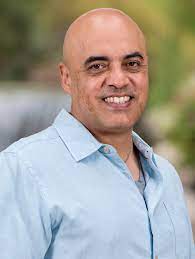
Doctor Henry Puente, Cal State Fullerton
Recently, our group had the opportunity to sit down with Communications Professor, Dr. Henry Puente, as a part of our term project for our Principles of Communications Research class with Professor Du, and we were able to survey him about his book “The Promotion and Distribution of U.S. Latino Films”. In our interview, we discussed the relationship between media and Latino films, as well as how the rise of media in the 21st century has affected the entertainment industry.
Dr. Puente’s extensive communications research and experience within the entertainment field made him an excellent candidate to interview. He has been an associate professor at California State University, Fullerton since 2006, teaching a wide variety of classes such as Principles of Entertainment and Tourism, and Writing for Broadcasting and Film. The time he has spent in the field has allowed him to see the rise of media, especially social media, and its effects that it has in the entertainment world. Our conversation with him allowed us to view this topic through a different lens, and understand how someone with more experience views the media and its presence in society. : A conversation with Doctor Henry PuenteDr. Puente has worked in many different fields of entertainment such as radio programming, reality TV, film distribution, and special events organization. Prior to being a professor at Cal State Fullerton, he mentioned that social media did not have an impact on his career. This is likely due to the fact that the rise of social media began in the late 2000’s and early 2010’s. Although Facebook had been developed for some time, albeit just for college students, media giants such as Instagram or LinkedIn gained traction later. When asked if he thought social media would have made a strong impact in his field of work had it been around, he said he thought that it would have had a positive effect.
In today’s society, the media plays a big role in interpersonal relationships. When asked about whether it is more beneficial or harmful to these relationships, Dr. Puente stated, “I think of social media like a hammer. It can be used as a tool to build or it can be used as a tool to destroy.” The impact media has on someone depends on the way in which it is used. Our group strongly agreed with that point, with members offering their own contributions stating how they had seen people have a falling out with social media. Sarah Frazier mentioned, “Many of my friends feel burnt out from the constant overbearing quality that social media has, and have taken it upon themselves to delete their accounts for their own mental well-being.” Upon hearing this comment, Dr. Puente laughed and stated that he couldn’t believe people in college would delete social media willingly, but that he hoped it would spark a change for the better.
“I think of social media like a hammer. It can be used as a tool to build or it can be used as a tool to destroy.”
Dr. Henry Puente
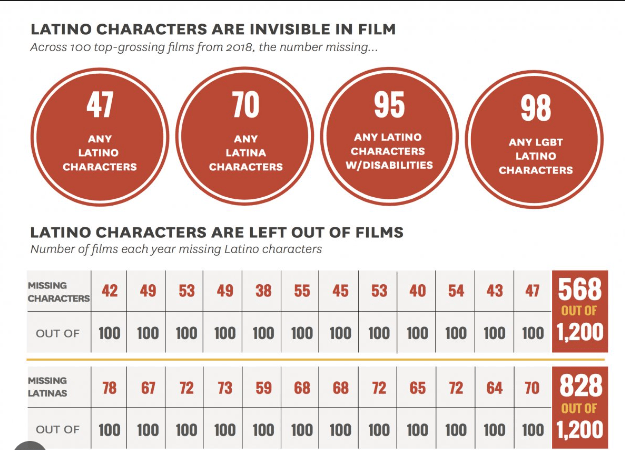
In his research focused on U.S. Latino films, Dr. Puente mentioned that social media hasn’t helped Latino films generate popularity. “They are marginalized in society which also means they are also marginalized in social media. Anything that starts out marginalized is hard to get traction in social media.” This was an interesting notation to point out, as the group hadn’t previously considered this. However, they agreed with Dr. Puente, and that in the future more social media and networking could be done to make the voices of this group louder and more prominent in society.
In the ethnic film market, Dr. Puente mentioned that U.S. Latino films are not quite at the level of African-American films when comparing them in terms of success and traction. However, within the last century, there has been a societal shift towards introducing more inclusive entertainment films. With the right strategies and investments, there is potential to make significant strides in the industry. Examples, such as box office hits ‘Coco’ and ‘Encanto,’ have found success, and although Dr. Puente is correct in stating that U.S. Latino films are lagging behind African-American films, we can see that there is a beginning. As the field continues to evolve and diversify, it is evident that the Latino film market has room to grow.
USC Annenberg
In the classroom setting, Dr. Puente has begun to see the impact of media on schoolwork, specifically in declining attendance and grades. The members of this group, unfortunately, agreed with this comment, with many of them stating that they find it harder to concentrate on one thing for a prolonged period of time. Dr. Puente mentioned how students’ attention spans seemed much shorter, and even in a 90-minute lecture, many of his own students struggled with paying attention.
When asked about any recommendations he may have on creating a healthier environment for social media users, Dr. Puente stated, “When you hold a bunch of dust in your hand and you blow it and you want to collect it back, you’ve already let it out so it’s an almost impossible thing to stop.” Social media has gained plenty of popularity within the last five to ten years, with students having their own personal electronics and social media accounts at increasingly younger ages. Dr. Puente noted that he would not be giving his sons their own personal phones until they were in their teenage years, and mentioned how he would rather them be focused on academics and extracurriculars.
“There needs to be an audiological shift in terms of the folks that are controlling those social media companies. There also needs to be a shift in how we disseminate info to young folks or just to folks.”
In conclusion, our interview with Dr. Puente has enriched our understanding of the interplay between media, entertainment, and personal health. It has provided us with insights on both the opportunities and challenges in this new digital age. We would like to extend our thanks to Dr. Puente for sharing his time and knowledge with us during our conversation. This interview has strengthened our knowledge about research methods and will help expand our expertise as we continue to learn about the principles of research in the communications field.

 The Society for Communications Research