By: Dominic Samaniego, Lauren Sharp, Armando Sanchez & Gabriela Angiuli
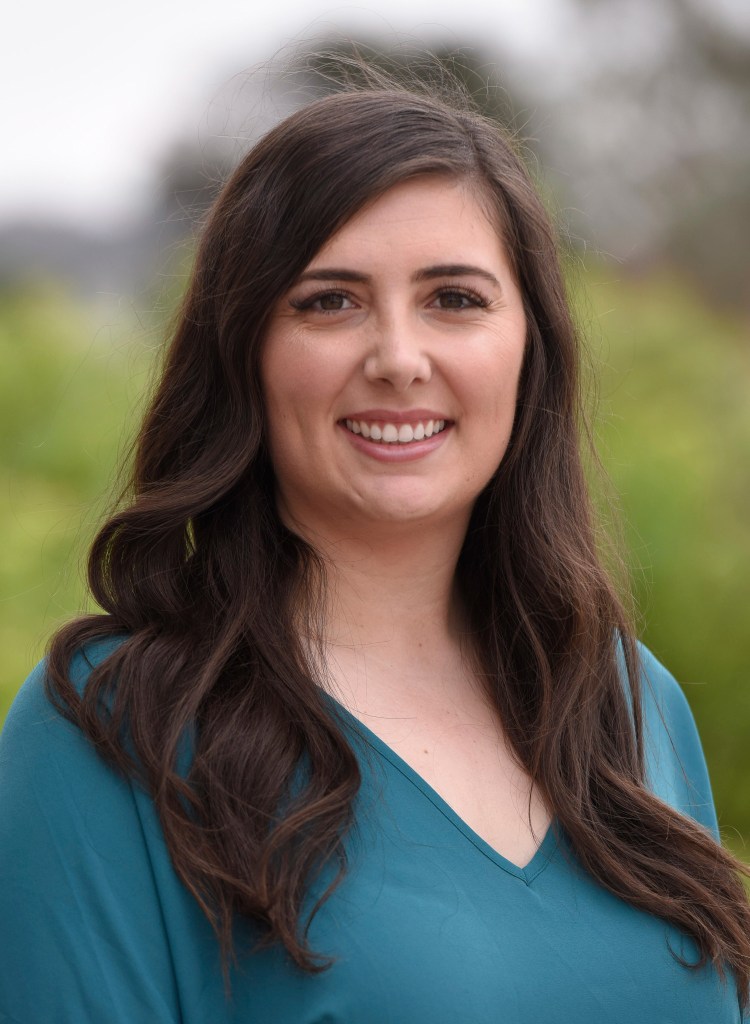
On Tuesday, October 24th, we conducted a Zoom interview with Cal State Fullerton communications professor Elise Assaf. Assaf primarily focuses on public relations studies and entertainment courses for undergraduate-level students in the communications major. This is part of our term project for Rosalyn Du’s course on the principles of communication research. Assaf’s background in communications research, public relations, and disability studies made her the perfect subject for the interview portion of the term project. The majority of our interview questions primarily focused on her dissertation. “Hidden Power: Journalistic Representations of Mental Health Labels.” Our brief interview with Dr. Assaf gave us much insight into the research process and all the elements of creating something as wide-scale as a dissertation. From there, we gained additional insight into the various concepts we are learning about in Dr. Du’s course. Speaking with expert and scholar Dr. Assaf helped us gain a better understanding of research methods and the implications of each. We were able to gain more perspective and insight from someone who has sufficient experience in conducting research in the field of communications.
Read more…: Interview with Communications Scholar Elise Assaf on “Journalistic Representations of Mental Health Labels”Get a glimpse of the interview here: Preview of Interview with Elise Assaf
Some other topics covered in this interview include research methodology, lessons learned from the research, and advice for future scholars hoping to engage in research during their undergraduate careers.
Dr. Assaf’s research gave us a clear idea and understanding of just what exactly goes into a research study. Such elements include content analysis, longitudinal study, qualitative research, and critical discourse analysis of literature to examine how linguistic elements hold great power and influence, more particularly in the field of mass communications.
During her time obtaining her Ph.D., she gained an interest in disability studies, which focuses on including students in the classroom as opposed to separating them in a special education classroom. Combined with her fascination for the topic and her personal experience, she decided to explore mental health even further. Assaf shared that she has various mental health diagnoses. She shared that when her younger brother was going through his diagnosis process, he was subjected to many different labels.
Interviewing Dr. Assaf gave us insight into the importance of selecting a sampling frame, especially in the context of deadlines and complex time frames. She emphasized that selecting content that is widely accessible and engaging in convenience sampling is often the best route to avoid tricky time frames. She mentioned that it is the most common way to select a sample for those engaging in undergraduate and graduate-level research.
Learning about people’s perceptions of someone with schizophrenia or schizoaffective was eye-opening. There were a lot of people that would ask if he’s dangerous and does he have voices in his head, those stereotypes that you see in film and TV and communicated on other platforms.
Dr. Assaf’s connection to the topic of mental health inspired her to gather information for the dissertation that she wrote. The process of data gathering in the study took place in a six-month period from July 1, 2018, to December 31, 2018. In that period, she gathered the instances when mental health terms were used in three national publications. She chose the three national publications so that they would be more accessible for future cases of researching the topic.
You want to make sure you have a data set that is broad enough, wide enough that you have enough data to analyze but also that it is narrow enough that you can complete it in the time you have.

Through the computer program she used to filter through all of the many articles posted in that time frame, she was able to gather more than sufficient data. For one, two different types of models were used to distinguish the use of both mental health and mental illness. These models were if the terms were used either medically or socially. The social model showed that “mental health” was used medically close to 88 times while it was used in social connotations less than 25 times. The term “mental illness” was used less than 55 times in the medical connotation. The term was never used in the social connotation at all. Her research also goes into depth about who said the terms in the articles or news stories and their placement in the stories.
In developing the questions, initially, Dr. Assaf framed her research around the language used in newspaper publications in academic settings, more specifically in college campus newspaper publications. Later, she expanded and tied her research to her communications background and honed in on major newspaper publications. The questions presented in her research were designed alongside her committee and were carefully designed. When asked in our interview about the lessons she learned in conducting the study, there were two main things she noted. The first thing she mentions in her response is the importance of selecting a subject that is “interesting enough to you to sustain you,” as conducting research of this level can last multiple years, and finding the energy and passion for conducting the research is of utmost importance. In addition, she advises those on the importance of being “mindful of who it is you are writing the content for.” For example, keeping in mind the different mediums in which the research could be relevant, such as in conference settings, and ensuring the research is relevant and useful.
Dr. Assaf emphasized how imperative it is to make sure your research is adding to the field in which the research is being conducted and providing new information about the topic, mentioning that “the authority that we place with certain people is very evident with these journalistic pieces.” Knowing where the quotes are coming from is beneficial as a researcher, as specific sources’ choices of words can impact readers’ perspectives, Dr. Assaf emphasized.
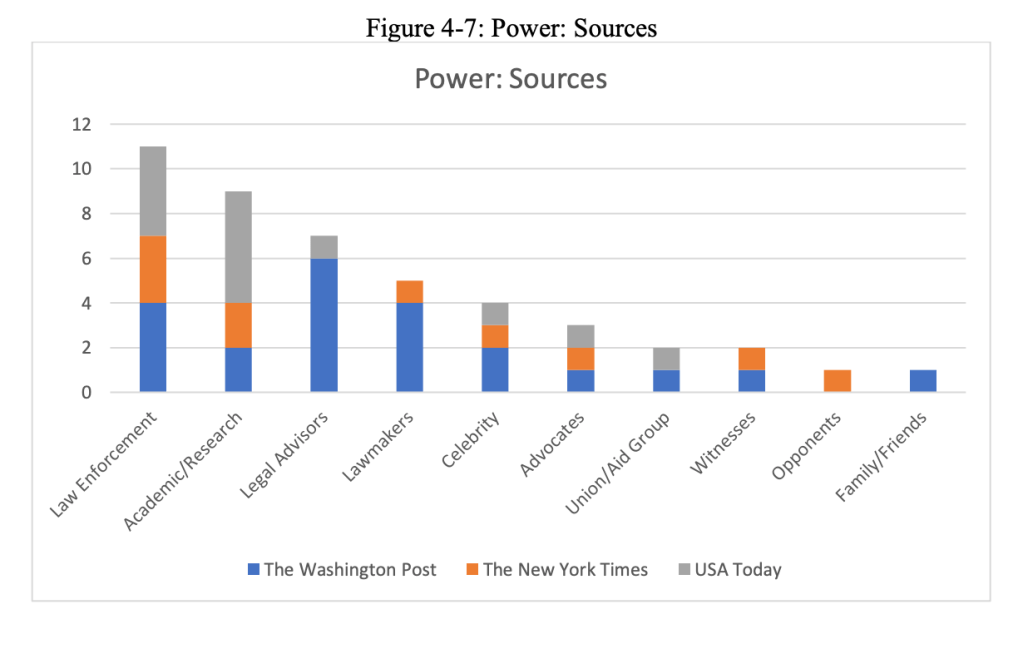
In the abstract of her dissertation, Dr. Assaf mentions, “potential ramifications of hidden power, as well as recommendations on altering the use of the key terms and sources used within the article, are discussed” (Assaf, 2020, p. v). The newspapers that were analyzed through her research made many implications of the “dangers” of people with mental health diagnoses, therefore feeding into the stigma surrounding mental health. In the section of her dissertation, “5.1.5 Predominance of Sources with Hidden Authoritative Power,” she mentions, “these dominant perspectives were more likely to present an individual with a mental health label as an aggressor rather than a victim or a neutral party, increasing stigmatizing language, perpetuating stereotypes, and further unbalancing levels of power” (Assaf, 2020, p. 106). The chart below shows the power sources in which the content of the publications and how detrimental the language used by these sources is since their words are being read on a large, national scale.
As Dr. Assaf’s study was originally published in 2020, we found it important to see if there were any notable changes in her observed findings since her study was done. As we discussed the constantly evolving state of the newspaper medium, Dr. Assaf discussed how she noted a difference in how mental health is mentioned in the media. Although she didn’t specifically focus on the correlation of mental health to gun violence in her research, a popular topic in the research of mental health at the time, she has found a decrease in the number of headlines assuming a mental health diagnosis on a gun violence perpetrator. As we focused heavily on discussing and understanding Dr. Assaf’s research methods during our conversation, we learned how research and findings can change.
As we concluded our time with Dr. Assaf, she encouraged media consumers to ensure the sources their information is derived from are reputable. With an influx of news being distributed through blogs and social media, it is important to be aware of reactionary language to encourage online sharing, who the information is coming from, and where they get it. These simple ideas can help consumers gain the factual and necessary knowledge that they’ll continue to carry and inform others with.
View the full interview with Dr. Assaf here:

 The Society for Communications Research