By: Tamera Innabi, Natali Martinez, Andrew Silva, Destinee Yepez
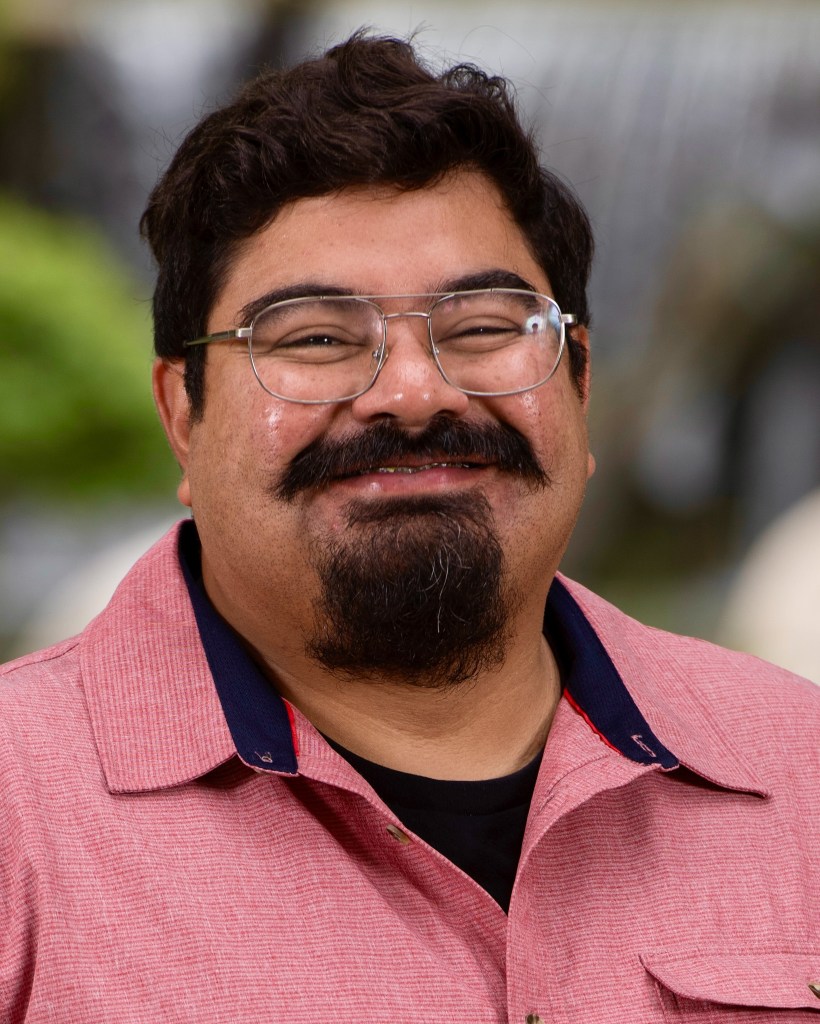
Dr. Ricardo Valencia, California State University, Fullerton
Our team had the opportunity of interviewing Dr. Ricardo Valencia about the research he conducted regarding LA Galaxy and LAFC rivalry. Dr. Ricardo Valencia, an esteemed assistant professor of public relations within California State University’s Department of Communications at Fullerton, brings a wealth of global communication experience to his role. Graduating with a doctoral degree in Media Studies from the University of Oregon in 2018, Dr. Valencia’s career highlights include serving as the head of the communication section at the Embassy of El Salvador to the United States from 2010 to 2014. Prior to his diplomatic role, he garnered extensive journalistic experience covering international and domestic politics. In our interview we focused on Dr. Valencias specific research involved with social media in which he collaborated with Dr. Henry Puente titled, “Nothing more American than a Mexican: Negotiating Social Media identities in the First City rivalry in U.S Football.”
Besides being a huge football fan, Dr. Valencia received his PHD at the Univeristy of Oregon which he described as a huge football university. He then went to Washington DC for 4 years as a Salvadoran diplomat while also working on many different campaigns. Afterwards, he started his career in journalism and started his masters in Germany. Through out his career, Valencia stated, “… I had moved around everywhere around the world, I tried to understand their culture through sports”. Valencia’s love for football and his travels have shaped his worldview, making him a well-rounded and adaptable professional.
Professor Valencia shares that the initial interest in the research came from an interest in what was the “relation between soccer branding, and how the organizations use history” as a way to continue the brand. He continues that using this historical framework allows to see how the soccer teams build franchise identities that resonate to the fans. Valencia and Puente also questioned how someone who is not originally from Los Angeles, then goes on to become a staple myth when it comes to sports, and then becomes the ‘face’ of the LA soccer brand, in this case Carlos Vela from LAFC and Zlatan Ibrahimovic from LA Galaxy.
Dr. Valencia worked in collaboration with Dr. Henry Puente. Together they were able to pull together their own research to form their thesis. When asked about the collaboration process between him and his colleague, Dr. Valencia stated that they were able to split the work by delegating the LA Galaxy and the LA football club. Dr. Valencia mentioned that he did most of the ethnographic research by looking at tweets and determining how the people viewed the teams and organization. While on the other hand, Dr. Puente did the background research on the organizations. Dr. Valencia stated that “We would look for themes (in LA Galaxy and LA football club) and I would look at most of the tweets…”. Using the themes they found on their own, they were able to compare and contrast their findings. Valencia mentioned that because Dr. Puente already had previous research and experience of the MLS, they were able to use their current findings to clear things up and define their findings.
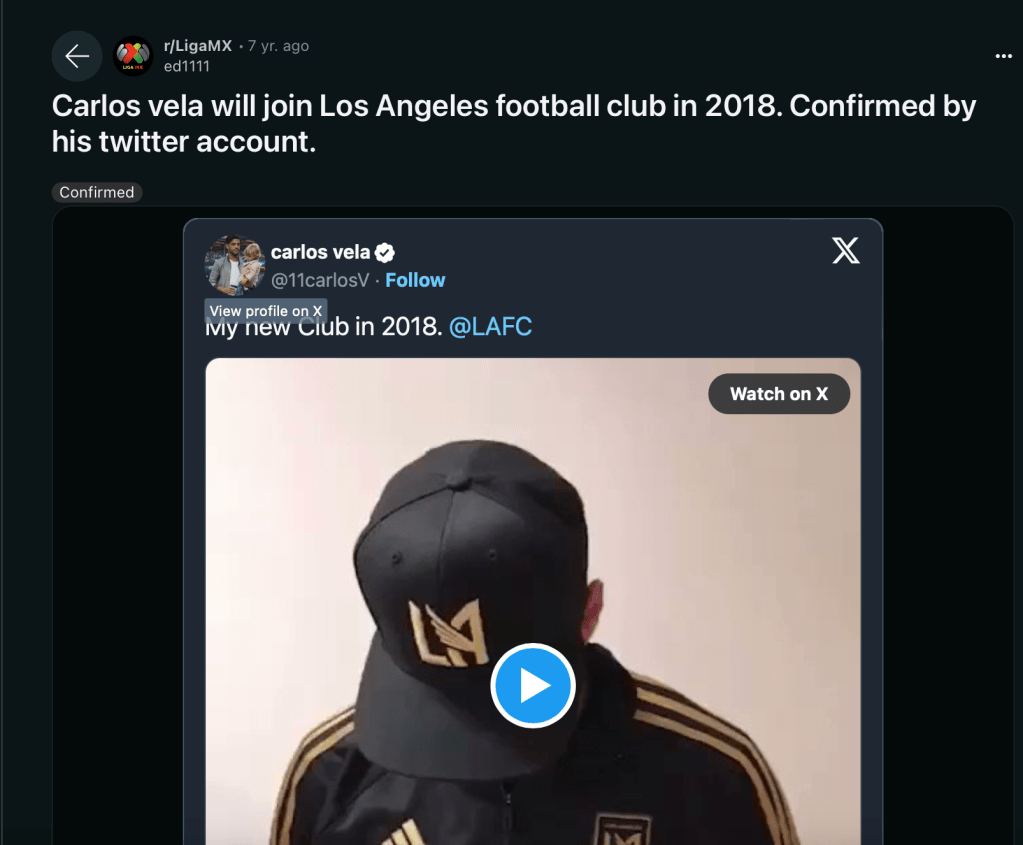
Courtesy of Reddit
When it came to conducting the research, Valencia and Puente decided to use social media as a main outlet for collecting data. Valencia shares that a main reason for the use of social media has to do with, “(social media) is the place where fans and organizations get together quite often on a daily basis.” Opposed to other ways fans interact with a sports organization (in-person), social media allows for 24 hour communication between fans and organizations. Using such a consistent way of communication to gather information helped better understand an “intersection between brand awareness and sports identity.”
In terms of choosing a sample population, Valencia and Puente did not choose any in the ‘traditional’ sense. Valencia shared that they tried to get a sample of “media or social media places that can tell you represented (sports) fans and organizations.” Valencia continued to explain that they (Valencia and Puente) tried to do more qualitative work, asking “what are the conversations going on, where can fans express their feelings about (other) fans.” While a specific population was chosen to look at, in this case LAFC or LA Galaxy fans active on social media, Valencia and Puente looked at different social media outlooks (X, Reddit, etc.) to gain more information.
“(social media) is the place where fans and organizations get together quite often on a daily basis.”
When asked what research method would be the most appropriate for the study, Dr. Valencia stated that it depended on the “type of question and what we wanted to quantify.” For their specific research he and his colleague Dr. Puente wanted to know themes, frames, and discussions. Therefore they used a qualitative approach especially historical because it can give a perspective than a quantitative analysis. Dr. Valencia and Dr. Puente both come from historical backgrounds so they wanted to merge themes, discourse and historical background in their research and wanted to merge both. We followed up with if there were any difficulties or complications with the research, the researchers encountered challenges in data collection, particularly with tracking social media content and capturing fan discussions. Tools and platforms for social media monitoring proved indispensable in overcoming these obstacles, allowing the researchers to access and analyze diverse sources of qualitative data. Dr. Valencia stated that twitter was a challenge because tweets disappear or are difficult to track and had to use other tools to find it. He ended up going to reddit to see fan engagement. Additionally mentions that when conducting a campaign the message should be consistent meaning if one tweet is missing in the research it is not a problem because communicators use the same topics and repeat information which gives freedom. So the overall complication was getting discussions and tweets from fans.
We asked Dr. Valencia a follow-up question on what challenges or limitations were encountered during the process, he explained that they tried to keep it short for the time being by focusing on just two people instead of the whole organization. He also expressed that it was difficult to combine the findings with historical background. Furthermore he stated that they wanted to focus only on a couple of media platforms because of how complex it can be and that made it difficult. They focused on social media and reddit but the most difficult thing they needed to decide on was what media news outlet they were going to use. They could use lots of news pieces about the topic but they needed to keep it small for the time span.

Statement from LAFC & LA Galaxy
Dr. Valencia talked about when doing research, and he found how things can change over time. “Things can be overstated or understated when doing a PR campaign, Strategic campaign, or Advertising campaign. For example, the case of Ibrahimovic, which was perceived as the white male or the white savior in Europe. The discussion is complex because Ibrahimovic came to Sweden as an immigrant. The LA Galaxy was portrayed as the lion or the soccer Messiah, which was interesting and difficult in a way.”
Following the last question, we asked Dr. Valencia what motivated you to research this topic? Sports motivated Dr. Valencia to research the LA Galaxy and LAFC rivalry. “I like soccer, I like sports, and sports are the most important things of the least important things in life. Also values of identities. Identities and politics all go through sports and entertainment.” He wanted to research something on what he likes, which was sports specifically soccer, it was something he wanted to do. He also talked about his research partner, Henry Fuente who also like sports. “ Also, my co-author Henry Fuente likes sports, and he teaches a class about sports communications at California State University, Fullerton. We have similar backgrounds, and it was pretty interesting that we were trying to span all this research.” Dr. Valencia also talked about maybe having a conference about soccer or football in a few years. The main reason he was motivated to research this topic was because he likes soccer and likes to do things that involve sports.

 The Society for Communications Research