By: Briannda Escobedo, Ethan Tandya, Jennifer Bui, Samantha Luu
We were interested in Dr. Mori Lisa’s research on the Psychological Impact of COVID-19 on Hispanic/Latine**, Asian, and White USA College Students research paper. As students, we care about the overall well-being of our peers and the psychological effects of COVID-19 on other college students. Upon reading the article, we were excited to contact and hoped to interview Dr. Mori about the study. Unfortunately, she had fallen ill and could not attend the interview. However, she redirected us to her research assistant, Eric Cortez, and we were able to ask him about his contributions and thoughts about the study.
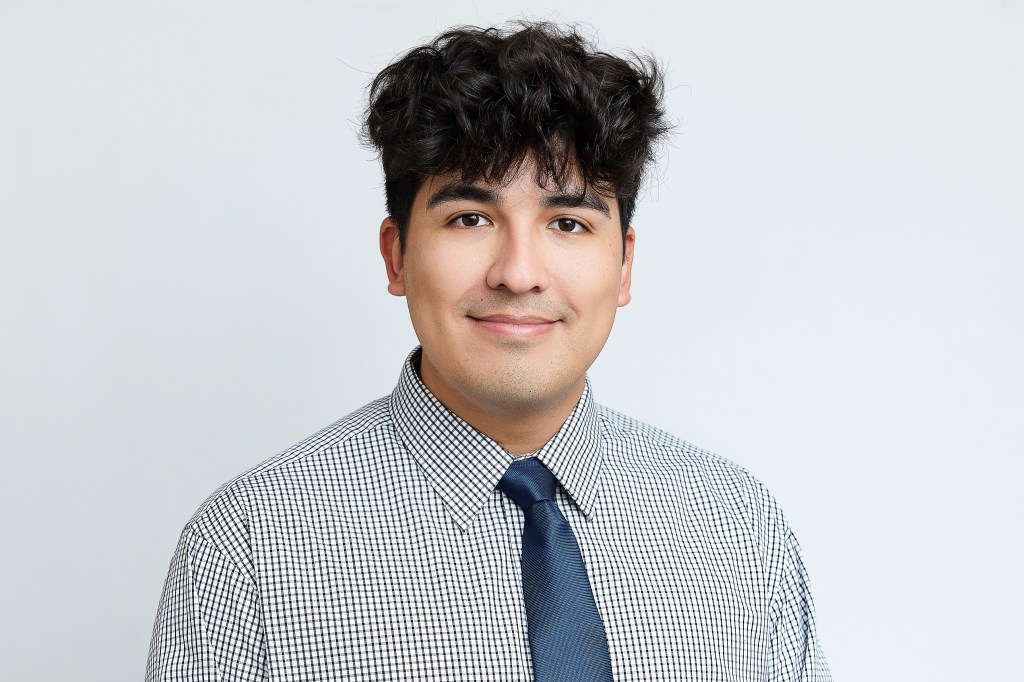
On Thursday, April 4th, 2024, we had the privilege to conduct a Zoom interview with California State Fullerton alum Eric Cortez. He was a graduate research assistant who assisted Dr. Lisa Mori with her research on the psychological impact of COVID-19 on college students in the United States. Eric is attending the University of Los Angeles and pursuing his Ph.D. in Health Psychology, and this study was one of his introductory research experiences that led him into the field.
Q: What motivated you to work on this study?
Eric was initially attracted to Dr. Lisa Mori’s lab at Cal State Fullerton due to her expertise in working with college students and their mental health. When Eric joined the lab, they were already working on the project, and the research was relevant at the time because COVID-19 was still a fresh topic. When the lab members asked Eric if he wanted to contribute to the project, he was thrilled to be given the opportunity. He stated it was a perfect chance to solidify his decision to pursue research in this field.
Q: What is your rationale behind working on this project?
Eric responded that after the two weeks of lockdown, the situation had escalated into a worldwide crisis and would be longer than anyone could have anticipated. With the drastic changes that had impacted students worldwide, the team decided to initiate the study locally with the students available to contact through the university and how COVID-19 would impact the students’ mental health. To conduct the research, the team had gotten permission from the school to contact a certain number of students and ask them to fill out a survey they had created.
Q: How was your experience while contributing to and writing this research study?
Eric shared his positive experience with us during his undergraduate research in this study. Eric mainly helped with literature reviews and cleaning up data sets as the data was being collected and the paper was drafted. He stated, “This was my first chance to contribute to discussions about relevant findings, what should be included in the paper, what stands out, and how to write it meaningfully. We also worked on designing the research, collecting data, and analyzing it. Though I helped in my way, it was a great learning experience for me, and he was happy to contribute to this paper.”
Q: Were there any significant challenges encountered during the research process?
During COVID-19, there was a significant obstacle to conducting studies on campus. Multiple faculty members attempted to contact many students for similar research purposes. Although he could not recall the exact number, his team did mail a good proportion of the student population, which was several thousand students. However, not all of them participated in the study. Convincing people to complete the survey was challenging because they were not enthusiastic about participating in additional activities besides those already required for their classes.
Q: Were there any unexpected findings from your research?
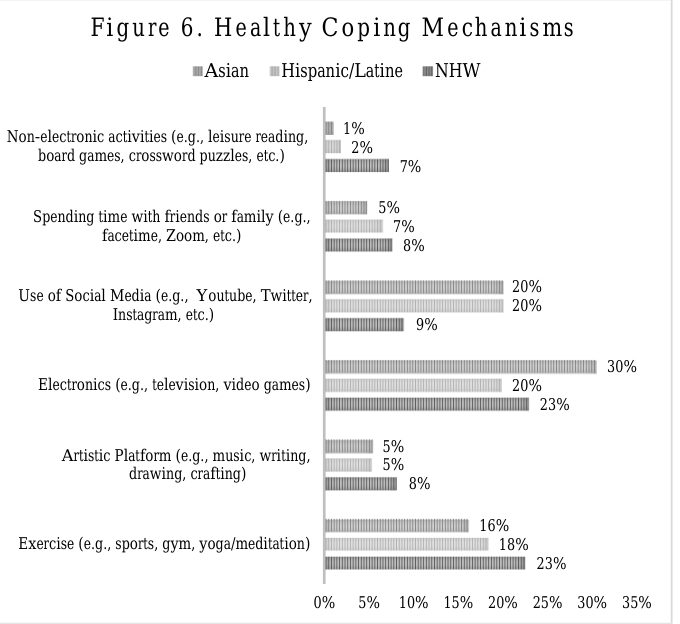
During an interview, Eric stated that they had anticipated mental health to be overall poor and the rates of everything to be high. They also expected exercise to be the top healthy coping exercise, but to their surprise, it was watching TV and streaming shows on Netflix. Furthermore, excessive use of alcohol was found to be the top unhealthy coping method for Latina and white students, while the use of cannabis was higher than expected.
Q: Were you surprised by your research’s overall findings? If yes, why? If not, why?
He answered that healthy coping skills like streaming and unhealthy coping skills such as alcohol were the biggest surprises. And that they didn’t know it’d be so uniform in terms of anxiety and depression. They thought that students of color would be more heavily affected by covid 19, but that was not the case.

Q: Could alternative research methods have been more effective, or do you consider surveying the optimal choice?
“As I’ve learned more about different research methods, optimal qualitative interviewing conditions would have been the best. That way, we captured more nuance and people’s responses. People would have been able to elaborate on how they responded the way they did, but at the time, they were quantitatively assessing people. Nonetheless, analyzing this was the best option, given the resources and quantitative timeline the team aimed for. Still, if there was more time or resources, we could offer people incentives to do an interview that would have been insightful.”
Q: What kind of incentives would you choose to give to help motivate students to take your survey?
Eric said that he would have liked to take a more quantitative route. There may have been additional avenues that the team could have inquired about, such as asking people how they felt about the transition to online learning, what they were doing in their free time, and how serious they thought it was. One solution that Eric had stated in response to this question was to give monetary incentives to the students if provided with a larger budget. For example, he had said that students would be more likely to answer questions if the researchers would provide them a gift card of $25 – $35 for their response.
Q: How do you envision future research building upon your findings to further explore the psychological impact of COVID-19 on college students from various racial and ethnic backgrounds?
Eric’s insights as a researcher on this study provided helpful information about the process of conducting a survey and the upsides and downsides that come with that particular design of the study. Eric recalls, “It was a few years ago at this point, but there are still obvious repercussions from that time, so I hope the study will influence people to look closer at coping skills because that is surprising. A more extensive conversation with alcohol use by college students being used as a coping skill also looks at the rates of anxiety and depression because they were crazy high, like 70%. When there is a significant shift in learning, it’s going to impact people’s mental health, which is crucial to do in any study.”

 The Society for Communications Research