By: Christina De Luna, Bryana Nguyen, Ruby Marie Perez, and Neida Torres

We had a wonderful interview with Dr. Elise Assaf to discuss her dissertation, Hidden Power: Journalistic Representation of Mental Health Labels. Dr. Assaf is an assistant professor in the Department of Communications, teaching public relations and entertainment courses in the undergraduate communications program. In addition to her professional career, she is also a wife and a mother of 2 and a half children. She is also a lover of animals as she has two dogs and even finds time to raise chickens. She took her time out of her busy schedule to provide very valuable insight to her process in writing and performing her research project.
Interview with Dr. Elise Assaf
Q1- Can you share a brief summary of your experience, how long you have been teaching, and the field of study that you specialize in?
Dr. Assaf completed her master’s program at California State Fullerton University in 2015. She expressed interest in teaching and started a position at Cal State Fullerton in the spring of 2016. While she was teaching, she applied to start her PhD program. Her professional background is in Public Relations, which is why she teaches the public relations and entertainment classes. She has a varied background that allows her to be a floater in the Communications department teaching various topics across the department. Her primary research interests are in media representation. One of the the first topics that interested her was when she started to look at sports as it related to the way women were discussed and the bad behavior inside the sports world. When she went into the PHD program, she wrote a paper about what was affecting college students. She focused on the subject of mental health. She had a personal connection to this topic as she had been diagnosed with anxiety and depression and her brother was diagnosed with schizophrenia. She realized that people have been vocal about stereo types of people who had mental health issues and it became an interest of hers to explore why these stereotypes existed. Because of her background in media it made sense for her to look at the media representation of those stereotypes and why they were being perpetuated within scripted content on TV. It was very impressive that she shared her personal story as it related to mental health. She said that she shares her story very openly because she believes that you can’t improve on these situations if you can’t talk about them openly.
Q2- Your research study is 250 pages long. How do you know where to start with a topic so complex?
The first thing that is important is that you have to select a topic that you are interested in. The second thing is that you have to select a research topic that is going to sustain a project. For example, this dissertation theoretically is done in one to two years, but she has a book chapter that is tied to this dissertation that she is looking at now and that is five to six years later.
Also, a professor of hers once told her, “The best research is done research.” That is a major factor. You have to know what your time frames are and your topic has to be something that is completed in that amount of time.
The key points in picking a topic are, the following:
1. Pick something that you are interested in.
2. Pick something that can sustain you, but also has a deadline
The other key thing to remember is that you can always do more research in the future. When you think about a project, think about something that is manageable and that you can always go back to later to review from a different angle.
Q3- What inclined you to choose the three newspaper outlets? Were there any other outlets that you were considering?
Dr. Assaf mentioned that she had a conflict of interest with one of the committee members where she expressed that being in that scenario was not common at all. She explained that the way a dissertation works has a chair, two committee members, and one would be in the department you are getting your degree in and an outside person from a different university/practicing in the field you are researching in. Then Dr. Assaf tells us that one of the committee members’ husband was working in the LA Times specifically as a health reporter. As she was completing her research his articles would come up in the data set if she was going to pick the LA Times. She explains why she wanted to pick LA Times as a media outlet to study. She originally wanted three national publications- East Coast, West Coast, and Midwest, however, due to the conflict of interest she had to reassess. That led her to The Washington Post, The New York Times, and USA Today.
Q4- What criteria were used to select the sample of news articles for analysis in this study on journalistic representations of mental health labels?
Dr. Assaf first explained the route with the data was because they were publicly accessible text she did not have to go through IRB and not worry about going back and forth with it. She deep-dived into the process of what articles she would be using based on how accessible they were. She and the committee arranged a timeline and emphasized what was manageable. It was described as how many articles have been written in a certain timeframe and what can be done in the allotted time the analysis needs to be completed.
Q5- How come television or any other medium was chosen?
Dr. Assaf explained that because the news articles are publicly accessible it dictated her decision. She did not have to pay for the majority of subscriptions, but one. In addition, Dr. Assaf expressed that it was daunting if she chose television, film, or news broadcasting because of how long it would have taken. She was lucky enough to have a colleague verify her findings within the articles she was analyzing and felt that it would have been difficult if she had used a different medium.
Q6- Across the three newspaper outlets, are there any differences in the language journalists use? If so, how do these variations contribute to the overall narrative surrounding mental health labels?
Dr. Assaf recalled that there was nothing major between the three newspaper outlets which could be due to their style guide. She explained that these three newspaper outlets use AP for example, but could be modified to that publication. However, it will be mirrored from one publication to the next, and terminology varies with politically extreme publications. Overall, the three publications that were used are ‘middle of the row’ publications and language did not really differentiate between them.

Figure 4-2 and 4-3 pulled from Dr. Assaf’s dissertation
Q7- During the research process, were there any challenges encountered? If so, what were the steps to overcome the challenges?
The committee was the biggest challenge that Dr. Assaf faced during the research process. Simply because it was a very different dynamic. There was quantitative and qualitative research. When doing conference papers, have reviewers who are blind, and they have their own way of research. A couple of people who review her work, have their own opinions on why she did the research methods she chose.
Q8- What methods were utilized when collecting and analyzing qualitative and quantitative data?
Dr. Assaf used online articles within the date parameters. Using an Excel sheet was also the easiest to organize the articles by using code words for each article.
Q9- When reporting on mental health issues, can you go into depth on the qualitative content analysis process?
Dr. Assaf talked about how content analysis employs a qualitative method, focusing on understanding the intentions of authors through their word choices and discerning how audiences interpret them. She emphasizes the importance of examining specific evidence within the text to infer the author’s intentions and analyzing the language contextually to gauge its impact on the audience’s perception. This involves scrutinizing the phrasing surrounding particular words for deeper insights.
Q10- We understand that words hold a lot of power. Do you think news publications will be more sensitive to how they word things in the future?
Dr. Assaf’s perspective highlights the evolving power of words in contemporary society, particularly in the context of “cancel culture” and vocal advocacy. The accessibility of platforms for expressing opinions has made it easier for individuals to voice their concerns about problematic language. However, this also creates challenges for journalists who must navigate the ever-changing landscape of terminology to ensure accuracy and sensitivity in their reporting. The diversity of opinions on this topic reflects the complexity of balancing free expression with the responsibility to use language responsibly.
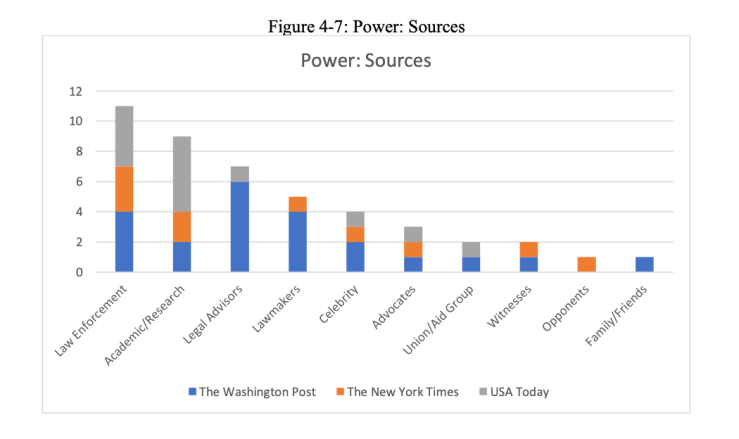
Figure 4-7 pulled from Dr. Assaf’s dissertation
Q11- You mentioned that it is problematic for those who are more knowledgeable about mental health and mental illness to be rarely ever provided with opportunities to speak from the authority of their lived experiences. Why is that? Are they trying to silence them?
Dr. Assaf’s concerns highlight the complex dynamics journalists face when reporting on individuals who are involved in legal matters or have disabilities. While it’s crucial to ensure that diverse voices, including those of people with disabilities, are heard, journalists must approach the situation with sensitivity and respect for their rights and well-being. When considering whether to seek quotes from individuals with conditions like schizophrenia or autism, journalists should prioritize informed consent, respect boundaries set by legal representatives or advocates, and be mindful of the potential impact on the individual’s mental health. It’s essential to foster an inclusive and ethical approach to reporting, recognizing the importance of amplifying marginalized voices while upholding ethical standards and ensuring the dignity and agency of all individuals involved.
Q12- Do you think news publications write that people with disabilities are the aggressors to get the reader’s attention?
Dr. Assaf’s observation underscores the tension between the commercial imperative of news media to attract readership through attention-grabbing headlines and the journalistic responsibility to provide accurate, informative, and nuanced reporting. The prevalence of clickbait headlines and the focus on generating traffic can sometimes overshadow the substance of the stories being reported. Her experience with the New York Times editor reflects a concerning trend where discussions about headlines take precedence over meaningful conversations about the content itself. Moving forward, Dr. Assaf expresses hope for a shift in priorities within the news media industry.
To watch the full interview here: Full Interview with Dr. Elise Assaf

 The Society for Communications Research