By America Maples, Brianna Ruiz and Hayden Fundament
COMM 410 – 02, Roselyn Du
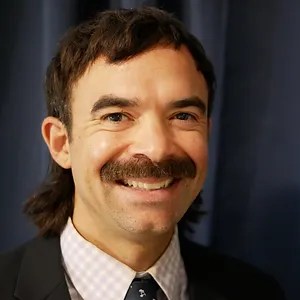
For the past couple of months, our team has been preparing to conduct a study at California State University, Fullerton, or CSUF. To minimize setbacks and errors, we have spent time understanding the process of conducting studies and what it entails. Producing quality research requires both time and attention, and we want to save time fixing mistakes that could have been prevented. That’s why we contacted Dr. San Bolkan, a California State University, Long Beach professor, for some advice based on his study, College Teacher Misbehaviors: Direct and Indirect Effects on Student Communication Behavior and Traditional Learning Outcomes.
Dr. Bolkan’s study investigated the impact of teacher misbehaviors on student outcomes in communication courses at a mid-sized Eastern university. Drawing upon a theoretical framework of relational power and instructional influence, the study examined how teacher misbehaviors, directly and indirectly, influenced student communication behavior and traditional learning outcomes. The study involved 343 undergraduate students from various communication courses who completed a series of validated instruments to measure teacher misbehaviors, student resistance, class participation, cognitive learning, affective learning, state motivation, and student communication satisfaction. Path analysis was conducted to analyze the relationships between variables, revealing that teacher misbehaviors, directly and indirectly, affected student outcomes, mainly through affective learning. The findings underscored the importance of addressing teacher misbehaviors to foster positive student engagement and learning outcomes in the classroom.
In our interview with Dr. Bolkan, we learned more about the process of conducting a study of this nature and the potential complications a researcher can run into.
Sampling Methodology:
- Can you describe the motivation behind conducting this study and why you chose to focus on teacher misbehaviors?
Dr. Bolkan was a student who continued his education through undergrad, master’s programs, and more. He had always assumed teachers should be good becuase of their role as healpers and leaders. However, he found his own experiences challenged that assumption. There were also times he would hear stories through friends, classmates and students that challenged these ideas as well. This was the motivation that propelled Dr. Bolkan to conduct this study with his own students.
- Were there specific criteria used to determine eligibility for participation? If so, what was it based on, and why was it chosen?
Within this study there wasn’t any specific criteria he and his partners were looking for when choosing the participants. The participants were chosen out of convenience as they were students in his courses. These students were given an extra credit incentive to participate in the study. According to Dr. Bolkan, one of the problems with choosing participants is finding people who will take your study and take it seriously. The ideal study would have been to survey students across the U.S. The next best thing is to get students in classes or in a class where they must participate in a participant pool. All in all, working within the constraints of what he had and working with the students he had access to, the pool was still large enough to be general to the population. Still, the sampled students are less than one hundred percent, which is the weakness of the study.
Data Collection Methods:
- What methods were used to collect data from participants?
When it came to deciding what kind of methods to use for this particular study, Dr. Bolkan used survey methods with existing measures. These survey methods were chosen because he knew they had specific statistical properties that were perfect in collecting the type of data he needed. He calls them “survey items that are a part of questionnaires” that people have developed previously.
Measurement Tools:
- What specific measures were used to assess the attitudes, behaviors, and perceptions of teachers?
While Dr. Bolkan states, they measured many different things and used a behavior scale to record misbehavior. Other measurements were recorded for personal resistance, participation, and overall course satisfaction. By having many students fill this out, there was a better general understanding of results rather than relying on one person’s responses to these questions.
- How were these measures developed or adapted for the study?
While Dr. Bolkan states he has done his measurement development pieces as a researcher and professor, he relied on the work of science and built off the work of others. He used them to benefit his research since they were validated methods, in the way he needed them to find the relationship between the variables because that was the interest.
Timing and Duration:
- How were the timing and duration of data collection determined?
As Dr. Bolkan mentioned, this was a survey study, so there wasnt a big concern about timing and duration. He and his colleague gave students extra credit and had them access a link to answer the questions. Sometimes, they would have students take a test based on a video just watched, and in that case, timing is essential to ensure students stay on the video and not walk away from the test, which could cause problems within the data. The test they used for this research was used for one semester and given to students in that time frame, so there wasnt any real need for timing and duration measures.
Data Analysis Techniques:
- What statistical methods were used to analyze the data?
Dr. Bolkan used measurement of reliability of the tools to see if they were operating in the way expected which is also what he calls reliability analysis.
- Could you walk me through the data analysis process, particularly how you conducted the path analysis and assessed the model fit?
All of the data and variables that were collected were put into various softwares to be sorted and organized. Specifically SPSS was used in order to input data from the path analysis and was then assessed by the software if the model was fit when compared to the initial model. Using his study, he could show us how teacher misbehaviors directly affected student learning and impacted the dependent variables.
Interpretation of Results:
- How did you approach any problems or limitations that were encountered while conducting the study and/or when interpreting the results?
Whenever any limitations or problems were found within the study, they were reported right away in order to be properly observed. Any of these outcomes were put in their own limitation section that were separated from the sample. Much of the data collected was perceptual so often with these findings, it was important to recognize there should be a body of research to help multiple outcomes and not just a specific study. Dr. Bolkan recommends to read multiple studies in order to gain a more general and correct understanding of teacher misbehaviors and their effects on students as a whole.
- How do you envision this research contributing to the field of education?
According to Dr. Bolkan he doesnt see his study or any study on this topic contributing to the field of education at this point and he had a great way of describing why. From his insight as a professor, the professors who believe in the point of this study are the good teachers who don’t necessarily need to learn anything from it. The professors who should be reading studies like this are the ones who don’t care enough to go looking for them. So essentially this study isn’t reaching its target audience.
Ethical Considerations:
- How were participants informed about the purpose and procedures of the study?
At the beginning of the survey all students were presented with an informed consent document to accept. There is an institutional review board which needs to review and approve the aspects of the study before hand in order to determine if there was anything that could be harmful in any way to any individuals involved in the study. The only guidelines that were set in place was students were not allowed to describe any identifiable information that could be sensitive towards instructors to keep the study as anonymized as possible.

 The Society for Communications Research