By: Jack Gritters, Victoria Valdez, Julianna Igama, Liliana Flores

Elise Assaf, Assistant Professor of Communications California State University of Fullerton
Introduction
With a growing society’s awareness of the importance of conversations surrounding mental health, there have been a lot of unproductive discussions. The way we discuss mental health and its effects on individuals and those around them is just as important as having difficult conversations. We still have a long way to go in terms of breaking down misconceptions, stigma, and accessibility to resources. Still, one step towards progress we as a society can and need to make is the language we use when having these conversations. These conversations become unproductive when we use language that only further enforces barriers.
These thoughts are what led researcher and California State University Fullerton Professor Elise Assaf to conduct a study on journalistic representations of mental health. Assaf sought to bring attention and research to the ways in which mental health is portrayed as a burden in journalistic representations.
Conceptual Ideas of Research
When interviewing Assaf, we focused on three research methods she used in her study: frameworks, critical discourse analysis, and overlexicalization. Assaf’s study consisted of choosing three national publications and two keywords, “mental health” and “mental illness,” which were then searched for in articles spanning a six-month time period. Assaf used frameworks to analyze and understand the data that was then collected from this search. Critical discourse analysis was used to justify the importance of the language used when discussing mental health. Overlexicalization was used to come to these conclusions when examining the language she found surrounding her keywords. These research methods allowed her to create such a nuanced study. Our interview with Assaf gave us more insight into the processes utilized in creating and conducting the study.
Frameworks
Elise Assaf described mental health as a burden to be directly affected by “Frameworks used by individuals aren’t just those that they create, rather they are bound to various cultural issues and focuses”.
Assaf’s study identifies a two step concept of framing that involves presentation as well as the reader’s interpretation. Presentation focuses on the aspect of telling a story and how frames can be used in the media to create stereotypes to tell stories in an easier manner.
Step two, reader’s interpretation, is how a consumer will perceive specific stories, stereotypes, and frames. These examples contribute to forming an interpretation and will lead a consumer to believe them to be true. Misinterpretation as well as the lack of unbiased and true information can hinder these steps and damage a subject’s story directly affecting their mental health. In reference to our interview, frame analysis has many positive and negative implications on society, they are inevitable despite some being problematic. It is necessary in the way we communicate about things in society. It is necessary for us to communicate with patients with a mental health diagnosis and use them to tell their story directly to spread awareness as well as be a source for media outlets.
The two steps of presentation and reader’s interpretation work together to resonate with news and media consumers differently. Overall, the effect on our mental health can be a massive burden and it is important to not be misinformed while perceiving as well as believing frames in society.

Critical Discourse Analysis
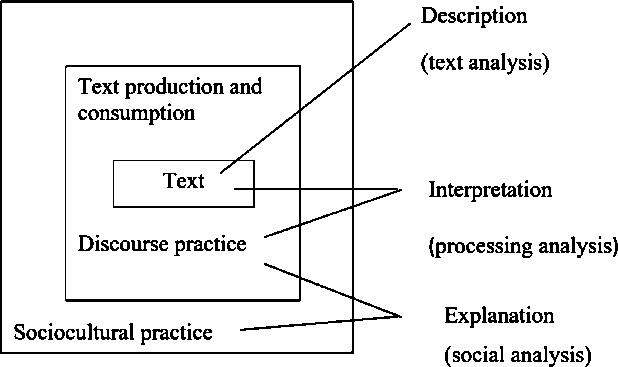
Elise Assaf defines critical discourse analysis (CDA) as a method that involves a hyperfocus on discourse, encompassing both negative, positive, and neutral parts of language. She emphasizes that CDA often involves examining specific elements of language, such as word choice, placement, synonyms, absence, and repetition, rather than solely adopting a critical perspective. The stigma surrounding mental health often revolves around language – the words we use to describe mental illness, the way it’s framed in media, and how individuals talk about their own struggles. Assaf clarifies a common misconception about CDA, noting that while the term “critical” may imply a negative lens, in reality it simply entails a heightened focus on language without necessarily implying criticism. This distinction is crucial as it highlights the nuanced nature of CDA and its approach to analyzing discourse.
Assaf explains that she used CDA in conducting her study because of her interest in language and its role in shaping values and ideologies. She believes that analyzing language can provide valuable insights into how individuals understand and communicate about various ideas and beliefs, including those regarding mental health. Additionally, Assaf suggests that language serves as a tool for making sense of information and understanding the underlying reasons behind certain phenomena.
Assaf’s approach to CDA reflects a sophisticated understanding of the complexities of language and its multifaceted role in shaping societal discourses. Her emphasis on the analytical aspect of CDA underscores its utility in uncovering deeper layers of meaning and understanding within texts and language.
Overlexicalization
Elise Assaf explains that overlexicalization often happens in agenda setting. Word choice and over-lexicalization play a crucial role in conveying ideological meanings in news discourse. The repetition of words is usually coupled with an emotional connotation. Excessive over-lexicalization can imply that there is no need for further research on the topic, which can create one-sided ideologies. Assaf explains that when this happens in news discourse, the same stories are being printed over and over; this can prevent the opposing side of the story from being heard, which can create missing information in these stories. In our interview, Elise Assaf explains how when a person reads something that has been repeated, they often then repeat what they learned from the story to more people. This then creates people reiterating the same things and never learning the full story about what they are reading. In terms of mental illness, over-lexicalization happens very often and can create negative connotations for people with mental health illnesses. Often, with the use of social media, words or phrases associated with mental health can be over-lexicalized to the point where the word loses its meaning or people misconstrue the true meaning of the term. Assaf explains how the repetition of words and the connotation in which the words are used both have a strong impact on their audience. It is necessary for people learning about mental health or disabilities to research the terms they are hearing through media outlets because many of these terms are over-lexicalized, which makes it hard for the audience to grasp their correct meaning.

 The Society for Communications Research