By Lilly Leal, Katelyn Moreno, Jaime Espinoza-Wolff, and Ivan Hernandez

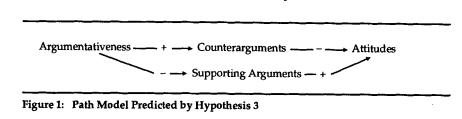
We conducted the interview with Dr. Dean Kazoleas, a Public Relations Professor here at California State University Fullerton. We analyzed his work The Impact of Argumentativemess on Resistance to Persuasion. This research wanted to look into the study of argumentativeness and if it influences cognitive responses and attitude change during persuasion. In the study it is hypothesized that argumentative individuals would be more resistant to persuasion and generate more counterarguments in response to persuasive messages. The results showed that argumentative individuals were more resistant to persuasion and produced more counterarguments.
Q1: How long have you been studying or conducting research?
Dean Kazoleas has been studying persuasion for about 30 to 40 years, starting around the time of his dissertation. His research focuses on two main ideas: first, whether certain personality traits, like argumentativeness, make people more resistant to persuasion. Second, he examined cognitive response theory, which suggests that persuasion is shaped by how people mentally respond to a message rather than by the message itself. His study specifically looked at whether argumentative individuals generate more counterarguments, making them harder to persuade. His background as a debater at Arizona State University influenced his interest in how critical thinkers might be less susceptible to persuasion
Q2: What would you say is the biggest challenge while conducting this study? Were there any stoppages?
There were two major challenges in conducting his study. First, the lack of modern technology at the time, such as the internet or widespread VCR use, made it difficult to collect and record data. They had to rely on a large Media Lab for recording materials. Second, the study’s population—students at Michigan State University—posed a challenge because many were participating for credit and might not have been fully focused. He also considered whether students’ attention levels were comparable to those of people watching ads at home, such as during television programs or while reading magazines.
Q3: You conducted the research with more women than men.Do you think that impacted the results or do you think that was just what was available to you at the time?
The gender imbalance in his study (more women than men) was largely due to the population available at the time, particularly communication majors, where women were the majority. He didn’t think this affected the results, as there was no significant difference between men and women in terms of their cognitive responses to the messages. Both genders showed argumentativeness as a personality trait. If he were to recreate the study today, he would try to achieve a more balanced sample and broaden the participant pool across different majors, since personality traits could influence the choice of major. He also emphasized the importance of a large sample size for stronger results
Q4: How do you feel the trait of argumentativeness affects how individuals engage with or counterargue against media messages?
The trait of argumentativeness influences how individuals engage with or counter media messages. He notes that people can be more argumentative in certain situations, particularly in a polarized political environment, such as during an election. In these contexts, individuals may become more cynical and critical of messages, leading them to challenge or argue against them more readily. He highlights that this trait was measured in his study using an argumentative scale, and suggests that in today’s highly polarized and media-saturated society, people are likely more argumentative than they would be during non-election periods due to the overwhelming volume of messages they receive.
Q5: What was more important, quality or quantity?
In his study, both quality and quantity were important, but he primarily focused on counting cognitive responses, as the model he used emphasized a straightforward quantitative approach. He notes that sometimes a single thought or piece of information can carry more weight, especially in political contexts where voters may be influenced by a single issue or negative information. Regarding the ease of conducting the study, he describes it as relatively easy for him because of his extensive training and experience at Michigan State, where he regularly conducted multiple studies and worked on research for campaigns. He was well-prepared for his undergraduate and master’s education at Arizona State, which made it easier to execute research during his PhD program. Finally, he emphasizes the importance of solid training in research methods and recommends learning both qualitative and quantitative approaches, as they are invaluable tools for understanding and analyzing communication.

Q6. What advice or tips would you give us as students that are just getting into the research World?
Dean Kazoleas offers several pieces of advice for students entering the research world. First, he emphasizes the importance of understanding research methods and statistics because, in your future career, you’ll likely need to assess research to make informed decisions, and understanding how to identify flawed studies is crucial. He also highlights that conducting research today is easier than in the past, with tools like SurveyMonkey making data collection more efficient. Second, he stresses that quantitative research is more valued in business than qualitative research, as companies rely on data-driven insights to make decisions. Lastly, if you enjoy research, he advises pursuing it, as expertise in quantitative research can lead to high-paying opportunities, as businesses value data for its power in decision-making. Ultimately, he encourages students to learn research methods thoroughly because it will be an invaluable skill in both academic and professional settings.
Thank You, Dr. Dean Kazoleas!

 The Society for Communications Research