November 8, 2024
By: Sophia Cardenas, Brian Tran, Jean Le

Jasmine Phillips Meertins Ph.D., Photo by CSUF Communications Department, 2022
About
California State University Fullerton students Sophia Cardenas, Jean Le, and Brian Tran interviewed Jasmine Phillips Meertins, Ph.D., assistant professor in the Department of Communications at CSUF. The interview consisted of questions relating to Meertin’s research article, Institutional Relational Maintenance Barriers and Perceptions of Relationship Quality Among Women With Incarcerated Partners, written alongside Katherine A. Durante and Eman Tadros. Other questions included thoughts on conducting research and research theory.
The conversation began with Professor Meertins’ reflections on the inspiration behind her research on relational maintenance barriers experienced by women with incarcerated partners. She explained that the study was born out of the complementary expertise she shares with her co-author, Katie Durante. With Durante’s background in criminal justice and sociology and Professor Meertins’ specialization in interpersonal communication, they found a rich, overlapping area for exploration. The availability of a preexisting data set on this topic presented an opportunity for them to investigate relational communication in the context of incarceration, a unique field that often goes unnoticed in broader research on relationship dynamics. She emphasized the collaborative nature of their research, sharing, “It’s nice because with research, you don’t have to do it by yourself.” She highlighted how combining perspectives enriched their work.
Moving deeper into their methodology, Professor Meertins discussed the choice to focus on specific institutional barriers, such as the costs associated with phone calls and the complexities of visitation. These obstacles are central to communication for many families dealing with incarceration. According to Professor Meertins, phone calls remain one of the primary forms of high-contact communication, providing an immediate way for incarcerated individuals to stay connected with family members. However, she pointed out that these phone services are often controlled by a small number of companies, creating a monopolistic environment that leads to exorbitant pricing. For families already facing economic strain, high phone costs impose an additional financial burden that can deter regular communication and weaken family ties over time. Professor Meertins emphasized how this monopolistic control not only restricts access but can also add to the emotional toll, as families often feel isolated from their loved ones due to financial limitations. For many families, in-person visits are both emotionally significant and logistically challenging, especially when prisons are located far from their communities. The time, travel expenses, and coordination required often make visits a difficult experience, adding to the strain on relationships. By focusing on these challenges, Professor Meertins and her partner aim to shed light on the systemic issues impacting families’ efforts to stay connected with their incarcerated loved ones. They hope their findings can contribute to future policy changes that address these relational barriers and support families in sustaining vital connections.

Durante K, Meertins J, and Eman Tadros E, 2022, Article, Institutional Relational Maintenance Barriers and Perceptions of Relationship Quality Among Women With Incarcerated Partners
Professor Meertins admits that her partner, Katherine Durante, focused on the statistics section of their study. Katherine Durante is a researcher and professor at the University of Utah who primarily focuses on racial and ethnic inequality in the criminal legal system and the impacts of incarceration on the family. Professor Meertins, who excels more in qualitative research, reasoned that binomial logistic regression was the best to uncover the correlations that they wanted to figure out. She highlighted the strengths and benefits to having a partner/team. This allows for each partner to contribute to where their strength lies.
Professor Phillip’s research team evaded the challenges typically associated with collecting data from sensitive populations, such as women with incarcerated partners, and the difficulties of gaining participants’ trust and interest. Other challenges included gaining Institutional Review Board (IRB) approval to conduct in-person interviews. Instead, the team utilized an existing data set, which proved advantageous given the complexities of gaining authorization for direct research within a prison. The team employed data from the Multi-Site Family Study on Incarceration, Parenting, and Partnering to expedite the data-gathering process and optimize efficiency. This data was confirmed as a reliable source as a well-regarded research firm developed it. In fields such as criminal justice, where gathering new data can be difficult and tedious, working with pre-existing data is a common practice. Analyzing previous resources accelerates research by eliminating the need for initial data collection. It allows for a wide range of analyses, enabling scholars to develop multiple research theories based on different facets of the original data.
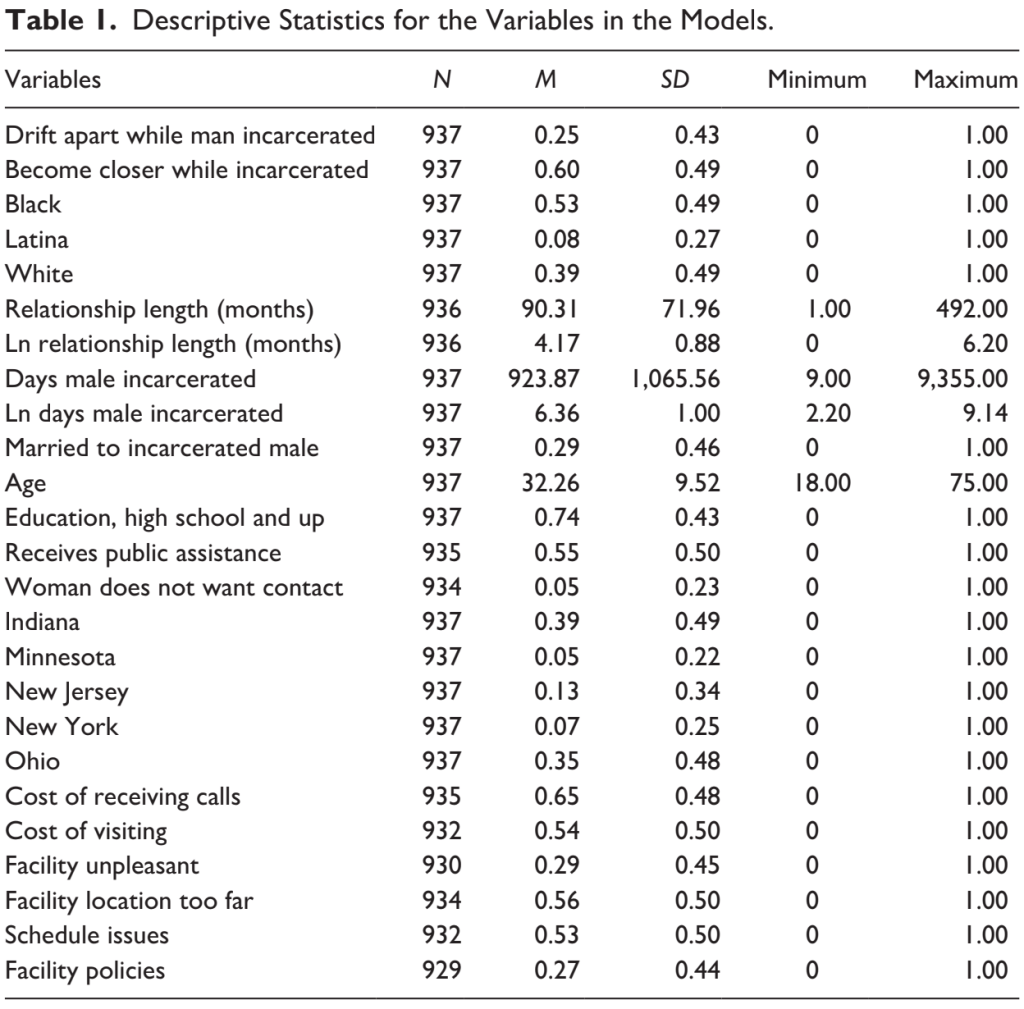
Durante K, Meertins J, and Eman Tadros E, 2022, Article, Institutional Relational Maintenance Barriers and Perceptions of Relationship Quality Among Women With Incarcerated Partners
Professor Phillips discovered that the remote locations of jails and prisons create significant obstacles for individuals attempting to visit incarcerated people. Many face challenges balancing work responsibilities and childcare while needing more financial resources to afford time away from their jobs. This economic strain is magnified as the primary income earner is often incarcerated. Professor Phillips had not previously encountered these experiences firsthand, and reflecting on her research led to a transformative shift in her perspective. She was particularly shocked by the unexpectedly high percentage of people who either know someone or have a family member currently in jail or prison. Another striking finding is the significant influence of phone companies on communications within prisons. Phone companies dictate the high costs of phone calls, which stand in striking contrast to the affordability of modern communication for the general public. Professor Phillips emphasized the relevance of this issue, expressing her astonishment at the ongoing policy debates in various states regarding free phone calls for inmates. Phillips noted free phone calls might seem to be an obvious necessity, but they represent a substantial improvement in the quality of life for incarcerated individuals.
Professor Phillips emphasized the importance of developing a hypothesis grounded in a well-established research theory before collecting data to test its validity. She pointed out that many researchers often employ a reverse methodology, identifying significant results and formulating a supporting hypothesis and reasoning. Working without a clearly defined hypothesis is akin to “shooting in the dark,” explained Phillips, suggesting that research efforts lacking a theoretical framework are unlikely to yield meaningful insights. She further explains that constructing a solid theoretical basis is crucial, as it provides direction and purpose to the research. According to her, researchers sometimes pose seemingly obvious questions, which, despite their simplicity, are essential for establishing foundational knowledge and facilitating advancements in their research. Phillips explains that many research inquiries are inspired by prior studies and theoretical models, which help scholars explore new perspectives and contribute to the field.
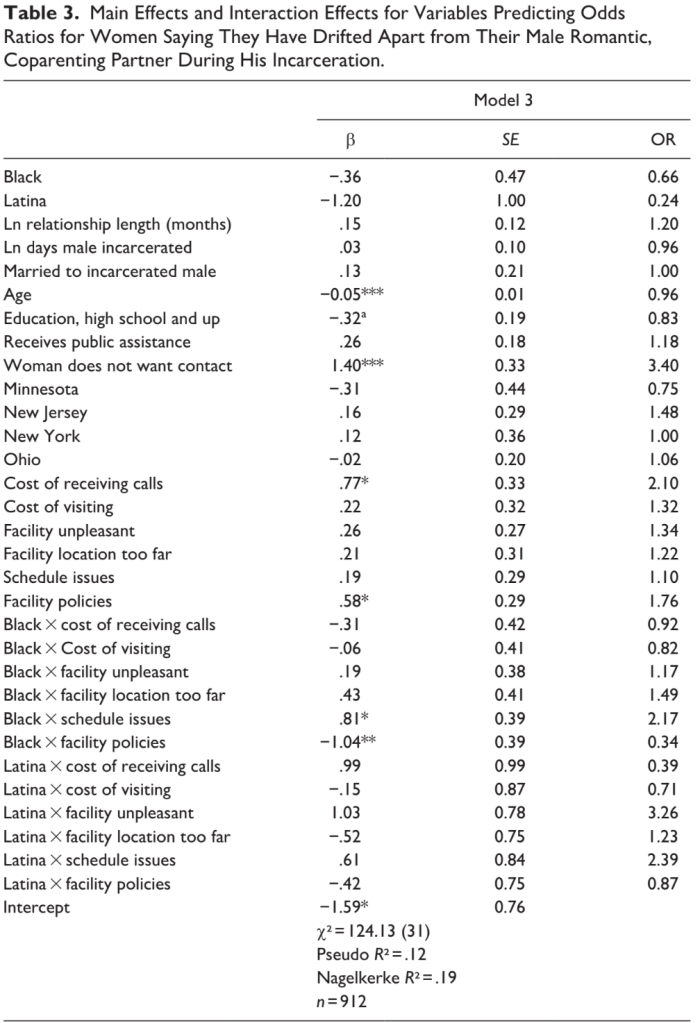
Durante K, Meertins J, and Eman Tadros E, 2022, Article, Institutional Relational Maintenance Barriers and Perceptions of Relationship Quality Among Women With Incarcerated Partners
When discussing ethical considerations in the research, professor Meertins emphasized their commitment to participant privacy and well-being through multiple safeguards. The primary dataset was pre-anonymized, containing only numerical data without personal identifiers. The research team adhered to standard ethical protocols, including obtaining IRB approval, implementing consent forms, and ensuring participants were informed of their right to withdraw at any time. Meertins illustrated their thorough approach to ethics by sharing an example from a separate project in Guatemala, where she and her team conducted interviews about HIV knowledge and attitudes among young adults aged 18-25. This project required comprehensive ethical framework, necessitating IRB approval from both their U.S. university and the Guatemalan government. To ensure informed consent across language barriers, they translated all consent forms into both Spanish and the local indigenous language. For participants who were unable to read or write, the research team adapted their process to include verbal consent, with interviewers reading the consent forms aloud. Throughout all their research, they maintained strict protocols for electronic data protection and emphasized to participants that while there might not be direct personal benefits from participation, their contributions were entirely voluntary and free from pressure.
Professor Meertins emphasized the critical importance of narrowing down research scope and being specific with study parameters. Using a social media influence study as an example, she advised that researchers should precisely define their focus by selecting specific platforms, target demographics, and products or behaviors to study. She stressed the importance of careful survey design, recommending that questions should be clear, focused, and avoid being “double-barreled” (asking two questions in one). When designing surveys about past behavior, Meertins cautioned against asking participants to recall events from too far in the past, suggesting that questions should focus on recent time frames or use hypothetical future scenarios instead. She recommended that researchers could structure questions strategically to uncover connections that participants might not consciously make themselves, such as correlating social media usage patterns with purchasing behaviors. For instance, Meertins suggested comparing high versus low consumption users of platforms like TikTok, while clearly defining these categories. The professor concluded by recommending that researchers should limit their focus to three key elements – in the case of social media research, this might mean selecting specific influencers, products, and platforms – and thoroughly test survey questions for logic and clarity.
Sophia Cardenas, Jean Le, and Brian Tran interview Jasmine Phillips Meertins

 The Society for Communications Research