By: Maritza Barrientos, David Magana, Anthony Noria, and Angie Pineda
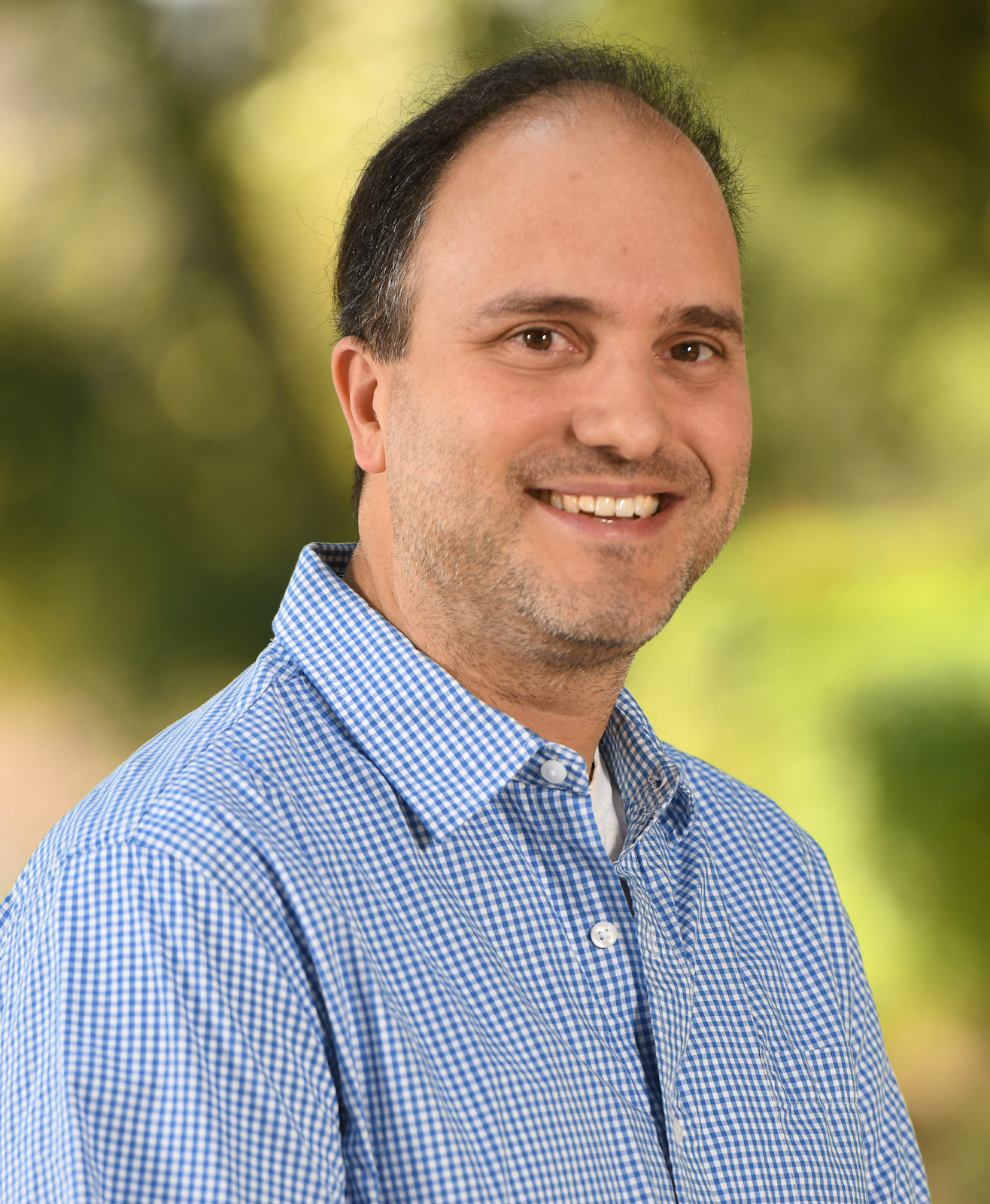
Dr. Waleed Rashidi, Department of Communications
We had the pleasure of interviewing Dr. Waleed Rashidi, an associate professor in the Department of Communications at CSUF whose research primarily explores music as a form of mass communication. Using grounded theory methodology, his study aims to build a connection between higher academia and punk rock, while also challenging negative stereotypes often associated with punk rock musicians—such as being uneducated, antisocial, delinquent, or violent.

In-depth interviews were conducted with a small sample of punk rock musicians who had completed doctoral programs. The study’s requirements included that participants must: (1) have earned a doctoral degree, (2) have performed in a touring band within the American punk scene for at least two years, and (3) have at least one domestically distributed, commercially available recording to their credit. Due to these strict criteria, Dr. Rashidi shared that finding eligible participants was challenging, and he ultimately conducted interviews with ten musicians.
⸻
Q1: What was the sample size?
Dr. Rashidi conducted ten interviews in total—one pilot interview and nine interviews used in the final study. He emphasized the value of a pilot interview as a way to test whether the questions are effective and make sense. Although the pilot participant met the study’s criteria, the content was not used in the final analysis. Dr. Rashidi noted how the pilot helped him refine and restructure his questions, leading to greater success in the remaining interviews. The final sample size consisted of nine participants.
⸻
Q2: Based on the responses you received, how did you code the categories of: Upbringing, Current Occupation, Education, Punk Ideology/Philosophy, Recurring Words, Time Management, Negotiation of Identity, Personality, and Intellectualism in Punk Rock?
Dr. Rashidi explained that during the transcription process, he began to notice patterns and recurring themes in participant responses. “I was noticing that, oh, you know, this person mentions this, this person mentions something similar. This person starts to mention something similar. So I started to see these patterns form amongst the various interviews that I did.” He conducted several rounds of coding, re-reading transcripts, making notes, and identifying connections. Through this iterative process, he constructed categories supported by commonalities found across the interviews.
⸻
Q3: Do you recommend asking all your participants a similar set of questions when conducting an interview?
Dr. Rashidi advocated for semi-structured interviews. He emphasized the importance of using a consistent framework for all participants, which makes it easier to compare and code responses later. At the same time, he stressed the need to stay flexible during interviews—following unexpected but potentially valuable tangents and asking spontaneous follow-up questions. These moments, he noted, can often yield the most insightful data.
⸻
Q4: Did any communication or cultural theory guide your interpretation of the interviews?
Dr. Rashidi relied on grounded theory—a qualitative research approach that allows new theories or conceptual frameworks to emerge from empirical data. He hoped that this study would inspire further research on music and academia, and he believes it successfully opened new conversations within that space.
⸻
Q5: What were the biggest limitations to the study and how did you address them?
Dr. Rashidi acknowledged that the most significant challenge was finding enough qualified participants. “This is a very specialized participant pool,” he explained. The study required individuals who had a nationally distributed album, experience touring in the punk scene, and a completed doctoral degree. “A lot of this is like pre-Spotify and pre-streaming and all that too. So we’re really talking about whether they have released CDs or vinyl or whatever it might be.” He emphasized the importance of finding musicians who were deeply rooted in the punk community—not just weekend performers. Recruiting was difficult, and some potential participants were skeptical or declined to be involved. “I was lucky to find the folks that I found, and to this day, I’m still very fortunate that they were accepting and agreed to help me out with this study.
⸻
Q6: One participant in your study mentioned feeling like they didn’t fully belong in either punk or academia. What do you think that says about identity and how subcultures or professions define belonging?
Dr. Rashidi reflected on how some participants saw themselves as outsiders—not entirely fitting into either world. He explained that many were drawn to punk rock precisely because they felt they didn’t have a place elsewhere. “Punk rock was kind of comprised of other people who felt like they didn’t have somewhere to go,” he said. That sense of not conforming extended into academia, where some participants still felt a sense of detachment. “They aren’t always conformists. In many ways, because they see themselves as outsiders, maybe they also view other things in unconventional ways.” Dr. Rashidi suggested that this outsider perspective can actually be a strength: it encourages creativity, originality, and a refusal to simply accept the status quo. “We want people who have new perspectives. People who aren’t always toeing the line… who might have new ideas about things.” He concluded that identifying as an outsider may have empowered these individuals to break molds and redefine what it means to belong—both in punk and in professional life.
⸻
Our conversation with Dr. Rashidi highlighted the intersection of academia and punk rock in a way that challenges mainstream assumptions about both. His study not only amplifies the voices of punk rock musicians in academic spaces but also demonstrates how grounded theory can uncover deep, often overlooked connections between culture and scholarship. Through thoughtful methodology, flexible interview strategies, and persistent outreach, Dr. Rashidi’s research carves out a meaningful narrative about identity, intellect, and music. His work reminds us that academic insight can come from the most unexpected places—even from a punk rock stage.

 The Society for Communications Research