By Paria Assemi, Kathryn Mayer, Vannesa Gonzalez, Emily Venegas

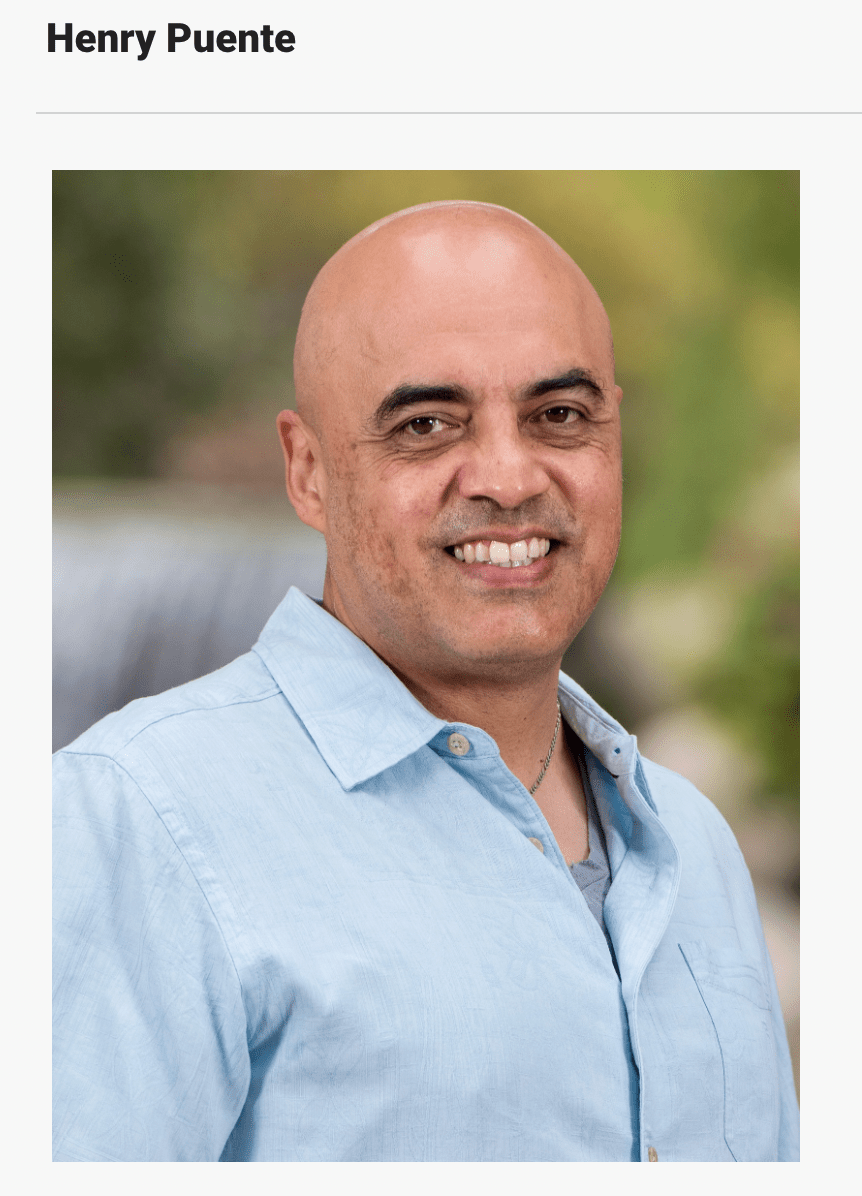
Picture from Department of Communications, California State University, Fullerton
Introduction:
The era in which we exist is a lifetime where diversity is promoted but still lacks complete representation. The media we see today often walks a fine line between diversity and the display of it– while they are glorified for their flair they are more often than not abandoned by industry structures and major marketing, this results in the Latinx community being treated as “niche”. Now the question we pose today is what will it take for the Latinx community to break through the surface and finally reach the audiences they have been working so hard for? In this interview, we met with Dr. Henry Puente to speak about his 2012 research study “Marketing and Distribution Lessons from Hispanic Hollywood.”
Q1: Please state your name and what courses you teach.
Dr. Henry Puente teaches media studies at California State University, Fullerton, where he focuses on media portrayal, industry practices, and U.S. Latino cinema. The interaction of media, culture, and economics, Latino media representation, and cinema marketing are some of the subjects he teaches. In the entertainment industry, diversity and accessibility are important topics that are emphasized in Dr. Puente’s curriculum.
Along with writing The Promotion and Distribution of U.S. Latino Films, Dr. Puente has written a number of scholarly works on Latino film productions and circulations as well as on media diversity. Because of his experience, his classes are extremely relevant to those who want to work in cultural studies, media, or communications.
Q2: What inspired you to explore the topic of the U.S. Latino film promotion and distribution?
Dr. Henry Puente’s career experiences in the entertainment industry and his academic interests are the driving forces behind his devotion to researching Latino cinema distribution and promotion in the United States. In his early career, he observed that films with Latino themes were frequently marginalized, with little marketing and distribution, preventing them from being seen by a wider audience. This discrepancy was most noticeable in the “Hispanic Hollywood” era of the late 1980s, when movies like La Bamba (1987) and Stand and Deliver (1988) briefly became popular but were unable to bring about long-lasting change in the business. In addition to enhancing conversations on equality in media portrayal, his work emphasizes the necessity of inclusive methods and culturally sensitive promotion that more accurately represent the variety of American audiences.
Q3: Were there any major gaps in existing research that you aimed to fill with this paper?
Dr. Henry Puente fills important research gaps in the field of U.S. Latino cinema distribution and promotion, especially during the late 1980s “Hispanic Hollywood” period. Not much research has looked at the inner workings of the film industry, including how movies were distributed, promoted, and aimed at Latino viewers. Dr. Puente described this as a huge error, particularly in light of the big studios’ brief but impactful attempts to promote movies like La Bamba (1987) and Stand and Deliver (1988) to both Latino and mainstream audiences during this time.
Additionally, he drew attention to the paucity of research on audience segmentation tactics including bilingual advertising, community involvement, and the usage of dubbed or Spanish-subtitled prints. In order to address this gap, Dr. Puente examined campaign materials, trade journals, and box office data in addition to interviewing professionals in the field. His work illuminates how marketing and distribution impact the success and exposure of Latino films by bridging the gap between cultural analysis and industrial practice. By recording these trends, Dr. Puente offers insightful information to academics, advertisers, and filmmakers that want to establish a deep connection with Latino viewers.
Q4: What was the most significant or surprising finding from your study?
Dr. Henry Puente’s study demonstrated how big studios and independent distributors during the “Hispanic Hollywood” era of the late 1980s misunderstood and mismanaged the U.S. Latino market. Even though there was a boom of Latino-themed movies during this time, such as La Bamba (1987) and Born in East L.A. (1987), marketing tactics frequently used reductive assumptions, treating Latino viewers as a monolithic population rather than acknowledging their many cultural roots. This lack of nuance produced mixed results; some movies did well in Spanish-speaking theaters, while others like The Milagro Beanfield War (1988) performed poorly in spite of comparable marketing campaigns.
In the end, his research highlighted a discrepancy between the industry’s failure to successfully engage Latino consumers with the increasing number of Latino stories on television. Although “Hispanic Hollywood” provided opportunities for representation, it also revealed more significant difficulties in comprehending and catering to the diversity of the Latino community in the United States.
Q5: How does the lack of representation in mainstream studios impact the visibility of Latino films?
Dr. Henry Puente’s study demonstrates how the exposure of Latino films during the “Hispanic Hollywood” era was significantly impacted by the absence of Latino representation in mainstream studio decision-making. Despite an increase in the representation of Latino talent on screen, these films frequently fell short of their target audiences due to the lack of U.S.-Latino voices in marketing and distribution.
Dr. Puente highlights that inclusion at all stages of filmmaking is necessary for representation, which extends beyond on-screen presence. Films run the risk of being ignored or misunderstood when Latino perspectives are not heard in boardrooms and marketing teams, which diminishes their cultural influence and exposure in a cutthroat industry.
Q6: What are the biggest challenges that Latino filmmakers face when trying to get their films distributed?
According to Dr. Henry Puente’s research, Latino filmmakers continue to encounter difficulties getting distribution; many of these issues were present throughout the “Hispanic Hollywood” era and still exist now.
Lack of studio support and market research is one of the main challenges. The variety within Latino communities was often overlooked by distributors, resulting in marketing strategies that were either poorly targeted or underfunded. Because they believed that general techniques would be adequate, studios frequently avoided bilingual or culturally specific outreach, which limited the films’ audience and impact.
Ultimately, Puente highlights how underrepresented Latinos are in the backstage industry. Many lacked the strategic backing required for greater distribution and success in the absence of Latino executives or marketers promoting these films. His study emphasizes that in order to achieve significant advancement, Latino voices must be heard at all industrial levels in order to dismantle these societal and institutional obstacles.
Conclusion:
During our conversation with Dr. Puente, he made one thing evidently clear; While the Latinx community has made much progress over the years, it remains restricted and unstable due to systematic roadblocks. Due to the lack of administrative power and the green light for Latinx individuals/creatives, the overall marketing tactics that highlight ethnic stories as compartmentalized rather than all-inclusive distort the way viewers look at Latinx films. Dr. Puente reminds us that representation does not always mean those who are tangible/visible; it’s about who is behind the story itself, and who decides how the story gets told and what goes into it.
Many Latinx films are not successful because they focus on Latinx culture, however, it’s more so due to the reason that they tell stories that relate to everyone universally, they bring cultural authenticity to the big screen and foster promotional plans that reach an array of audiences. Now more than ever, we have the tools to magnify diversity and the voices that come with it, as the younger generation comes forth, creators of all ethnic backgrounds will cultivate countless ideas for representation and the pipeline for that is just beginning.
Visual Aids

Infographic from Marketing and Distribution Lessons from Hispanic Hollywood by Dr. Henry Puente

 The Society for Communications Research