By Adriana Arias, Meghan Hsieh,, Jacob Guillen, Xzachary Rositas
Renowned academic Craig M. Loftin holds a Ph.D. in U.S. History from the University of Southern California and is a pioneer in the field of queer history research. He is an esteemed professor in the American Studies Department at California State University Fullerton, offering much experience and insight into the academic world. In addition to his work as an educator, Loftin is a well-known writer and editor. The study of LGBTQ+ history and culture has benefited greatly from his essential works, which include “Masked Voices: Gay Men and Lesbians in Cold War America” and “Letters to ONE: Gay and Lesbian Voices from the 1950s and 1960s.” This article explores Loftin’s most recent research project and highlights his significant contributions to the study of queer history.
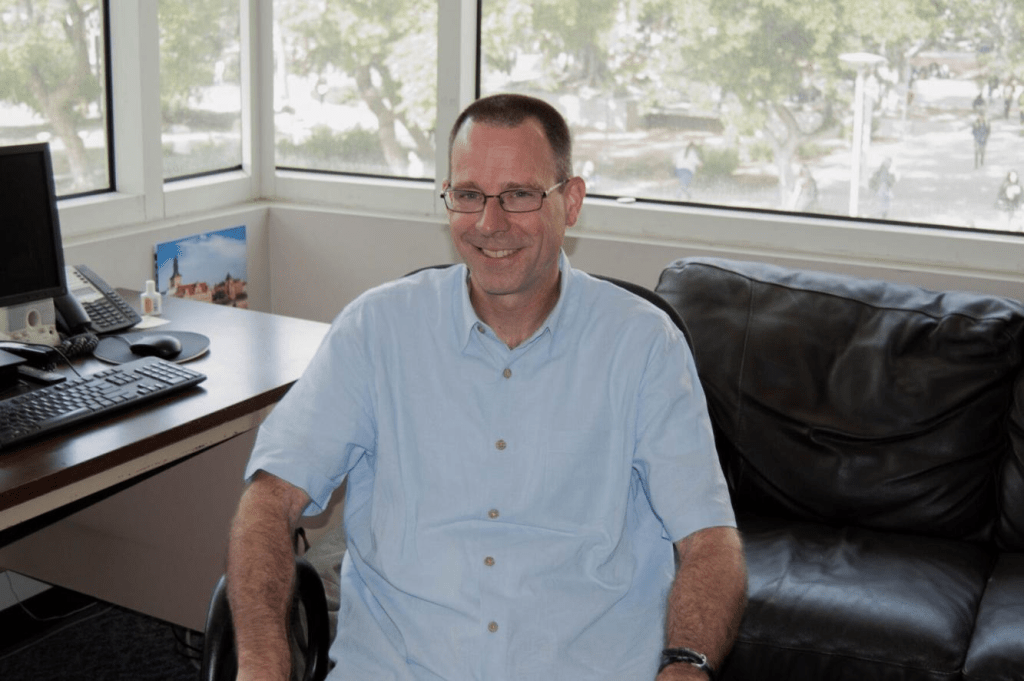
Academic Craig Loftin began extensive research for his novel “ Masked Voices: Gay Men and Lesbian in Cold War America ” while undergoing his Ph.D. program in American Studies at the University of Southern California. Throughout his book, Loftin utilizes direct letters that gay and lesbian individuals sent to ONE magazine in order to interpret the historical background of these individuals during the Cold War—a period of increased anxiety because of the communist party. Through careful examination of each letter, Loftin was able to decipher the significance behind each letter to further understand the context of each letter . Professor Loftin then implemented a systematic division amongst these letters by categorizing each letter through key terms in order to highlight specific themes as part of his research method, which he would ultimately use for his Primary Research.
Read More : A Look Into 1950s Gay and Lesbian Community with Professor Craig Loftin
What sparked the interest of the LGBTQ+ community during the 1950s rather than other eras?
As an Undergrad, Loftin was always interested in 1950s history, due to it being a time of mass hysteria for the American people because of the Communist Party and the McCarthy Era. However, when Loftin arrived at USC as a grad student, he was introduced to classes that talked about the LBGTQ+ community, which for him was a new topic of classes that would further inspire him to write his book. By attending these classes Loftin was able to integrate his personal experience, as a gay man, to what he was being taught in classes. This would then further spark interest in understanding LGBTQ+ history during the 1950s which ultimately would be the topic of his book.
What steps did you take in order to prepare for your research study?
To prepare for his research study, Loftin first had to understand what type of data he was collecting. Loftin began to collect qualitative data from letters that he was able to find from the ONE magazine archives provided by USC libraries. By reading each letter and understanding the significance behind these letters , he was able to create a coding system in order to organize his data. By creating this coding system Loftin was able to sub categorize each letter in order to understand what these letters were addressing. An example of this would be if a letter emphasize family matters, he would write a coding word to place all family letters together and so on and so forth. By doing this Loftin was better able to use his research in a more productive way which would eventually help him write his dissertation for his class.
How do you consider the accuracy of the data before using it in your work?
Due to ONE Magazine being the first public LGBTQ+ Magazine, much of its contents were personal letters that gay and lesbian individuals would send out to the magazine. Due to these letters being more personal testimony rather than actual data, Loftin had to find a way to connect these letters to what was occurring during that time in history. After carefully analyzing each letter, he was then able to find historical context in order to analyze the real message behind these letters, to further help him understand the actual history of the 1950s.
How do you consider the accuracy of the data before using it in your work?
Due to ONE Magazine being the first public LGBTQ+ Magazine, much of its contents were personal letters that gay and lesbian individuals would send out to the magazine. Due to these letters being more personal testimony rather than actual data, Loftin had to find a way to connect these letters to what was occurring during that time in history. After carefully analyzing each letter, he was then able to find historical context in order to analyze the real message behind these letters, to further help him understand the actual history of the 1950s.

What struggles did you face while collecting your information and data? And how did you overcome it?
When preparing to write his dissertation, Professor Loftin went to his USC library to find articles about the LGBTQ+ community in the 1950’s. However, the library was recently bought only 2 years prior. It was still filled with hundreds of boxes with archives that haven’t been sorted. This is when the librarian told Loftin that he can volunteer in the library and whatever articles he finds he would be able to use for his dissertation. While sorting out these archives he found boxes with ONE magazine letters which had never been seen by the public. In these personal letters he was able to collect his data thus furthering his use of these letters for his dissertation. The struggle he faced in this case was looking through all the boxes to find what articles he could use for his dissertation which did take a couple years to find.
If we were organizing a study on the same topic, would you advise us to use your method of collecting data? Why?
Loftin expresses that he believes that by reading these letters thoroughly in its entirety is a vital way of conducting his research, as reading them repeatedly until full comprehension is needed for a proper way of understanding. Loftin states that although his job as a historian is to interpret what the letters mean and relate to historical events, he also intends for the letters themselves to convey their own messages. Thorough reading and understanding these historical documents is a crucial point of research, as the results are that of qualitative discoveries. When students conduct these studies, they will find that it is much help to research this way, as everyone’s interpretation may be different and lead to new discoveries.
In your opinion what is the most important thing to remember in researching? Any tips?
Professor Loftin believes that the most important part of research is to be patient when looking for data. He emphasizes that while research can be a long and tedious process, it takes time to formulate and collect all data. If you are passionate enough about your topic, operations will eventually run smoothly when key evidence is revealed. It is good to be passionate and have excitement for your work, however, there is no room for impatience in research as it is easy to make regrettable mistakes.
Conclusion
Interviewing Professor Loftin granted us great knowledge to take away and apply in our own research. In doing research, there are many possibilities and tactics that can be used to make it successful and effective. He explained the difficulty of finding the research itself and how long it may take to understand and perfectly translate this information giving one of the key takeaways; patience. It is clear that in order to create a piece of media, one must take much time to find it and then comprehend it to the fullest extent. There is also a chance of running across information that is unexpected that may help in the process. Of course, in the end, the most important thing to take away from this interview is being passionate about the topic one seeks to research about.
 The Society for Communications Research