By: Cassidy Apolo, Grecia Haro-Flores, Jackson White, Miriam Ugalde
April 11, 2024
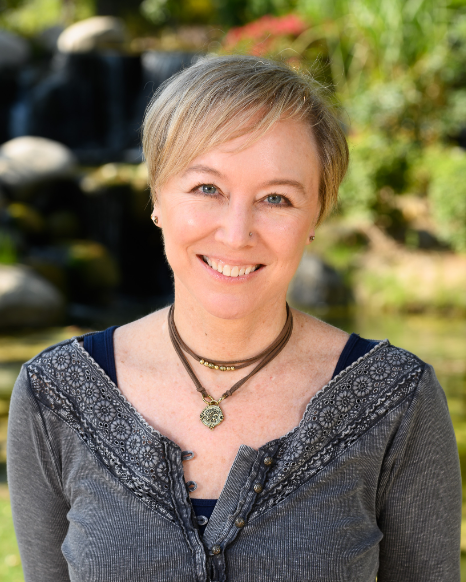
Our team interviewed Dr. Emily Erickson, an award winning professor at California State University, Fullerton (CSUF). Her teaching career began at Louisiana State University, as an assistant professor, before she moved to CSUF, where she has been teaching for almost 15 years. Her love for teaching is what kick-started her research career. Dr. Erickson focuses her research on communication and media law, specifically jurisprudence. We interviewed her about, The Watchdog Joins the Fray: The Press, Records, Audits, and State Access Reform, which was originally her dissertation for her doctorate, which she earned from the University of Alabama. In the paper, she investigates the reasons why journalists ended up in the world of politics to make public records more accessible. Dr. Erickson guided us through her reasoning behind her choice in choosing this specific topic, the research methods she used, challenges faced, and gave us advice for the future.
Read more: Our First Amendment Right to Information: Journalists fight for Freedom of InformationProfessor Erickson’s research for her paper involves a historical analysis of state government transparency with journalists regarding sharing statewide record audits. Although public records are legally public, government agencies have denied journalists access to record audits. Her interest in this area of communications was inspired by her pursuit of starting and running a Freedom of Information Center during her doctorate program at the University of Alabama. In her research on freedom of information centers (FOI) across the country, she observed that a combination of FOI centers and a recent phenomenon of newspapers doing record audits during the 90s created a story she needed to tell. She explained,
I thought it would be cool to have a body of knowledge, and I ended up going down a rabbit hole.
In her paper, Erickson creates a narrative that begins post-World War II with the press crusade to fight for an international right of freedom to information and recent attempts by journalists and press groups fighting for access at the state level. Further, she considers press groups and individuals highlighted in her paper from a theoretical lens using interest-group theory. Moreover, most importantly, she tells the story of journalists who have used their record audits for public records reform.
Her research paper concentrates on the free flow of information and how available it is to the public. The three main groups of people with whom she conducted her interviews were lawyers, librarians, and journalists. All of these occupations handle the freedom of information. Erickson took on a large sample size, 12 different states.
“I did what you guys are not supposed to do in research, I did way too big a project”
She was told to research three states and that would be fine, but she felt strongly that that wasn’t the whole picture. The whole picture was 12 states. She shares that she doesn’t regret it, and though it took some time, she got something that was worthwhile.
Erickson’s research involved purposive sampling and used a combination of methods. She used statutory analysis where she would examine the statures themselves, though long and boring she became an expert in freedom of information. She then examined all of the laws and created a typology of the different approaches to public records law. The second method of research was historical analysis where she did tons of press coverage about the groups and the audits.
She looked into the phenomena of the actual FOI groups themselves. Finally, she used content analysis where she did an in-depth legal analysis of state access laws and policies.
12 case studies were conducted looking into their attempts to get reform in their states. Erickson held telephone interviews with 100 people with occupations ranging from lawyers, journalists, editors, and publishers in touch with the newspaper. By the time she did the very detailed interviews, she got savvier about what questions to ask. Due to her prior background knowledge on the state’s record audits, she became an expert. That made all the difference in her interviews, she says, when you know what you are talking about it is amazing how much better your interviews are.
Erickson’s insights into the future of media and information access are profound. She identifies two steadfast champions of freedom of information: journalists and librarians. During her research, journalism still possessed substantial financial resources, enabling them to expand their roles beyond the conventional. Erickson’s paper, titled The Watchdog Joins the Fray: The Press, Records, Audits, and State Access Reform, reflects this shift as journalism ventured into political engagement, a departure from its traditional stance of neutrality. Erickson says, “I call it, The Watchdog Joins the Fray so that they can use that money to try…the weird thing is that they got involved in politics in some cases. They got very much involved in politics.”
Erickson notes with intrigue how journalists delved into political spheres, engaging in lobbying efforts through investigative journalism, public shaming, and direct interactions with government officials. “They did something that we think is not normally appropriate for journalists because they’re supposed to be outside the fray,” says Erickson, “They’re supposed to be objective.” Looking ahead, Erickson believes that we need to stop thinking of journalism as fully objective and we let journalism be more of a campaign things like freedom of information. However, Erickson doesn’t think the Supreme Court will be of any help with this as she doesn’t think the Supreme Court will ever establish a constitutional “right of access” to government information. As a matter of fact, Erickson doesn’t see that happening in her lifetime at all. “At this point, they didn’t even stand up for voting rights so I certainly don’t think they’ll stand up for access to information. They are not gonna be our champion at all…on anything,” says Erickson.
“It’s going to be really interesting to see what happens over the next number of years.”
For aspiring researchers, Erickson advises against biting off more than you can chew. Instead, she suggests delving into a rabbit hole of topics you’re passionate about and already have a solid understanding of. This approach allows you to gain a deeper insight into what is feasible and manageable. By following this approach, you’ll gain a better grasp of what’s achievable and realistic.
 The Society for Communications Research