(Written by Luciano Faria, Jade Estarada, Alexys Puche and Monet Andrade)
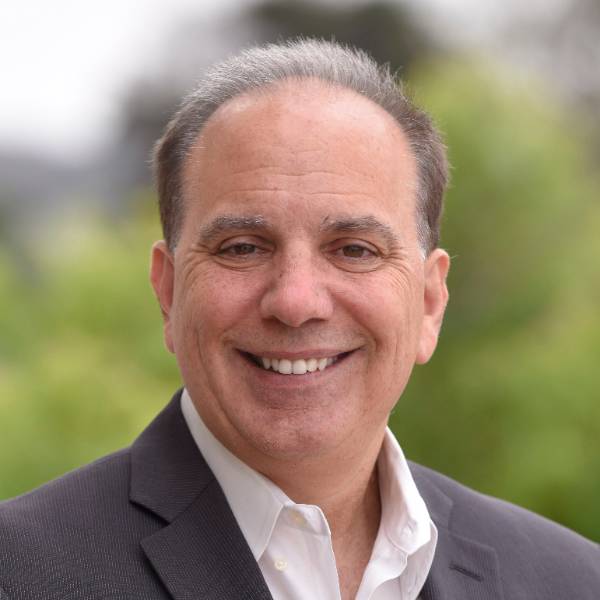
Dr. Dean Kazoleas is a seasoned communications scholar and the Maxwell Center for International Communications Director at Cal State Fullerton. With over two decades of teaching and research experience, he specializes in public relations, crisis communication, and international campaigns. Dr. Kazoleas has developed global exchange programs, published extensively in the field, and consulted for over 50 organizations. He holds APR accreditation and has served in multiple leadership roles within the Public Relations Society of America.
Dr. Dean Kazoleas has authored over 20 articles in the public relations and communications field, pursuing research on why people lean to certain types of evidence, whether that be qualitative or quantitative, and how that affects the marketing decisions, polling decisions, academic decisions, etc. In his 1993 research study, A Comparison of the Persuasive Effectiveness of Qualitative versus Quantitative Evidence: A Test of Explanatory Hypotheses, Dr. Kazoleas explores this such idea, hypothesising in his vividness hypothesis that qualitative research would be more persuasive, whereas in his under-utlization hypothesis he hypothesized that when knowledge and attitude changes of a quantitative nature were exposed, subject would be more swayed. This interview seeks to explore Dr. Kazoleas’s research methods, reactions to the experiment, and overall methodology, giving greater insight on research at large and strategies to be more successful in research.

(Excerpt from A Comparison of the Persuasive Effectiveness of Qualitative versus Quantitative Evidence: A Test of Explanatory Hypotheses – Dean Kazoleas)
Q1: How did you decide which research method to use?
In his research study, A Comparison of the Persuasive Effectiveness of Qualitative versus Quantitative Evidence: A Test of Explanatory Hypotheses, Dr. Dean Kazoleas asserted that the experimental method was the only appropriate approach for testing his hypotheses. Experimental research relies on a substantial amount of data to test hypotheses and draw meaningful conclusions. Dr. Kazoleas emphasized that “data is power,” stating that no matter how strong an opinion may be, it holds little weight unless supported by data that can validate it as fact.
Q2: Why do you believe that research method was best to use?
Dr. Kazoleas believes the experimental method was the best research method to use because it allows researchers to maximize the differences between independent variables while minimizing error. By using a controlled format, such as a video advertisement, the researcher can control the type and amount of information each participant receives. Essentially, this eliminates distractions or inconsistencies that could occur if participants were reading the material on their own, where they might skim or interpret the message differently. Controlling these factors ensures the data collected is more accurate and reliable for testing the hypotheses.
Q3: What obstacles did you face during your research, and how did you combat them?
Dr. Kazoleas begins by stating that he didn’t anticipate any obstacles during his research, not because he is a genius but because he is well-versed in research and made many mistakes before taking on this research project. Dr. Kazoleas has done many research studies in the past and emphasized how he learned a lot along the way. One of his biggest takeaways from all his years of research, and something he prides himself in, is that he learned how to not make those same mistakes he’s made in the past, and he learned how to not make things hard. He explains how research never needs to be extremely overcomplicated; the simpler the study, the less likely a mistake will be made.
Q4: If you could redo the study, would you change anything in your approach?
Dr. Dean Kazoleas starts by mentioning how advanced technology is now compared to when he conducted his study. While he states that his research was straightforward and simple, if he had to choose one thing he would improve, it would be the video quality. \With today’s technology, he acknowledges that researchers have access to more tools that can enhance the clarity and professionalism of their work.
Offering advice to researchers, Dr. Kazoleas emphasizes the importance of keeping studies simple and focused. He warns against overcomplicating the research process, as many scholars get overwhelmed by excessive data collection. His key takeaway: stay focused on answering the core research question rather than getting lost in an overload of information. Not only will it be too difficult to summarize, but it may also be difficult to organize in general. Scholars may feel the need to include every aspect of their research, but sometimes, it is just not needed.

(Excerpt from A Comparison of the Persuasive Effectiveness of Qualitative versus Quantitative Evidence: A Test of Explanatory Hypotheses – Dean Kazoleas)
Q5: How has this study influenced your perspective on the subject?
Dr. Kazoleas notes that statistics can be challenging for many people to understand. Simply presenting raw data isn’t always the most effective way to communicate research findings. However, modern tools allow researchers to transform statistics into infographics, making information more accessible and digestible for a wider audience.
Looking back, he acknowledges how time-consuming it was to create visual representations manually. Today, software can generate professional-looking infographics in just a few seconds—something researchers in the past could only dream of. He encourages scholars to take full advantage of these resources, as they not only enhance the presentation of findings but also make research more engaging.
Q.6 About the research subjects, were they your students at the time (the 176 undergraduate students enrolled in communications classes at a large midwestern college)?
When looking at the experiment and chosen sample of subjects, it wasn’t immediately clear if Dr. Kazoleas had randomly selected to perform in the experiment, if they were chosen from within his class, or if they were from the entire communications program. When asked about the participants involved in his study, Dr. Kazoleas confirmed that the 176 undergraduate students were not just his own communications students, but rather a collective representative of all the students in the communications program at the large midwestern college. He emphasized that their participation was entirely voluntary and conducted in full compliance with ethical research standards, ensuring the integrity of the study.
Q7: Also, were you surprised by the findings of your study?
Reflecting on the results, Kazoleas admitted he was surprised by what the data revealed. While the research team had initial expectations, the findings offered unexpected insights into student attitudes and behaviors. According to him, the results not only challenged some of their early assumptions but also sparked new questions and directions for future exploration. Dr. Kazoleas mentioned that this study was part of a greater marketing study to see what information and evidence persuades consumers to buy certain products, so getting this insight was a key point to getting to a place where researchers are asking the right questions in the right way to get the sought-after answers.
“Information is power”. Dr. Kazoleas leads others to really challenge their ways of thinking and not go off of ifs, maybes, or tendencies but to really look at the statistics, the data, the information that a study achieves. With data at our fingertips, consumers and businesses alike can better understand their study and what their end goals are, leading to growth and depth in how we understand each other as humans.
 The Society for Communications Research