By: Valentina Castillo, Samantha Hernandez, Jennifer Zavala

Dr. Waleed Rashidi, Department of Communications
Intro
Our group decided to interview Dr. Waleed Rashidi, an associate professor in the Communications department. Dr. Rashid’s primary research interest is music as a form of mass communication through media and technology experiences. Dr. Rashidi shared his journey through communication research. He attended Cal State Fullerton to receive his master’s and later got his doctorate from ULV. Rashidi, before teaching, was the editor-in-chief of Mean Street Magazine. His interest in music-focused research was sparked by his personal experience and shared passion for music and the industry, which led to a curiosity about music as a form of mass communication.
Q1: What is the main focus of your research?
The main focus of Dr. Rashidi’s research explores the fascinating intersection of mass communication and music, with a special focus on how people engage with music in their daily lives. From vinyl records and cassette tapes to CDs and streaming platforms, Dr. Rashid dives into the different ways people experience and collect music. His work also touches on music technology and the evolving world of music journalism, offering a broad look at how music continues to shape and reflect our culture.
Q2: How did you get started in research, and what made you focus on music more specifically?
Dr. Rashidi’s journey into research began during his time as a grad student at Cal State Fullerton, where he completed a master’s degree in communications nearly 20 years ago. Inspired by supportive professors and engaging coursework, he gradually found footing in the world of academic research. Unsure of his passion, he found connecting with professors and peers helped him explore different topics, eventually uncovering his love for music. However, before pursuing a master’s degree, he had already built a solid foundation in the music industry. After finishing his bachelor’s degree, his first professional role was as the editor-in-chief of a music magazine based in SoCal. In this role, he oversaw all editorial operations, from choosing which bands to feature to shaping the magazine’s overall voice. Initially, while in grad school, he was unsure if music fit within the scope of communications research, but his growing involvement in the program helped him see the connection. Deciding to merge his industry experience with his academics, he started his passion for music. His research now bridges mass communication and music, drawing from both professional insight and scholarly exploration.
Q3: What methods of research do you use most frequently? Which method engages the most participation/ results?
When it comes to research methods, his approach has evolved. Early on, He leaned heavily on in-depth interviews—an approach that came naturally due to their background in music journalism, where interviewing artists daily was part of the job. This skill translated seamlessly into his academic work, allowing him to dive deep into people’s experiences with music and media.
More recently, he expanded his methods to include online surveys and questionnaires, allowing them to reach broader audiences and gather different types of data. He’s also delved into content analysis, especially of music journalism, examining patterns and themes across news stories and articles. This includes coding and rounds of review to identify recurring narratives. Ultimately, his choice of methods depends on the nature of the research, blending qualitative and quantitative techniques to explore the many ways people interact with music and media.
Q4: What are some initial questions you ask yourself to decide if a topic is worth researching? What are some challenges that arise?
When it comes to choosing a research topic, one of the biggest challenges for Dr Rasidi is finding something that truly feels unique, something that hasn’t already been thoroughly explored. The first question he always asked is, “Have I seen this before?” He’ll scan existing research to see if there’s a gap or a niche that hasn’t been filled, aiming to contribute something fresh to the field. If a topic feels overdone, or if someone else has already published something similar, he keeps searching for that one idea that hasn’t been fully explored yet.
Of course, that process isn’t always easy. There are moments of frustration, times when a great idea turns out to already exist, or when he comes across research he wishes he had thought of first. But beyond the search for originality, there’s also a personal element: the topic has to be something he’s willing to live with for a long time. Research takes weeks, sometimes months, so it needs to be something he’s deeply interested in and connected to, something worth investing in from start to finish.
Time is another major challenge when it comes to research. Deadlines for journals and conferences can sneak up fast, and he often finds himself racing the clock to get everything done in time. It’s not just about finishing the work, it’s about making sure it’s good work, and that takes planning. He’s learned the key is to work backward from the deadline, mapping out milestone moments along the way, four months out, three months out, and so on. That way, he can pace himself and avoid a last-minute scramble. Still, even with careful planning, time pressure can be intense. Balancing quality research with tight deadlines is a constant juggling act, and it’s one of the more stressful parts of the process.
Q5: Have you ever had to scrap or rethink a project entirely?
Scrapping or rethinking research projects is something he’s experienced, and more than once. Sometimes, an idea just doesn’t take off. Maybe there’s not enough existing information to build from, or he can’t find the right participants or enough of them to carry out the study effectively. That’s one of the more common challenges: having a strong concept, but realizing it’s too narrow or specific, making it tough to recruit people who fit the criteria.
There have also been times when the scope of a project was simply too ambitious or the timing didn’t work out, forcing him to scale back or go back to the drawing board entirely. These setbacks are part of the process, though. As frustrating as they can be, they often lead to a clearer, more realistic direction and sometimes even better ideas down the line.
Q6: How do you decide which sources or data to prioritize?
He has to. It very depends on the individual project. There isn’t necessarily a “go-to situation” for what he is going to prioritize for whatever study he is doing. You have to see how a project is going to lay out, how it will play out the next few months/weeks, and then determine where your priorities are and where he will be spending most and less of his time. It’s hard to say “Well, this is what I always do” because it doesn’t work that way. There’s variation depending on this.

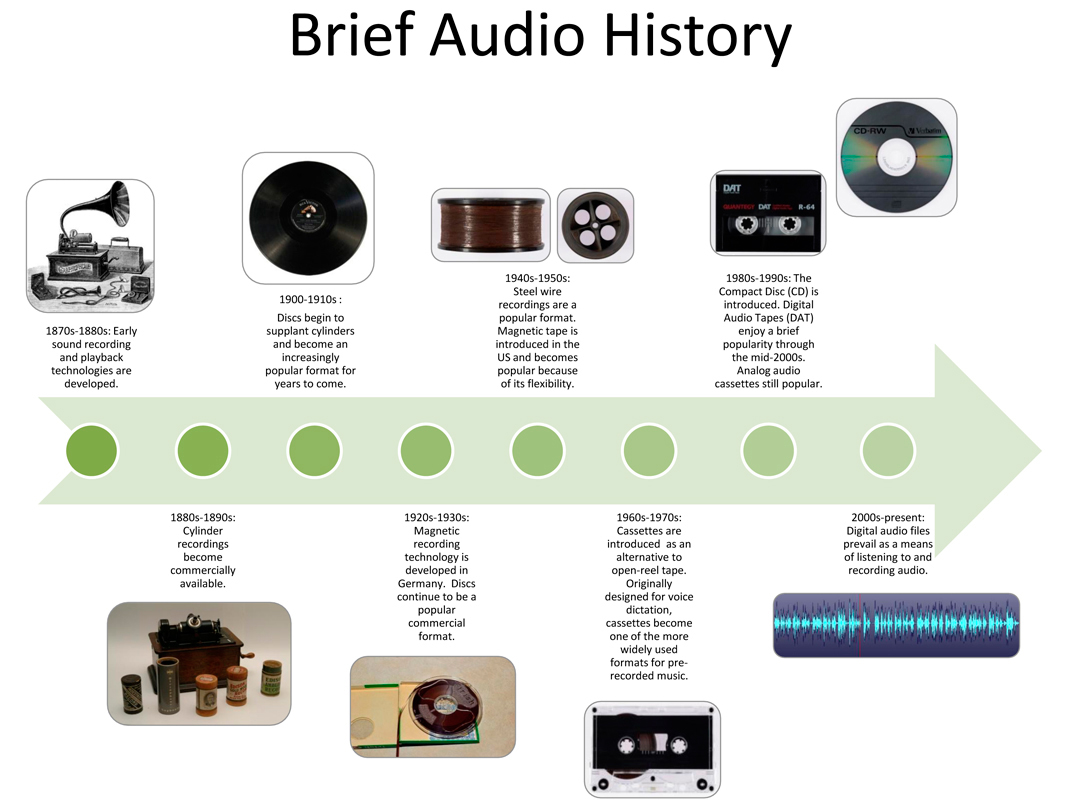
citations:
Lindquist, M. J. (n.d.). Unit Two, part one: History of audio recording. Audio Production Course Manual.
McCarthy , N. (n.d.). Chart: Music streaming revenues overtake CD sales in the U.S. | statista.
Q7: When it comes to conducting research, do you typically collaborate with others or mostly work independently, and which do you prefer?
Dr. Rashidi enjoys working on his own, which is different. Most of his colleagues like working in teams and collaborating with others, but he has always been good as an independent researcher. The only time he teams up with other people is when he has grad students who help him with his research. Grad students will help him look things up and get information for the literature review, but that has been the extent of which he has collaboration with other people. He likes to be a solo author, an independent researcher.
He also feels as though it is less challenging working on his own. Everything that he does is on his timeline. He doesn’t have to wait on others to complete their part before moving forward. There is also the challenge that could be different schedules or others having different projects that can create differences in priority. This project that they are working on together can be low priority for the other, while it’s higher priority for Rashidi. This can then create delays in getting things done. At least when he works on his own, he is responsible for failures or not getting things done on time.
Q8: What do you enjoy most about doing research, and do you believe you’ve made an impact?
Just the exploration of it all. He enjoys how he can explore something interesting, unique, and fascinating to him, and that might be of interest to other people. He feels that if he can contribute to that body of work on the topic that is already available, he can bring something unique and different to the landscape that is already out there. It is beneficial for himself but also others.
He hopes that he has made an impact with the research that he has done. There have been books that have quoted his research. His research has also been published in books, as well. Some students’ master’s theses or for doctoral dissertations, where they used him as a source or cited his work within their research. He would hope to think that what he is doing has benefited or has had an impact. It’s always hard to say because he doesn’t always know where his research lands, but he hopes that people read it and get inspired to learn from it or do their own research from the ideas that he presented.
Q9. What advice would you give someone interested in research?
The first thing Rashidi advises anyone interested in research is to have patience. Good research takes time, and you need patience to make sure you’re doing things properly and things are going in a methodical fashion. You also have to be very methodical about how you operate, as well. Do things step by step, schedule things out, and have a lot of patience. Be willing to make modifications as you go along because sometimes what you originally set out to do, you find out that it’s not exactly what you anticipate or expect, and that’s ok. You have to be able to take those tangents or go in a slightly different direction, and you might end up having better outcomes.
Q10: Most challenging part about doing research?
Sometimes it can be hard when you have a great idea, and then you start searching around and find out someone already took that. There are also times when he sees research out there and just thinks, “I wish that was me. I wish I thought of that idea!” Overall, it can be challenging in trying to find a really good topic that you find unique and different, but also something that you feel other people will be interested in reading and learning about, and exploring. Rashidi also believes that you should feel connected to the research that you do. You have to think about how you are going to be working on a topic for a fairly good amount of time, so think about really picking a topic that you know you will feel engaged in and willing to invest time in.
Another big challenge can just be the amount of time that is put into research. Rashidi feels as though he is always “Racing the clock all the time” when it comes to research that he is putting together. There are deadlines that journals and conferences have for when to submit your papers. There are times when he tries to finish things in a timely manner, and hopefully he has enough time to put everything together.
Conclusion
Concluding the interview with Dr. Rashidi, it left our team with a valuable and inspiring look into the academic research world, more particularly the connection between music and mass communication. Rashidis’ journey from doing music journalism to becoming a professor and researcher showed the importance of researching and the challenges that come along with it. He gave us knowledge on how to conduct research and what steps to take to have effective results. My team and I gained insight into the many methods of research and the importance of originality, along with the reality of time management and collaborations. He also emphasized the qualities we need to have to move forward, some being patience, organization, and passion. He emphasised the significance of researching topics that spark genuine interest. This interview has left my team and i with a clear understanding of what it takes to conduct meaningful research and the qualities to have to thrive.
VIDEO LINK
 The Society for Communications Research