Karina Cosbey, Hong Ngo, Odalys Raya, Sophia Hoffman
In her article “Breaking the Mold: Women Defying Media Stereotypes,” Tiffany Lederle addresses the many concerns and based around the stereotypes women face in the media. Lederle holds many professional titles, two of which include: ‘AI Integrator and Change Leader’ and ‘Advocate for Sustainable Business and Women-led Innovation.’ She is an activist who acts as a voice, advocate, and adviser to other women who are struggling to make an impact in their endeavors simply because of the presumptions and prejudices set against their gender. Lederle has faced scrutiny in the workplace herself, and is often misunderstood or looked down upon in her field. She claims that part of this is due to the wrong kind of exposure of women in the media.
By: Maritza Barrientos, David Magana, Anthony Noria, and Angie Pineda
Dr. Waleed Rashidi, Department of Communications
We had the pleasure of interviewing Dr. Waleed Rashidi, an associate professor in the Department of Communications at CSUF whose research primarily explores music as a form of mass communication. Using grounded theory methodology, his study aims to build a connection between higher academia and punk rock, while also challenging negative stereotypes often associated with punk rock musicians—such as being uneducated, antisocial, delinquent, or violent.
By Denise Luis Cruz, Lauren Lujan, Eito Sugai, and Grace Tran
Professor Mazandarani
We had the privilege of interviewing Dr. Farnosh Mazandarani, a social scientist and methodologist. She holds a PhD in Communication and Media Studies from the University of North Carolina at Chapel Hill. She began her studies at California State University, Fullerton, where she obtained her M.A. in Mass Communication and B.A., double majoring in Entertainment Studies and Radio-Television Film. Dr. Mazandarani is a part-time lecturer who teaches Mass Media Ethics and Entertainment and Society in the Department of Communication. Her experience includes working for Disney ABC Television Group as a commercial clearance coordinator. She was also a production assistant for Nickelodeon Animation Studios’ hit show The Fairly Oddparents. Professor Mazandarani’s research specifically focuses on pornographic media content and its influence on relationship assessments.
During our interview with Professor Mazandarani on her thesis, “Millennial Perceptions of Pornographic Media, Realism, and Influence on Relationship Assessments,” we were given important insight on how to shape our study. A profound layer of her work lies in her analysis of how perceptions formed in media conception translate beyond the realm of pornography and into broad but impactful aspects of life during our interview. She emphasized that media, especially highly visual and emotionally charged content like pornography, has a strong influence on how people subconsciously form beliefs, often reinforcing stereotypes and shaping how we see ourselves and others in real life.
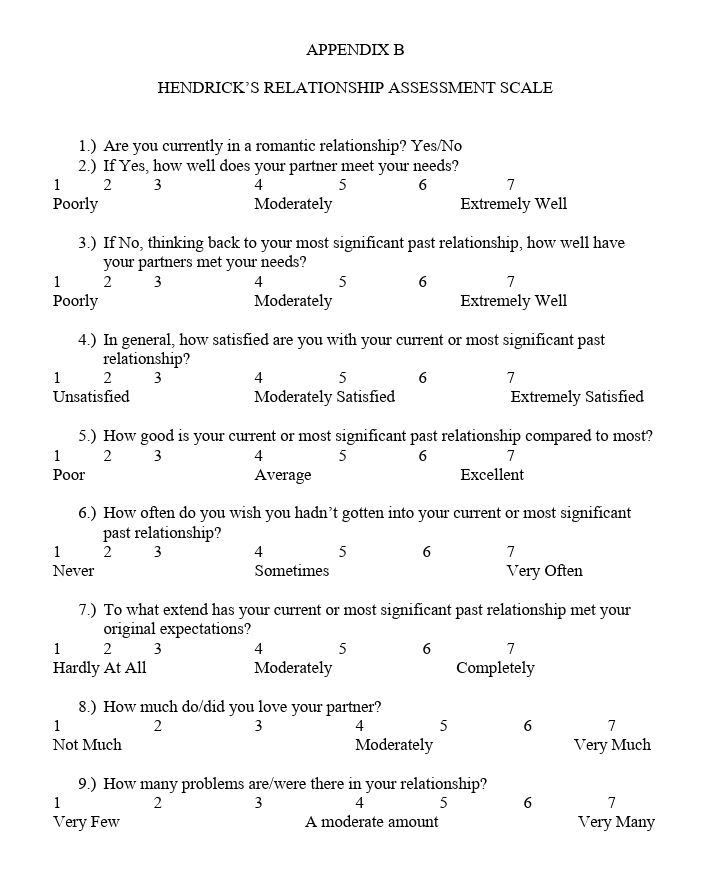
An example of one of the assessment scales used in the study.
This helped us recognize that how people interpret media realism doesn’t just impact their romantic or sexual relationships. It shapes how they internalize and navigate systems of race and power, and they are more broadly identified. Professor Mazandarni explained to us how, in everyday life, we can see examples of this and how individuals form expectations about people based on ethnic backgrounds, from what they consume in movies, news, coverage, and other media outlets. Professor Mazandarni discusses how the adult entertainment industry perpetuates racial stereotypes and capitalizes on racial fantasies and fetishes. After the murder of George Floyd, porn sites were flooded with offensive racist content, following the Black Lives Matter Movement. During our interview, she mentioned that pornography websites often have a massive number of racist titles, ultimately profiting from racism.
Research suggests that the perception of realism in the categories can subconsciously validate the belief that these portrayals represent how people form these beliefs and how they think certain people should behave. Her insight and work show that media literacy must include understanding how media reinforces systematic racism. Mazandari also pointed out that pornography consumption has increased over the years. She referenced that back in 2018, Hawaii residents woke up to an emergency alert on their cellular phone to seek immediate shelter due to an incoming missile. After a second message was sent declaring it was a false missile alert, there was an increase in traffic from users in Hawaii watching pornography.
Professor Mazandarani didn’t shy away from letting us know the reality of conducting research. Things are rarely going to go the way you planned, and most times, you’re going to have to switch your plans midway. She talked to us about how staying flexible is a key way to not block ourselves into a corner and make it harder on ourselves. Professor Mazandarani mentioned to us that her 2016 research was basically a 3 in 1 study. Because she was just starting off as a researcher, her determination to prove everything all at once complicated her overall operation for her study and took a lot longer than anticipated. She also talked about how, because of how her study was formatted, she felt like she wasn’t able to go in depth with each topic that she touched base upon and that she “doesn’t think this study is all that good” compared to the recent studies she has conducted and published. Professor Mazandarani mentioned that if she had the chance to redo the study over again, she would focus on one topic rather than having everything thrown together.
Limitations were another topic that she talked to us about, and how some research has a limit to which you can go before you start to face backlash or lack of information. With Professor Mazandarani’s topic being sexual, an already taboo topic, pre-existing research was scarce, and there were a lot more rules put into place to make sure that research couldn’t go past a certain point. She understands that there are safe measures to protect the public, but at the same time, it’s only hindering researchers like herself from fully understanding human nature and putting that research to good use in other channels like media and relationship evolutions.
The way she formatted her study was intentional, and the Likert Scale surveys and purposefully worded questions were all calculated to the smallest detail to make sure that the results she was collecting would benefit her, either by proving her point or showing her in another direction. She noted that finding the “perfect” way to collect data is never easy and that we should spend a good amount of time focusing on what kind of data we want to collect, how, and why. Many iterations of her study were revised and changed to make the operation as streamlined as possible. We, as students with ample information provided to us by the Pollack Library and other applications online, should take advantage of everything that we can get our hands on. She helped us understand that in any research study, everything is connected, no matter the topic. We were also reminded how important it was to identify our independent and dependent variables early on because that is always so crucial for guiding the direction of any research study. By understanding how these variables interact, it became easier to figure out what kind of data we needed and how to build our study step by step. It made research feel less overwhelming and more like a process you can follow and make sense of.
After interviewing Professor Mazandarani, our team has a clear understanding of what we are going to do moving forward. We have a solid idea of what we want to do for our research project. She informed us that flexibility is key when conducting research, and it is crucial to have a plan if things don’t turn out how we want them to. Ultimately, it is valuable to take advantage of our campus resources, such as the Pollack Library.
By Indie Von Martin, Amber Curiel, Ashley Goines, & Jocelyn Phoumavongsa
Professor Tenzin Dorjee, Courtesy of the CSUF Communications Department
Introduction
For this assignment, we chose to interview Professor Tenzin Dorjee. Professor Dorjee got his PHD at University of California, Santa Barbara, where he completed his PHD dissertation on intercultural dependence in India. He now works as an Associate Professor within the Human Communication Studies Department at California State University, Fullerton. He specializes in intergroup communication, and has vast amounts of knowledge in communication studies. At Cal State Fullerton, he met fellow Communication scholar, Stella Ting-Toomey. Since Professor Ting-Toomey had similar interests in Intercultural Communication, she invited Professor Dorjee to become a co-author for the second edition of her book entitled, “Communicating Across Cultures” (2018). Our interview mainly focused on the research process for this book, which intersected their two perspectives of intercultural communication and intergroup communication.
MORE
How Was Research Conducted for the Book?
Since the book focused on a theoretical framework based on a multitude of intercultural studies, quantitative and qualitative data was used to prepare the text. Interview-based discussion and experimental based research done by different authors was analyzed and used so that the book included a well-rounded understanding of the text’s topic, communication across cultures.
What Did You Expect People to Gain from the Book’s Publication?
Professor Dorjee discussed how there were many intercultural textbooks that exist, however there are few that are written at this level. He explained that many of these pre-existing textbooks on the subject are not written at a higher-level due to these types of books having a history of not selling well, or being difficult or time-consuming to produce. Nevertheless, the book by Dorjee and Ting-Toomey was created at a 400-undergraduate level to be used as a bridge to the 500-graduate level. In their textbook, complexities and advanced approaches within intercultural and intergroup communication are expanded upon due to their love of research for the topic. The book focuses on Identity Negotiation Theory and Integrative Identity Negotiation Theory, with inter-group perspectives present within the text. Intercultural intergroup communication competence, complex identity, and social identity negotiation are some other important topics which are included. Professor Dorjee expressed that the book can be used as evidence for other researcher’s publications, as well as can be used by Intercultural Trainers as an aid in their profession.
What Challenges Did You Face in Your Research Process?
In asking about potential challenges within the research process for their book, Professor Dorjee discussed how the main challenge was time. Being a professor is a timely position, so finding time to do un-paid research was the most difficult. He also explained how many weekends and summers were spent trying to synthesize information from intercultural communication and intergroup communication into one updated book. Due to the size of both communication fields, this was a daunting task. However, they found it important to do this, as well as include certain newer concepts such as intercultural adjustment, culture shock, adaptation, and intimate intercultural relationship development within their text.
How Does Intercultural Communication Change with Rising Modern Media?
In speaking with Dorjee, we spoke about how globalization is highly impacted by the ever-changing advancements in technology and media that occur in society today. The Professor explains how through modern technology and social media, people can now virtually travel to other parts of the world, which greatly improves our ability to meet people across the world, who may come from different cultures, and this greatly impacts our ability to connect with them. Due to technological and media advancements of the modern age, the Professor explains that more research needs to be done on the impact of technological advancements on intercultural communication.
How Does Music Play a Role in Intercultural Communication?
Through our discussion with Professor Dorjee, we spoke about how music can play a big role in intercultural communication. In many ways, music can be used as somewhat of a universal language. Although not every song can be understood by people, if the lyrics are not in the same language that they speak, emotion often can be felt through the tone of voice of the singer, rhythm of the music, note progressions, and more. If a song is within a language that a group of people speak, then this song has an even greater ability to create a unified message for these people. Professor Dorjee also mentioned how some songs may relate or resonate with people from specific cultures. For himself, he said he has a special relationship with Bollywood music because he grew up in India. Another example he mentioned was the song “Gangnam Style” which is a type of Korean music which is popular and liked by many different cultures, despite being a part of Korean pop music genre.
Despite our first-hand knowledge of the impact of music on communication across cultures, Professor Dorjee explained that more research can be done regarding music’s impact on intercultural communication. He mentioned examining low-powered distance and large powered distance communication as possible facets to explore as well as messaging in music communicated with low-context, explicit messaging, or high-context, implicit messaging. Further knowledge on these areas of communications in relevance to music, would be greatly beneficial to our understanding of music’s impact on society, and specifically how we communicate across cultures through music.
General Discussion
The information provided by Professor Dorjee was incredibly useful to our knowledge of research processes, and gave us great insight to how intercultural communication is impacted by media, and music specifically. This interview will be greatly helpful in our own research topic, which will examine how people depend on music in times of social change, and times of uncertainty. Our chat with Professor Dorjee further amplified our existing belief that music has the power to bring people together, even across cultures, and this is why people might turn to music as an aid during big social movements or major events. Overall, the knowledge we have obtained from this interview will further help us in our future research endeavors and has given us valuable insights to the realm of intercultural communications.
Figure 1. Visual representation of framework showing the basis, conditions, and potential outcomes of Intercultural Music Engagement. Crooke, A. H. D., Thompson, W. F., Fraser, T., & Davidson, J. (2023). Music, social cohesion, and intercultural understanding: A conceptual framework for intercultural music engagement. Musicae Scientiae, 1-21. Advance online publication.
Figure 2. Table 7.1. Navigating intercultural and intergroup communication. Ting-Toomey, S., & Dorjee, T. (2018). Communicating across cultures. Guilford Publications.
Professor Frank Russell, Courtesy of the CSUF Communications Department
We conducted our scholarly interview with Professor Russell, an associate journalism professor at CSUF. Professor Russell has a bachelor’s degree in journalism and a master’s in mass communication from San Jose State University. He completed his Ph.D. in journalism from the University of Missouri. With over 15 years of experience in journalism, Professor Russell has worked at numerous publications such as The Seattle Times and Los Angeles Daily News, working in various parts of the journalism industry, including management, editing, writing, and page design. As a professor here at Fullerton, Professor Russell teaches classes focusing on news reporting and serves as the news adviser for the school newspaper, Daily Titan. Majority of his research focuses on media sociology, media ethics, and social media within the career of journalism. For our interview, we discussed his 2023 research paper “#BREAKING Twitter use in a large media market.”
By: Alexa Olmos, Dulce Garcilazo, Haley Lopez, Mia Mendoza
Gayle Jansen Brisbane is a former broadcast sports journalist and current associate professor at CSUF, teaching TV news and sports journalism.Brisbane, Ph.D., studies women’s progress in sports media and how religion, politics, and media intersect today. She holds degrees from CU Boulder, Chatham University, and Pepperdine. The research study titled “Side-by-Side Sports Reporters: A Between-Subjects Experiment of the Effect of Gender in Reporting on the NFL,” written by Brisbane, analyzes gender representation in sports journalism, more specifically in the NFL, as well as highlights the importance of ongoing studies to understand biases in sports media.
Key Findings:
Brisbane studies indicated that audience perceptions of gender in sports media reporting have evolved. She highlights previous research that emphasizes biases favoring male reporters. However, her study found that such biases have decreased. This suggests that there is a shift towards more diverse and equitable views regarding gender in the sports industry.
MORE
Q1: How did you go about the variables like attractiveness or experience in selecting the journalists for the videos?
To fairly examine perceptions of credibility and knowledge, Dr. Brisbane was careful to control key variables. She selected two professional sportscasters, one male and one female, who were similar in age, attractiveness, and experience in the sports business. She even pretested their attractiveness by having a small group of people rate them to ensure one wasn’t significantly more attractive than the other. By holding these factors constant, the only major difference between the two presenters was gender. This approach allowed participants to focus solely on the sportscasters’ credibility and knowledge rather than other factors.
Q2: The study focuses on fact-based vs. Opinion-based reporting– why was this distinction essential?
One of the most important choices in Dr. Brisbane’s study design was the decision to compare fact-based reporting versus opinion-based reporting, specifically in the context of NFL coverage. The NFL, a hyper-masculine sport with no female players, has often drawn criticism regarding how women in the media are treated when covering it. Female sportscasters are frequently dismissed with comments questioning how they could possibly understand the game if they haven’t played it.
With this in mind, the study tested whether audiences would perceive female reporters as equally credible when presenting objective facts versus offering a personal opinion. Participants watched one of two versions of the same script: one version simply outlined recent NFL rule changes, while the other included a measured opinion about why those changes might not be a good idea. Both male and female reporters delivered the exact same words in the same setting to ensure gender was the only variable.
Following this format, the researchers had to ask themselves a critical question: if a woman presents facts, she might be seen as neutral or acceptable, but does that same credibility still hold if she offers her own opinion or takes on the game? Would viewers accept her expertise when expressing an opinion, or would misogyny and stereotypes surface? By repeating and refining the recordings to be exactly the same, Dr Brisbane ensured the experiment tested audience perception with complete consistency, making the gender-based insights even more compelling.
Q3: What challenges did you face during your study, and how did you overcome them?
While designing a study that isolates gender bias in sports journalism, Dr. Brisbane faced several challenges, particularly when it came to gathering participants. She wanted to move beyond the limited approach many academic studies take, which often rely solely on college students. This method typically skews younger and more females, which could distort results for a topic like NFL reporting that traditionally draws an older male audience.
Initially, the study had a limited number of participants. To address this, Dr. Brisbane and her co-author invested in Amazon Mechanical Turk, a platform that allowed them to collect data from a wider, more representative demographic across the United States. This approach brought in a diverse mix of participants by age and gender, with a particularly valuable number of older male respondents—the exact audience they aimed to understand.
Financial limitations could have held the project back, but with funding support from her co-author, Dr. Brisbane was able to scale the study in a meaningful way. The result was a participant pool that better reflected the actual audience consuming televised NFL coverage, strengthening the relevance and impact of the study’s findings.
Q4: Were you surprised that your findings differed from those of prior studies?
Dr. Brisbane explained that she wasn’t entirely surprised by the results as being a part of the sports media industry for 20 years, she was hopeful there would be more of an acceptance of women in sports. She had hoped that her findings would prove no difference, showing how strongly women had made progress. For Dr. Brisbane, it meant that women in sports media have made credible strides and moved beyond the topic of bias/discrimination in the industry.
Q5: How do these findings compare to older studies that showed clear gender bias?
Dr. Brisbane notes that many older studies it was often focused on women’s physical attraction rather than their professional efforts. Through Brisbane’s own study, she focuses on her connections in the business to get an assessment from current sportscasters. Brisbane believed that previous studies focused too heavily on a woman’s looks, so in her own study, Brisbane branched out and got findings from women in sports media showing their professional credibility rather than looks.
Q6: What do your findings suggest about the sports journalism industry, specifically female sportscasters?
Dr. Brisbane shared that her findings highlight the growing recognition that women belong in sports media and that their opinions are valued for their credibility and knowledge. She explained that when women approach sports journalism in a professional way, they are just as capable as their male counterparts. Today, women are increasingly seen as valuable contributors in the field, offering meaningful insights into the games themselves. Dr. Brisbane believes her findings and this ongoing evolution will open doors for even more women to make their mark in the industry.
She also expressed that it’s encouraging to see women in sports media being more accepted, hoping this trend continues. However, she acknowledged that challenges remain, including sexism and unequal treatment. While there’s still work to be done, Dr. Brisbane believes it’s important to recognize the progress made. Although achieving complete gender equality has yet to be achieved, the gap is narrowing. Her findings ultimately point to a positive shift in the industry that supports female sportscasters’ continuous empowerment.
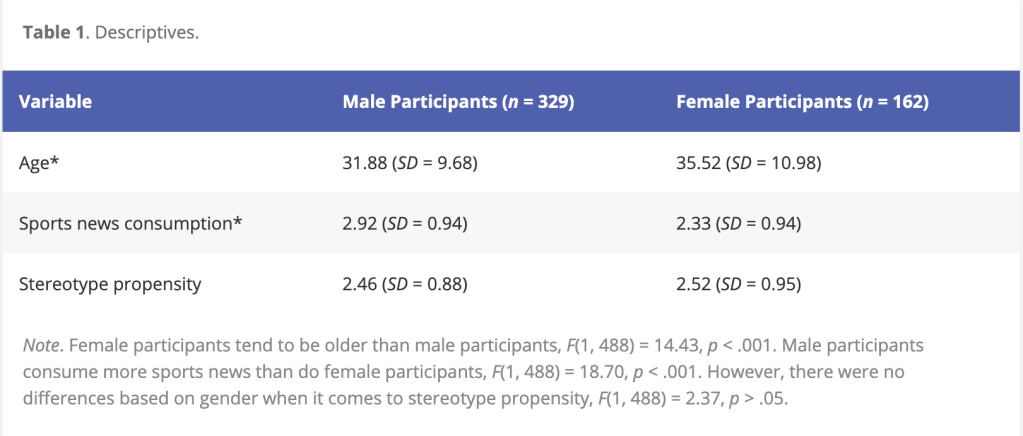
Case-Study Participants Information
Brisbane, G. J., Ferrucci, P., & Tandoc, E. (2021). Side-by-Side Sports Reporters: A Between-Subjects Experiment of the Effect of Gender in Reporting on the NFL. Communication & Sport, 11(1), 115-134. https://doi.org/10.1177/2167479521995462 (Original work published 2023)
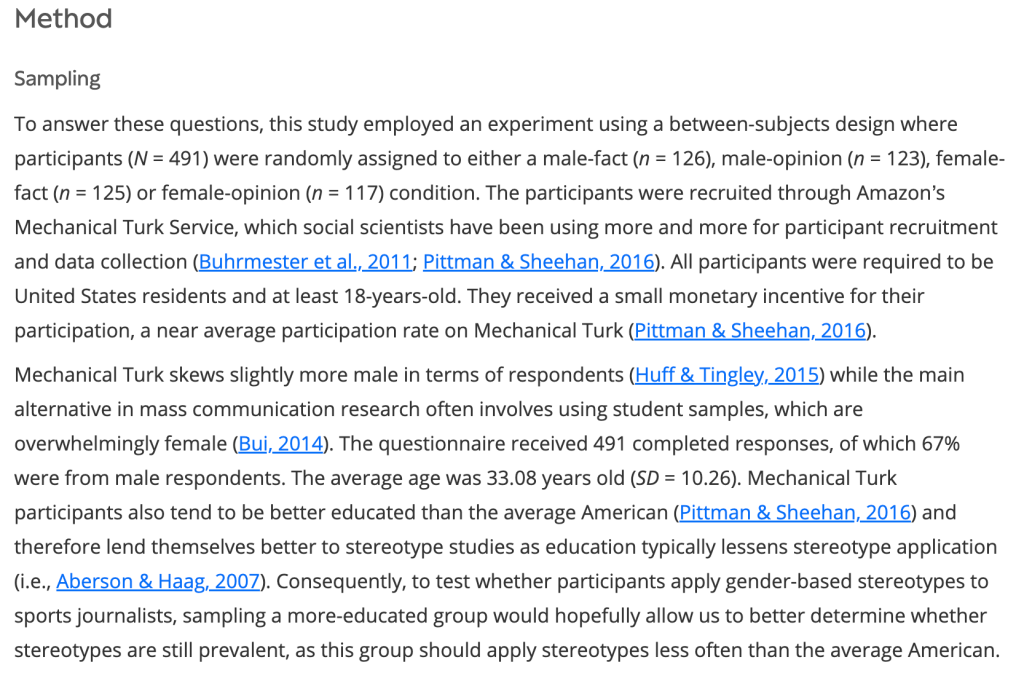
Case-Study Sampling Method
Brisbane, G. J., Ferrucci, P., & Tandoc, E. (2021). Side-by-Side Sports Reporters: A Between-Subjects Experiment of the Effect of Gender in Reporting on the NFL. Communication & Sport, 11(1), 115-134. https://doi.org/10.1177/2167479521995462 (Original work published 2023)
*Photo Courtesy of Washington State University Website
Article by Ava Villalobos, Alyssa Heinlein, Brittany Montiel, and Nevaeh San Luis
ABOUT DR. ERICA AUSTIN – BACKGROUND AND INSPIRATION Our team interviewed Dr. Erica Austin from Washington State University. She obtained her PhD in Communications from Stanford University, and she currently works as the Director of the Murrow Center for Media and Health Promotion Research at Washington State. We contacted Dr. Austin to discuss her study, “An Exploration of the Associations of Alcohol-Related Social Media Use and Message Interpretation Outcomes to Problem Drinking Among College Students.”
By: Zach Juarez, Gerardo Colon & Rene Trujillo Jr.
Professor Robert Meeds, Courtesy of the CSUF Communications Department
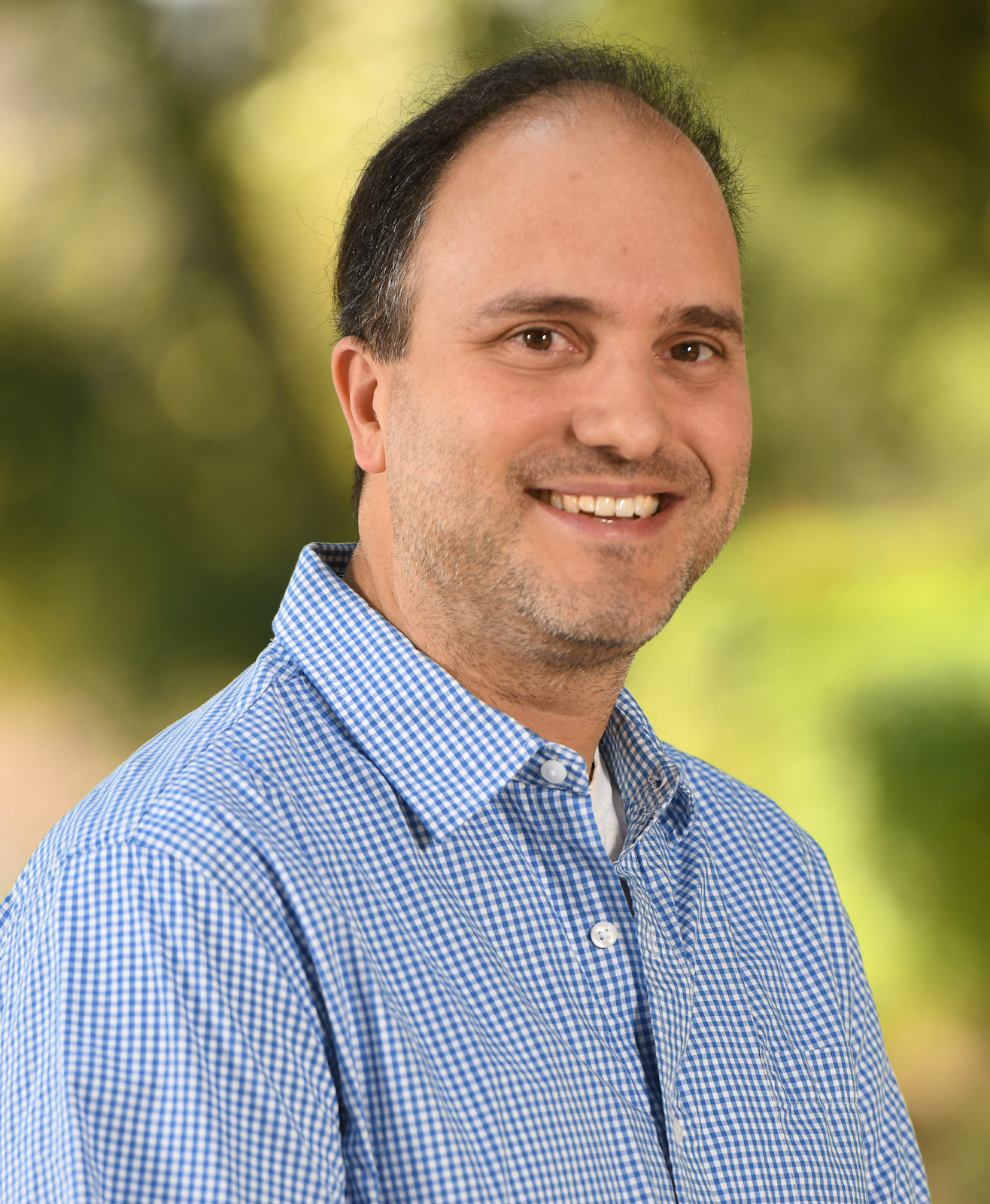
We had the pleasure of interviewing Dr. Robert Meeds for our scholar interview.
Meeds is a professor of Communications at California State University, Fullerton, teaching areas are in advertising and integrated marketing communications. His research explores how changes in the ways advertising copywriting affects what consumers notice, learn, think, and feel. His research articles are published in academic journals such as the International Journal of Advertising, Journal of Consumer Psychology, Psychology and Marketing, Journal of Computer-Mediated Communication, Newspaper Research Journal, Journal of Middle East Media, and others. Prior to joining Academia, Meeds worked as a graphic designer and newspaper advertising director.
To gain feedback and insight into research methods, we interviewed him about his research on factors affecting the information processing of internet advertisements. Our blog post summarizes our interview with the professor.
By: Jennyfer Lopez Ramirez, Leah Humphrey, Lily Holman, and Sofia Vargas
The dissertation titled “Hidden Power: Journalistic Representations of Mental Health Labels” by Elise Anguizola Assaf analyzes how mental health is portrayed in online newspaper articles, focusing on three major U.S. newspapers: The Washington Post, The New York Times, and USA Today. Using Critical Discourse Analysis (CDA), Assaf examines the language and framing methods used in 33 articles published over six months in 2018. Her work explores how media narratives often align with a medical model, emphasizing terms and connotations that reinforce mental health as a biological or medical issue, which may perpetuate stereotypes and marginalized individuals labeled with mental health conditions.
Key findings include:
Dominant Use of Medical Framing: Most articles apply a medical model, often casting mental health in terms of illness, treatment, and pathology, thereby reinforcing stigmatized views.
Power and Source Bias: The majority of articles rely on law enforcement and legal sources for causality and authority, which often leads to depictions of individuals with mental health conditions as potential aggressors.
Overlexicalization and Connotation: The frequent use of formal, medicalized language impacts readers’ perceptions by highlighting mental health conditions in terms of risk or criminality, often neglecting social or recovery-focused narratives.
This study ultimately argues for a more nuanced approach in journalistic practice, where mental health stories incorporate balanced and humanizing language and perspectives, and proposes recommendations for shifting from stigmatizing discourse.
Q1: How do you think the lack of tone indication or context in social media can lead to negative mental health effects?
A: Professor Assaf explained there are two sides of social media in terms of the content that audience members are getting. There is the visual and the text that they are reading. With the visual components, tone can come across more clearly. Whereas things that are written can be difficult for an audience member to understand the tone that is intended. There can be problems that occur such as not knowing if the person is mad or funny, we are not always sure how the message is going to come across to the reader. Social media tends to be much more stagnant, she explains that unlike in a text where we can ask for clarification over social media it is almost a one way communication because there is less fluidity back and forth. This issue can affect mental health because people can let that concern, of not understanding the language they are reading, make them uncomfortable and there is not outlet for them to go back and communicate for clarification.
Q2: How did you ensure the validity and reliability of your data?
A: During the long process of writing her dissertation, she had a committee and a chair which allowed for conversations to review and assist on some of the data she was working on. There were multiple sets of eyes going over the data to make sure her findings were reliable. She also conducted a pilot study along with another peer researcher and they agreed to be eachothers second pair of eyes and review each other’s research. During this pilot study her peer selected a random sample of 10% of the data and analyzed it with the codes. Then they went back together and matched the data to confirm they were both coding the information in the same way to improve reliability. She also made sure her newspaper sources had enough variety to confirm her data. She chose an east cast, west coast and middle america publication to ensure she covered the whole country.
Q3: With a topic as nuanced as mental health, how did you ensure that your personal perspectives didn’t influence the interpretation of your findings?
A: Assaf explained she is very up front with her personal experiences with mental health and it did affect her research to an extent. She explained in qualitative research it is very important to acknowledge your bias and the lens you see and process this information through. In her dissertation there are two pages dedicated to why the topic is important to her which tied into how she will read and process the data. She mentioned in qualitative research it is important to communicate those biases to the reader up front so the readers understand what could impact the analysis within that study.
Q4: What did you find the most challenging in the research process?
A: Professor Assaf shared that the most challenging part of her research process was managing feedback from her committee. She explained that having a committee of three meant navigating multiple opinions and expectations, which could be frustrating and sometimes delayed her progress. However, she acknowledged that their input helped her grow as a researcher and ultimately strengthened her work, despite moments of struggle. She mentioned that the same challenge arose when submitting work to journals and conferences, where reviewer feedback ranged from outright rejection to conditional acceptance with required changes. This ongoing back-and-forth with reviewers had both positive impacts on her research and tested her resilience throughout the process.
Q5: Do you feel like the more you grow as a researcher it’s able to balance out or is this the life as a researcher?
A: Professor Assaf believes that challenges in research—particularly those stemming from reviewer feedback and blind review processes—are an inherent part of a researcher’s life. She shared an example from a study she conducted with her colleague, Doug Swanson, where they had to anonymize his name in citations to meet the requirements of a blind review. Ironically, a reviewer then recommended they cite Doug Swanson’s work, not realizing he was a co-author. This experience highlighted for her how, in research, if one challenge is resolved, another often arises, reflecting the ongoing, sometimes ironic, nature of the process.
Q6: Looking back, is there anything you would’ve done differently in the research process?
A: Professor Assaf reflected that, overall, she feels confident in the strength of her study and doesn’t have significant regrets. She mentioned that, in retrospect, she might have preferred including publications like the LA Times and a Midwest newspaper, in addition to the NY Times, to capture a broader geographical representation. However, she didn’t feel strongly enough about this preference to pursue a follow-up study, as she moved on to other research areas.
The qualitative research done by Professor Assaf focuses on the stigma of negativity in the media. Assaf talks about how direct messages and content are targeted towards an individual, whether from a post or direct messages. She then explains how negative content can directly impact them more when they do not have an outlet to fact-check where information comes from. Journalists also use mental health and framing in their media, this creates different interpretations of mental disorders such as schizophrenia, or bipolar disorder.
When asked about bias during this research, Assaf stated that “it’s really important to acknowledge your bias” and how it affects you during the process. In her dissertation, she explains why this topic is important and how it impacts her. It is also important to process the lens through which this information is given because that shapes the view of the message to the person reading. By Focusing on the nuances of language, qualitative data really shows the power journalists and reporters have on society.
Professor Assaf’s advice:
Professor Assaf advised choosing a research topic that genuinely interests you, as this can make the long process of research more fulfilling and manageable. She noted that while a semester-long project may only need a few months of dedication, longer-term research can span years with frequent adjustments and revisions. To prevent burnout, she emphasized picking a topic that won’t become burdensome over time. Assaf also recommended thoroughly researching the topic in advance. She reflected on her own experience as a student, explaining that having a wealth of sources not only strengthens a paper but also makes it easier to write, as you won’t struggle to meet page requirements when you have a strong foundation of information.
Professor Cynthia King, Ph.D. Courtesy of the CSUF Communications Department
For our scholar interview, we had the pleasure of interviewing Dr. Cynthia King about her research article titled, “Effects of Humorous Heroes and Villains in Violent Action Films.” Professor Cynthia King, Ph.D, has a master’s degree in political science and earned her doctorate in mass communication. Her published research focuses on entertainment and commercial media’s effect on humor and emotion. To gain insight and feedback on our own research as well as her own, we asked Dr. King to explain her research and how it pertains to our question, as well as provide advice and constructive feedback on how we should conduct our research. Our research question is, “How does music consumption affect the overall mood of college students?” The following analysis includes detailed explanations of Dr. King’s responses to our questions, as well as a recording of our interview that highlights the essence and purpose of our call.









 The Society for Communications Research