Our First Amendment Right to Information: Journalists fight for Freedom of Information

By: Cassidy Apolo, Grecia Haro-Flores, Jackson White, Miriam Ugalde

April 11, 2024

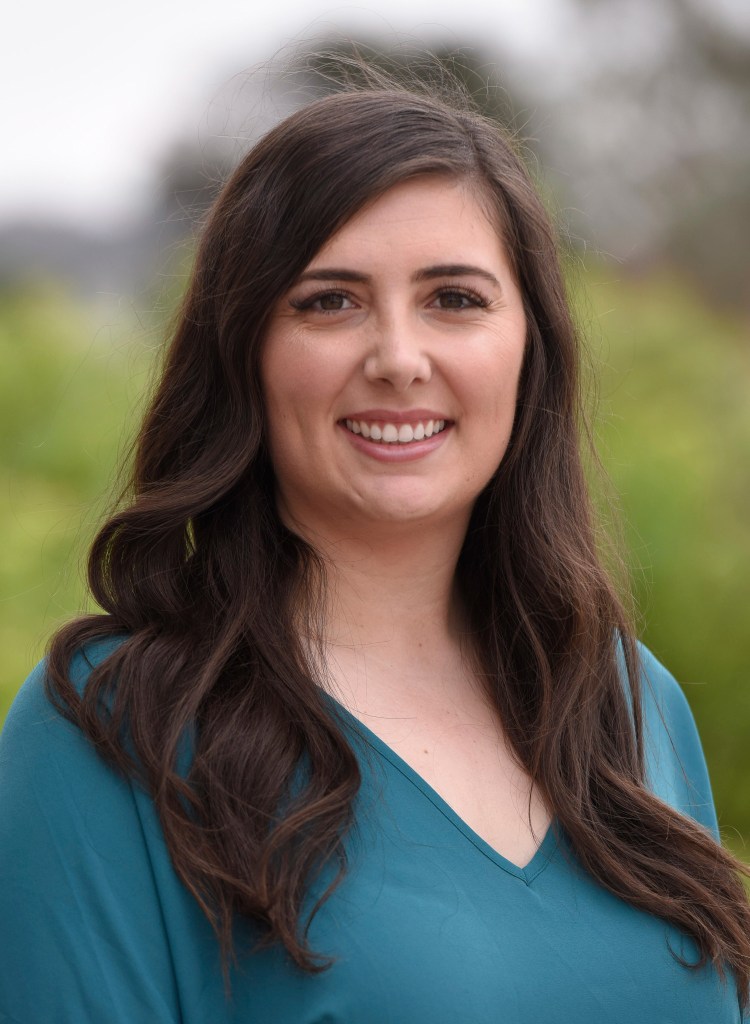
Professor Emily Erickson, PhD

Our team interviewed Dr. Emily Erickson, an award winning professor at California State University, Fullerton (CSUF). Her teaching career began at Louisiana State University, as an assistant professor, before she moved to CSUF, where she has been teaching for almost 15 years. Her love for teaching is what kick-started her research career. Dr. Erickson focuses her research on communication and media law, specifically jurisprudence. We interviewed her about, The Watchdog Joins the Fray: The Press, Records, Audits, and State Access Reform, which was originally her dissertation for her doctorate, which she earned from the University of Alabama. In the paper, she investigates the reasons why journalists ended up in the world of politics to make public records more accessible. Dr. Erickson guided us through her reasoning behind her choice in choosing this specific topic, the research methods she used, challenges faced, and gave us advice for the future.

Read more: Our First Amendment Right to Information: Journalists fight for Freedom of Information

Professor Erickson’s research for her paper involves a historical analysis of state government transparency with journalists regarding sharing statewide record audits. Although public records are legally public, government agencies have denied journalists access to record audits. Her interest in this area of communications was inspired by her pursuit of starting and running a Freedom of Information Center during her doctorate program at the University of Alabama. In her research on freedom of information centers (FOI) across the country, she observed that a combination of FOI centers and a recent phenomenon of newspapers doing record audits during the 90s created a story she needed to tell. She explained,

I thought it would be cool to have a body of knowledge, and I ended up going down a rabbit hole.

In her paper, Erickson creates a narrative that begins post-World War II with the press crusade to fight for an international right of freedom to information and recent attempts by journalists and press groups fighting for access at the state level. Further, she considers press groups and individuals highlighted in her paper from a theoretical lens using interest-group theory. Moreover, most importantly, she tells the story of journalists who have used their record audits for public records reform.

Her research paper concentrates on the free flow of information and how available it is to the public. The three main groups of people with whom she conducted her interviews were lawyers, librarians, and journalists. All of these occupations handle the freedom of information. Erickson took on a large sample size, 12 different states. 

“I did what you guys are not supposed to do in research, I did way too big a project” 

She was told to research three states and that would be fine, but she felt strongly that that wasn’t the whole picture. The whole picture was 12 states. She shares that she doesn’t regret it, and though it took some time, she got something that was worthwhile. 

Erickson’s research involved purposive sampling and used a combination of methods. She used statutory analysis where she would examine the statures themselves, though long and boring she became an expert in freedom of information. She then examined all of the laws and created a typology of the different approaches to public records law. The second method of research was historical analysis where she did tons of press coverage about the groups and the audits. 

She looked into the phenomena of the actual FOI groups themselves. Finally, she used content analysis where she did an in-depth legal analysis of state access laws and policies. 

12 case studies were conducted looking into their attempts to get reform in their states. Erickson held telephone interviews with 100 people with occupations ranging from  lawyers, journalists, editors, and publishers in touch with the newspaper. By the time she did the very detailed interviews, she got savvier about what questions to ask. Due to her prior background knowledge on the state’s record audits, she became an expert. That made all the difference in her interviews, she says, when you know what you are talking about it is amazing how much better your interviews are. 

Erickson’s insights into the future of media and information access are profound. She identifies two steadfast champions of freedom of information: journalists and librarians. During her research, journalism still possessed substantial financial resources, enabling them to expand their roles beyond the conventional. Erickson’s paper, titled The Watchdog Joins the Fray: The Press, Records, Audits, and State Access Reform, reflects this shift as journalism ventured into political engagement, a departure from its traditional stance of neutrality. Erickson says, “I call it, The Watchdog Joins the Fray so that they can use that money to try…the weird thing is that they got involved in politics in some cases. They got very much involved in politics.”

Erickson notes with intrigue how journalists delved into political spheres, engaging in lobbying efforts through investigative journalism, public shaming, and direct interactions with government officials. “They did something that we think is not normally appropriate for journalists because they’re supposed to be outside the fray,” says Erickson, “They’re supposed to be objective.” Looking ahead, Erickson believes that we need to stop thinking of journalism as fully objective and we let journalism be more of a campaign things like freedom of information. However, Erickson doesn’t think the Supreme Court will be of any help with this as she doesn’t think the Supreme Court will ever establish a constitutional “right of access” to government information. As a matter of fact, Erickson doesn’t see that happening in her lifetime at all. “At this point, they didn’t even stand up for voting rights so I certainly don’t think they’ll stand up for access to information. They are not gonna be our champion at all…on anything,” says Erickson.

“It’s going to be really interesting to see what happens over the next number of years.”

For aspiring researchers, Erickson advises against biting off more than you can chew. Instead, she suggests delving into a rabbit hole of topics you’re passionate about and already have a solid understanding of. This approach allows you to gain a deeper insight into what is feasible and manageable. By following this approach, you’ll gain a better grasp of what’s achievable and realistic.
Deep Dive into the Fray

Cognitive & Attitudinal Effects of Technical Advertising- Robert Meeds Interview

By: Andrew Pucci, Anthony Jasso, Sara Virgen

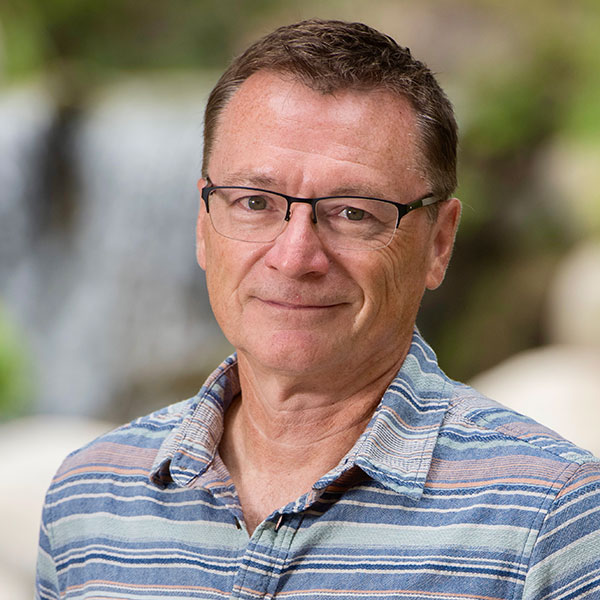
Professor Robert Meeds, PhD

Our Group had the opportunity to conduct an in-depth interview with Professor Robert Meeds in regards to his study, “Cognitive & Attitudinal Effects of Technical Advertising.” This study aims to understand the idea how individuals with varying levels of knowledge in specific product domains respond to print advertisements containing technical information. The focus lies on understanding consumer-level differences in processing persuasive messages, which directly influence advertising copywriting strategies. We discussed Robert Meeds’s breakdown of the study, how the study came about to begin with, and his overall thoughts and process within the study.

Continue reading “Cognitive & Attitudinal Effects of Technical Advertising- Robert Meeds Interview”

Interview with Dr. Amy Schmitz Weiss on her research paper, Journalists and Their Perceptions of Location: Making Meaning in the Community

Taken from the SDSU website

by Jackie Logwood, Stephen Lopez, Dustin Malek & Tony Rodriguez

Amy Schmitz Weiss is a research professor at the School of Journalism and Media Studies, at San Diego State University. Her 2020 paper titled Journalists and Their Perceptions of Location: Making Meaning in the Community is an attempt to better understand the role location plays in journalism. It’s one of many papers and research projects Dr. Schmitz Weiss has conducted over several years.

“The article is one of several that I’ve done that look at the idea and the framework called spatial journalism. That is an area that I’ve been developing for several years now that looks at…how journalists do their work from a lens of location,” says Dr. Schmitz Weiss.

Read more: Interview with Dr. Amy Schmitz Weiss on her research paper, Journalists and Their Perceptions of Location: Making Meaning in the Community

The role of location and journalism is long-standing and, in many ways, obvious. After all, newspapers are often location-based. The New York Times, The Chicago Tribune. The Fayetteville Observer. For centuries newspapers have been serving specific communities, covering local elections, high school sports teams, community events, and the like. Location and journalism are not a new concept but that doesn’t mean there isn’t room for improvement. Nearly every person in the developed world carries a GPS device in their pocket and uses apps like Yelp that can direct you to the best pizza or hamburger in any given city. How the technologies of today improve journalistic practices that have been around for centuries is at the heart of Dr. Schmitz Weiss’s research.

For this study, Dr. Schmitz Weiss interviewed twenty-one journalists from three different media organizations that use software to geotag the location of the stories they report on. The interviews represent a form of qualitative research known as grounded theory. Grounded theory collects data, in this case, answers to interview questions, forms concepts from that data, and groups those concepts into categories. Through these twenty-one interviews, Dr Schmitz Weiss identified recurring themes and insights. Those were grouped into six categories which eventually consolidated into three. This is the final phase of grounded theory research which is where the data is analyzed and interpreted to identify relationships and connections between the categories.

“Basically the grounded theory approach entails diving in and reviewing all the material that you have. In this case, all the transcripts, the 21 reviews going through and at first identifying what the explicit information that’s there, what people say in the actual wording, and doing a first read of that, and then going back through that a few more times, two times, three times, four times to re-review what’s coming up that’s implicit, that could be garnered out of the deeper meaning of what people are saying, and then identifying how they may translate with the specific themes or concepts, and then grouping them accordingly,” says Dr. Schmitz Weiss.

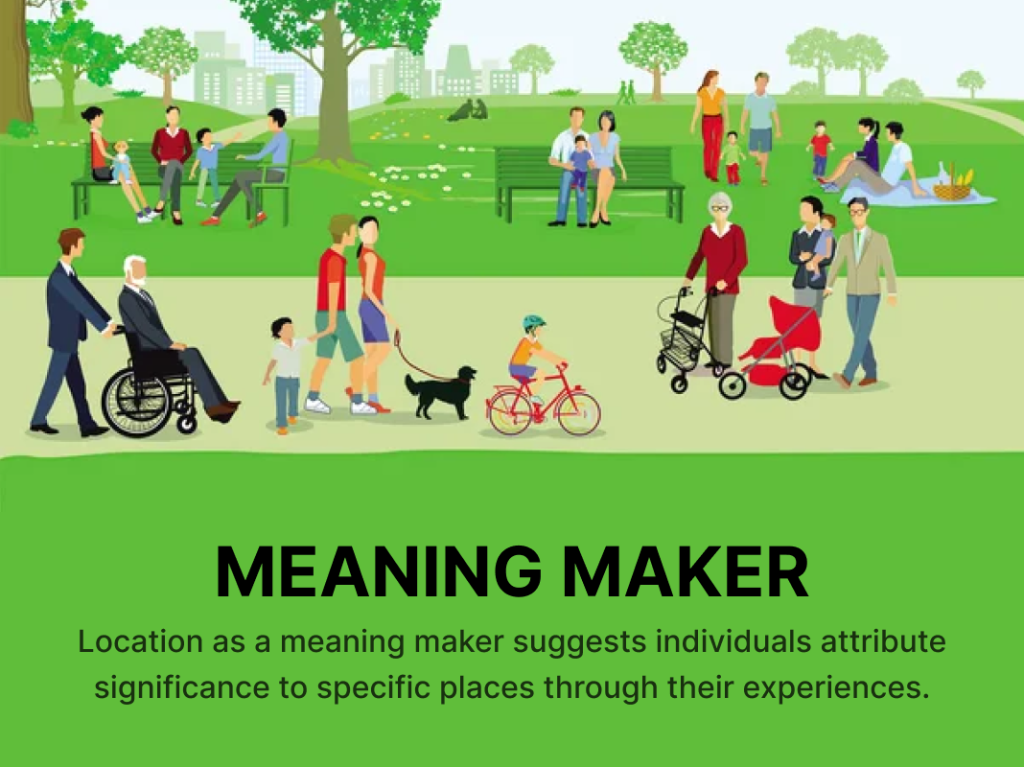
The three categories that the research led to are as follows. Location as a meaning maker, location as an organizer, and location as a communicative challenge. This article offers a cursory overview of each category. It is in no way meant to represent the extensive research Dr. Schmitz Weiss has done on the topic of spatial journalism but rather to display the outcomes the research uncovered using grounded theory research.

Location as a meaning maker is the idea that we as people ascribe meaning to a place. The example Dr. Schmitz Weiss used in our conversation was a person’s favorite coffee shop. To one person it might simply be another coffee shop, to someone else that might be where you wrote your first screenplay or worked your way through college. Readers will engage in a story about a place they care about. Understanding which places people in the community have an outsized connection to provides a helpful context for journalists and can potentially drive readership.

“Spatial ideology takes the idea of what we put in our mind as what’s close and has meaning to us and puts it within the context of space and place is how we associate information and how we make decisions from that information of how important it’s to us or why we would want to know more about it,” says Dr. Schmitz Weiss.

Location as an organizer is helped by the technology that some news organizations use allowing them to geotag the stories they cover. This technology gives newsrooms a visual representation of where news is happening. In the past, a newsroom might have had a sense of where news was happening but they wouldn’t have hard data, now they do. Although this does bring about certain challenges. As one of the publishers, Dr. Schmitz Weiss interviewed explained in the research paper.

“Not everything that you cover should be eligible for this sort of thing. Like, if you’re down at City Hall and you’re writing a story that ultimately takes place at City Hall, people don’t need to see that on a map, because it’s a City Hall story, right? It’s not a geographically linked thing.…. We needed the editor to sort of go through and figure out what was appropriate to tag and what was not,” said the editor.

There’s also the issue of privacy. The Austin Monitor has an interactive map on their website where Austinites can see stories based on location. Usually, they geotag stories based on an address. If a liquor store gets robbed, that’s easy, put in the address and move on. But sometimes a story has multiple locations in those cases they have to make tough decisions. The new technology brings up old ethical issues journalists have always faced. Using an exact address could potentially out a source leaving them open to retribution. Or it could be used to identify a victim of a crime. In cases like that, these organizations have to be broad, opting for cross streets or general areas rather than exact locations. While challenges exist, there are numerous benefits. It allows stories to be categorized in new and unique ways and it lets organizations know which parts of the community are underserved.

The last category Dr. Schmitz Weiss found was location as a communicative challenge. Essentially the challenge is convincing news organizations that spatial journalism is a value add that will help drive readership.

“The research shows that when something has space place with meaning to them, they are more interested, they’ll consume it more,” says Dr. Schmitz Weiss.

While this type of grounded theory qualitative research is thorough and can be eye-opening it does have its drawbacks in comparison to quantitative research.

“If you have a thousand people representative of a population for a quantitative study, you might be able to say because of X, Y happened based on statistics…. with qualitative you’re not going to have a large enough sample to say, because of X, Y happened with twenty people,” says Dr. Schmitz Weiss.

Still, qualitative research has many advantages. Dr. Schmitz Weiss continues.

“…with that said, qualitative research can still show the validity in the layers of nuance and deep meaning that comes out of those 20 people that shows specific patterns, similarities or differences.”

Interview with Ricardo Valencia

By: Tamera Innabi, Natali Martinez, Andrew Silva, Destinee Yepez

Dr. Ricardo Valencia, California State University, Fullerton

Our team had the opportunity of interviewing Dr. Ricardo Valencia about the research he conducted regarding LA Galaxy and LAFC rivalry. Dr. Ricardo Valencia, an esteemed assistant professor of public relations within California State University’s Department of Communications at Fullerton, brings a wealth of global communication experience to his role. Graduating with a doctoral degree in Media Studies from the University of Oregon in 2018, Dr. Valencia’s career highlights include serving as the head of the communication section at the Embassy of El Salvador to the United States from 2010 to 2014. Prior to his diplomatic role, he garnered extensive journalistic experience covering international and domestic politics. In our interview we focused on Dr. Valencias specific research involved with social media in which he collaborated with Dr. Henry Puente titled, “Nothing more American than a Mexican: Negotiating Social Media identities in the First City rivalry in U.S Football.”

Continue reading “Interview with Ricardo Valencia”

Interview with Dr. Megan Vendemia on Body Image and Social Media

By: Marlene Zuniga-Mata, Jasmine Gutierrez, & Michelle Martin-Soto

Dr. Megan A. Vendemia (Ph.D), Assistant Professor of Communication Technology at West Virginia University

In this generation, social media has become a vast and ever-changing part of our lives. Content shared by celebrities (or now, influencers) sets stereotypes many people can not obtain, such as a perfect body, diet, and lifestyle. Doctor Megan Vendemia is one of many deeply interested in social media; fortunately, our team shares the same interest. We sought Dr. Vendemia to learn more about her perspective on the stigma around social media. We learned that although she broadly studies communication technology, she mainly focuses on social media’s effects on women. She first started digging deeper into social media during the beginning of her graduate studies. She felt as though social media was and still is the perfect place to study because of the modifications that happen time and time again. Through the interview we had with her, we learned more about her and how social media is a significant factor in women’s lives.

Continue reading “Interview with Dr. Megan Vendemia on Body Image and Social Media”

Interview with Dr. Ceisel: “El Sabor de Galicia : Wine as Performance in Galicia, Spain”

By Julymoe Aung, Jessica Bartolo, Marco Maleki, & Lauren Salas

Dr. Christina Ceisel, Ph.d. , Cal State Fullerton

Our team had the pleasure of conducting a zoom interview with Dr. Christina Ceisel, a communications professional and professor at Cal State Fullerton, about her chapter “El Sabor de Galicia : Wine as Performance in Galicia, Spain” published in the book Wine and Culture: from The Vineyard to the Glass. Her prior knowledge and expertise in qualitative research prompted our desire to inquire her about her study. Dr. Ceisel walked us through what she discovered about the significance of and relationship between wine/commodity culture and heritage during her time in Galicia, Spain, and the process of how she conducted her research.

What initially piqued your interest in this topic?

When Dr. Ceisel was honing in on an area of focus for her research, which she conducted for her dissertation; she knew she was interested in transnational communication and media processes. Around the time when she first set out to begin her study, she noticed the rise in more companies and commodities thinking about their branding, and also had a deep interest in food studies. She combined both areas of interest to answer the ultimate questions: “How does food serve as a cultural marker?” and “Why is food and heritage so important?”.

How did you plan the logistics? Was is a challenge trying to align your travel schedule with your research schedule?

One of the most challenging aspects was finding funding, considering there was limited time and financial aid. She knew she wanted to research in Spain, so her goal was to seek out opportunities that would enable her to stay in Spain for as long as possible for the duration of her study. She ended up acquiring some grant money to conduct the research, and later returned due to another fellowship that allowed her to stay for another few months. She visited Galicia in 2010 for about a month, returned in 2011 for and additional three months, and spent two months there in 2014.

How did you determine which research methods would be the most appropriate?

Dr. Ceisel, who described herself as a “qualitative researcher at heart”, demonstrated her belief in the grounded research approach, which she followed for her study. She explained that grounded research is when one starts off with their desired area of study and then examines which research methods would be the most suitable. She detailed her deep appreciation for ethnography, which she was able to explore and expand upon, and enjoyed the opportunity of exploring a new space, observing the environment, and engaging in profound conversations with the locals about themselves and the community.

“I loved being in a new space and getting to observe everything that’s happening, and having the license to be nosy.”

What was the most difficult part of this study?

When asked about the difficulties of the study, Dr. Ceisel mentioned narrowing down her options of studies was difficult. She also mentions the energy required to conduct a study, such as going out to introduce yourself to numerous people. Although she was taking field notes, she had to be able to remember even the smallest details of the day, while staying organized.

Were there any stressful situations?

We asked Dr. Ceisel of the stressors she endured conducting the study. She responded “More often than not, it was fun”. She mentions the struggles of traveling from small town to small town as it required taking several busses.

What was the most surprising? Any unprecedented challenges?

When asked about the unexpected challenges, she mentioned the interdependence movement occurring in Galiacia at the time. This was a political movement which supported the independence of Galiacia and the claim of Galician-speaking territories. She mentions how she was surprised to hear the language as frequently as she did.

Given the qualitative nature of your study, can you explain how you defined and measured your independent and dependent variables?

In the qualitative study, traditional variables were replaced by a more abstract and individualistic approach. Dr. Ceisel’s research did not rely on the conventional notions of independent and dependent variables but instead used personal experiences to convey the information on wine from Galicia. Each person offered a unique take on their preferred wine and the history embedded within.

Courtsey of Dr. Ceisel: Figure 7.1 El Sabor de Galicia (“It’s the Flavor of Galacia”). Seen at a bus stop in Santiago de Compostela and on a bus


Was it difficult planning your pool of people that you wanted to interview and obtain information from?

The people that we wanted to interview happened in a mix between arranged meetings and on the spot conversations. Vendors at Food Festivals offered powerful perspectives and data that allowed her to get a comprehensive understanding of her research topic.

Courtesy of Dr. Ceisel: Figure 7.2: Pidelo su nombre (“Ask for it by.”). Ad in an actiivity guidebook provided by a hotel. C.R.D.O Rias Baixas

A clip from our interview

Interview with Dr. Zac Johnson on the effect of student-to-student confirmation on student’s mental health and well-being.

By: Kyle McCaghren, Logan Blevins, Victoria Bridenbecker

Dr. Zac Johnson, California State University, Fullerton

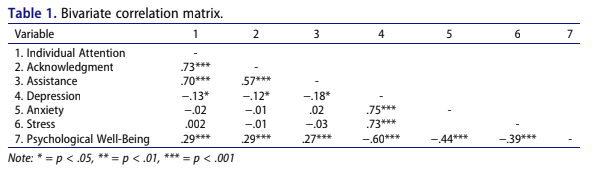
We had the pleasure of sitting down with Dr. Zac Johnson to discuss his study from 2021 about the effect of student-to-student confirmation on the overall mental health and well-being of college students. Dr. Johnson is an associate professor at California State University, Fullerton, in the Department of Human Communications Studies. His research is featured in Communication Education, Communication Quarterly, Communication Research Reports, and other publications.

Read more: Interview with Dr. Zac Johnson on the effect of student-to-student confirmation on student’s mental health and well-being.

Q1: In regards to student-to-student confirmation, what caused you to take an interest in that topic and take a dive into it?

Dr. Johnson described student-to-student confirmation as his niche area of study that he was exposed to when seeking to find a direction to take his study in when transitioning out of graduate school and into his career as a researcher.

When going through existing literature and studies, he came to the realization that, as a collective, there were a multitude of studies on teacher-to-student relations. Yet, the understanding of student-to-student interaction and confirmation was borderline nonexistent. Dr. Johnson took an interest in exploring what had yet to be studied about the college student and wanted to assist in pioneering an increase in the focus on this topic.

With this study and various others Dr. Johnson has participated in throughout the years, the focus is on positive forms of communication and communication ideas. He described how a majority of communications research in his field has the tendency to focus on the negative aspects of communication, such as misbehavior and complaining. He attributes this focus on the negatives to the belief that it creates a sense of relatability and normality for the audience; people can look at these negative forms of communication and justify that they are normal because they complain, too. Dr. Johnson guides his research away from this norm to focus on aspects of communication, such as confirmation, that reveal more positive behaviors and their potential benefits.

Q2: In your study, you have a decent selection of references to other studies throughout; what was the process like in finding previous literature for this topic?

Dr. Johnson described how, in this niche field of study that he is in, communications-based research is almost impossible to find. In the case of this study, he had to take a dive into studies from psychology, sociology, and educational psychology in order to find some references and information about the topic.

In the field of communications, the focus has always been on learning outcomes and the things that directly impact those outcomes. Studying student interaction and anything related to the mental health and well-being of the student just has not been done yet. Dr. Johnson said that this actually has been to the detriment of the field in general as it is a significant piece of the puzzle being left out; he continues these studies to fill that gap and pioneer its importance.

Q3: During the sampling process for this study, 412 university students were surveyed. Were you hands-on in the process of gathering those surveys, and what was the process like?

Dr. Johnson described how he has a commitment to going out and gathering his data and surveys. He will go out physically on campuses to individually survey students on his own and take over the whole data-gathering process. Data to Dr. Johnson is an extremely important part of his studies, and he feels the personal responsibility to gather and collect it for his studies. The process can be very challenging at times, but committing to the data-gathering process ensures that things are done correctly.

Q4: When it comes to the results of your studies, do you sometimes find it challenging to translate those results into a meaningful discussion?

When it comes to the discussions, Dr. Johnson described how it definitely can be difficult, but it all comes down to the strength of your results. In cases where your results are significant and strong, it can be easier to draw the conclusions you come to in the end. In the case of this study, he describes how the results were pretty much what was expected, and so there were pretty decent grounds for discussion.


There are, of course, cases where you may go into a study, and the results you find are meager at best. In those cases, it can be hard to find much significance that you can translate to a results-based discussion, and Dr. Johnson shared that he has had studies like this in the past.

Q5: In your discussion, you describe the practical implications of your results as well as the limitations. Do you view it as a researcher’s duty to offer these kinds of insights in their studies?

Dr. Johnson explained how, in some lines of research, this is not necessary, and sometimes just the results are enough. However, with his focus on instructional communications research, it absolutely should be a duty to offer those practical implications.

“It should be the point of instructional-based research. If you’re not sort of concluding why you should care about this, what can you take away from this practically to impact your students’ experiences, to impact your experiences, to be a better teacher, then what are you doing?”

An Interview with Dr. Jeong about Privacy Concerns on Social Networking Sites

Blog post by Alyssa Montes, Taylor Perez, Katie Poppins, and Michael Van de Brooke

We had the pleasure of interviewing and getting to know the knowledgeable Professor Yongick Jeong. Originally from South Korea, a CSUF alumni, now teaching media research and media analysis at Louisiana State University. His interests are in advertising, news and entertainment media, and measuring advertising effectiveness. He’s currently working on a new research project involving AI. Professor Jeong is someone who appreciates different theories which in turn creates a better understanding of his research.

We took an interest in the work he had done with Yeusueng Kim, titled, “Privacy concerns on social networking sites: Interplay among posting types, content, and audiences”. He delves into topics such as SNS (social networking sites), types of posting, the information types, young SNS users, as well as privacy concerns of the audience using Facebook and Twitter.

READ MORE

How do you think the fact that participants were chosen from a mass communications research pool affected the results? How do you think choosing from a group with less of a communications emphasis would have yielded different results?

Dr. Jeong is quick to acknowledge that as a result of who was readily available as participants meant that his findings likely wouldn’t be directly generalizable to the broader population. However, as he explained, when one works in academia at a university, the portion of the population that a researcher has easy access to are the students learning about their field. He added that a more generalizable study would have focused more on individuals of average age, which he posited was the 37-55 age range.

Why did you decide to use surveys to collect data? Did you find any advantages or disadvantages of that decision? Were other quantitative or qualitative methods considered and rejected?

Professor Jeong explained that he used surveys to collect data for his study because of the type of research questions he wanted to answer. He created the surveys based on what information he wanted to discover. By using surveys he was able to understand what people thought about certain issues and how it impacted them, instead of using a quantitative method with less of an opinionated response. He felt that using surveys to collect data allowed him to find out what people were actually feeling and thinking, which improved his data. Professor Jeong found that using surveys was the best way to answer his research questions.

How do you feel that SNS influencer aspirations have affected people’s regard for their online privacy?

Professor Jeong mentioned many theories throughout our interview, but a theory he mentioned that answered this question was the privacy calculus theory. Professor Jeong states about privacy calculus theory that, “…when I decide to share my information, I calculated the benefit and loss, what can I get and what am I going to lose…some influencers because of finance and reward and reputation or interest, they easily give up their benefits or their privacy…and as a consumer we try to calculate.” As humans, we tend to calculate the benefits and losses of a certain decision a lot and this theory is a great way to explain why some people throw their privacy away, because in someone’s mind, the benefits of publicity outweigh the benefits of privacy.

The COVID pandemic made people especially dependent on the internet for work, social life, etc. Do you feel this shift has affected people’s feelings regarding their online and social media privacy?

Within our society, smart devices have become necessary and something we have become highly dependent on. Acknowledging this, Dr. Jeong approaches this question through the use of the concept of the “privacy paradox,” which centers on the matter that many individuals today use the internet and smart devices in their daily lives despite the known dangers of their usage. Despite privacy concerns and information usage, these devices and their counterparts continue to be prominent within our society for a number of reasons, with one being known as the “fear of missing out,” or “FOMO”. Dr. Jeong explains that FOMO can be a big contributor to social media usage as many individuals feel obligated to participate due to the idea that others will know about information they may miss out on. Dr. Jeong continues on to the potential risks, including the knowledge that criminals and ill-intentioned individuals also have access to devices and can do harmful things with our information, but many continue to use them and input their information. He then mentions that with our dependence on devices, there is a need for improvement in policies and regulations within the United States, as other countries have become advanced in those areas for the safety of the individuals. Throughout his response, Dr. Jeong expresses his concern about our increased dependence and dangers that come with our devices and media.

Your study focuses on young adults, partly because they are the largest age group on SNSs as the article says. Did you look into other age groups who may be more vulnerable to privacy breaches?

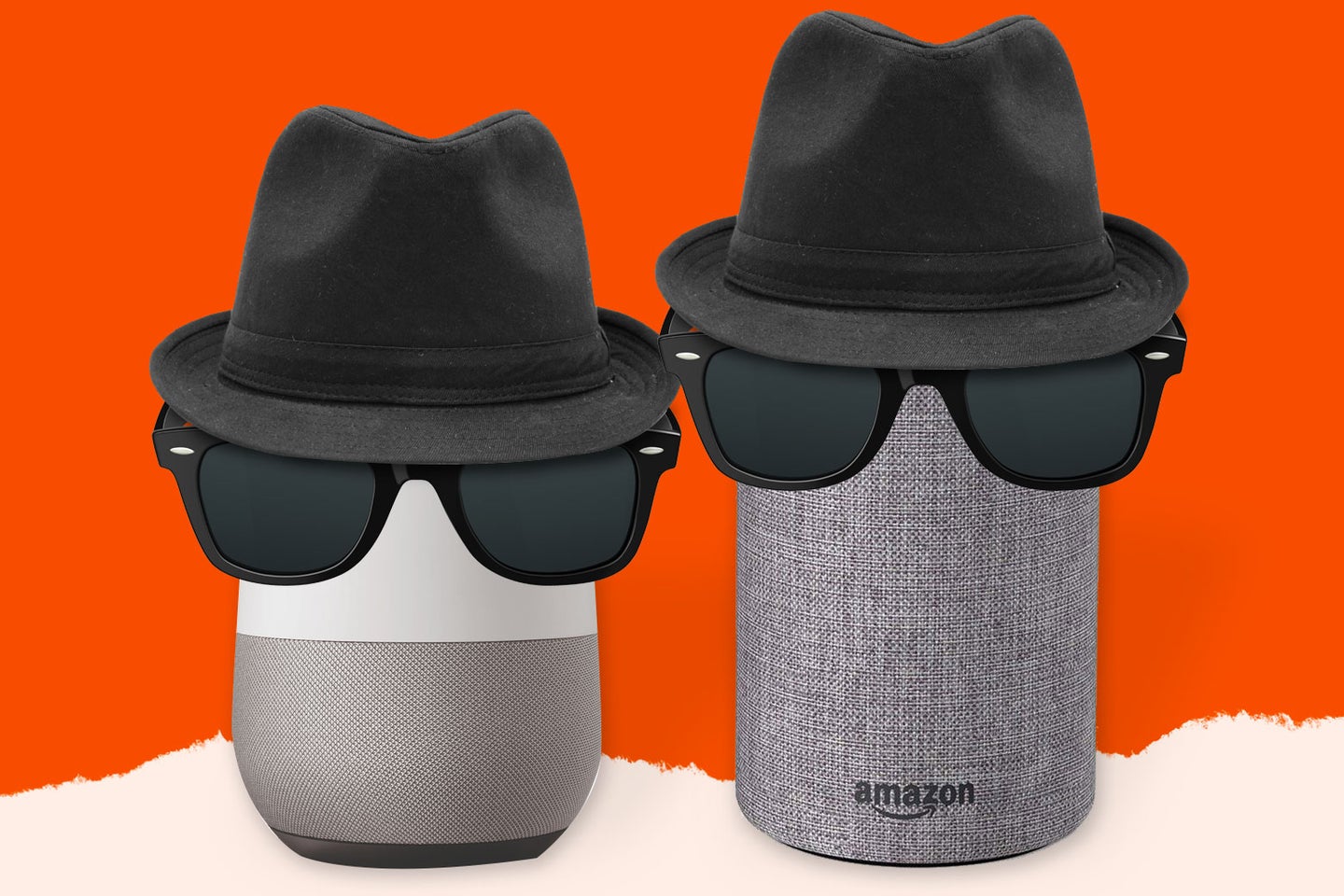
Though Dr. Jeong did not look into privacy issues regarding other age group’s social media use at the time of the study in 2010, he reports that he is now at his current position at Louisiana State University. He is currently focused on privacy matters with relation to artificial intelligence (AI) and smart devices like Amazon’s Alexa, Google Home, and more. He finds his current inquiry to be of great importance, warning us of the potentially existential threat that is AI.

So generative AI is scary, very scary. So when that is combined with technology, then we may see the end of the world sooner.”

– Dr. Yongick Jeong
https://youtu.be/DlUjlYXef_w?si=0S03M_uZ6wiUNTWd

An Interview with Professor Assaf on the Fundamentals of Communications Research

By Aidan McElhany, Jake Cipres, Ashley Abercrombie, and Fernando Calvillo Alcantar

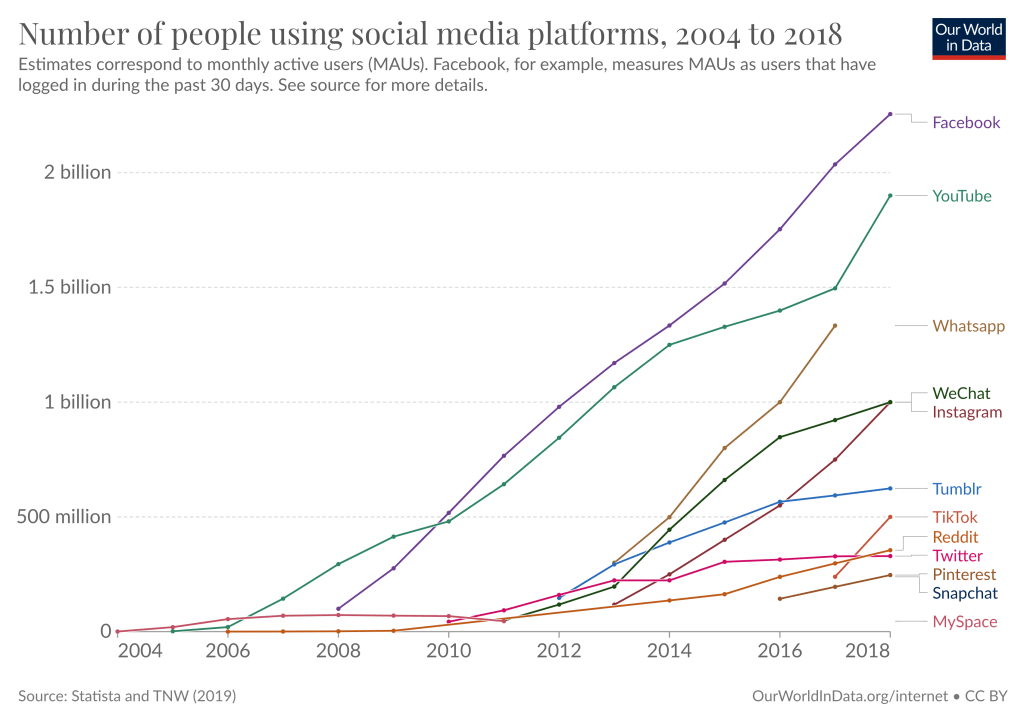
With the rising popularity of social media platforms such as TikTok, Instagram, and YouTube, many have expressed their concerns about how the excessive use of these platforms will affect our mental health and other aspects of our well-being. In particular, the short-form content present on TikTok and YouTube Shorts has been criticized for its potential negative effects on users’ attention spans. Our research study aims to find a correlation between the use of social media platforms and its influence on the attention spans of media users. The study will examine two variables in regard to social media usage. The first is which social media platforms are most widely used. The second is how much time media users spend on each platform on a daily, weekly, and monthly basis. Additionally, the study will examine signs of a shorter attention span, such as restlessness, inability to focus for long periods of time, etc. The data will be gathered through a convenience sample survey consisting of students at California State University, Fullerton.

Continue reading “An Interview with Professor Assaf on the Fundamentals of Communications Research”

Interview with Communications Scholar Elise Assaf on “Journalistic Representations of Mental Health Labels”

By: Dominic Samaniego, Lauren Sharp, Armando Sanchez & Gabriela Angiuli

Elise Assaf

On Tuesday, October 24th, we conducted a Zoom interview with Cal State Fullerton communications professor Elise Assaf. Assaf primarily focuses on public relations studies and entertainment courses for undergraduate-level students in the communications major. This is part of our term project for Rosalyn Du’s course on the principles of communication research. Assaf’s background in communications research, public relations, and disability studies made her the perfect subject for the interview portion of the term project. The majority of our interview questions primarily focused on her dissertation. “Hidden Power: Journalistic Representations of Mental Health Labels.” Our brief interview with Dr. Assaf gave us much insight into the research process and all the elements of creating something as wide-scale as a dissertation. From there, we gained additional insight into the various concepts we are learning about in Dr. Du’s course. Speaking with expert and scholar Dr. Assaf helped us gain a better understanding of research methods and the implications of each. We were able to gain more perspective and insight from someone who has sufficient experience in conducting research in the field of communications.

Read more…: Interview with Communications Scholar Elise Assaf on “Journalistic Representations of Mental Health Labels”

Get a glimpse of the interview here: Preview of Interview with Elise Assaf

Some other topics covered in this interview include research methodology, lessons learned from the research, and advice for future scholars hoping to engage in research during their undergraduate careers. 

Dr. Assaf’s research gave us a clear idea and understanding of just what exactly goes into a research study. Such elements include content analysis, longitudinal study, qualitative research, and critical discourse analysis of literature to examine how linguistic elements hold great power and influence, more particularly in the field of mass communications. 

During her time obtaining her Ph.D., she gained an interest in disability studies, which focuses on including students in the classroom as opposed to separating them in a special education classroom. Combined with her fascination for the topic and her personal experience, she decided to explore mental health even further. Assaf shared that she has various mental health diagnoses. She shared that when her younger brother was going through his diagnosis process, he was subjected to many different labels. 

Interviewing Dr. Assaf gave us insight into the importance of selecting a sampling frame, especially in the context of deadlines and complex time frames. She emphasized that selecting content that is widely accessible and engaging in convenience sampling is often the best route to avoid tricky time frames. She mentioned that it is the most common way to select a sample for those engaging in undergraduate and graduate-level research. 

Learning about people’s perceptions of someone with schizophrenia or schizoaffective was eye-opening. There were a lot of people that would ask if he’s dangerous and does he have voices in his head, those stereotypes that you see in film and TV and communicated on other platforms.

Dr. Assaf’s connection to the topic of mental health inspired her to gather information for the dissertation that she wrote. The process of data gathering in the study took place in a six-month period from July 1, 2018, to December 31, 2018. In that period, she gathered the instances when mental health terms were used in three national publications. She chose the three national publications so that they would be more accessible for future cases of researching the topic.

You want to make sure you have a data set that is broad enough, wide enough that you have enough data to analyze but also that it is narrow enough that you can complete it in the time you have.

Figures 4-2 & 4-3. Pulled from Dr. Assaf’s dissertation.

Through the computer program she used to filter through all of the many articles posted in that time frame, she was able to gather more than sufficient data. For one, two different types of models were used to distinguish the use of both mental health and mental illness. These models were if the terms were used either medically or socially. The social model showed that “mental health” was used medically close to 88 times while it was used in social connotations less than 25 times. The term “mental illness” was used less than 55 times in the medical connotation. The term was never used in the social connotation at all. Her research also goes into depth about who said the terms in the articles or news stories and their placement in the stories. 

In developing the questions, initially, Dr. Assaf framed her research around the language used in newspaper publications in academic settings, more specifically in college campus newspaper publications. Later, she expanded and tied her research to her communications background and honed in on major newspaper publications. The questions presented in her research were designed alongside her committee and were carefully designed. When asked in our interview about the lessons she learned in conducting the study, there were two main things she noted. The first thing she mentions in her response is the importance of selecting a subject that is “interesting enough to you to sustain you,” as conducting research of this level can last multiple years, and finding the energy and passion for conducting the research is of utmost importance. In addition, she advises those on the importance of being “mindful of who it is you are writing the content for.” For example, keeping in mind the different mediums in which the research could be relevant, such as in conference settings, and ensuring the research is relevant and useful.

Dr. Assaf emphasized how imperative it is to make sure your research is adding to the field in which the research is being conducted and providing new information about the topic, mentioning that “the authority that we place with certain people is very evident with these journalistic pieces.” Knowing where the quotes are coming from is beneficial as a researcher, as specific sources’ choices of words can impact readers’ perspectives, Dr. Assaf emphasized. 

Commonly used rhetoric that three major publications have used. Pulled from Dr. Assaf’s dissertation.

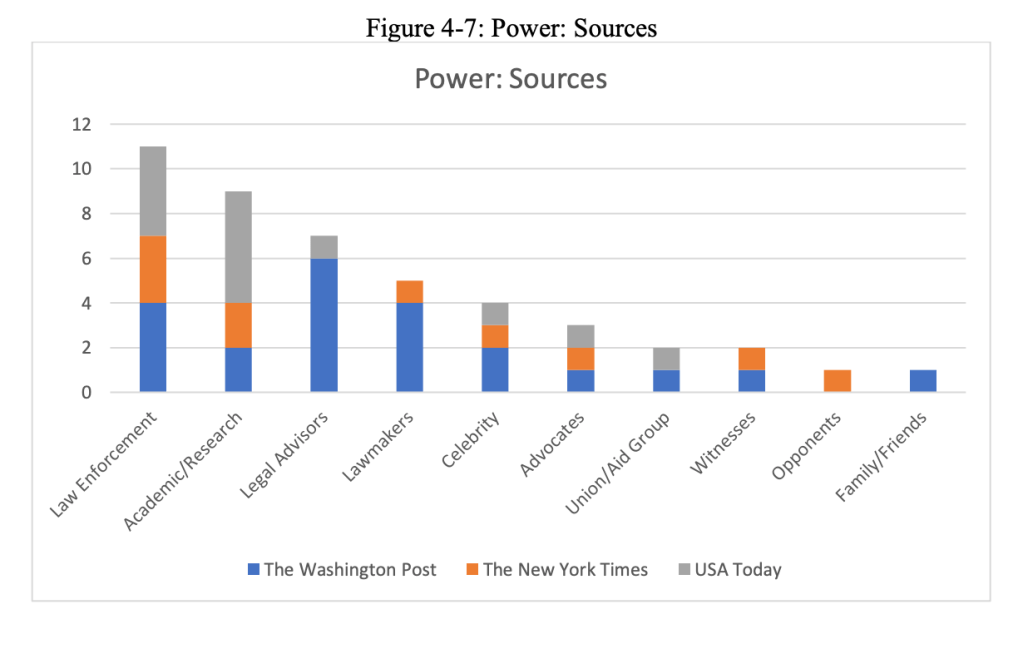
In the abstract of her dissertation, Dr. Assaf mentions, “potential ramifications of hidden power, as well as recommendations on altering the use of the key terms and sources used within the article, are discussed” (Assaf, 2020, p. v). The newspapers that were analyzed through her research made many implications of the “dangers” of people with mental health diagnoses, therefore feeding into the stigma surrounding mental health. In the section of her dissertation, “5.1.5 Predominance of Sources with Hidden Authoritative Power,” she mentions, “these dominant perspectives were more likely to present an individual with a mental health label as an aggressor rather than a victim or a neutral party, increasing stigmatizing language, perpetuating stereotypes, and further unbalancing levels of power” (Assaf, 2020, p. 106). The chart below shows the power sources in which the content of the publications and how detrimental the language used by these sources is since their words are being read on a large, national scale.

As Dr. Assaf’s study was originally published in 2020, we found it important to see if there were any notable changes in her observed findings since her study was done. As we discussed the constantly evolving state of the newspaper medium, Dr. Assaf discussed how she noted a difference in how mental health is mentioned in the media. Although she didn’t specifically focus on the correlation of mental health to gun violence in her research, a popular topic in the research of mental health at the time, she has found a decrease in the number of headlines assuming a mental health diagnosis on a gun violence perpetrator. As we focused heavily on discussing and understanding Dr. Assaf’s research methods during our conversation, we learned how research and findings can change.

As we concluded our time with Dr. Assaf, she encouraged media consumers to ensure the sources their information is derived from are reputable. With an influx of news being distributed through blogs and social media, it is important to be aware of reactionary language to encourage online sharing, who the information is coming from, and where they get it. These simple ideas can help consumers gain the factual and necessary knowledge that they’ll continue to carry and inform others with.

View the full interview with Dr. Assaf here:

Full Interview with Elise Assaf