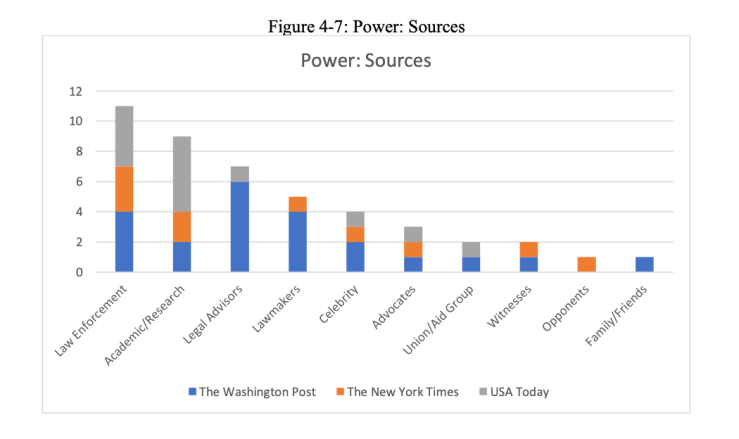
Interview With Robert Meeds: Qatar and News

By: Olivia Morris, Sheyda Ebrahimi, Cyrus Tavakkoly, & Mhaczyne Chu De Castro

November 5, 2024
Q1: What was your time like in Qatar?

So I lived in Qatar for 4 and a half years, got there on New Years Eve in 2010 and left in the middle of 2015 for 4 and a half years. My son was born there. It was a very interesting place to live, I mean it’s hot and dusty; uber conservative but it has a thriving expat community. The money was way better than I’ll ever make in any other academic appointment. You can travel and all that kind of stuff so it was a very cool place to live.

Q2: What made you come to the conclusion that you wanted to conduct research about how people received their news in Qatar?

The real practical reason was that Qatar University had very good funding for conference attendance, only you had to have a paper accepted. So I was trying to figure out a paper to write to get accepted to these various conferences that would be in Lebanon, Morocco, Jordan, and these places I wanted to go so I started writing papers. In my main area- Advertising research, that’s not really a very big or popular research in the Khaleeji Region in the middle east and so I was trying to figure out something else to do and I found out that there was this really good data set that was available that nobody was using and I thought, well, i’m going to look into that because it was a really rich resource, that people weren’t using and so, I kinda just thought I would troll it for data and see what I can find.

Q3: What type of sampling method did you use to collect the participants?

So this methodology was the research; the surveys were conducted by a professional survey research group. A research foundation that was funded by and housed at Katri university, which is where I work. So there were these people that had worked for top-notch research companies in the US and then, Europe and had this research background, and so, they got grant money from the Katri foundation, which is a very large and wealthy organization that funds a lot of prosocial things in Qatar, and one of the things they wanted to do is fund what they call omnibus survey of life in Qatar. And I don’t know if any of you have ever heard of the general social survey in the US; it is a really big survey that sociologists have been doing, probably since the 1970s, and so they do this survey or modules of it every year. And over time, they’ve developed this incredible database that can show trends data on how values and attitudes and all kinds of things are changing in US society over a period of time because they keep adding to it and also ask a lot of the same questions from year to year so this survey in Qatar was modeled after the US version of the general social survey. 

So if you mention that to Dr. Du, I’m sure Dr du will be well aware of the general social survey. And so, anyway, they had all this funding to do this research, and they surveyed, I believe it was over 2,000 people, about 2100 people on this portion of the survey that I was working on the data on, and these were all done in in-person interviews and using a computer-assisted personal interviewing device, so basically, it’s a data collection device on a tablet that administers the survey. Exactly how they sampled it, I’m not entirely clear. It could be that I knew and I don’t remember it could be that I just never knew because in-person sampling, sampling for in-person surveys, often becomes a function of multiple different techniques. One is called snowball sampling, which is where you get some people and then they refer you to others, and refer you to others. That’s not a real statistically strong method of sampling. Could’ve been convenient sampling; I imagine they did hang out at a lot of coffee shops and restaurants, and they did hang out in the malls and things like that and just invited a lot of people, and then there was probably also some invitation through email, text messaging, phone calls, to get people to agree and then let the interviewees come to their home so it was probably, for something that big, a combination of sampling methods.

Q 3.1: Just a follow-up question, in the pre-test assessment, you ruled out migrant laborers from the analysis. Did it affect the overall results?

Probably not because, first off, to understand who the migrant laborers were, and I don’t know if you are that familiar with the population compositions of countries like Qatar and Dubai, things like that. They have, so Qatar for instance, was a population of about 2 million people when I lived there; only about 15% of the population were Qatari nationals. So national citizens from Qatar. The rest were people that were brought in there to work and then they kind of classified the people who were brought into work into two very broad categories. There were the expatriate workers which I was one of those, but these would be mostly people who were working in kind of professional jobs. Management, a lot of stuff in the energy sector. Medicine, education, those are expat workers. Most of the expat workers were from other Arab countries. In the MENA region, North Africa, around the Mediterranean basin, and things like that where you tend to have pretty high levels of education among the Arab-speaking population, but then there were also plenty of European expat workers and things like that. Those were the two groups that were included in the survey. The migrant workers are largely laborers, and they would be, and I don’t know if you’ve followed this, it was kind of a big controversy during the World Cup, but it’s quite controversial how migrant workers are treated in these countries. There’s a lot of promising higher wages than they actually get delivered, there’s a lot of, they get them into the country and then essentially, confiscate their passports so that they can’t leave. There are a lot of human rights issues there, and the people doing this survey wanted and did a lot of interviewing migrant workers to get their perceptions of life in Qatar. However, on the variables that I was looking at as far as media consumption and things like that, there just wasn’t enough. They weren’t even asked those questions because they didn’t have them; they mostly lived in communal housing and did not read newspapers, had very little access, had no general media, and very little general media consumption. Had they had media consumption and been able to be in the survey, may have been a completely different set of results. But they also would’ve been very reluctant to honestly answer questions.

Q4: When conducting this research, how do you determine the sampling error percentage?

So, technically, every question in a survey has its own sampling error, but we usually report the sampling error broadly based on the sample size. I looked it up right before because I couldn’t remember, but the equation… Have you taken any statistics in your research methods class? Okay, so sampling error is calculated using a z-score, which is a standardized score with a midpoint of zero, and each standard deviation is one, or minus one, two, minus two, etc.

The sampling error is calculated as Z, which is based on your confidence interval, and for most surveys, you want a confidence interval of plus or minus 5%. What that means is that within this confidence interval, if people are rating something on a scale of 1 to 10 and the mean is 7, you’re confident that the true mean is within 5% of 7. That’s what a confidence interval represents. So, you take your confidence interval and multiply it by the standard deviation of the population for the variable you’re considering. The standard deviation of the population is divided by the square root of the sample size, and that gives you a percentage.

Q5: Given the nature of the research, did you find it easier to conduct the research using quantitative or qualitative methods?

I’ve always been a quantitative researcher, that’s how I was raised. And with a data set like this it’s intended for quantitative analysis.

Q6: Could you explain the importance of media framing and agenda setting and how that can influence the public’s opinion?

It’s a theory often used in mass communication  context and they’re related. The whole agenda setting framework which started I think in the 19780s McCombs and Shaw had a famous article that kind of started this agenda setting model, but there had been for many many years research into people that were thinking that the media in general and news media in particular had these major effects on what people believed, how they voted, how they thought about things, and the research simply wasn’t supporting it. There just was this idea of these major Grand effects, which kind of grew out of the post WWII framework where sociologists and researchers were really concerned about how somebody like Hitler could come along persuade an entire population of country to believe that a set of people were bad and needed to be removed and needed to be exterminated, right. And researchers were like how can somebody be that powerful through their use of the media and they started thinking that media had these profound effects on people but it isn’t necessarily the media that is having these profound effects. And so the agenda setting model kinda started with the idea that maybe the media don’t tell you so much about what to think, but they are pretty good at informing you or informing you in terms of what you think is important. Not so much what to think, but what to think about. If you were to look at political polling right now leading up to the presidential election and I am not sure exactly the order of the top 5, but the top 5 issues across the broad samples of American voters would be the economy, immigration, climate change is actually in the top 5, democracy itself is in the top 5, and I can’t remember the 5th one but that could be an agenda setting effect, depending on what news media  you are most paying attention to, which ones they cover the most could influence you in which order is most important So that’s the idea of agenda setting. Framing then gets into how do they characterize the issues and that’s where you get more into liberal media, is it mainstream media, is it conservative media and they may cover the same topics, but they are going to put a vastly different spin on it depending on the political leanings of the people running these news organizations, but also to an extent of the political leaning of the audiences, and trying to feed them information that is consistent with their world view and all media do that so that’s the relationship between agenda setting and framing.

Q7: What language is the news given in in Qatar?

So in Qatar, I guess it depends on which media vehicle you’re talking about. Most of the newspapers were in Arabic only, and then there were two English-language newspapers. Al Jazeera, which is featured pretty prominently in this article, is headquartered in Doha, Qatar, and is quasi-funded by the Qatari government. Al Jazeera essentially has two networks: an English network and an Arabic network. They have different managing editors. The whole top structure is unified, but they are essentially different news divisions under the same name. So, there are different reporters, camera people, producers, and programs between Al Jazeera English and Al Jazeera Arabic. Some of the other TV news networks mentioned would be mostly or completely in Arabic, but they come from other countries like Saudi Arabia.

Q8: I think you talked about this a little bit earlier, but based on the research that you conducted in your results what type of surveys would you recommend we use in order to receive the most effective and accurate data?

Meeds: So tell me a little bit more about what you’re doing

Cyrus: Yeah so we wanted to interview students about like where they consume their media and if it shapes their opinion, or we can find that out when we ask them, but we didn’t know the best way to do that, like we could probably go on campus

Olivia: We were also thinking we could do a google survey and send them because we all have different classes and Discord chats we can send them in there but I feel like we would need to have a some sort of incentive for them to do the survey, but i feel like thats a good way to get more people to do it in a different demographic of people if we were to send it out that way instead of going up to everybody on campus and having them answer questions right then and there, would you think that would be a good idea? 

Meeds: It very well might be. Are you talking about doing a survey then?

Olivia: Yes making a survey and having them fill it out.

Meeds: Ok so like a quantitative survey you could set it up in qualtrics. You could also go through survey monkey which is pretty cheap, and you can limit it to college students

Olivia: Ok, so narrow it down so it’s not so broad.

Meeds: Right I would have that conversation with Dr. Du, who is more engaged in survey methodologies than I am, most of my research has been behavioral experiments so this whole thing of doing secondary analysis on survey data was a jump in a different direction for me. I’m not a survey researcher. She knows you won’t have a lot of resources and you’re not going to get a huge random sample of respondents.

Olivia: Right and she told us from the beginning that the survey would probably be the easiest for us since one we don’t have a lot of time and two it’s just the easiest way to quickly receive the data that we need so I think she’ll be happy with the survey.

Q9: Why do you think Qatari nationals trust Al Jazeera more than other news channels?
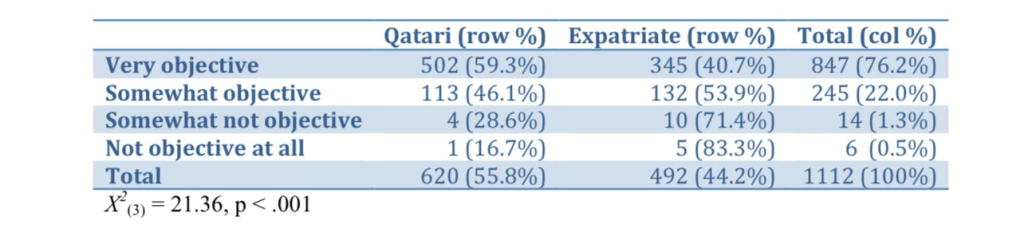
Well, Al Jazeera is kind of the home media. It’s headquartered in Doha. It’s a point of national pride. I mean, Qataris are very proud that Al Jazeera is theirs. And so, they, and I assume they still do, but it is kind of a point of national pride, so it would be natural that they would trust that more so than news sources that were from outside the country. Al Jazeera has been criticized quite a lot for being very pro-Qatar in their editorial stances. As you might expect, but that didn’t necessarily bother the Qataris, so they tended to trust it.

Q10: At the end of the study it was deemed that television was the dominant source for news, looking back from those 10 years how that has changed in both the US and Qatar?
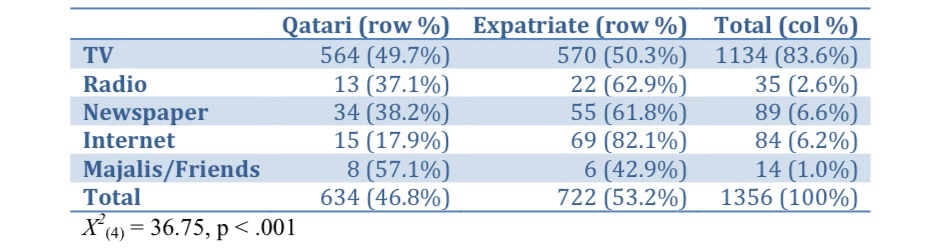
Meeds: the influence of newspapers have a very long and rich heritage in Arab countries even though the models of freedom of the press are quite different than what the US press system was founded on and this was a 2013 paper and I was doing this stuff probably in 2012, which is one of the reasons why I don’t remember it real well, I don’t remember what I had for dinner last night laughs. But even then the influence of newspapers was waning in 2012. The influence of Al Jazeera in particular in television news was very strong but people were starting to consider Facebook as kind of a source of news information, so now Facebook is a bit pase and I’m sure it is in Qatar as well but Twitter was also used quite heavily so I’m sure that if you were to look at it now you would see a lot more reliance on social media for the source of news. I would guess Al Jazeera is still pretty strong in Qatar, but may not be as strong in other Arab countries. One of things about social media that often gets overlooked in it’s role in providing information in developing countries and 3rd world countries is that a lot of people in North Africa, East Africa where there’s a lot of political strife and also a lot of poverty- they may not have access to much traditional media, but they all have phones.

Cyrus: That’s interesting

Meeds: That is a really big link to the outside world and as cheap as phones are, that has made a lot of information available to many many people who maybe didn’t get much information before.

Cyrus: And I did a slight dive into how people- college students specifically, and how they get their news, and most of it has been through social media whether it’s Instagram, or Youtube, a lot of it being third party sources, unlike older generations that use traditional like TV or newspaper and I thought it was pretty interesting how it can shape their perception of world foreign affairs that are going on today 

Meeds: Very much so.

Our Interview With Meeds
Interview with Jasmine Phillips Meertins on Institutional Barriers in Relationships with Incarcerated Partners

ceciliaordaz8


By: Jizelle Hernandez, Alejandra Rodriguez, Cecilia Ordaz

Jasmine Philips Meertins, LinkedIn Profile

Overview

Dr. Jasmine Phillips Meertins is an assistant professor in the Department of Communications at California State University, Fullerton, teaching digital foundations and public relations courses. She holds a B.A. in political science from Yale University, an M.A. in international affairs from George Washington University, and a Ph.D. in communication from the University of Miami. Prior to working at CSUF, Dr. Phillips was an assistant professor at Nevada State College, teaching courses such as Public Relations Campaigns, Case Studies in Public Relations, and Social Media. She was also a Director of Education Abroad at Virginia Commonwealth University and Assistant Director of Study Abroad at the University of Miami, where she led marketing communications to promote international program participation. Dr. Phillips conducts research at the intersection of communication, culture, and media, utilizing both quantitative and qualitative methods. 

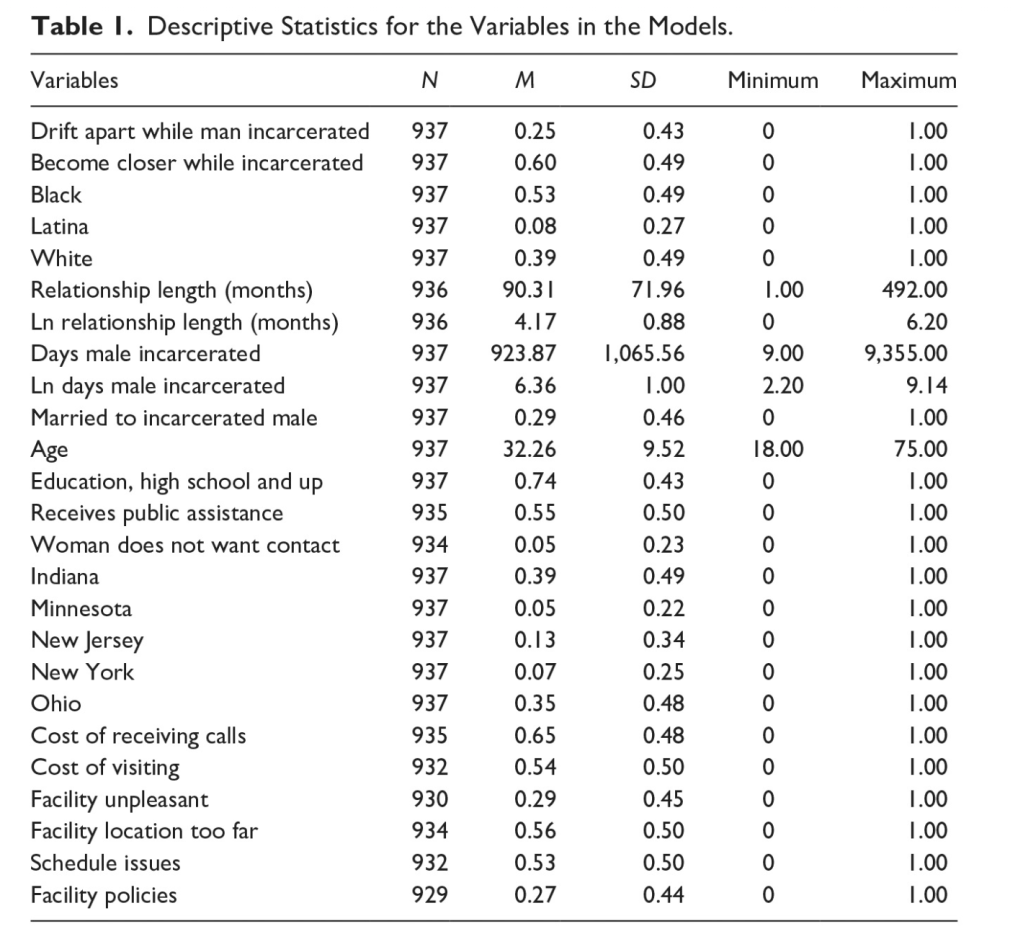
During our interview, we focused on Dr. Phillips’ research study, “Institutional Relational Maintenance Barriers and Perceptions of Relationship Quality Among Women With Incarcerated Partners,” which she conducted with her colleagues, who are also scholars with different academic backgrounds. The study highlights how institutional barriers in the prison system affect the relationship quality of women whose male partners are incarcerated. The research focuses on how these barriers impact women’s emotional connections and perceptions of their romantic and co-parenting relationships. Through both quantitative and qualitative methods, Dr. Phillips and her colleagues found that these barriers contribute to women feeling emotionally distant from their partners.

Q: What inspired you to explore the impact of institutional barriers on relationships of women with incarcerated partners?

This research opportunity came about when a colleague of Dr. Phillips, who works in the criminal justice field, approached her with the idea of collaborating on a research project. Dr. Phillips, a scholar in communications, and her colleague recognized the potential for a collaborative approach to studying issues at the intersection of their two fields. They began brainstorming ideas to find a topic where communication and criminal justice issues overlap. They identified an area of interest: how institutional barriers can impact relationships in the criminal justice system. They specifically discussed how communication challenges within the prison system affect relationships between incarcerated partners and their families. This collaborative process allowed them to develop a unique research topic that combined their expertise, leading to the study of “Institutional Relational Maintenance Barriers and Perceptions of Relationship Quality Among Women With Incarcerated Partners.”

Q: What were the demographic characteristics of your study sample, and how did you select participants?

For her study, Dr. Phillips focused on a predominantly female sample. The critical criteria for inclusion were that the participants had to be non-incarcerated women in a romantic relationship with an incarcerated male partner. Additionally, the women also had to have a child with their incarcerated partner. Dr. Phillips did not exclude participants based on age, race, or other demographic variables. The study aimed to capture diverse experiences and perspectives among women navigating relationships with incarcerated partners by maintaining this broad inclusivity. The study allowed for a more comprehensive understanding of these women’s challenges and relational dynamics.

Q: What specific data collection methods did you use to gather information from participants?

Dr. Phillips and her colleagues did not collect the data for this study. She explained that, as a researcher, she had initially assumed she would always gather her own data. However, she learned that in some cases, researchers analyze pre-existing data rather than collecting it firsthand. Dr. Phillips and her colleagues used data from a broader research project focused on incarceration, parenting, and partnership. Gaining access to interview people who are incarcerated or those visiting jails and prisons can be challenging, so they analyzed the interviews the original study conducted. Overall, learning that analyzing existing data was an option was an important insight for her research approach.

Q: Can you describe the process you went through to develop your survey questions? How did you ensure they accurately captured the participants’ experiences?

Dr. Philips discusses the limited control she had in developing the survey questions, which were primarily close-ended, allowing participants only three response options. She emphasizes that in the field of social sciences, complex variables like attitudes, perceptions, and feelings can make it challenging to verify the accuracy of participant responses. By using close-ended questions and Likert scale options, however, the survey design simplified data collection and analysis, providing a more straightforward approach to gathering responses across these nuanced variables.

Q: Why do you prefer qualitative research over quantitative?

Dr. Phillips notes her abilities to be limited in numbers. Therefore, she prefers qualitative research because it enables a more in depth exploration of complex issues. While she acknowledges the strain that a barrier like incarceration could create on interpersonal and romantic relationships, she believes that the emotions and personal stories exist and are important to outline through qualitative methods. She also appreciates the human aspect of qualitative research, it values the meaningful conversations that reveal the participants’ genuine emotions and feelings.

Q:What challenges did you face during the research process, particularly in collecting or analyzing data?

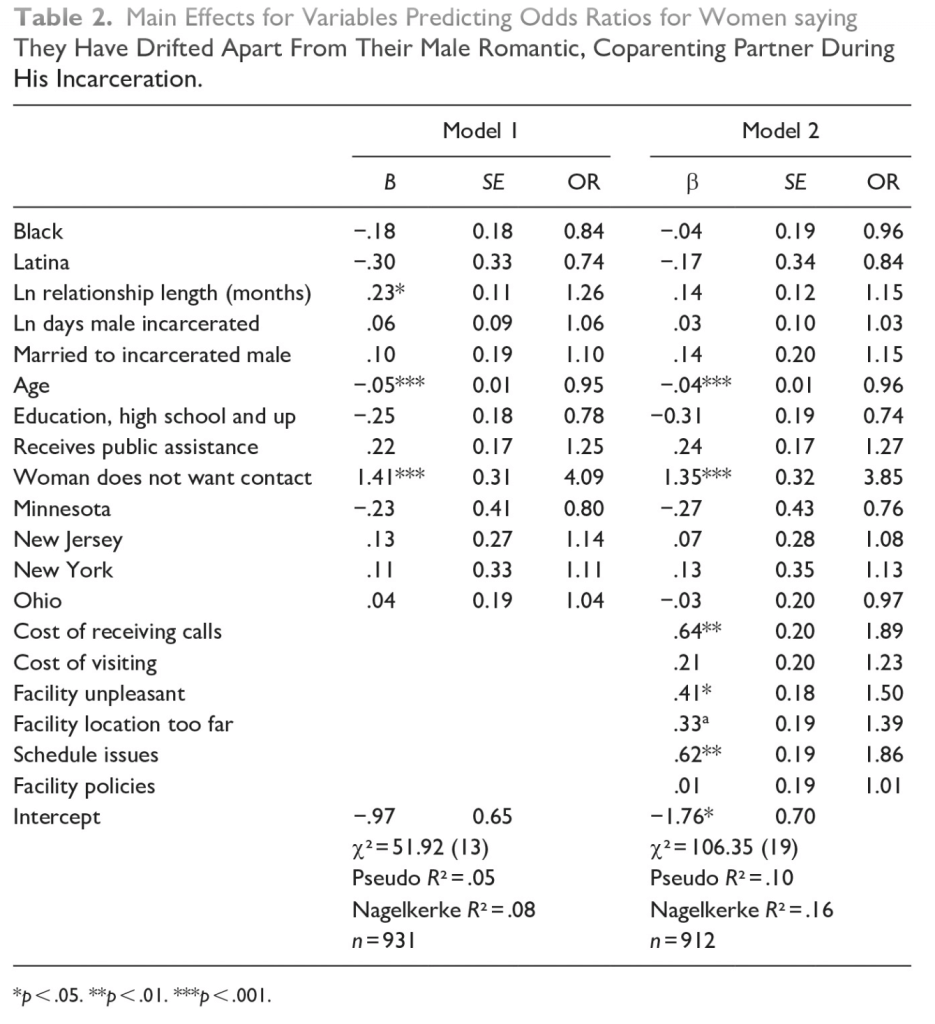
She describes that sometimes you start out with a research question and it doesn’t yield the anticipated results. Initial questions can oftentimes not align with the data that is collected. Dr. Phillips notes that researchers may “reverse engineer it”, by coming up with the results they want and then go on to asking the question. What she and the team did was look at the data set and analyze it in different ways with the hope of uncovering a distinction. Generally, there were certain variables they found not to be significant at all which would result in omitting them or refining the research question in order to understand the data from a different angle.

Phillips Table #1 :Statistical Data

Phillips Table #2

Q: Did you encounter any limitations with your data collection methods? How did you address these limitations in your analysis?

As Dr. Jasmine Phillips mentioned in the interview, one limitation of this study is that the data used was quite old between 2008 and 2014. This made the data less relevant and less applicable to current situations. Dr. Jasmine Phillips also pointed out that this is a quantitative study. There was no way to follow up with participants to clarify or further explore their responses. This made it challenging to understand the reasons behind participant’s answers. In addition, Dr. Jasmine Philips emphasized that the study was a snapshot of one day. It was difficult because it didn’t allow her or her colleagues to track participants from the beginning of their relationships or observe how their views might differ before or after. Dr. Jasmine Phillips concluded her answer by mentioning that this was a longitudinal study and would have been insightful with more varied data.

Q: What specific challenges did the participants identify as most significant in maintaining their relationships with incarcerated partners?

Dr. Jasmine Phillips highlighted that while phone access in prison is often seen as a basic issue, it is a significant problem. Many prisons still restrict phone access; when it is available, the cost is astronomical because two or three companies control it. She continues to say that this burden falls heavily on the families outside, particularly on the primary person with income, such as often being women who are also responsible for taking care of children and planning visits. Dr. Phillips added that she supports free phone calls for prisoners and mentions that maintaining contact through these phone calls can play a crucial role in preserving relationships.

Q: How can the study findings help create better support or programs to help women communicate and maintain their relationships with incarcerated partners?

Dr. Jasmine Phillips pointed out that the high cost of phone calls for prisoners harms both relationships and society. While it benefits corporations, it certainly doesn’t help the individuals or families involved, especially when we live in a period where you can easily talk to someone halfway across the world for free. She emphasized the absurdity of continuing to restrict prisoners’ access to communication, as they are already incarcerated and facing numerous challenges. She continues to mention that several states, including California, have begun to address this issue. She believes this is an important issue to pay attention to. 

To Conclude…

Dr. Jasmine Phillip’s research highlights how prison-related barriers like expensive phone calls hurt relationships between women and their incarcerated partners. These challenges often create emotional detachment between families, resulting in a loss of connection. Dr. Phillips states that making communication affordable or accessible would help these relationships flourish. As states across the country, including California, begin to address this issue, many families have hope that there will be a better support system for prisoners and their families.


Full Interview with Jasmine Phillips

Interview with Julio Reyes: Social Media and the Pandemic

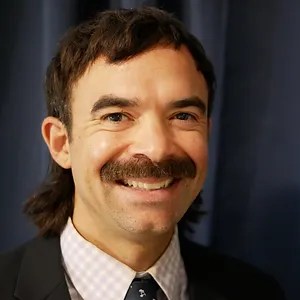
Image of Julio Reyes, Radio Specialist

April 12, 2024

By Graciela, Sophia, Tinny, & Sally

Q: Can you tell us a little bit about what being a media specialist is?

Julio Reyes, the Radio Media Specialist at Titan Radio, California State University of Fullerton’s radio station, has been in in the media specialist business for 10+ years now. He says the his role right now is more on the aspects of radio broadcasting and television and sending out some sort of product for target audiences to consume. Alongside his role, he oversees the radio station and helps the student workers, all while teaching them skills in broadcast and communication. He says the biggest role in his positon is making sure everyone knows how to communicate with each other and the proper way to do it since the way communication has changed since covid. He mentioned how before covid, we would have had our interview with him in person, but since covid, there is barely any in person meetings they’re all on zoom or google meets.

Q: Over the years, have you seen a decrease in the viewership from radio to streaming.

He says since he works in the industry he has a biased view on this situation. He says there has been a decrease that has been seen, but the media world is also in the middle of evolving into this new idea of streaming. He says many people are saying broadcast radio is dying, which is true, but not the way that they think. It’s evolving from its old ways and bringing an upcoming into something new and exciting for the newer generation. He says it’s not the older generation creating this new idea for us, he says its our generation that is shaping the way for this new way of viewer and listenership. 

Q: Being a media specialist, I assume you’re on social media a little bit, have you noticed a change in the way people socialize with the increase in popularity in social media from before covid and after covid?

Mr. Reyes said there is definitely a switch in how people, young and older generation, socialize with each other after covid. He said in his free time he plays guitar in a band, and before covid people would constantly be talking to one another at his shows, and now after covid, it is like pulling teeth to get people to have a conversation with one another without pulling out their phones. He says social media takes a big part in it because there is less repercussion for what you say on the internet rather than in person. 

Q: Can you tell us a little more about your educational background and about any research you’ve done in your field?

Mr. Reyes attended the California State University of San Bernandino and received a Bachelors in Communications and Mass Studies with an emphasis in Media Studies. As he was studying at CSUSB, he worked at the school radio station while simultaneously working two other commercial radio station jobs. He concurrently gained field experience in both high desert and low desert, Palm Desert and Victorville. Mr. Reyes was able to experience dramatically different interactions with a diverse group of people. For instance, in Palm Springs, he was able to work with an LGBTQ+ radio station. This was a completely different dynamic than Victorville, which is a very conservative area and population. 

Q: What radio stations did you work for and what kind of content did you put out?

While attending CSUSB, Mr. Reyes was a production coordinator for the Coyote radio station at CSUSB. After graduating, Mr. Reyes worked for the KQPS, channel Q at the Palm Springs electronic music station and did promotions while working there. He worked a similar position at the El Dorado Broadcasters in Victorville, which is a cluster of five radio stations. While working for these radio stations, Mr. Reyes gained insight on how people think, work, and how music brought people together. 

Q: How has it been working at the CSUF radio station and have you noticed any trends in the media that we put out?

Mr. Reyes really enjoys working with CSUF’s Titan Radio station, his colleagues, and the students. He says that it’s been very challenging and equally as fulfilling of an experience. As for the trends he has exhibited while working at Titan Radio, Mr. Reyes states that he has seen the typical, common trends with young people. He says that the younger audience are the “taste-makers” and that they know the ins-and-outs of trends and what’s cool or not. A common trend he’s seen personally with the Titan Radio students is that they like to experiment. He emphasizes that the students’ ambitious mindsets allow for creativity, whereas in contrast to traditional radio stations, there is little to no creative freedom/expression. 

Q:How do you stay informed about emerging trends in media and technologies?

Julio has stated that he pays attention to what the students are doing to their communication to the words they say from everything. What he attempts to do is to see what young adults are listening to in music and tries to keep an open mind to everything. 

“So a good example is when I first started working here, a band called The garden was super big. And I would listen to it. And I’d be like, What the heck is this, I can’t understand this. But even now, like, after a while, and I’m late to it, I’m late to everything” 

Q:How do you stay creative and innovative in your media work?

Julio states that he attempts to convey this message to a lot of the students, especially the students that he sometimes sees as a little blocked and creative. “One to always keep growing, you know, no matter what the age, I think you can always keep growing. And as far as artistically is, you know, you have your career path, you have your professional side of yourself, right” he states.  He always tells students, you know, do what you want to do for your career, for your accounting, if your communications PR, great, that’s awesome. But remember to also have this linear parallel line of something you love to do, whether it’s art, whether it whatever it may be. He uses the example of when he was working at Titan Radio he always had a show going on. His show would include him bringing in different local Djs from the dance scene and he gives them a platform by interviewing them. Even if it was his job to do so it was still doing something that he loved and is passionate about. And when you do that, you find more fulfillment, and you end up being happier, even though it’s work sometimes 

Q:How do you determine the most effective social media platforms for a specific target audience?

He said he was not sure if he could answer this question but he could in a different way. But he states that the social media platform that he has found staying alive the the app “X” formally known as “Twitter” before its rebranding. He says how it has been around since Facebook and it is still being used especially by newer generations from what he has observed from. He later states that many apps have passed its popularity such as Facebook, Myspace, BeReal,  and possibly instagram sharing that same fate. At the moment it seems that “X” and possibly TikTok are the two apps left to still have a growing audience. Although he believes that TikTok will be the next to die out from its social media popularity.

Q: How has the role of social media evolved in facilitating socialization following the COVID-19 pandemic?

 He said social media during the pandemic (covid 19) keeps us connected with the world, people we did not get to see, family, and friends. A lot of people who are artists have been supported by others, even strangers or friends they haven’t seen for a long time, which has led them to become famous. Therefore, many tiktokers became famous artists during and after the pandemic with a lot of eyes on them. Besides that, the bad side of social media during the pandemic was when people were stuck in their houses and people in the same house were stuck in their rooms. 

Q: In what ways has social media both positively and negatively affected the quality of social interactions after the pandemic?

He said the positive thing would be FaceTime with family or friends that live far away from you. In his opinion. He likes Facetime more than texting, because when he can see people’s voice tone and reasons from a person he calls. In Facetime, it’s better not to misunderstand content such as “I’m fine” when texting, which is different from “I’m fine” when talking. Negatively, some people do not think before they upload the video to express their feelings/ emotions at that point. For example, they just feel sad, and then put the video on social media and the internet. 

Q: Have you observed any significant shifts in social media usage patterns or preferences among different age groups as a result of the pandemic’s impact on socialization?

According to Julio, parents worry so much about their children that they ask them to turn on their location or FaceTime to find out if they are drunk or not. He said it’s bad in the way that the kids would wonder why they need to do that. Growth could be inhibited by too much micromanagement. The lesson cannot be learned unless they go outside the world and overcome the challenges around them, even if they are traumatized. Despite this, there is a need for time for each generation to get used to certain things in the new generation; for instance, he stated that his parents enjoyed using TikTok.

Here is a video of our Full Interview:

Interview with Dr. San Bolkan, College Teacher Misbehaviors: Direct and Indirect Effects on Student Communication Behavior and Traditional Learning Outcomes

By America Maples, Brianna Ruiz and Hayden Fundament

COMM 410 – 02, Roselyn Du

For the past couple of months, our team has been preparing to conduct a study at California State University, Fullerton, or CSUF. To minimize setbacks and errors, we have spent time understanding the process of conducting studies and what it entails. Producing quality research requires both time and attention, and we want to save time fixing mistakes that could have been prevented. That’s why we contacted Dr. San Bolkan, a California State University, Long Beach professor, for some advice based on his study, College Teacher Misbehaviors: Direct and Indirect Effects on Student Communication Behavior and Traditional Learning Outcomes. 

Dr. Bolkan’s study investigated the impact of teacher misbehaviors on student outcomes in communication courses at a mid-sized Eastern university. Drawing upon a theoretical framework of relational power and instructional influence, the study examined how teacher misbehaviors, directly and indirectly, influenced student communication behavior and traditional learning outcomes. The study involved 343 undergraduate students from various communication courses who completed a series of validated instruments to measure teacher misbehaviors, student resistance, class participation, cognitive learning, affective learning, state motivation, and student communication satisfaction. Path analysis was conducted to analyze the relationships between variables, revealing that teacher misbehaviors, directly and indirectly, affected student outcomes, mainly through affective learning. The findings underscored the importance of addressing teacher misbehaviors to foster positive student engagement and learning outcomes in the classroom.

In our interview with Dr. Bolkan, we learned more about the process of conducting a study of this nature and the potential complications a researcher can run into. 

Sampling Methodology:

  1. Can you describe the motivation behind conducting this study and why you chose to focus on teacher misbehaviors?

Dr. Bolkan was a student who continued his education through undergrad, master’s programs, and more. He had always assumed teachers should be good becuase of their role as healpers and leaders. However, he found his own experiences challenged that assumption. There were also times he would hear stories through friends, classmates and students that challenged these ideas as well. This was the motivation that propelled Dr. Bolkan to conduct this study with his own students.

  1. Were there specific criteria used to determine eligibility for participation? If so, what was it based on, and why was it chosen? 

Within this study there wasn’t any specific criteria he and his partners were looking for when choosing the participants. The participants were chosen out of convenience as they were students in his courses. These students were given an extra credit incentive to participate in the study. According to Dr. Bolkan, one of the problems with choosing participants is finding people who will take your study and take it seriously. The ideal study would have been to survey students across the U.S. The next best thing is to get students in classes or in a class where they must participate in a participant pool. All in all, working within the constraints of what he had and working with the students he had access to, the pool was still large enough to be general to the population. Still, the sampled students are less than one hundred percent, which is the weakness of the study.

Data Collection Methods:

  1. What methods were used to collect data from participants? 

When it came to deciding what kind of methods to use for this particular study, Dr. Bolkan used survey methods with existing measures. These survey methods were chosen because he knew they had specific statistical properties that were perfect in collecting the type of data he needed. He calls them “survey items that are a part of questionnaires” that people have developed previously. 

Measurement Tools:

  1. What specific measures were used to assess the attitudes, behaviors, and perceptions of teachers? 

While Dr. Bolkan states, they measured many different things and used a behavior scale to record misbehavior. Other measurements were recorded for personal resistance, participation, and overall course satisfaction. By having many students fill this out, there was a better general understanding of results rather than relying on one person’s responses to these questions. 

  1. How were these measures developed or adapted for the study?

While Dr. Bolkan states he has done his measurement development pieces as a researcher and professor, he relied on the work of science and built off the work of others. He used them to benefit his research since they were validated methods, in the way he needed them to find the relationship between the variables because that was the interest. 

Timing and Duration:

  1. How were the timing and duration of data collection determined? 

As Dr. Bolkan mentioned, this was a survey study, so there wasnt a big concern about timing and duration. He and his colleague gave students extra credit and had them access a link to answer the questions. Sometimes, they would have students take a test based on a video just watched, and in that case, timing is essential to ensure students stay on the video and not walk away from the test, which could cause problems within the data. The test they used for this research was used for one semester and given to students in that time frame, so there wasnt any real need for timing and duration measures.

Data Analysis Techniques:

  1. What statistical methods were used to analyze the data?

Dr. Bolkan used measurement of reliability of the tools to see if they were operating in the way expected which is also what he calls reliability analysis. 

  1. Could you walk me through the data analysis process, particularly how you conducted the path analysis and assessed the model fit? 

All of the data and variables that were collected were put into various softwares to be sorted and organized. Specifically SPSS was used in order to input data from the path analysis and was then assessed by the software if the model was fit when compared to the initial model. Using his study, he could show us how teacher misbehaviors directly affected student learning and impacted the dependent variables.  

Interpretation of Results:

  1. How did you approach any problems or limitations that were encountered while conducting the study and/or when interpreting the results?

Whenever any limitations or problems were found within the study, they were reported right away in order to be properly observed. Any of these outcomes were put in their own limitation section that were separated from the sample. Much of the data collected was perceptual so often with these findings, it was important to recognize there should be a body of research to help multiple outcomes and not just a specific study. Dr. Bolkan recommends to read multiple studies in order to gain a more general and correct understanding of teacher misbehaviors and their effects on students as a whole.

  1. How do you envision this research contributing to the field of education?

According to Dr. Bolkan he doesnt see his study or any study on this topic contributing to the field of education at this point and he had a great way of describing why. From his insight as a professor, the professors who believe in the point of this study are the good teachers who don’t necessarily need to learn anything from it. The professors who should be reading studies like this are the ones who don’t care enough to go looking for them. So essentially this study isn’t reaching its target audience. 

Ethical Considerations:

  1. How were participants informed about the purpose and procedures of the study?

At the beginning of the survey all students were presented with an informed consent document to accept. There is an institutional review board which needs to review  and approve the aspects of the study before hand in order to determine if there was anything that could be harmful in any way to any individuals involved in the study. The only guidelines that were set in place was students were not allowed to describe any identifiable information that could be sensitive towards instructors to keep the study as anonymized as possible.

Our interview with Dr. Bolkan!

Interview with Dean of Communications, Dr. Bey-Ling Sha, on The Fundamentals of Conducting Research

By Isabel Lerma, Jadyn Stowell, Dean Tran & Serina Smith

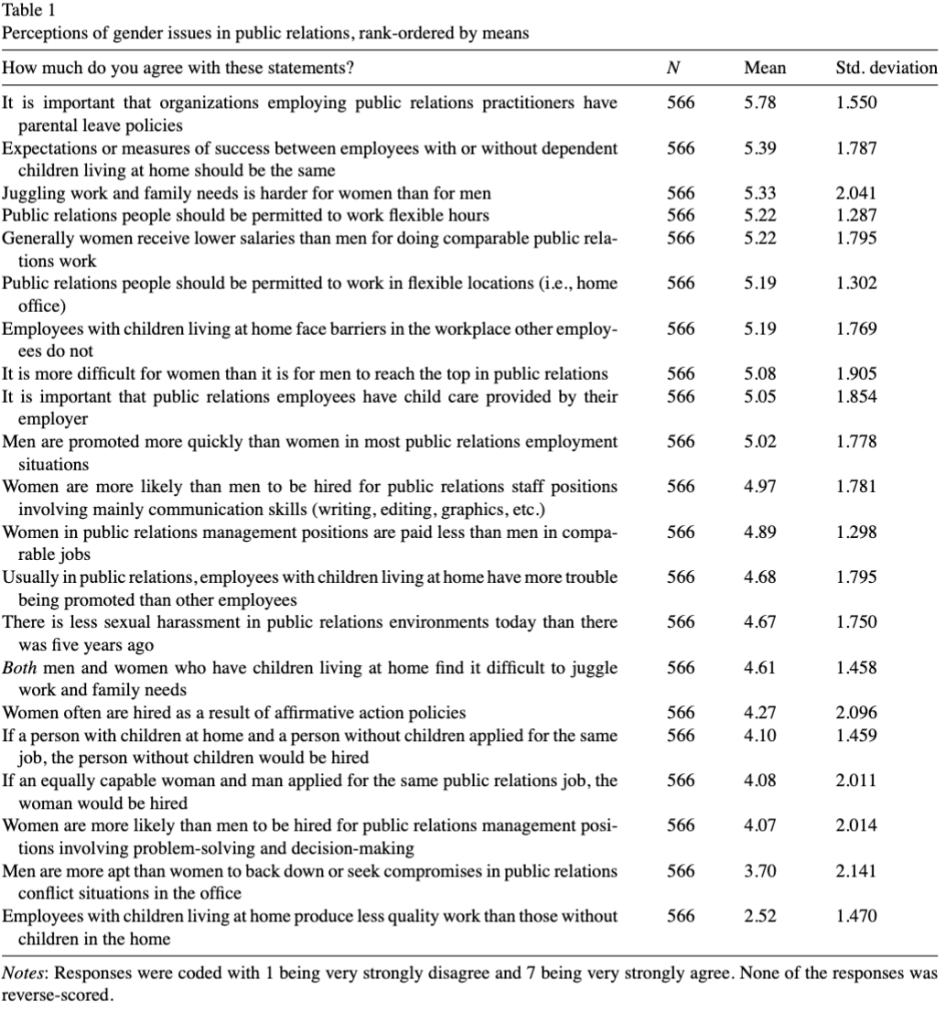
We had the privilege of interviewing our Dean of Communications, Dr. Bey-Ling Sha, an award-winning, published public relations practitioner, educator, and researcher. She received her bachelor’s in Public Relations & French at Purdue University, her master’s in Journalism, and her Ph.D. in Mass Communications at the University of Maryland. Sha has been very active within the PR world. She has been Editor in Chief for the Journal of Public Relations Research, Chair of the Board of Directors in the Union of Pan Asian Communities, and a member of the College of Fellows of the Public Relations Society of America. A handful of her studies have emphasized gender and interculturality within the field. As an Asian American woman, her impact in PR has done much for AAPI and female representation throughout the trajectory of her career, from published research to books, being a professor at SDSU to now being a mentor for students here at California State University, Fullerton. Before conducting the interview, we researched Dean Sha’s background, which helped us develop questions. We came across two articles, one of her own research, “Future Professionals’ Perceptions of Work, life, and gender issues in Public Relations” dating back to 2005, and a research study conducted by now Dr. Nicole Lee “The Role of New Public Relations Practitioners as Social Media Experts,” in which Dean Sha collaborated and oversaw the research process.

We discovered that research does not base progress on key performance indicators but is an ongoing process to find answers for said subject topic. The research concepts are not predicated upon performance bases but more so upon developing growth toward finding answers to research questions through research. Adequate questioning starts the research process with the proper direction for finding answers. They also help reevaluate how the research is being conducted by discovering previous information as a foundation to further develop research findings.

Dr. Sha then goes into how the research was conducted with background information in the public relations sector from the 1980s and 1990s to give a foundation for this research study that was conducted in 2012-2015. She then goes on to share that Dr. Lee found that social media at the time was new to the industry and that many entry-level practitioners were appointed the technician roles by the more senior positioned leaders. The executives and leaders did not grasp this new concept of social media at the time, placing the duties on younger, more entry-level practitioners to execute more managerial roles and responsibilities. 

With the Dean’s level of experience and knowledge, we asked broader questions during our Zoom session with her to further develop our study topic and apply what we have learned to our research study.

Questions

Q. How would you recommend starting the research process from scratch? 

First and foremost, Bey-Ling Sha mentioned that when starting research, it is essential to have a question to which you want to know the answer. Research, as a whole, is all about finding answers to our questions. Different aspects, such as the target population, help you start the research process. The target population is the one who enables you to answer the question. 

Q. What aspects of human relations intrigued you the most in research? 

Bey-Ling Sha is a higher education leader, and her studies focus on public relations and communications. Overall, how people relate to each other with respect to people’s different identities intrigues her. The Purdue alumni is now the Dean at CSUF and does not participate in as much research as she used to, so when students like us want to discuss her past research, it allows her to work out that part of her identity again. Bey-Ling Sha expressed her thoughts on how vital human relations are in the present world.

Q. How would you recommend splitting responsibilities between partners to complete the specific study you set out to conduct? 

Splitting responsibilities all depends on the kind of study and the questions being answered. Everyone has different abilities and strong suits for contributing to the specific research, and it comes down to who you are working with. Bey-Ling Sha explained that there may be a huge data set, and the studies have various authors. To split everything, the writers will rotate authorship and help each other. Ultimately, it comes down to who’s idea the study was and who drives the question. 

Q: How would you recommend splitting responsibilities between partners to complete the specific study you set out to conduct? 

Splitting responsibilities all depends on the kind of study and the questions being answered. Everyone has different abilities and strong suits for contributing to the specific research, and it comes down to who you are working with. Bey-Ling Sha explained that there may be a huge data set, and the studies have various authors. To split everything, the writers will rotate authorship and help each other. Ultimately, it comes down to who’s idea the study was and who drives the question. 

Q. What research methods do you prefer using from a personal perspective?

A common problem that researchers face is fixating on a specific or preferred research method in a research study. Dean Sha stressed the importance of assessing different research methods to find the one that would yield the best results. Research studies could be conducted in many ways, and conducting research that will answer your research question would be the best way to start. 

Q. What type of research topics pique your interest?

Dean Sha has extensive experience in PR and finds topics within the scope of PR to be the most interesting. She is particularly interested in organizational relationships and relationship building. 

Q. If a Wikipedia page were created about you, what would you want on there, and what would you want to be known for? 

Dean Sha emphasized that she would rather be known for her contributions to CSUF as a mentor and dean rather than for research studies or literary work. Though she has been productive and ambitious on her path to her role as dean of communications at CSUF now, she finds her work as a college dean the most rewarding. 

How people relate to each other now is increasingly important because often, what is happening is we don’t really take the time to find out who people really are. We are more reacting to who we think they are.

-Bey-Ling Sha. 

Example of Findings in Bey-Ling Sha’s 2005 Study:

Conclusion

Dr. Bey-Ling Sha has a lengthy background in PR work which deemed her the perfect candidate to enlighten us on all things research. Her published research has emphasized interculturalism, gender roles, and identity and how they are foundational in the public relations field. Our interview with her allowed us to gain perspective for our study through her hard work and experience as a seasoned professional.

Interview with Dr. Elise Assaf on the Narratology of American Special Education Textbooks

By: John Torres, Audrey Marcilla, John Square, Roberto Ordonez

Introduction

My group had the pleasure of interviewing comm scholar Dr.Elise Anguizola Assaf on her part in writing and researching for “​​The Politics of the Hero’s Journey: A Narratology of American Special Education Textbooks.” Dr. Assaf, Dr. Scot Danforth, and Professor Jennifer James collaborated on this research study to show how special education textbooks, commonly used to earn a teaching credential, fail to portray disabled students as active participants in their own lives. These texts allude to the notion that they cannot make their own decisions. Therefore, they are left out of decisions that affect their lives and well-being. It also fails to empower the instructor to make a difference in the lives of the students they will serve. Instead, they are forced to conform to antiquated ideas of what it means to be a disabled person in and out of the American education system. Dr.Assaf and the rest of her team call for a shift to a disability studies approach to education rather than the current segregative special education programs in place all over the United States. 

Motivation and Background 

Dr. Assaf, Dr. Danforth, and Professor James all shared an interest in disability studies. More specifically, they all wanted to emphasize the significant differences between disability and special education studies. Dr. Assaf defined disability education as a shared classroom with students with disabilities and other students, while special education divides these students into separate classrooms. The major issue that Dr. Assaf and her team found with special education is the lack of inclusivity. Flaws with the special education system include the limited opportunities for social interaction between students and the perpetuation of stereotypes. With Dr. Dandorth’s extensive experience and background with studies in special education and disability studies, Dr. Assaf and Professor James were able to conduct a research study where they highlighted how special education textbooks lack in creating a path for teachers to help students with disabilities meet their academic potentials through their collaborative efforts. Dr. Assaf, Dr. Danforth and Professor James strived to empower educators to take on different approaches to their teaching methods and styles to create an environment to help all students thrive regardless of their ability. 

Goals and Challenges 

Table 1.1 pulled from Dr.Assaf’s research study

The hardest challenge that Dr. Assaf said her team faced was getting the data from the textbook companies. Many of these textbook companies were worried about what they were doing with the data and what their intended goals were for their research. Nevertheless, they were able to obtain as much information and data as they needed to conduct their research. Their primary objective was to showcase the lack of information necessary for inclusive teaching and learning within these textbooks. By revealing how these textbooks were not providing enough information for inclusive learning, their hope was for this study to open the door and evoke a sense of urgency to incorporate disability education in favor of special education. Bringing different lenses and approaches to teaching and education for disabled students would ultimately aid the lack of inclusivity within the education system. 

Methodological Approach 

Dr.Assaf and the rest of her team used several different methodological approaches to analyze the data they collected. These methodologies aim to unravel how the history of special education is presented to future educators. It focuses on linguistic elements, narrative structure, and thematic content. The primary approaches include: 

Content Analysis

Here, their team focused closely on the portions of the text that revolved around the history of special education and how it is structured through prose, structure, and citations. 

Discourse Analysis 

Their team took a more traditional approach, such as line-by-line coding. In her interview, Dr.Assaf explained how her team fed their texts into an online program and gave it keywords to find specific information. This was also to see how often or not certain words were used and how they were used to get a clear understanding of how concepts were being presented. 

Narratological analysis

Their textual analysis uncovered a motif prevalent throughout their research. The concept of the hero’s journey was used to express how special education has evolved over time. According to their study, the hero’s journey consists of five parts: a call to adventure, supernatural aid, threshold guardians, trials and tribulations, and the return. This concept was employed partly because it makes the ideas they are trying to convey easier for the reader to understand. In her interview, Dr.Assaf stressed the importance of “writing for your audience” when reporting your findings to ensure they reach the target audience. 

Findings 

Dr.Assaf and her team uncovered several problems within these textbooks and how they portray special education students and instructors. These textbooks do not express these two groups’ agency or the difference it makes. Instead, they choose to revere and focus on the efforts of historical figures and legislations they helped pass. This portrayal undermines the professional identity and autonomy of exceptional education instructors and positions them as passive recipients of wisdom rather than active, innovative participants. Disabled students and adults are often dehumanized in their portrayal and unincluded in decision-making on what will affect them. Little to no focus is placed on their adult lives. Rather than attempting to empower these individuals, they paint bleak pictures of their future. These texts also express skeptical views of inclusive education, a method that, according to Dr.Assaf, several other countries have adopted and have had great success with. Separated education is almost uniquely American and fails to encourage these individuals to be self-sufficient and empower them to feel like they have agency in their lives. 

Learn How Mental Health as a Burden Affects YOU!

By: Jack Gritters, Victoria Valdez, Julianna Igama, Liliana Flores

Elise Assaf, Assistant Professor of Communications California State University of Fullerton

Introduction

With a growing society’s awareness of the importance of conversations surrounding mental health, there have been a lot of unproductive discussions. The way we discuss mental health and its effects on individuals and those around them is just as important as having difficult conversations. We still have a long way to go in terms of breaking down misconceptions, stigma, and accessibility to resources. Still, one step towards progress we as a society can and need to make is the language we use when having these conversations. These conversations become unproductive when we use language that only further enforces barriers.

These thoughts are what led researcher and California State University Fullerton Professor Elise Assaf to conduct a study on journalistic representations of mental health. Assaf sought to bring attention and research to the ways in which mental health is portrayed as a burden in journalistic representations. 

Conceptual Ideas of Research

When interviewing Assaf, we focused on three research methods she used in her study: frameworks, critical discourse analysis, and overlexicalization. Assaf’s study consisted of choosing three national publications and two keywords, “mental health” and “mental illness,” which were then searched for in articles spanning a six-month time period. Assaf used frameworks to analyze and understand the data that was then collected from this search. Critical discourse analysis was used to justify the importance of the language used when discussing mental health. Overlexicalization was used to come to these conclusions when examining the language she found surrounding her keywords. These research methods allowed her to create such a nuanced study. Our interview with Assaf gave us more insight into the processes utilized in creating and conducting the study. 

Frameworks 

Elise Assaf described mental health as a burden to be directly affected by “Frameworks used by individuals aren’t just those that they create, rather they are bound to various cultural issues and focuses”.

Assaf’s study identifies a two step concept of framing that involves presentation as well as the reader’s interpretation. Presentation focuses on the aspect of telling a story and how frames can be used in the media to create stereotypes to tell stories in an easier manner.

 Step two, reader’s interpretation, is how a consumer will perceive specific stories, stereotypes, and frames. These examples contribute to forming an interpretation and will lead a consumer to believe them to be true. Misinterpretation as well as the lack of unbiased and true information can hinder these steps and damage a subject’s story directly affecting their mental health. In reference to our interview, frame analysis has many positive and negative implications on society, they are inevitable despite some being problematic. It is necessary in the way we communicate about things in society. It is necessary for us to communicate with patients with a mental health diagnosis and use them to tell their story directly to spread awareness as well as be a source for media outlets.

 The two steps of presentation and reader’s interpretation work together to resonate with news and media consumers differently. Overall, the effect on our mental health can be a massive burden and it is important to not be misinformed while perceiving as well as believing frames in society. 

Source: SlideServe

Critical Discourse Analysis

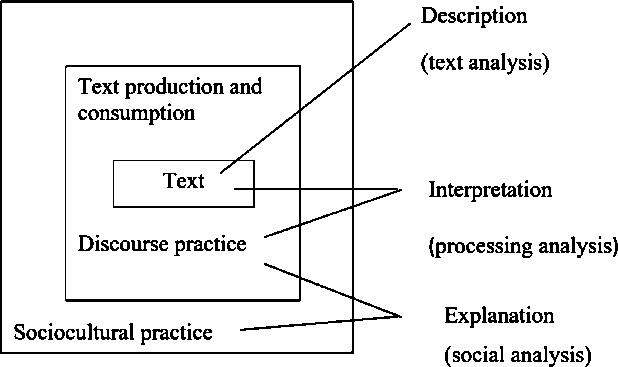
Elise Assaf defines critical discourse analysis (CDA) as a method that involves a hyperfocus on discourse, encompassing both negative, positive, and neutral parts of language. She emphasizes that CDA often involves examining specific elements of language, such as word choice, placement, synonyms, absence, and repetition, rather than solely adopting a critical perspective. The stigma surrounding mental health often revolves around language – the words we use to describe mental illness, the way it’s framed in media, and how individuals talk about their own struggles. Assaf clarifies a common misconception about CDA, noting that while the term “critical” may imply a negative lens, in reality it simply entails a heightened focus on language without necessarily implying criticism. This distinction is crucial as it highlights the nuanced nature of CDA and its approach to analyzing discourse. 

Assaf explains that she used CDA in conducting her study because of her interest in language and its role in shaping values and ideologies. She believes that analyzing language can provide valuable insights into how individuals understand and communicate about various ideas and beliefs, including those regarding mental health. Additionally, Assaf suggests that language serves as a tool for making sense of information and understanding the underlying reasons behind certain phenomena.

Assaf’s approach to CDA reflects a sophisticated understanding of the complexities of language and its multifaceted role in shaping societal discourses. Her emphasis on the analytical aspect of CDA underscores its utility in uncovering deeper layers of meaning and understanding within texts and language.

Source: Fairclough’s 3D Model of Critical Discourse Analysis.

Overlexicalization

Elise Assaf explains that overlexicalization often happens in agenda setting. Word choice and over-lexicalization play a crucial role in conveying ideological meanings in news discourse. The repetition of words is usually coupled with an emotional connotation. Excessive over-lexicalization can imply that there is no need for further research on the topic, which can create one-sided ideologies. Assaf explains that when this happens in news discourse, the same stories are being printed over and over; this can prevent the opposing side of the story from being heard, which can create missing information in these stories. In our interview, Elise Assaf explains how when a person reads something that has been repeated, they often then repeat what they learned from the story to more people. This then creates people reiterating the same things and never learning the full story about what they are reading. In terms of mental illness, over-lexicalization happens very often and can create negative connotations for people with mental health illnesses. Often, with the use of social media, words or phrases associated with mental health can be over-lexicalized to the point where the word loses its meaning or people misconstrue the true meaning of the term. Assaf explains how the repetition of words and the connotation in which the words are used both have a strong impact on their audience. It is necessary for people learning about mental health or disabilities to research the terms they are hearing through media outlets because many of these terms are over-lexicalized, which makes it hard for the audience to grasp their correct meaning.

The Impact of Influencer Culture on Consumerism and Identity Among the Youth

Introduction

  • Scholar Interviewed: The spotlight of our research illuminates Elise Assaf, a scholar whose investigative journey delves into the transformative world of social media and its profound impact on individuals with disabilities. Assaf’s academic pursuits are anchored in exploring the vast seas of influencer culture, dissecting its intricate role in sculpting the perceptions, aspirations, and very identities of youth navigating the complexities of disabilities. Her expertise not only contributes a crucial scholarly lens to our understanding of digital culture but also enriches the discourse on accessibility, representation, and identity formation within the digital age. We had the privilege of engaging in a video call with her, delving into the study she had contributed to. Throughout our conversation, we eagerly absorbed her insights as she elaborated on her ideas, offering us a glimpse into innovative concepts.
  • Insights Gained: Our engaging dialogue with Elise Assaf unveiled the multifaceted nature of social media, presenting a narrative that oscillates between the glorification of life through rose-tinted filters and the empowering platforms it offers for voices often marginalized. This dual narrative wields significant influence over the career dreams and personal identity frameworks of young people, especially those contending with disabilities. Assaf’s profound insights into this dynamic underscore the pivotal role of inclusivity and understanding in molding educational pathways and fostering personal growth among the youth. Our discussion brought to light the prevalent issues within the disabled community and emphasized the significant role that social media can play in both exacerbating and addressing them.

Section 1: Overview of the Scholar’s Study

  • Study Summary: Assaf’s work, as detailed in “An Analysis of Literature on Disability and Fear through Life,” focuses on the intersections of disability, fear, and social perceptions across life stages. Their study critically examines how societal attitudes towards disabilities are mirrored and influenced by social media, stressing the importance of self-advocacy and inclusion. It sheds light on the myriad challenges encountered by disabled youth, including bullying, anxiety within educational environments, interactions with faculty and peers, access to higher education, and transitioning into adulthood.

Section 2: Interview Highlights

  • Research Motivations: Assaf was driven by the lack of a nuanced understanding of how social media impacts individuals with disabilities, and additionally emphasizes the crucial significance of inclusivity and visibility for the disabled community.
  • Challenges Faced: One major challenge highlighted was navigating the balance between showcasing reality and maintaining privacy or dignity, especially for those with disabilities. The study highlighted the common dilemma faced by individuals with disabilities, who often find themselves torn between striving for a conventional life and grappling with acceptance of their disability
  • .Impact of Findings: the findings stressed the need for a more inclusive and diverse representation on social media platforms to foster a more accepting and understanding society. We discussed how important it is for genuine concern and interest in these issues for an influencer if they choose to discuss it on their platforms. It was noted that followers can easily detect a lack of sincerity, which can consequently portray the influencer as merely capitalizing on the trendiness of the issue. Furthermore, the research highlighted the power dynamics at play within influencer-follower relationships, emphasizing the responsibility influencers bear in shaping societal attitudes and perceptions. Authentic engagement with diversity and inclusivity issues not only enhances an influencer’s credibility but also contributes to meaningful social change. By prioritizing genuine connection and empathy over mere virtue signaling, influencers can play a pivotal role in promoting tolerance, acceptance, and understanding within their online communities.

Section 3: General Conceptual Ideas

Her work contributes to the broader discourse on the role of social media in shaping societal norms and perceptions, especially around disability and inclusion. It underscores the need for critical media literacy among the youth to navigate the complex landscapes of identity formation and consumerism influenced by influencer culture.

Section 4: Practical Ideas on Conducting Research

  • Data Collection and Analysis Techniques: Assaf emphasized the importance of qualitative approaches to capture the nuanced experiences of individuals with disabilities interacting with social media.
  • Advice for Researchers: The importance of ethical considerations, especially concerning privacy and representation of vulnerable populations, has been stressed.

Multimedia Elements

A Short Video Clip of our Interview

  • Here is a segment from the interview with Elise Assaf discussing the transformative potential of inclusive influencer culture on societal attitudes towards disabilities.

Static Visualizations

  • Only 24.2% of students with learning disabilities disclosed their disability status to post-secondary staff, indicating potential barriers in communication or support systems.
  • A significant portion of students perceived university faculty as inaccessible, with just 33% requesting accommodations, suggesting issues with faculty approachability and awareness.
  • The low disclosure and accommodation request rates imply a stigma associated with disabilities which may deter students from seeking help or openly acknowledging their disability.
  • External influences such as social media, pop culture, and social circles could negatively affect students’ willingness to disclose their disabilities, contributing to the stigma and reluctance to seek necessary support.
  • Recently, there has been a significant shift in positive attitudes toward mental and physical disabilities, marked by influencers and public figures openly embracing their identities and contributions to society.

Conclusion

  • The exploration into the influence of social media on the lives of young individuals, particularly those with disabilities, has underlined a complex situation of how digital platforms act as double-edged swords. Through our discussion with Elise Assaf, we’ve unearthed an intersectional perspective on how influencer culture can both empower and intimidate, shaping aspirations and identities in profound ways. Assaf’s insights highlight the critical need for a more inclusive representation within digital spaces, advocating for a society that embraces all its members with understanding and respect.
  • Through this research, we not only deepen our understanding of these pivotal issues but also take a step closer to realizing a more inclusive society. The path forward is paved with the stories, struggles, and successes of individuals from all walks of life, and it is our shared responsibility to illuminate and honor these narratives within our global digital village.

Publishing Guidelines

  • Authorship: Alexis Logan and Harper, in collaboration with Elise Assaf.

Interview with Professor Claudia Evans-Zepeda about Media Misinformation Regarding Immigration 

By: Angela Cruz, Cristina Rivas, Genesis Gaitan, Guadalupe Ruelas

Professor Evans-Zepeda

On March 29th, we had the opportunity to speak to Professor Evans-Zepeda, an associate professor in the Human Communications department at Cal State Fullerton. She received her bachelor’s and master’s degrees at Cal State LA as a communications studies major. She received her Ph.D. at the University of New Mexico, where her focus was intercultural communication and rhetoric. She wrote her dissertation on the undocumented immigrant youth movement. Professor Evans-Zepeda found interest in the activism being done by youth groups and how they were affected by the immigration laws that barred them from having citizenship, no matter how long they lived in the country.

Q: What inspired you to research misinformation and stereotypes regarding immigration? 

The reason Professor Evans-Zepeda was inspired to research misinformation and stereotypes regarding immigration was because she mentioned that it was a very personal thing to her and her family. Professor Evans-Zepeda and her family migrated from central Mexico when she was about six years old, and even as a child, she noticed a very explicit anti-immigrant sentiment. While growing up, she realized that there was a connection between the kind of words that were heralded towards her and her family, words that were dehumanizing and very inaccurate. That made her want to do a deep dive and make sure that she understood the why, how, and most importantly, the how to make a change so that it didn’t continue to be the experience of other people who are also migrating. She stated that she didn’t want others to feel rejected because their intention of coming here was to bring the best that they could to this country.

Q: How did you conduct your research? 

Professor Evans-Zepeda would call herself a qualitative critical scholar, meaning she does not necessarily depend on quantitative research, which is more based on data. Still, she was interested in the personal stories of people who were related to her interests and who could relate to her story. She has done in-depth interviews to give people who are reading her work a detailed snapshot of what their experience has been like. She has also done other research focusing on her own life and experiences when writing. She also includes content analysis, known as rhetoric analysis (media analysis), which means that what she is interested in is looking for cultural practices; this type of research includes looking at the text and artifacts that can be media-related, and it helps her ask questions and conclude with this analysis what can we take from the media text and make better sense on the question she develops through her process. 

Q: What was your most important factor when conducting research (ex., interviews, reading, surveys, etc.)? 

When conducting her research, Professor Evans-Zepeda emphasized that every research step should be intentional and vigorous. She believes starting with a concrete research question is a substantial base to filter the research you seek and what scholars to reach out to. As a qualitative critical researcher, Professor Evans-Zepeda remains aware that she is not a completely objective researcher. Her personality and personal opinions will affect how she engages in her research; with this in mind, she strives to be ethical in her interview approach and the channels she uses for her study. 

Q: Do you feel that through your research, you were able to figure out why media outlets spread misinformation? 

Professor Evans-Zepeda has spent a long time researching this question; she started in 2006 and tried to find an answer to understand the truth about media outlets better. She stated “yes and no” that she believes media outlets spread misinformation, saying that media outlets can be co-creating the type of research she is doing. Although Professor Evans-Zepeda doesn’t have a congregate answer, she did say that her research and the research she has taken from other scholars with the same interest in this topic have been beneficial in debunking a lot of the myths that do exist about immigrants and the various false information and issues such as “what it takes to be an illegal immigrant” and saying such as “get back in line” and the type of example the media gives to explain why it’s a complicated process. Other myths she brought up that she has seen include what kind of economic assistance immigrants bring to the United States or the many misconceptions such as having to fund the lives of immigrants. According to Professor Evans-Zepeda, that data shows how inaccurate those statements are. She has tried to show others and educate others that many of the numbers and statistics that have been used regarding immigration contribution have been put in the wrong context and are very explicit about immigrants being a very wonderful contribution and necessary element of the United States. 

Q: In your opinion, what is the best way to combat the distribution of misinformation? 

Professor Evans-Zepeda shared that we need to return to reputable, credible, academic, peer-reviewed scholarships because of their high level of academic work, which has gone through many procedures to ensure validity. She also recommended looking at sources. She mentioned that when looking at where misinformation comes from, sources often have slanted political views and an agenda of what narrative to push. She advised bringing forward independent and non-profit venues where they take a more critical lens and give a more holistic understanding of specific topics. Additionally, she emphasized being committed to telling stories that mainstream media and society often overlook through counter-storytelling. Counter-storytelling is vital because it gives the audience an idea of what reality is for folks being affected beyond superficial narratives, which can be very harmful as they push stereotypes and assumptions that are not true. 

Q: Why do you believe that it is important to not spread false information regarding immigration? 

Professor Evans-Zepeda believes it is essential to avoid spreading false information because it has many material consequences. The example she used is the Trump election, in which American citizens saw a significant uptake of anti-immigrant rhetoric being pushed forward. She also highlighted that the hate speech during this time led to violence, and she described it as a very scary thing to witness. She said it was scary that there was this wrong narrative and an amorphous abstract way it impacted Americans. She mentioned the real impact of things such as the border separation and the way children have been affected. She added that this is not just the case for immigrants, but that whenever there is misinformation or false information, and people act in accordance with wrong information, it affects policies and viewpoints and shapes who we are as a nation. She argued that Americans do not want to be a nation that is rooted in nativism, xenophobia, and problematic values since that is not concurrent with what the ideals of the U.S. are supposed to be, which are equality and freedom.  

Q: Do you believe that as a professor it is important to make sure you are teaching your students factual information, rather than relying on what is written by media outlets; if so why? 

Professor Evans-Zepeda assigns research papers in her classes for more purposes than teaching students how to write papers of that caliber. She focuses on teaching her students how to find credible sources. Professor Evans-Zepeda believes the procedure of understanding what is good data is a vital skill beyond simply writing a research paper. It is essential to question what sources information is being taken from. People should question who is writing the “research” they are reading. What are that person’s interests and agenda, how are they looking for the information to be perceived, and why is it important that the information is accessible and public? Professor Evans-Zepeda encourages her students to utilize university resources and approach research with an open mind. 

Interview with Dr. Elise Assaf on Mental Health Labels within Newspaper Media

By: Christina De Luna, Bryana Nguyen, Ruby Marie Perez, and Neida Torres

We had a wonderful interview with Dr. Elise Assaf to discuss her dissertation, Hidden Power: Journalistic Representation of Mental Health Labels. Dr. Assaf is an assistant professor in the Department of Communications, teaching public relations and entertainment courses in the undergraduate communications program. In addition to her professional career, she is also a wife and a mother of 2 and a half children. She is also a lover of animals as she has two dogs and even finds time to raise chickens. She took her time out of her busy schedule to provide very valuable insight to her process in writing and performing her research project.  


Interview with Dr. Elise Assaf


Q1- Can you share a brief summary of your experience, how long you have been teaching, and the field of study that you specialize in? 

Dr. Assaf completed her master’s program at California State Fullerton University in 2015. She expressed interest in teaching and started a position at Cal State Fullerton in the spring of 2016. While she was teaching, she applied to start her PhD program. Her professional background is in Public Relations, which is why she teaches the public relations and entertainment classes. She has a varied background that allows her to be a floater in the Communications department teaching various topics across the department. Her primary research interests are in media representation. One of the the first topics that interested her was when she started to look at sports as it related to the way women were discussed and the bad behavior inside the sports world.  When she went into the PHD program, she wrote a paper about what was affecting college students. She focused on the subject of mental health. She had a personal connection to this topic as she had been diagnosed with anxiety and depression and her brother was diagnosed with schizophrenia. She realized that people have  been vocal about stereo types of people who had mental health issues and it became an interest of hers to explore why these stereotypes existed. Because of her background in media it made sense for her to look at the media representation of those stereotypes and why they were being perpetuated within scripted content on TV. It was very impressive that she shared her personal story as it related to mental health. She said that she shares her story very openly because she believes that you can’t improve on these situations if you can’t talk about them openly.

Q2- Your research study is 250 pages long. How do you know where to start with a topic so complex? 

The first thing that is important is that you have to select a topic that you are interested in. The second thing is that you have to select a research topic that is going to sustain a project. For example, this dissertation theoretically is done in one to  two years, but she has a book chapter that is tied to this dissertation that she is looking at now and that is five to six years later. 

Also, a professor of hers once told her, “The best research is done research.” That is a major factor. You have to know what your time frames are and your topic has to be something that is completed in that amount of time. 

The key points in picking a topic are, the following: 

1. Pick something that you are interested in. 

2. Pick something that can sustain you, but also has a deadline 

The other key thing to remember is that you can always do more research in the future. When you think about a project, think about something that is manageable and that you can always go back to later to review from a different angle.

Q3- What inclined you to choose the three newspaper outlets? Were there any other outlets that you were considering? 

Dr. Assaf mentioned that she had a conflict of interest with one of the committee members where she expressed that being in that scenario was not common at all. She explained that the way a dissertation works has a chair, two committee members, and one would be in the department you are getting your degree in and an outside person from a different university/practicing in the field you are researching in. Then Dr. Assaf tells us that one of the committee members’ husband was working in the LA Times specifically as a health reporter. As she was completing her research his articles would come up in the data set if she was going to pick the LA Times. She explains why she wanted to pick LA Times as a media outlet to study. She originally wanted three national publications- East Coast, West Coast, and Midwest, however, due to the conflict of interest she had to reassess. That led her to The Washington Post, The New York Times, and USA Today. 

Q4- What criteria were used to select the sample of news articles for analysis in this study on journalistic representations of mental health labels?

Dr. Assaf first explained the route with the data was because they were publicly accessible text she did not have to go through IRB and not worry about going back and forth with it. She deep-dived into the process of what articles she would be using based on how accessible they were. She and the committee arranged a timeline and emphasized what was manageable. It was described as how many articles have been written in a certain timeframe and what can be done in the allotted time the analysis needs to be completed.

Q5- How come television or any other medium was chosen? 

Dr. Assaf explained that because the news articles are publicly accessible it dictated her decision. She did not have to pay for the majority of subscriptions, but one. In addition, Dr. Assaf expressed that it was daunting if she chose television, film, or news broadcasting because of how long it would have taken. She was lucky enough to have a colleague verify her findings within the articles she was analyzing and felt that it would have been difficult if she had used a different medium.  

Q6- Across the three newspaper outlets, are there any differences in the language journalists use?  If so, how do these variations contribute to the overall narrative surrounding mental health labels?

Dr. Assaf recalled that there was nothing major between the three newspaper outlets which could be due to their style guide. She explained that these three newspaper outlets use AP for example, but could be modified to that publication. However, it will be mirrored from one publication to the next, and terminology varies with politically extreme publications. Overall, the three publications that were used are ‘middle of the row’ publications and language did not really differentiate between them. 

Figure 4-2 and 4-3 pulled from Dr. Assaf’s dissertation

Q7- During the research process, were there any challenges encountered? If so, what were the steps to overcome the challenges?

The committee was the biggest challenge that Dr. Assaf faced during the research process.  Simply because it was a very different dynamic. There was quantitative and qualitative research.  When doing conference papers, have reviewers who are blind, and they have their own way of research. A couple of people who review her work, have their own opinions on why she did the research methods she chose.

Q8- What methods were utilized when collecting and analyzing qualitative and quantitative data?

Dr. Assaf used online articles within the date parameters. Using an Excel sheet was also the easiest to organize the articles by using code words for each article.

Q9- When reporting on mental health issues, can you go into depth on the qualitative content analysis process? 

Dr. Assaf talked about how content analysis employs a qualitative method, focusing on understanding the intentions of authors through their word choices and discerning how audiences interpret them. She emphasizes the importance of examining specific evidence within the text to infer the author’s intentions and analyzing the language contextually to gauge its impact on the audience’s perception. This involves scrutinizing the phrasing surrounding particular words for deeper insights. 

Q10- We understand that words hold a lot of power. Do you think news publications will be more sensitive to how they word things in the future?

Dr. Assaf’s perspective highlights the evolving power of words in contemporary society, particularly in the context of “cancel culture” and vocal advocacy. The accessibility of platforms for expressing opinions has made it easier for individuals to voice their concerns about problematic language. However, this also creates challenges for journalists who must navigate the ever-changing landscape of terminology to ensure accuracy and sensitivity in their reporting. The diversity of opinions on this topic reflects the complexity of balancing free expression with the responsibility to use language responsibly.

Figure 4-7 pulled from Dr. Assaf’s dissertation

Q11- You mentioned that it is problematic for those who are more knowledgeable about mental health and mental illness to be rarely ever provided with opportunities to speak from the authority of their lived experiences. Why is that? Are they trying to silence them?

Dr. Assaf’s concerns highlight the complex dynamics journalists face when reporting on individuals who are involved in legal matters or have disabilities. While it’s crucial to ensure that diverse voices, including those of people with disabilities, are heard, journalists must approach the situation with sensitivity and respect for their rights and well-being. When considering whether to seek quotes from individuals with conditions like schizophrenia or autism, journalists should prioritize informed consent, respect boundaries set by legal representatives or advocates, and be mindful of the potential impact on the individual’s mental health. It’s essential to foster an inclusive and ethical approach to reporting, recognizing the importance of amplifying marginalized voices while upholding ethical standards and ensuring the dignity and agency of all individuals involved.

Q12- Do you think news publications write that people with disabilities are the aggressors to get the reader’s attention?

Dr. Assaf’s observation underscores the tension between the commercial imperative of news media to attract readership through attention-grabbing headlines and the journalistic responsibility to provide accurate, informative, and nuanced reporting. The prevalence of clickbait headlines and the focus on generating traffic can sometimes overshadow the substance of the stories being reported. Her experience with the New York Times editor reflects a concerning trend where discussions about headlines take precedence over meaningful conversations about the content itself. Moving forward, Dr. Assaf expresses hope for a shift in priorities within the news media industry. 

To watch the full interview here: Full Interview with Dr. Elise Assaf