As research has increasingly become an essential part of the communications profession, lacking such skills will put our students in a disadvantaged position when they enter the workforce, where such attributes may be vital to survive and thrive. It is critical that we make extra efforts to ensure that our graduates are well equipped with such competence.
In fact, research should not be misunderstood as dull numbers or statistics. It means much more than that. In the field of communications, research embraces a variety of concepts, tasks, and skills that are of real necessity to the profession. For example, fact-checking what a news source says is research; collecting evidence to substantiate an argument made in an advertising/marketing message is research; analyzing public records to draft a press release for crisis management in public relations (PR) is research.
“Be curious and cautious.” That is always my motto. That can also serve as the advice for my research methods students.
Karina Cosbey, Hong Ngo, Odalys Raya, Sophia Hoffman
In her article “Breaking the Mold: Women Defying Media Stereotypes,” Tiffany Lederle addresses the many concerns and based around the stereotypes women face in the media. Lederle holds many professional titles, two of which include: ‘AI Integrator and Change Leader’ and ‘Advocate for Sustainable Business and Women-led Innovation.’ She is an activist who acts as a voice, advocate, and adviser to other women who are struggling to make an impact in their endeavors simply because of the presumptions and prejudices set against their gender. Lederle has faced scrutiny in the workplace herself, and is often misunderstood or looked down upon in her field. She claims that part of this is due to the wrong kind of exposure of women in the media.
By: Maritza Barrientos, David Magana, Anthony Noria, and Angie Pineda
Dr. Waleed Rashidi, Department of Communications
We had the pleasure of interviewing Dr. Waleed Rashidi, an associate professor in the Department of Communications at CSUF whose research primarily explores music as a form of mass communication. Using grounded theory methodology, his study aims to build a connection between higher academia and punk rock, while also challenging negative stereotypes often associated with punk rock musicians—such as being uneducated, antisocial, delinquent, or violent.
By Denise Luis Cruz, Lauren Lujan, Eito Sugai, and Grace Tran
Professor Mazandarani
We had the privilege of interviewing Dr. Farnosh Mazandarani, a social scientist and methodologist. She holds a PhD in Communication and Media Studies from the University of North Carolina at Chapel Hill. She began her studies at California State University, Fullerton, where she obtained her M.A. in Mass Communication and B.A., double majoring in Entertainment Studies and Radio-Television Film. Dr. Mazandarani is a part-time lecturer who teaches Mass Media Ethics and Entertainment and Society in the Department of Communication. Her experience includes working for Disney ABC Television Group as a commercial clearance coordinator. She was also a production assistant for Nickelodeon Animation Studios’ hit show The Fairly Oddparents. Professor Mazandarani’s research specifically focuses on pornographic media content and its influence on relationship assessments.
During our interview with Professor Mazandarani on her thesis, “Millennial Perceptions of Pornographic Media, Realism, and Influence on Relationship Assessments,” we were given important insight on how to shape our study. A profound layer of her work lies in her analysis of how perceptions formed in media conception translate beyond the realm of pornography and into broad but impactful aspects of life during our interview. She emphasized that media, especially highly visual and emotionally charged content like pornography, has a strong influence on how people subconsciously form beliefs, often reinforcing stereotypes and shaping how we see ourselves and others in real life.
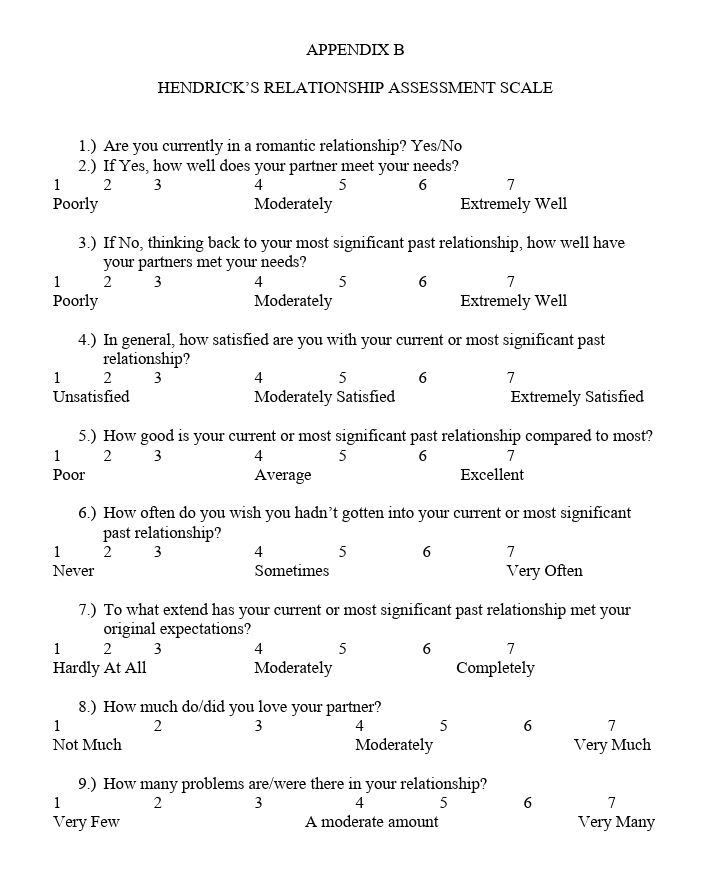
An example of one of the assessment scales used in the study.
This helped us recognize that how people interpret media realism doesn’t just impact their romantic or sexual relationships. It shapes how they internalize and navigate systems of race and power, and they are more broadly identified. Professor Mazandarni explained to us how, in everyday life, we can see examples of this and how individuals form expectations about people based on ethnic backgrounds, from what they consume in movies, news, coverage, and other media outlets. Professor Mazandarni discusses how the adult entertainment industry perpetuates racial stereotypes and capitalizes on racial fantasies and fetishes. After the murder of George Floyd, porn sites were flooded with offensive racist content, following the Black Lives Matter Movement. During our interview, she mentioned that pornography websites often have a massive number of racist titles, ultimately profiting from racism.
Research suggests that the perception of realism in the categories can subconsciously validate the belief that these portrayals represent how people form these beliefs and how they think certain people should behave. Her insight and work show that media literacy must include understanding how media reinforces systematic racism. Mazandari also pointed out that pornography consumption has increased over the years. She referenced that back in 2018, Hawaii residents woke up to an emergency alert on their cellular phone to seek immediate shelter due to an incoming missile. After a second message was sent declaring it was a false missile alert, there was an increase in traffic from users in Hawaii watching pornography.
Professor Mazandarani didn’t shy away from letting us know the reality of conducting research. Things are rarely going to go the way you planned, and most times, you’re going to have to switch your plans midway. She talked to us about how staying flexible is a key way to not block ourselves into a corner and make it harder on ourselves. Professor Mazandarani mentioned to us that her 2016 research was basically a 3 in 1 study. Because she was just starting off as a researcher, her determination to prove everything all at once complicated her overall operation for her study and took a lot longer than anticipated. She also talked about how, because of how her study was formatted, she felt like she wasn’t able to go in depth with each topic that she touched base upon and that she “doesn’t think this study is all that good” compared to the recent studies she has conducted and published. Professor Mazandarani mentioned that if she had the chance to redo the study over again, she would focus on one topic rather than having everything thrown together.
Limitations were another topic that she talked to us about, and how some research has a limit to which you can go before you start to face backlash or lack of information. With Professor Mazandarani’s topic being sexual, an already taboo topic, pre-existing research was scarce, and there were a lot more rules put into place to make sure that research couldn’t go past a certain point. She understands that there are safe measures to protect the public, but at the same time, it’s only hindering researchers like herself from fully understanding human nature and putting that research to good use in other channels like media and relationship evolutions.
The way she formatted her study was intentional, and the Likert Scale surveys and purposefully worded questions were all calculated to the smallest detail to make sure that the results she was collecting would benefit her, either by proving her point or showing her in another direction. She noted that finding the “perfect” way to collect data is never easy and that we should spend a good amount of time focusing on what kind of data we want to collect, how, and why. Many iterations of her study were revised and changed to make the operation as streamlined as possible. We, as students with ample information provided to us by the Pollack Library and other applications online, should take advantage of everything that we can get our hands on. She helped us understand that in any research study, everything is connected, no matter the topic. We were also reminded how important it was to identify our independent and dependent variables early on because that is always so crucial for guiding the direction of any research study. By understanding how these variables interact, it became easier to figure out what kind of data we needed and how to build our study step by step. It made research feel less overwhelming and more like a process you can follow and make sense of.
After interviewing Professor Mazandarani, our team has a clear understanding of what we are going to do moving forward. We have a solid idea of what we want to do for our research project. She informed us that flexibility is key when conducting research, and it is crucial to have a plan if things don’t turn out how we want them to. Ultimately, it is valuable to take advantage of our campus resources, such as the Pollack Library.
By Indie Von Martin, Amber Curiel, Ashley Goines, & Jocelyn Phoumavongsa
Professor Tenzin Dorjee, Courtesy of the CSUF Communications Department
Introduction
For this assignment, we chose to interview Professor Tenzin Dorjee. Professor Dorjee got his PHD at University of California, Santa Barbara, where he completed his PHD dissertation on intercultural dependence in India. He now works as an Associate Professor within the Human Communication Studies Department at California State University, Fullerton. He specializes in intergroup communication, and has vast amounts of knowledge in communication studies. At Cal State Fullerton, he met fellow Communication scholar, Stella Ting-Toomey. Since Professor Ting-Toomey had similar interests in Intercultural Communication, she invited Professor Dorjee to become a co-author for the second edition of her book entitled, “Communicating Across Cultures” (2018). Our interview mainly focused on the research process for this book, which intersected their two perspectives of intercultural communication and intergroup communication.
MORE
How Was Research Conducted for the Book?
Since the book focused on a theoretical framework based on a multitude of intercultural studies, quantitative and qualitative data was used to prepare the text. Interview-based discussion and experimental based research done by different authors was analyzed and used so that the book included a well-rounded understanding of the text’s topic, communication across cultures.
What Did You Expect People to Gain from the Book’s Publication?
Professor Dorjee discussed how there were many intercultural textbooks that exist, however there are few that are written at this level. He explained that many of these pre-existing textbooks on the subject are not written at a higher-level due to these types of books having a history of not selling well, or being difficult or time-consuming to produce. Nevertheless, the book by Dorjee and Ting-Toomey was created at a 400-undergraduate level to be used as a bridge to the 500-graduate level. In their textbook, complexities and advanced approaches within intercultural and intergroup communication are expanded upon due to their love of research for the topic. The book focuses on Identity Negotiation Theory and Integrative Identity Negotiation Theory, with inter-group perspectives present within the text. Intercultural intergroup communication competence, complex identity, and social identity negotiation are some other important topics which are included. Professor Dorjee expressed that the book can be used as evidence for other researcher’s publications, as well as can be used by Intercultural Trainers as an aid in their profession.
What Challenges Did You Face in Your Research Process?
In asking about potential challenges within the research process for their book, Professor Dorjee discussed how the main challenge was time. Being a professor is a timely position, so finding time to do un-paid research was the most difficult. He also explained how many weekends and summers were spent trying to synthesize information from intercultural communication and intergroup communication into one updated book. Due to the size of both communication fields, this was a daunting task. However, they found it important to do this, as well as include certain newer concepts such as intercultural adjustment, culture shock, adaptation, and intimate intercultural relationship development within their text.
How Does Intercultural Communication Change with Rising Modern Media?
In speaking with Dorjee, we spoke about how globalization is highly impacted by the ever-changing advancements in technology and media that occur in society today. The Professor explains how through modern technology and social media, people can now virtually travel to other parts of the world, which greatly improves our ability to meet people across the world, who may come from different cultures, and this greatly impacts our ability to connect with them. Due to technological and media advancements of the modern age, the Professor explains that more research needs to be done on the impact of technological advancements on intercultural communication.
How Does Music Play a Role in Intercultural Communication?
Through our discussion with Professor Dorjee, we spoke about how music can play a big role in intercultural communication. In many ways, music can be used as somewhat of a universal language. Although not every song can be understood by people, if the lyrics are not in the same language that they speak, emotion often can be felt through the tone of voice of the singer, rhythm of the music, note progressions, and more. If a song is within a language that a group of people speak, then this song has an even greater ability to create a unified message for these people. Professor Dorjee also mentioned how some songs may relate or resonate with people from specific cultures. For himself, he said he has a special relationship with Bollywood music because he grew up in India. Another example he mentioned was the song “Gangnam Style” which is a type of Korean music which is popular and liked by many different cultures, despite being a part of Korean pop music genre.
Despite our first-hand knowledge of the impact of music on communication across cultures, Professor Dorjee explained that more research can be done regarding music’s impact on intercultural communication. He mentioned examining low-powered distance and large powered distance communication as possible facets to explore as well as messaging in music communicated with low-context, explicit messaging, or high-context, implicit messaging. Further knowledge on these areas of communications in relevance to music, would be greatly beneficial to our understanding of music’s impact on society, and specifically how we communicate across cultures through music.
General Discussion
The information provided by Professor Dorjee was incredibly useful to our knowledge of research processes, and gave us great insight to how intercultural communication is impacted by media, and music specifically. This interview will be greatly helpful in our own research topic, which will examine how people depend on music in times of social change, and times of uncertainty. Our chat with Professor Dorjee further amplified our existing belief that music has the power to bring people together, even across cultures, and this is why people might turn to music as an aid during big social movements or major events. Overall, the knowledge we have obtained from this interview will further help us in our future research endeavors and has given us valuable insights to the realm of intercultural communications.
Figure 1. Visual representation of framework showing the basis, conditions, and potential outcomes of Intercultural Music Engagement. Crooke, A. H. D., Thompson, W. F., Fraser, T., & Davidson, J. (2023). Music, social cohesion, and intercultural understanding: A conceptual framework for intercultural music engagement. Musicae Scientiae, 1-21. Advance online publication.
Figure 2. Table 7.1. Navigating intercultural and intergroup communication. Ting-Toomey, S., & Dorjee, T. (2018). Communicating across cultures. Guilford Publications.
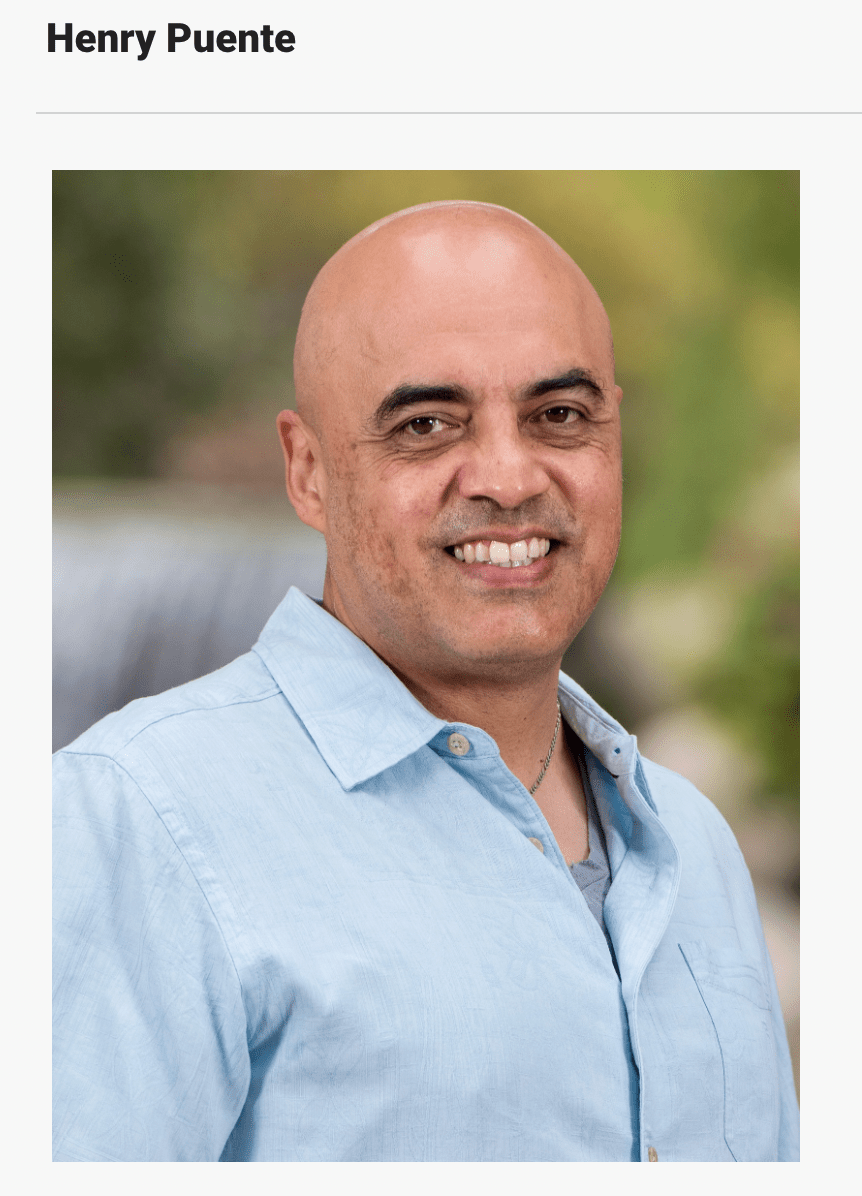
Introduction: The era in which we exist is a lifetime where diversity is promoted but still lacks complete representation. The media we see today often walks a fine line between diversity and the display of it– while they are glorified for their flair they are more often than not abandoned by industry structures and major marketing, this results in the Latinx community being treated as “niche”. Now the question we pose today is what will it take for the Latinx community to break through the surface and finally reach the audiences they have been working so hard for? In this interview, we met with Dr. Henry Puente to speak about his 2012 research study “Marketing and Distribution Lessons from Hispanic Hollywood.”
By: Valentina Castillo, Samantha Hernandez, Jennifer Zavala
Dr. Waleed Rashidi, Department of Communications
Intro
Our group decided to interview Dr. Waleed Rashidi, an associate professor in the Communications department. Dr. Rashid’s primary research interest is music as a form of mass communication through media and technology experiences. Dr. Rashidi shared his journey through communication research. He attended Cal State Fullerton to receive his master’s and later got his doctorate from ULV. Rashidi, before teaching, was the editor-in-chief of Mean Street Magazine. His interest in music-focused research was sparked by his personal experience and shared passion for music and the industry, which led to a curiosity about music as a form of mass communication.
Q1: What is the main focus of your research?
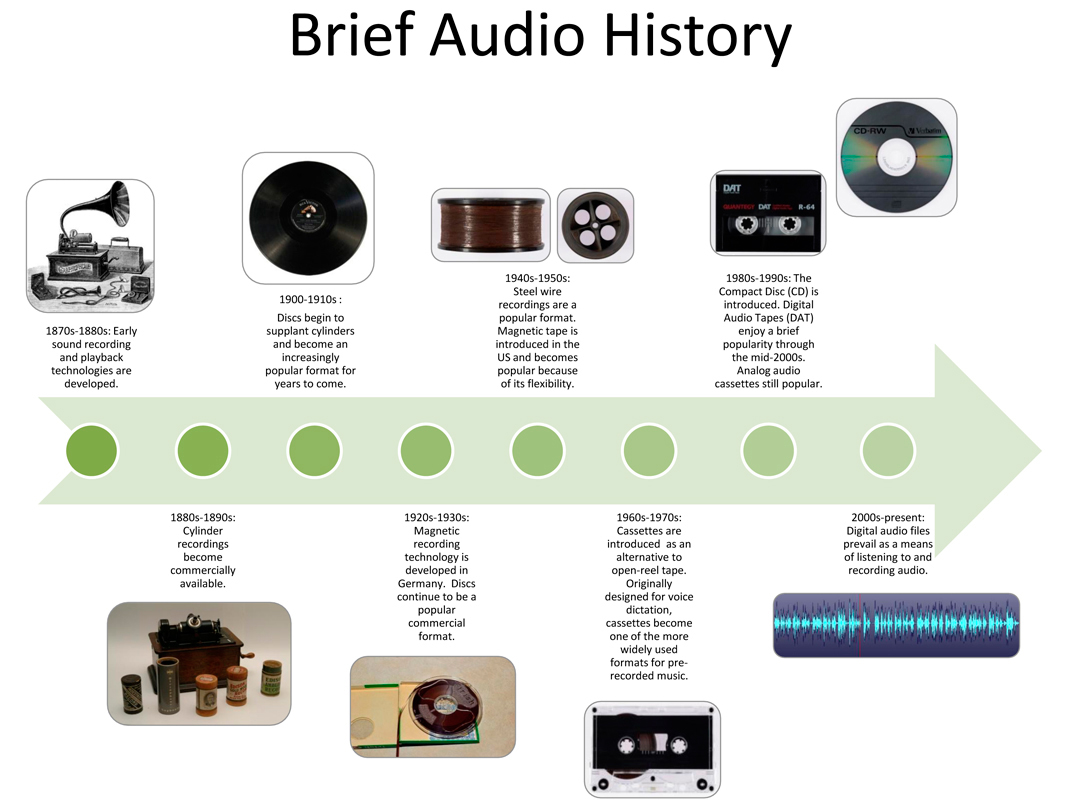
The main focus of Dr. Rashidi’s research explores the fascinating intersection of mass communication and music, with a special focus on how people engage with music in their daily lives. From vinyl records and cassette tapes to CDs and streaming platforms, Dr. Rashid dives into the different ways people experience and collect music. His work also touches on music technology and the evolving world of music journalism, offering a broad look at how music continues to shape and reflect our culture.
Q2: How did you get started in research, and what made you focus on music more specifically?
Dr. Rashidi’s journey into research began during his time as a grad student at Cal State Fullerton, where he completed a master’s degree in communications nearly 20 years ago. Inspired by supportive professors and engaging coursework, he gradually found footing in the world of academic research. Unsure of his passion, he found connecting with professors and peers helped him explore different topics, eventually uncovering his love for music. However, before pursuing a master’s degree, he had already built a solid foundation in the music industry. After finishing his bachelor’s degree, his first professional role was as the editor-in-chief of a music magazine based in SoCal. In this role, he oversaw all editorial operations, from choosing which bands to feature to shaping the magazine’s overall voice. Initially, while in grad school, he was unsure if music fit within the scope of communications research, but his growing involvement in the program helped him see the connection. Deciding to merge his industry experience with his academics, he started his passion for music. His research now bridges mass communication and music, drawing from both professional insight and scholarly exploration.
Q3: What methods of research do you use most frequently? Which method engages the most participation/ results?
When it comes to research methods, his approach has evolved. Early on, He leaned heavily on in-depth interviews—an approach that came naturally due to their background in music journalism, where interviewing artists daily was part of the job. This skill translated seamlessly into his academic work, allowing him to dive deep into people’s experiences with music and media.
More recently, he expanded his methods to include online surveys and questionnaires, allowing them to reach broader audiences and gather different types of data. He’s also delved into content analysis, especially of music journalism, examining patterns and themes across news stories and articles. This includes coding and rounds of review to identify recurring narratives. Ultimately, his choice of methods depends on the nature of the research, blending qualitative and quantitative techniques to explore the many ways people interact with music and media.
Q4: What are some initial questions you ask yourself to decide if a topic is worth researching? What are some challenges that arise?
When it comes to choosing a research topic, one of the biggest challenges for Dr Rasidi is finding something that truly feels unique, something that hasn’t already been thoroughly explored. The first question he always asked is, “Have I seen this before?” He’ll scan existing research to see if there’s a gap or a niche that hasn’t been filled, aiming to contribute something fresh to the field. If a topic feels overdone, or if someone else has already published something similar, he keeps searching for that one idea that hasn’t been fully explored yet.
Of course, that process isn’t always easy. There are moments of frustration, times when a great idea turns out to already exist, or when he comes across research he wishes he had thought of first. But beyond the search for originality, there’s also a personal element: the topic has to be something he’s willing to live with for a long time. Research takes weeks, sometimes months, so it needs to be something he’s deeply interested in and connected to, something worth investing in from start to finish.
Time is another major challenge when it comes to research. Deadlines for journals and conferences can sneak up fast, and he often finds himself racing the clock to get everything done in time. It’s not just about finishing the work, it’s about making sure it’s good work, and that takes planning. He’s learned the key is to work backward from the deadline, mapping out milestone moments along the way, four months out, three months out, and so on. That way, he can pace himself and avoid a last-minute scramble. Still, even with careful planning, time pressure can be intense. Balancing quality research with tight deadlines is a constant juggling act, and it’s one of the more stressful parts of the process.
Q5: Have you ever had to scrap or rethink a project entirely?
Scrapping or rethinking research projects is something he’s experienced, and more than once. Sometimes, an idea just doesn’t take off. Maybe there’s not enough existing information to build from, or he can’t find the right participants or enough of them to carry out the study effectively. That’s one of the more common challenges: having a strong concept, but realizing it’s too narrow or specific, making it tough to recruit people who fit the criteria.
There have also been times when the scope of a project was simply too ambitious or the timing didn’t work out, forcing him to scale back or go back to the drawing board entirely. These setbacks are part of the process, though. As frustrating as they can be, they often lead to a clearer, more realistic direction and sometimes even better ideas down the line.
Q6: How do you decide which sources or data to prioritize?
He has to. It very depends on the individual project. There isn’t necessarily a “go-to situation” for what he is going to prioritize for whatever study he is doing. You have to see how a project is going to lay out, how it will play out the next few months/weeks, and then determine where your priorities are and where he will be spending most and less of his time. It’s hard to say “Well, this is what I always do” because it doesn’t work that way. There’s variation depending on this.
citations:
Lindquist, M. J. (n.d.). Unit Two, part one: History of audio recording. Audio Production Course Manual.
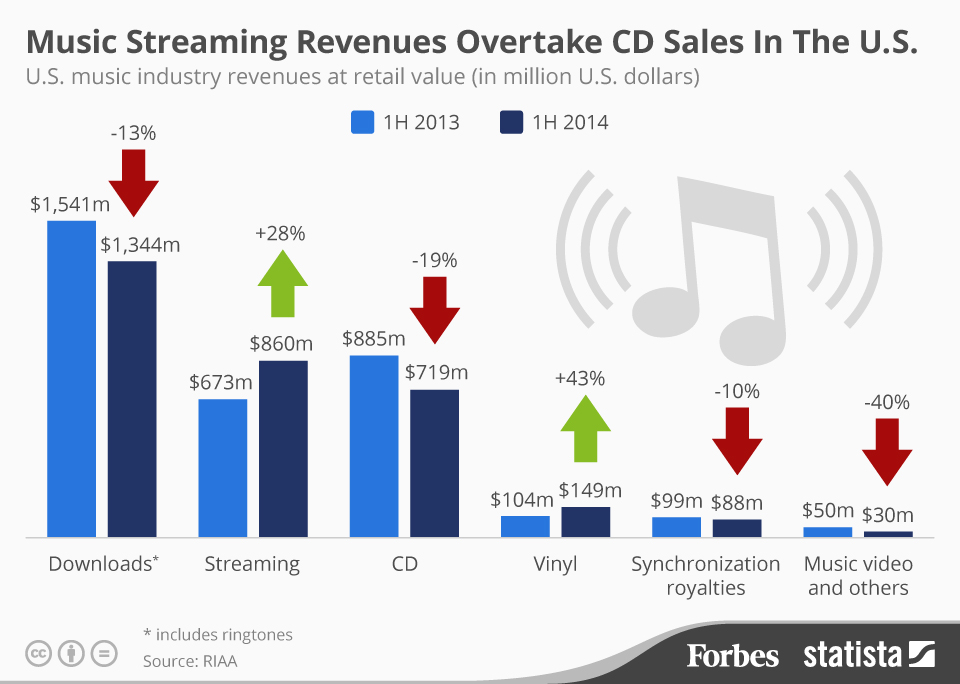
McCarthy , N. (n.d.). Chart: Music streaming revenues overtake CD sales in the U.S. | statista.
Q7: When it comes to conducting research, do you typically collaborate with others or mostly work independently, and which do you prefer?
Dr. Rashidi enjoys working on his own, which is different. Most of his colleagues like working in teams and collaborating with others, but he has always been good as an independent researcher. The only time he teams up with other people is when he has grad students who help him with his research. Grad students will help him look things up and get information for the literature review, but that has been the extent of which he has collaboration with other people. He likes to be a solo author, an independent researcher.
He also feels as though it is less challenging working on his own. Everything that he does is on his timeline. He doesn’t have to wait on others to complete their part before moving forward. There is also the challenge that could be different schedules or others having different projects that can create differences in priority. This project that they are working on together can be low priority for the other, while it’s higher priority for Rashidi. This can then create delays in getting things done. At least when he works on his own, he is responsible for failures or not getting things done on time.
Q8: What do you enjoy most about doing research, and do you believe you’ve made an impact?
Just the exploration of it all. He enjoys how he can explore something interesting, unique, and fascinating to him, and that might be of interest to other people. He feels that if he can contribute to that body of work on the topic that is already available, he can bring something unique and different to the landscape that is already out there. It is beneficial for himself but also others.
He hopes that he has made an impact with the research that he has done. There have been books that have quoted his research. His research has also been published in books, as well. Some students’ master’s theses or for doctoral dissertations, where they used him as a source or cited his work within their research. He would hope to think that what he is doing has benefited or has had an impact. It’s always hard to say because he doesn’t always know where his research lands, but he hopes that people read it and get inspired to learn from it or do their own research from the ideas that he presented.
Q9. What advice would you give someone interested in research?
The first thing Rashidi advises anyone interested in research is to have patience. Good research takes time, and you need patience to make sure you’re doing things properly and things are going in a methodical fashion. You also have to be very methodical about how you operate, as well. Do things step by step, schedule things out, and have a lot of patience. Be willing to make modifications as you go along because sometimes what you originally set out to do, you find out that it’s not exactly what you anticipate or expect, and that’s ok. You have to be able to take those tangents or go in a slightly different direction, and you might end up having better outcomes.
Q10: Most challenging part about doing research?
Sometimes it can be hard when you have a great idea, and then you start searching around and find out someone already took that. There are also times when he sees research out there and just thinks, “I wish that was me. I wish I thought of that idea!” Overall, it can be challenging in trying to find a really good topic that you find unique and different, but also something that you feel other people will be interested in reading and learning about, and exploring. Rashidi also believes that you should feel connected to the research that you do. You have to think about how you are going to be working on a topic for a fairly good amount of time, so think about really picking a topic that you know you will feel engaged in and willing to invest time in.
Another big challenge can just be the amount of time that is put into research. Rashidi feels as though he is always “Racing the clock all the time” when it comes to research that he is putting together. There are deadlines that journals and conferences have for when to submit your papers. There are times when he tries to finish things in a timely manner, and hopefully he has enough time to put everything together.
Conclusion
Concluding the interview with Dr. Rashidi, it left our team with a valuable and inspiring look into the academic research world, more particularly the connection between music and mass communication. Rashidis’ journey from doing music journalism to becoming a professor and researcher showed the importance of researching and the challenges that come along with it. He gave us knowledge on how to conduct research and what steps to take to have effective results. My team and I gained insight into the many methods of research and the importance of originality, along with the reality of time management and collaborations. He also emphasized the qualities we need to have to move forward, some being patience, organization, and passion. He emphasised the significance of researching topics that spark genuine interest. This interview has left my team and i with a clear understanding of what it takes to conduct meaningful research and the qualities to have to thrive.
Dr. Elise Assaf is an assistant professor of communications, where she teaches courses in public relations and entertainment. She holds a PhD in Education from Chapman University and earned both her MA and BA in Communications from Cal State Fullerton.
In her dissertation, Hidden Power: Journalistic Representations of Mental Health Labels, Dr. Assaf examined how The New York Times, The Washington Post, and USA Today portray mental health. She used a qualitative case study approach with Critical Discourse Analysis to explore how journalistic language influences public understanding by reinforcing stereotypes and simplifying complex issues.
In our interview, she shared the personal and academic journey behind her research, along with insights on mental health, media framing, and the role of language in shaping perception.
Q: What initially sparked your interest in researching mental health representations in media, and how has that inspiration evolved throughout your research journey?
Dr. Assaf’s interest began with personal experience, especially the responses she witnessed to her brother’s schizophrenia diagnosis. She grew curious about how media shapes those reactions, noticing a pattern of repeated stereotypes and an emphasis on diagnosis rather than the full person. Rather than focusing on how audiences interpret these messages, she chose to examine how news outlets construct them.
Q: How did you approach balancing your personal perspectives with objectivity throughout the research process?
She believes that acknowledging personal bias is an important part of qualitative research. Rather than trying to remove it, she reflected on how her experiences shaped her analysis. She also collaborated with peers to compare interpretations and ensure the analysis remained grounded and open to other perspectives.
Q: What advice would you give to emerging researchers who want to explore media representation and discourse studies? What challenges should they anticipate?
Dr. Assaf advises choosing a topic you care deeply about. Research can be long and challenging, so genuine interest helps sustain the work. She emphasizes the value of contributing something meaningful to the field, whether by exploring new topics or revisiting older studies with updated perspectives. She encourages researchers to identify gaps in the literature and focus on producing work that informs and sparks conversation.
Q: How do you see your research contributing to broader discussions about mental health representation, especially within news media?
She views media as a powerful space for learning. Dr. Assaf sees her work as a way to connect communication and education by exploring how news stories shape what people know and believe about mental health. These stories do more than report facts. They influence how people talk about mental health and how it is understood in everyday life. Her goal is to help people become more aware of the messages they consume and more thoughtful about the assumptions those messages carry.
Q: You applied Critical Discourse Analysis to articles from The Washington Post, The New York Times, and USA Today. Would you expect different results if you applied your analysis to other major publications or non-traditional news sources?
She believes similar results would likely appear in other national newspapers because they serve similar audiences. However, different patterns might emerge in international outlets, local publications, or media with strong political leanings. She originally hoped to include more geographic diversity in her sample but revised her plan due to a conflict of interest.
Q: Were there any significant differences in how each of the three publications framed mental health? If so, what do you believe contributed to those differences?
Dr. Assaf found no major differences among the newspapers she studied. Each one used similar language and relied on comparable sources. Since they are all written for wide national audiences, their tone and framing were mostly aligned. While this consistency can be helpful for clarity, she noted that it can also limit the diversity of perspectives included in coverage.
Q: Your analysis identified patterns and trends in the linguistic choices used to describe mental health. Were there any specific words or phrases that stood out as particularly problematic or beneficial in shaping public perception?
She did not identify one specific phrase, but what stood out to her was the lack of voices from people with lived experience. Most of the reporting relied on third-party sources, such as officials or clinicians, which can affect credibility and create distance from the subject. She also noted that when stereotypes are repeated across multiple articles, they can quietly shape public attitudes in powerful ways.
Source: Washington Post
Source: Washington Post
Q: What would you change or expand upon if you were to conduct this study again with a broader or different dataset? Would you consider including social media or alternative news sources?
Dr. Assaf would consider including social media and independent news platforms, though she recognizes the challenges involved. Social media content is less stable, often more difficult to verify, and subject to manipulation. She also expressed interest in studying local publications, but found that many smaller outlets are owned by larger companies and often recycle national stories.
Q: What limitations did you encounter in applying Critical Discourse Analysis to your dataset, and how would you address them in future research?
She explained that every method has its limits. Her analysis focused only on article text and did not include visuals, reader comments, or other digital elements. She also worked with a relatively small sample size in order to explore each article in depth. She believes future studies could expand on this by analyzing a broader range of content from more diverse sources.
Q: Considering your findings, what recommendations would you make to journalists or media outlets to improve their coverage of mental health topics?
She encourages journalists to seek out voices from people with lived experience. These stories are often overlooked or underrepresented, yet they provide important insight. She acknowledges that reaching these individuals can be difficult because of privacy and stigma, but believes the effort is worth it. Including more direct accounts can create more accurate, human-centered reporting and help shift the narrative away from overly clinical or institutional viewpoints.
Q: Were there any findings that particularly surprised you or contradicted your initial assumptions?
Yes. One thing that surprised her was the frequent appearance of first responders, such as police officers and firefighters, in mental health stories. In many cases, they were included even when they had no direct involvement. Dr. Assaf expected to see more quotes from family members or people with personal ties to those in the stories. This made her question why authority figures are so often treated as default experts on mental health, even though their experience in this area may be limited.
Conclusion
Dr. Assaf’s work reminds us that the way we talk about mental health matters. By examining how media frames these conversations, her research encourages us to become more thoughtful consumers of news and more intentional storytellers in our own lives.
Professor Cynthia King, Ph.D. Courtesy of the California State University, Fullerton Communications Department
The communication professor we interviewed was Dr. Cynthia King. She studied communications and earned her PHD from the University of Alabama, studying under the renowned Dr. Zillman and Dr. Bryant. We held a Zoom meeting with her to gain insight on her experiment, “Effects of Humorous Heroes and Villains in Violent Action Films.” We chose this particular experiment because Dr. King looked at media effects in this study, and our research project aligns with the same goals we are doing within our own research for Comm 410. In this interview, Dr. King explained how she designed the experiment, the different variables she looked at when conducting her research, and how this affects the audience’s view of media.
The conversation with Robert Meeds discussing his study he co-authored with one of his former master’s students at Kansas State, dove into the psychological impact of internet advertisements and how consumers respond to them emotionally and behaviorally. Whether you’re reading an article, watching a video, or browsing online, users are forced to physically stop what they are doing to manually close the ad and create a sense of inconvenience, which nobody likes. Although it’s a small action, it becomes a repeated annoyance that builds negative associations with both the ad itself and the brand it represents. Disruption is key to understanding whether something like pop up ads are effective or ineffective. They not only interrupt but also require effort from the user, making them feel imposed rather than engaged. The study was primarily led by the master’s student, focusing on how viewers react to pop-up ads, examining whether these interruptions influence attitudes toward the product or brand. They built a theoretical framework exploring psychological reactions like frustration and avoidance. Interestingly the results showed that most participants shared similar negative reactions, with frustration being the most common. This emotional response often overshadowed any positive brand messaging, reinforcing the idea that placement and execution heavily impact ad effectiveness. One of the most telling findings was that the act of manually closing a pop-up significantly contributed to users’ irritation. Despite the evolution of digital platforms, he noted that research hasn’t shown advertising to be significantly more effective today than in the past. Instead the field continues to focus on how specific persuasive techniques work with particular audiences and media types. This conversation highlighted how strategic execution and user psychology play central roles in ad effectiveness and how essential it is for advertisers to consider the emotional responses their content might provoke
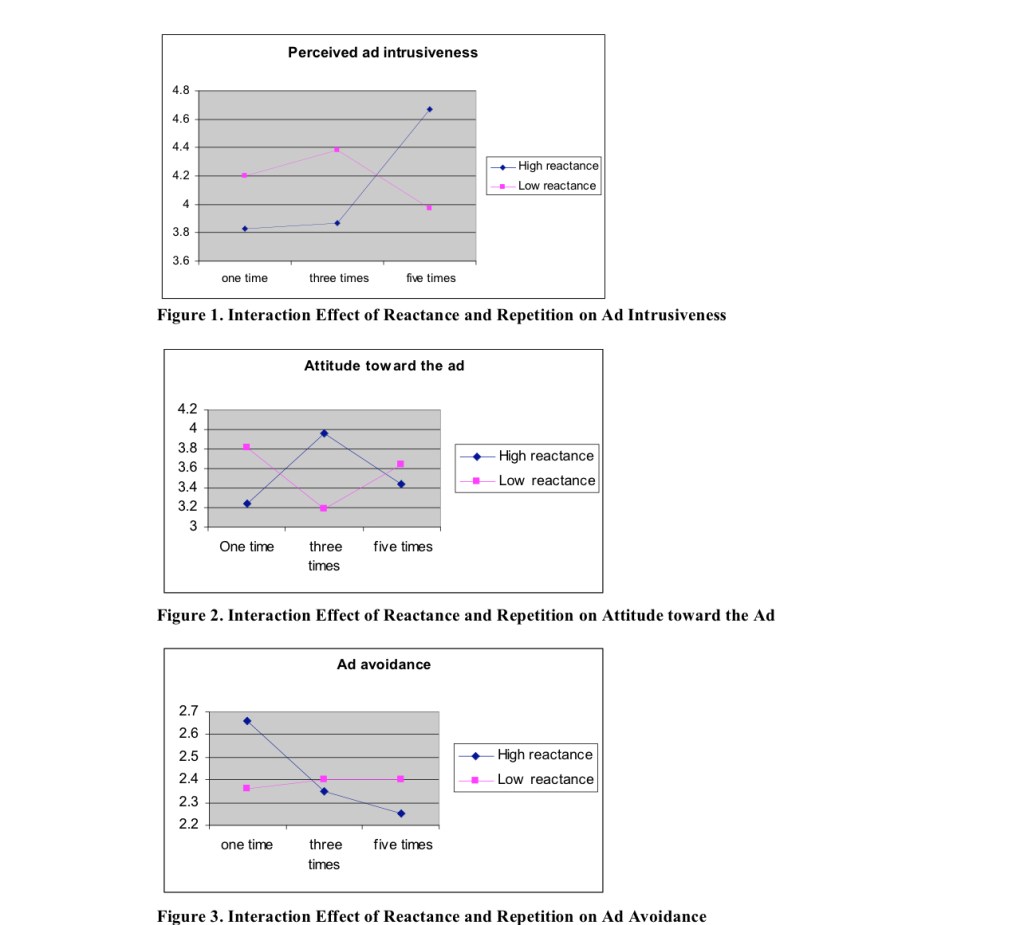
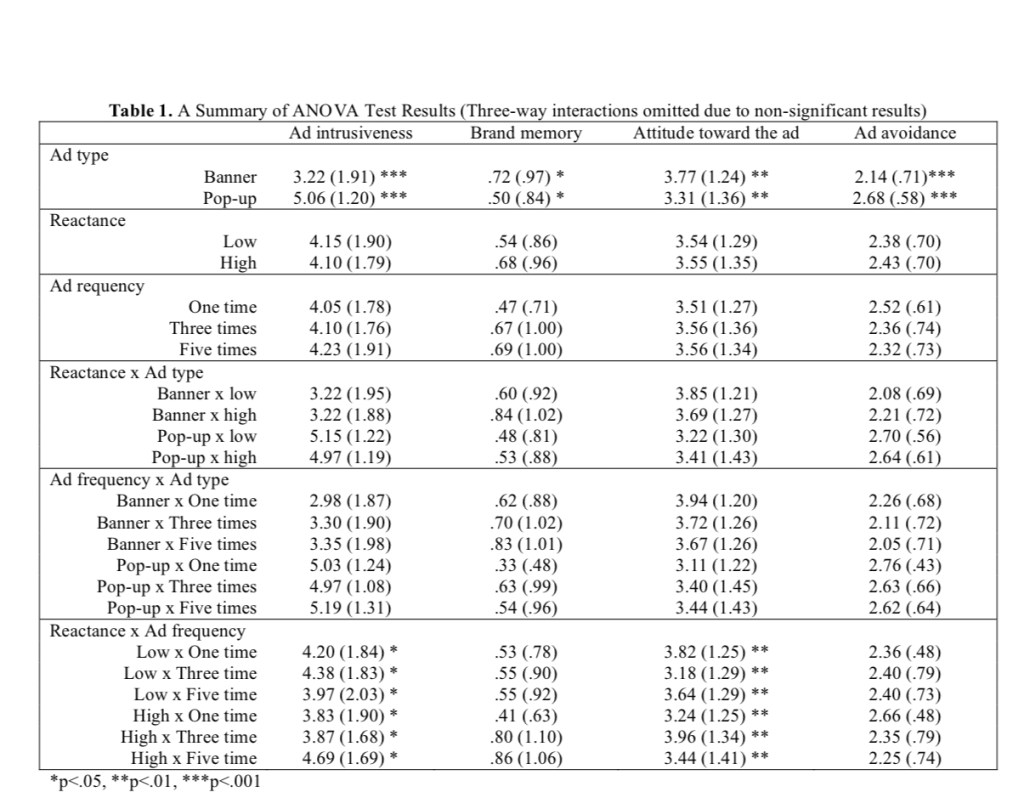
Doing a deeper dive, there are a few key concepts that are crucial to the study. First, the usage of forced exposure is a major component to the study. Forced exposure was used in the ads from the experiment to disrupt the flow of internet usage. The idea was to see if using this method of ad exposure would lead to negative memories about a brand. Unforced ads are also used as a measurement against forced ads in terms of best delivery for branding. The next key concept that is important to the study was Psychological Reactance, which was touched on broadly by Robert Meeds. It’s the reaction people make when something is impeding their freedom. In this case, the study is trying to find out if the reaction from forced and unforced exposure of ads contributes to brand memory. The conclusion of the study proved what the initial question was asking: whether or not forced exposure causes negative reactions and worse brand memory than non-forced ads. Other hypothesis that were set were looking at if frequency of each exposure condition (forced and non-forced) caused negative results and if the reaction to ads were going to produce different responses. Both were found to be false as regardless, the attitude of ads was not changed by frequency and the reaction between people who at high and low reactants was too similar to be separated. To wrap up the summary, the type of ad that was presented to participants did cause negative reactions as it disrupted the flow we go into when browsing the internet. The findings in the study are interesting when looking at the wider landscape of modern ads as we consume more content at a higher rate than ever before. Robert Meeds as asked about if modern ads were considered intrusive and if there was regulations around them. His answer surprised us as he mentioned there was more of a unspoken rule about how ads should be made ethically, but that there are no actual regulations on forced ads or how ads are presented to consumers.
What made this study especially strong was the way it looked at both emotional and memory-based responses. After participants viewed the ads, they were asked about their feelings, like whether they felt annoyed, frustrated, or indifferent. Then, they were tested on how much they remembered about the brand that was advertised. This two-part approach helped the researchers understand not just how people felt in the moment, but also how those feelings affected their ability to recall brand information later on. The researchers also looked closely at how different types of exposure—forced versus unforced—changed the way people interacted with the ads. Forced ads, like pop-ups and interstitials, appeared in a way that stopped users from continuing their activity. Unforced ads, like banners or sidebars, were easier to ignore and didn’t interrupt the user’s flow. These differences were important because they showed that how an ad is presented can be just as important as what the ad is actually saying. A surprising finding was that how often the ad appeared didn’t make a big difference. Whether people saw the ad a few times or many times, their reactions stayed about the same. This suggests that it’s the format and timing of the ad that really matter, not just how often someone sees it. It also challenges the idea that more exposure always leads to better results, especially when the delivery method disrupts the user’s attention or mood. In the bigger picture, this study helps us think more critically about how ads affect us every day. It reminds advertisers that people are not just passive viewers—they have emotions and preferences that should be respected. Ads that interrupt and annoy may stick in the memory, but not always for the right reasons. If the emotion connected to the brand is negative, the ad might actually do more harm than good in the long run. Overall, the study shows how advertising effectiveness depends on more than just getting attention. It’s about how that attention is earned. Respecting user experience, emotional reactions, and the natural flow of content is key to creating meaningful, lasting, and effective digital ads in today’s fast-moving online world.
(Written by Luciano Faria, Jade Estarada, Alexys Puche and Monet Andrade)
Dr. Dean Kazoleas is a seasoned communications scholar and the Maxwell Center for International Communications Director at Cal State Fullerton. With over two decades of teaching and research experience, he specializes in public relations, crisis communication, and international campaigns. Dr. Kazoleas has developed global exchange programs, published extensively in the field, and consulted for over 50 organizations. He holds APR accreditation and has served in multiple leadership roles within the Public Relations Society of America.
Dr. Dean Kazoleas has authored over 20 articles in the public relations and communications field, pursuing research on why people lean to certain types of evidence, whether that be qualitative or quantitative, and how that affects the marketing decisions, polling decisions, academic decisions, etc. In his 1993 research study, A Comparison of the Persuasive Effectiveness of Qualitative versus Quantitative Evidence: A Test of Explanatory Hypotheses, Dr. Kazoleas explores this such idea, hypothesising in his vividness hypothesis that qualitative research would be more persuasive, whereas in his under-utlization hypothesis he hypothesized that when knowledge and attitude changes of a quantitative nature were exposed, subject would be more swayed. This interview seeks to explore Dr. Kazoleas’s research methods, reactions to the experiment, and overall methodology, giving greater insight on research at large and strategies to be more successful in research.
(Excerpt from A Comparison of the Persuasive Effectiveness of Qualitative versus Quantitative Evidence: A Test of Explanatory Hypotheses – Dean Kazoleas)
Q1: How did you decide which research method to use?
In his research study, A Comparison of the Persuasive Effectiveness of Qualitative versus Quantitative Evidence: A Test of Explanatory Hypotheses, Dr. Dean Kazoleas asserted that the experimental method was the only appropriate approach for testing his hypotheses. Experimental research relies on a substantial amount of data to test hypotheses and draw meaningful conclusions. Dr. Kazoleas emphasized that “data is power,” stating that no matter how strong an opinion may be, it holds little weight unless supported by data that can validate it as fact.
Q2: Why do you believe that research method was best to use?
Dr. Kazoleas believes the experimental method was the best research method to use because it allows researchers to maximize the differences between independent variables while minimizing error. By using a controlled format, such as a video advertisement, the researcher can control the type and amount of information each participant receives. Essentially, this eliminates distractions or inconsistencies that could occur if participants were reading the material on their own, where they might skim or interpret the message differently. Controlling these factors ensures the data collected is more accurate and reliable for testing the hypotheses.
Q3: What obstacles did you face during your research, and how did you combat them?
Dr. Kazoleas begins by stating that he didn’t anticipate any obstacles during his research, not because he is a genius but because he is well-versed in research and made many mistakes before taking on this research project. Dr. Kazoleas has done many research studies in the past and emphasized how he learned a lot along the way. One of his biggest takeaways from all his years of research, and something he prides himself in, is that he learned how to not make those same mistakes he’s made in the past, and he learned how to not make things hard. He explains how research never needs to be extremely overcomplicated; the simpler the study, the less likely a mistake will be made.
Q4: If you could redo the study, would you change anything in your approach?
Dr. Dean Kazoleas starts by mentioning how advanced technology is now compared to when he conducted his study. While he states that his research was straightforward and simple, if he had to choose one thing he would improve, it would be the video quality. \With today’s technology, he acknowledges that researchers have access to more tools that can enhance the clarity and professionalism of their work.
Offering advice to researchers, Dr. Kazoleas emphasizes the importance of keeping studies simple and focused. He warns against overcomplicating the research process, as many scholars get overwhelmed by excessive data collection. His key takeaway: stay focused on answering the core research question rather than getting lost in an overload of information. Not only will it be too difficult to summarize, but it may also be difficult to organize in general. Scholars may feel the need to include every aspect of their research, but sometimes, it is just not needed.
(Excerpt from A Comparison of the Persuasive Effectiveness of Qualitative versus Quantitative Evidence: A Test of Explanatory Hypotheses – Dean Kazoleas)
Q5: How has this study influenced your perspective on the subject?
Dr. Kazoleas notes that statistics can be challenging for many people to understand. Simply presenting raw data isn’t always the most effective way to communicate research findings. However, modern tools allow researchers to transform statistics into infographics, making information more accessible and digestible for a wider audience.
Looking back, he acknowledges how time-consuming it was to create visual representations manually. Today, software can generate professional-looking infographics in just a few seconds—something researchers in the past could only dream of. He encourages scholars to take full advantage of these resources, as they not only enhance the presentation of findings but also make research more engaging.
Q.6 About the research subjects, were they your students at the time (the 176 undergraduate students enrolled in communications classes at a large midwestern college)?
When looking at the experiment and chosen sample of subjects, it wasn’t immediately clear if Dr. Kazoleas had randomly selected to perform in the experiment, if they were chosen from within his class, or if they were from the entire communications program. When asked about the participants involved in his study, Dr. Kazoleas confirmed that the 176 undergraduate students were not just his own communications students, but rather a collective representative of all the students in the communications program at the large midwestern college. He emphasized that their participation was entirely voluntary and conducted in full compliance with ethical research standards, ensuring the integrity of the study.
Q7: Also, were you surprised by the findings of your study?
Reflecting on the results, Kazoleas admitted he was surprised by what the data revealed. While the research team had initial expectations, the findings offered unexpected insights into student attitudes and behaviors. According to him, the results not only challenged some of their early assumptions but also sparked new questions and directions for future exploration. Dr. Kazoleas mentioned that this study was part of a greater marketing study to see what information and evidence persuades consumers to buy certain products, so getting this insight was a key point to getting to a place where researchers are asking the right questions in the right way to get the sought-after answers.
“Information is power”. Dr. Kazoleas leads others to really challenge their ways of thinking and not go off of ifs, maybes, or tendencies but to really look at the statistics, the data, the information that a study achieves. With data at our fingertips, consumers and businesses alike can better understand their study and what their end goals are, leading to growth and depth in how we understand each other as humans.










 The Society for Communications Research