Gallery

Motivations For Participating in Fantasy Sports – An Interview with Professor Meeds

By Andi Woods, Nathyn Scruggs, Adilene Bravo, Ronald Chy

Intro

We interviewed Professor Meeds about his involvement in this study and his motivations for participating in fantasy sports. This study was conducted by Lee Farquhar, assisted by Robert Meeds. Farquhar created this study for his master’s thesis at Kansas State, where Meeds was an advisor helping him. The study was conducted in 2007 and involved a unique methodology (Q Methodology) that not many social sciences would use.
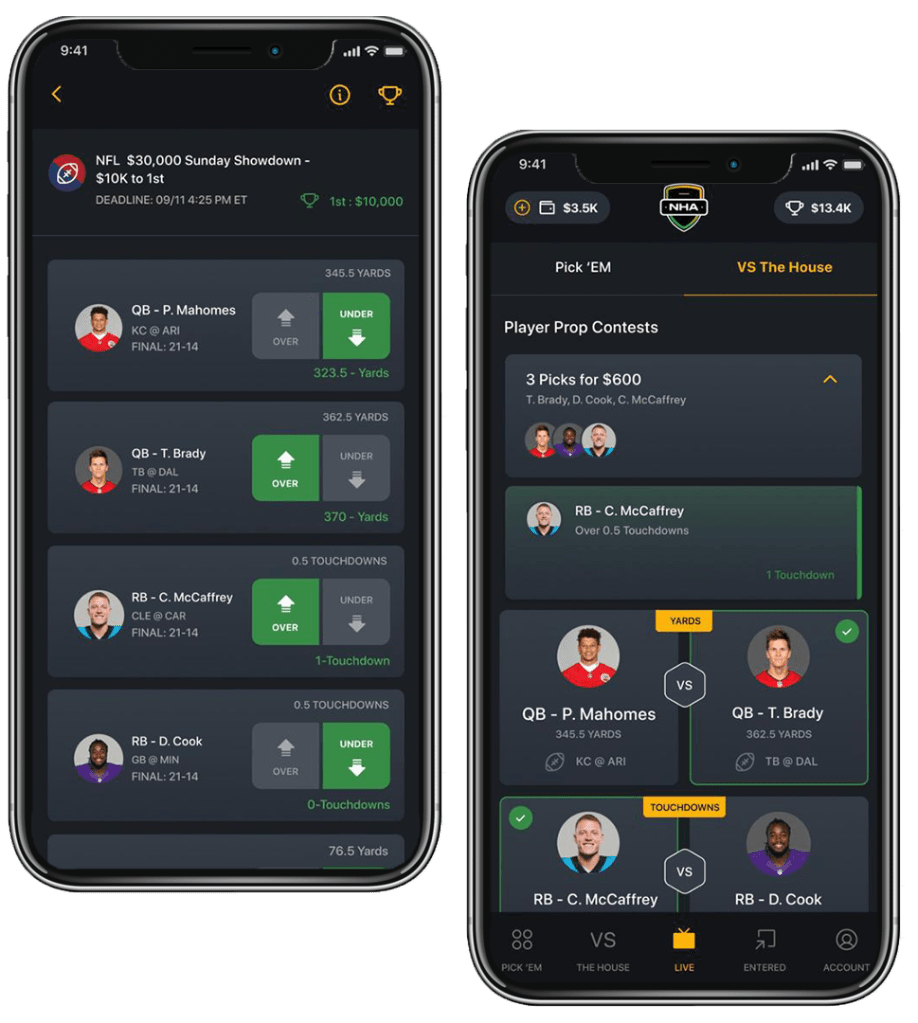
ESPN Fantasy Sports Betting in 2022

Farquhar was interested in fantasy sports then, as they became increasingly popular throughout the years. Fantasy sports is a game where people would create mock drafts of NFL or MLB teams and bet on whether or not their team wins or loses. It gained a lot of followers as it was fairly new in terms of its popularity, and it was also a way people could connect with other sports fans. Fantasy sports is a user-driven form of entertainment that includes a small gathering between friends or family. This study will explore people’s motivations for participating in fantasy sports.

Interview Questions

What was your motivation behind doing this research and what question were you trying to answer?

I will speak for Lee because this was his baby, but this was a very doable study for a Master’s student who didn’t have research funding and so it was the kind of thing you could do with a reasonably small sample of people who were participating in the research. It was something that he was really kind of interested in, so it hit both of those criteria.

What was your methodology and why did you choose to apply it to this research?

One of the practical reasons was that it was a methodology that did not require the kind of sampling that you would get from a normal survey. From a normal survey, to be able to have reasonable sampling error within your responses, you’re usually talking about at least 300 people that you need to participate. With Q-methodology, you’re talking about a much smaller sample. It was the practical reason, but it was also a good fit for what he wanted to find out. We wanted to find out more about people’s motivations for participating in fantasy sports and this research is something that Q-methodology is really good at. 
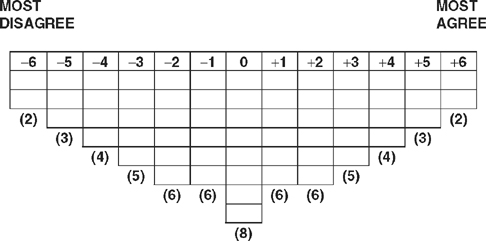
Example of Q-methodology scale

Basically, you can vary people, times, or occasions. So with Q-methodology, you’re trying to make generalizations about types of people. You have to flip your brain 90° in terms of what you’re trying to make generalizations about. The purpose of Q-Methodology is to try to understand people’s motivations and group them into types of people. Q-methodology is a generalization about people and about variables.

And with factor analysis in our methodology, it seemed like we were asking the same question in 20 different ways. We ask a lot of questions that kind of sound similar, but they’re getting a slightly different aspect of an attitude Then, what we did is take that data and we threw the whole thing into a hopper in SPSS, and it simultaneously calculated the correlations among all those variables. When it was done it spit out groups that went together. Then you take Q-methodology and flip the data matrix, what we’re doing factor analyzing people. It will produce a factor analysis of people and it will tell us what people go through in certain factors based on their responses to the questions. And so people get sorted and the factors and then the researcher’s job is to identify the factors and try to interpret them. 

The study noted that members of the F5 group were still inexperienced. Which group do you think a majority of them would most likely join when they become more experienced?

I think that it would be very interesting to see which group these inexperienced people would join later in life if they do even change groups. I think it is very possible for these people to change to one of the other groups.

How different is it applying Q methodology compared to your other studies?

One study was early in my career, and that was a Q methodology study about advertising students and their opinions about advertising and why they were studying advertising. The other study involved a graduate student, and I can’t even remember the topic of this one. It was not a well-conducted study, and we didn’t get a publication out of it. Those two are the only ones that would have been the correct methods to use Q-methodology, and it depends if it is appropriate for answering the question, research question that you have. We were interested in understanding ain students chose to advertise or what the typologies of the students were, and Q methodology was good for that. Most of my other advertising research. Q would not be an appropriate methodology because I’m doing a lot of linguistic research in advertising. I’m trying to figure out how different ways that I might phrase different ways that I might construct a sentence, how that would actually impact the reader’s attitudes about it, and Q-methodology wouldn’t be, would not be very useful at all for that.

If you could conduct this study again, is there anything you would do differently? 

I think this would be an interesting study to replicate since it was done multiple years ago. The study was tidy and no major errors were made, but I think it would be a really interesting one to replicate if Lee ever wanted to do it again, and see those types of people and motivations compare in the past and present.

What factor surprised you about this whole experiment?

As I’m looking back through it, I haven’t thought about this study much for several years, but I’ve probably found the isolationists and thrill seekers kind of surprised me a little bit. People that liked doing it but didn’t really like the interaction as other people and were just about the results was surprising to me.

What was the most interesting or favorite part of your research?

There were a couple things that were really pretty interesting. One is this was a study that the people who participated in it. They just really enjoyed it. You know, they were like, this is kind of cool, to be asked about your opinion about fantasy sports. The other thing that’s always interesting to me about a Q study is applying it to the experiment, and seeing how different it is from the other methodologies.

Interview

Here is our full interview with Dr. Robert Meeds:
Interview with Dr. Yongick Jeong about Privacy Concerns on Social Media

by Cristian Flores, Margaret Babia, Reinhard Siedenburg

Dr. Yongick Jeong is a professor at Louisiana State University who specializes in advertising, news and entertainment media, and measuring advertising effectiveness. Having published several research papers and presentations for almost a decade now, Jeong is an established advertising scholar. His research covers a wide range of topics from measuring advertising effectiveness, digital and social media, health and environmental communication, to international communication.

On October 18, 2022, we had the opportunity to meet with Dr. Jeong for an interview on Zoom to ask him questions about his 2016 research study: Privacy Concerns On Social Networking Sites: Interplay Among Posting Types, Content, and Audiences. From our interview, we were able to gain a more solid comprehension of the way privacy concerns relating to social media are influenced by the different audiences found on each platform. Additionally, we were given valuable advice relating to the logistics of conducting our own research study.

Dr. Yongick Jeong is actually an alumnus of California State University, Fullerton, having received his M.A. in Communications with a concentration in Internet Advertising in 2003. Being able to connect with Dr. Jeong through our educational backgrounds was a great experience, and we had a wonderful time getting to know his friendly and supportive personality. As beginner researchers, we greatly appreciated this opportunity to learn and expand our knowledge with Dr.Jeong.

READ MORE

What motivated your study?

At that time, social media was important already and many people were using social media platforms, but back then – not many people really knew about the privacy aspect of social media. In 2016, it was the beginning or earlier stages of social media and social networking sites, and we wanted to know what people were worried about regarding those social platforms. For the study, we used the uses & gratification theory (UGT) to understand why & how people actively seek out different media in order to satisfy their specific needs. We were looking to discover the different purposes or motivations there are behind people using social media and we wanted to see the relationship between those different motivations and privacy concerns.

What were some challenges and difficulties with your study, that you would say to keep a look out for? In terms of conducting the survey and getting the participants.

During the study, we experienced an external validity issue because our target for the study were college students. Even though college students are primary users of social media sites, they may be different from others in the general population who also use social media such as people are 30yr-40yr olds. That was the biggest limitation of the study.

What methods did you debate between using, and why did you end up going with an online survey? Were there any limitations in regard to other methods?

The deciding factor for your research method will be the research questions you come up with for your study. For us, an online survey was chosen specifically because it was the best fit for our research question regarding social media.

https://stock.adobe.com/search?load_type=search&native_visual_search=&similar_content_id=&is_recent_search=&search_type=usertyped&k=lock&asset_id=245814884

Why were Twitter and Facebook the chosen SNS’s for the study v.s. Instagram and Snapchat?

At the time of the study, Facebook and Twitter were the two most popular social networking sites. They had the largest user base, so we centered the study around these platforms as opposed to Snapchat and Instagram which had not reached the popularity they have now. Even today, Facebook and Twitter are very popular platforms among the general population.

If the study took place this year with the development of SNS’s like Tik Tok becoming massive in popularity, how do you anticipate the results of the study would change? Would they change?

It is important that you know the reason why people use those social media networks specifically. At the time of the study, we knew people used Facebook for everything – even for commercial purposes. In contrast, Twitter had a very different purpose and it was being used for microblogging on an even smaller scale. If the study were to take place today, the research question would need to be modified and the variables would need to be changed depending on the social media networking sites you choose to conduct the study on. In order to decide on what needs to be modified, understanding what demographics primarily use social networks like Tik Tok and for what purpose will be key. Logistically, it will be essential to decide what social media network is popular right now so that you can find enough users for the study.

https://stock.adobe.com/contributor/205363189/bakhtiarzein?load_type=author&prev_url=detail&asset_id=433867105

What are some methods you used in your study to reduce response bias? 

Actually, the survey we conducted was given as an extra-credit opportunity for our undergrad students. Research bias was pretty hard to detect in the study. Additionally, we did not include any checkpoints in the study that would check if participants were paying attention while they were taking the survey. If we were to give an example, during the survey we would have given a random question to participants where they would have to read the prompt thoroughly to find which random answer is the correct answer. If they answered that question incorrectly, then we would filter out their response. If the right answer is not chosen, then it is clear the respondents are not paying attention and the response can be eliminated.

In the discussion section of the article, you mentioned a potential limitation of your study was the skewed sample size of the study. Because a majority of participants were women, there was no balance of gender. How do you anticipate the results might change if the sample size was more balanced by gender?

In that instance, you would go with stratified sampling. If you conduct research with a general population of college students, you would need to get an accurate percentage of how many seniors, juniors, sophomores, and freshmen there are. From the proportional distribution, you are able to get your sample. The best case scenario would be that you know what percentage of Facebook users fall under each gender and category. After, you should be able to gather data that will represent the general population accurately, despite most participants being college students.

Being based around posts on social media, what is your opinion on gathering data over the span of 3 different social media platforms (Tik Tok, Snapchat, Instagram) v.s. just one platform?

Keep in mind, each social networking site is very different categorically. It is important to ensure that the networking sites you choose to focus on in the study are relevant to the research questions and will provide valuable insight for research. The complication with focusing a study around more than 2 social networking sites is the volume of questions that would need to be covered in the study. For a study of that scale, it would be difficult to have participants actively engage throughout the study without compensation.

Disney, a “colossal titan” in world entertainment

By Vanessa Rodriguez, Sophia Lozano, Sophia Good, Janete Por Amacosta

Dr. Andi Stein

Through the rise of their popularity with people, the Walt Disney Company leads in victory in the entertainment industry by building a line of storytelling. Their storytelling has created a gateway to a huge part of people’s lives by implanting their characters everywhere from movies to action figures to theme park rides. Having this impact can shape everyone since childhood to grow from loving the characters to potentially wanting to be part of the fantasy land that Disney has created.

To begin, we as scholars were interested in learning about the marketing aspect in entertainment and tourism, specifically what amusement parks like Disney offer to their patrons to be a successful brand. This “colossal titan” has led to an example of how to become successful in marketing for tourism attractions. Leading expert professor from Cal State Fullerton, Dr. Andi Stein, provides insightful information on Disney’s marketing strategy. Dr. Stein teaches in the Department of Communications and has conducted much research in the Walt Disney Company. Her book “Attracting Attention: Promotion and Marketing for Tourism Attractions” best reflected the authenticity of marketing as a whole. As Stein described, the book examines all the different ways companies in the attractions industry can promote and market to the public using traditional media and social media. Doing things like having events, developing marketing materials, and promotional brochures help in drawing people to their attractions.

A look inside “Attracting Attention”…

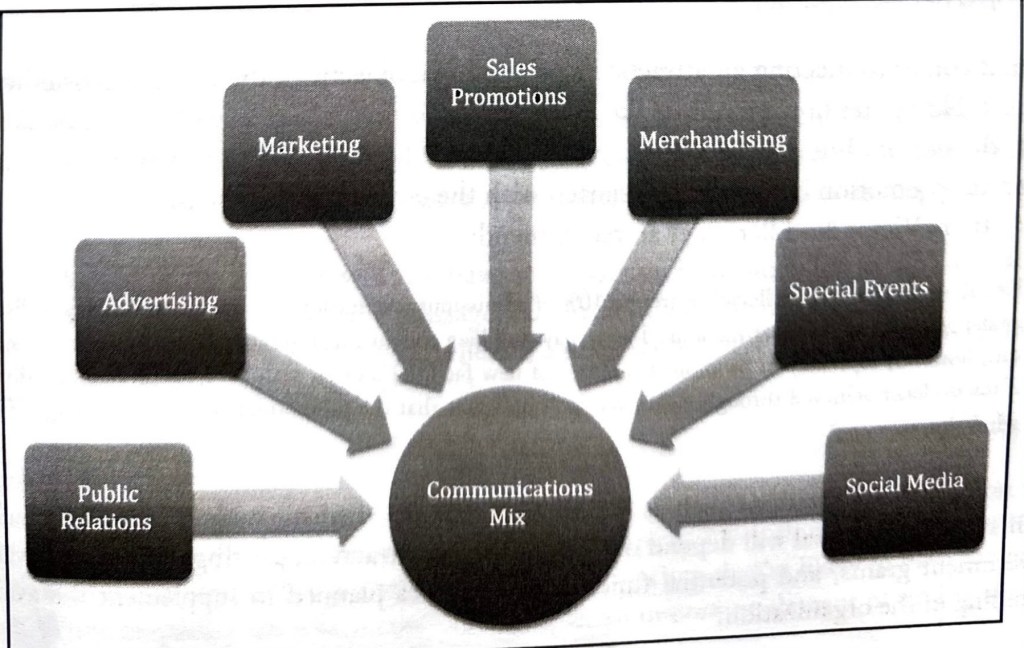
Promotion and marketing are essential components of attraction management. They serve as a means of telling an attraction’s story through words, images, and events. One bit of key information that stood out was the use of the Communication mix, a chart that highlights the categories in promotion. It includes the following: public relations, advertising, marketing, sales promotion/merchandising, social media, and special events. Although the landscape for public relations has changed in recent years, much of traditional media is still of use for highlighting what attractions provide. Within the new digital age of technology, advertising has also come a long way. It offers new techniques and methods for creating better ads. Sales promotion and merchandising rely on special incentives, gimmicks, and other techniques to encourage sales. It falls under the umbrella of sales promotion and services to rack sales up through online and in-person shopping. Social media perpetuates the need to “be in the loop” when these promotions and sales go up. It draws the attention of differing audiences with the goal to get their hands on the newest releases. Special events are another means of bringing attention to an attraction. It allow patrons to experience the hype firsthand. When enough people talk about it, the event can bring about entertainment, leisure, and fun.

Just how did Dr. Stein go about conducting her research in the study?

Her research consisted of talking to other scholars in the entertainment and tourism industry. Stein read many academic sources, including newspapers, magazines, and scholarly articles about what was going on regarding companies and their success.

How is Disney able to sustain itself as a colossal in all aspects of entertainment, tourism, and media?

According to Dr. Stein, the Disney company is consistently successful because they understand the steps of successful marketing. First, the team at Disney constructs great ideas and researches them extensively to ensure it has yet to be executed. Then they produce these ideas into products and know how to market them successfully to their target audience. Disney has administered the ability to tell a heartfelt story about likable characters. “They are masters at taking those characters and building empires around them. They build theme park rides, movies, and merchandise.” Disney has mastered synergy; its characters can be found in its parks, on its streaming service, in TV ads, in merchandise stores, and on their social media platforms. Everything they produce connects, keeping their ideas and products in the limelight of people’s minds.

What are setbacks in the theme park industry?

The Covid-19 pandemic caused a significant misfortune loss of revenue to all companies in the entertainment and tourism industry. Dr. Stein stated, “We are now seeing how a lot of these companies are trying to fight their way out of the chaos the pandemic caused. Theme parks have bounced back pretty well; the cruise industry is still struggling, and hotel and restaurant industries are struggling because they do not have the staff they used to have”. Currently, our economy is in a high state of inflation. As a result, Disney raised the prices of theme park admission, parking, merchandise, and food at the parks. Yet, Disney parks are more packed than before pre-pandemic. Stein explained that Disney has ‘magic’ that draws people to them. Interacting with Disney puts their target audience in a fantasy. “Their theme parks create an escape environment. Same as watching a film or attending a Disney cruise line; everything is about fantasy. It makes us feel good consuming and experiencing their brand,” Dr. Stein mentions. Disney owes its extraordinary success to its ability to provide escapism to its target audience, who will pay any price to endure the brand.

Post-Pandemic Theme Park Recovery

When speaking to Stein regarding the effects of the pandemic on tourism, in anticipation of their reopening, Stein believes the closures did more damage from a financial standpoint. These parks have found other ways to compensate for these losses. “Now that the parks are open, people are coming back in droves… some parks have more people than they know what to do with,” said Stein. Since these reopenings, we have seen prices spike for admissions and the cost of food. “We are all paying the price for these companies trying to recover their losses,” said Stein. Despite these changes, Stein still frequents Disney parks but has noted an increase in parkgoers compared to pre-pandemic attendance.

Disney’s marketing tactic is proven to be successful because they understand what consumers want. Through the thick and thin, Walt Disney company has continued to grow during the pandemic. Traditional media, social media, and theme parks have reached many as young as five-years-old to love Disney. Disney’s ability to tell stories through characters is what made them so successful and what sets them apart from the rest of the competition.

The Nature of Backstabbing in Professional Settings: A Conversation with Patty Malone

By

Ian David, Amanda Mendoza, Samantha Belmudes, and Andrew Pham

The Nature of Backstabbing in Professional Settings

Although a typical day in the workforce can be long and strenuous, for many people, developing good relationships is crucial to maintaining their mental health. However, not everyone is willing to keep the peace and unfortunately, backstabbers can run rampant throughout any field and affect the wellbeing of their targets.

About Our Interviewee

Patty Malone received her PhD at the University of Texas, Austin in 2005. In 2010, she began her work as a communications speaker and trainer for the Clear Communication Institute, an organization devoted to aiding teams in resolving conflict and improving communication.         

She is also employed as an associate professor at California State University, Fullerton for the department of human communications.

We decided to interview Dr. Malone after finding great interest in the article she co-authored for her dissertation: Backstabbing in Organizations: Employees’ Perceptions of Incidents, Motives and Communicative Responses. Its contents will serve as the foundation for our primary research.

Question 1A:

In the research, it said that grad students were targeted as participants because they have more work experience. Do you believe that your results would have changed if you didn’t have any students as participants?

Dr. Malone’s starting point was working with graduate students, but she later decided to send these surveys to companies for subsequent procedures. However, using graduate students as participants was key in this case. Undergraduates in comparison don’t necessarily have as much work experience in comparison to positions higher up the professional hierarchy since most merely handled menial roles (e.g., retail and resturants) instead of occupying established careers.

(Malone & Hayes, 2021)

Question 1B:

Before you analyzed the results, what forms of backstabbing did you believe were going to be the most prominent based on your sample?

She wasn’t quite sure at the time of conducting the study if there were any particular forms of backstabbing were going to be more prevalent in workplaces. Regardless, the survey with open-ended questions heavily inspired her second study. 

The first study was a survey that incorporated open-ended questions. The second one consisted of a likert scale with questions based on answers she she received from the previous study. 

Dr. Malone was able to come up of numerous categories of backstabbing based on the information and data that was collected from the second study. These categories played a significant role in her study, as they broadened the definition and concepts of backstabbing. Although she did not focus on a specific form of backstabbing, all of the categories listed served a purpose for the entire study.

Question 2: 

Through your research, do you think gender plays a role in backstabbing and workplace aggression through the perceived motive of power struggles?

Dr. Malone does not believe that gender plays a role in backstabbing following to the results of her study. It was confirmed that the outcomes were not indiciating any considerable gender differences. Although, there is a common belief that women are more inclined to commit backstabbing than men are, but Dr. Malone’s findings prove otherwise.

The methodology of how they were backstabbing on the grounds of gender roles did not seem to hold true either. There were many various categories that emerged from it. An example of such would be the forms of how they were backstabbed, consisting of actions like lying, stealing ideas, spreading rumors, etc. 

Dr. Malone additionally examined how employees responded to the backstabbing they experienced. An example would be if they complained to the supervisor after the incident. Another response would be backstabbing the backstabber in hopes to get even with one another. These responses served great data to Dr. Malone’s research. These categories of backstabbing evolved from the methodologies of how they were backstabbed on the grounds of gender roles.

Question 3: 

Does the experience level and position of the employee, such as entry-level positions, leave the employee more vulnerable to backstabbing in the workplace In comparison to middle or intermediate positions?

Because our intended matter of primary research concentrates on instances of backstabbing between entry-level positions in particular, we needed to further explore her outcomes regarding durations of professional experience as a sample demographic. Dr. Malone divided such into: 0-5, 6-10, 11-15, 16-20, 21-25, 26-30, 31-35, and over 36 years of experience—additionally factoring in their specific occupations since the distances between administrative levels can vary across industries. 

Moreover, her response to this question explicitly stated that employees’ length of experience was not necessarily a variable which affected the frequency, occurrence, or manner of backstabbing. Her results contrarily indicated that the nature of backstabbing was similar across 0 to 36+ years of experience. Both active and passive forms of aggression were displayed. And, perceived motives were rooted in manners of self-projection, conflicting personalities, and pursuits of authority despite how much experience they had.

However, Malone is not absolutely certain that there is an absence of association between backstabbing and accumulated experience since her study participants skewed toward the higher tiers of the administrative totem pole. She revealed that a greater majority of her sample—by chance—occupied long-term careers near or within executive departments like chief executive officers, vice presidents, and managerial positions of that sort. 

Question 4:

 Due to this study being conducted in 2012, do you believe that remote work has reduced the amount of backstabbing found in the workplace?

When asked, Dr. Malone cited that she did not have enough information to address the question properly. Due to the study being conducted over 10 years ago, there are significant changes that have occurred regarding the workplace and how it’s viewed. As a result of the COVID-19 pandemic, remote work has become the standard in the workplace. However, there is limited research conducted on remote work environments and the interactions among coworkers. 

Due to the limited study on remote work and its relationship regarding workplace behavior, there leaves much room for a new study to be conducted analyzing these interactions. A hypothetical study utilizing similar research methods as Dr. Malone’s backstabbing in the workplace methodologies and typologies would provide insight on how backstabbing incidents present themselves through remote work. 

Conversation with Henry Puente: Hispanic Hollywood

By: Maddie Barsch, Dana Del Rio, Janine Hernandez, Mikayla Orozco-Pedroza

Dr. Henry Puente

First of all, we would like to thank Dr. Henry Puente for taking the time to speak with us regarding his qualitative research study on the Hispanic Hollywood. He was extremely helpful and provided us with insight that allowed us to have a better understanding of research methods and approaches.

Dr. Henry Puente is a Professor of Communications at CSUF. He has experience in the entertainment industry and specializes in researching the areas of U.S. Latinx Entertainment. We began this interview with Dr. Puente by asking him what inspired him to conduct this research. He explained how he worked for a Latino film distributor while also completing his Ph.D. He realized there was little research regarding Latino audiences and felt inspired. He decided that he could be the first to conduct this kind of research.

What question do I want to ask?

Once Dr. Henry Puente decided on conducting this study, his first step in approaching this project was creating questions to ask his interviewees and deciding what questions he wanted answers to. He explained how this was a difficult process because having questions is basically the entire basis and outline of the research. We can relate to this difficulty because likewise, we had to create questions for Dr. Puente to get our answers.

While on the topic of interviews, we asked Dr. Puente about the process of interviewing people for his research. He said that one aspect that surprised him was the fact that some people just did not want to talk about this subject. He said he was especially surprised because the questions he asked were not too personal or invasive. We think that this was very insightful information because organizing interviews plays a huge role in research. Without interviews it is hard to receive vital information that one needs for academic research. He also explained how this made his process much longer than he wanted it to be. He also introduced to us the idea of the IRB. It is a type of certification one has to have before interviewing people. He understood why the University makes this necessary after this experience. We found this interesting because we did not know about this concept beforehand.

Dr. Puente mentioned that research methods depended on the study in which was being performed. So, when asking him what method he used for this specific research, he had said he used a mix of both qualitative and quantitative studies. Quantitative studies were the easiest part since all he was looking at were numbers. The qualitative part was the hardest because of having to transcribe the information given by people. When interviewing people, it became hard at times to get the information needed from them. He had to be able to read people and navigate what was fact and what was fiction, which is only learned from experience.

With all the time and hard work he put into his research, he didn’t think it would be innovative but he more so did it because it was a topic that was never really brought into question. Being in the industry, he noticed there wasn’t much attention on latino culture, let alone films. He wanted his research to make an impact on the industry and to focus on better promotion and advertisement with latino films and to push to make more

In response to a question about the most effective research methods, Dr. Puente explained that the approach that works best depends on the study in question. He explains that much of his skill is derived from experience. 

 “People are complicated.” 

According to Puente, one of the skills he has acquired over the course of his research career is the ability to read people. When interviewing folks, you have to be able to discern whether they are saying what you want them to; “sometimes they don’t tell you enough” so you have to judge how relevant the information is. Puente goes on to explain that you can determine if a person is telling the truth by reading their body language and crosschecking it with other sources of information.

“Navigating fact and fiction is just a skill you have to learn, I think you can learn it but I don’t know if you can teach it” 

During the course of writing and publishing his research, Dr. Puente reveals he had no great ambitions. “Best case scenario, It might be helpful for people who are going to be promoting Latino culture or even reaching Latino audiences…you don’t necessarily write things because you think everyone is going to read it, you just want some people to read it.” In retrospect, he expressed hopes that it would have crossed over to the industry a little more. In spite of the fact that the work he conducted was kept under wraps, it continues to inspire young Cal State Fullerton researchers.

Navigating through the research was a process for Dr. Puente. When it came to choosing which films will be included in the research, he came up with a criterion that each film needed to be classified as a U.S. Latino film. To help with that process he used periodization. When talking about what is included and what is not included, he asked the question: “What is Hispanic Hollywood?” He determined the best way was to say when Hispanic Hollywood started and when it ended. With those determinations he also made a justification for his reasoning.

“Most of the cast had to be latino, director had to be latino, the writer latino, had to be produced in the U.S.,” said Dr. Puente.

In that short period that Hollywood was making Hispanic films, Hollywood will use English/Spanish print and advertising, as well as Hispanic language and subtitles. Knowing that fact defined Hispanic Hollywood according to Dr. Puente.

Although Dr. Puente was the first one to research Hispanic Hollywood, he did not feel overwhelmed. He felt that there was no pressure because the research simply did not exist yet.

“This research did not exist, so whether I don’t do it or do it do matter that much, so I just kind of saw it as something of tiny little contributions of knowledge and not as something more than that,” said Dr. Puente.

After a year and a half worth of work Dr. Puente’s discipline helped him finish his research on “Marketing and Distribution lessons from Hispanic Hollywood.” and is available to read online.

An interview with Professor Emily Erickson-The Watchdog Joins the Fray: The Press, Records, Audits, and State Access Reform

By: Isla Huerta, David Peach, Devin Guevara, Antoine Dinh

Professor Erickson is an associate professor at Cal State Fullerton where she teaches Comm Law and Media and Society. Professor Erickson has several published articles that are in the realm of law review, but the article that we chose to base our research around is the article, The Watchdog Joins the Fray: The Press, Records, Audits, and State Access Reform. The article is about how journalists have crossed into the realm of politics so that information can become more accessible. In our interview with Professor Erickson we ask her a series of questions that give us an insight of how she conducted her research and why she chose to do research on this topic.

What made you choose to research about the watchdog element of journalism?

Being that Erickson is a professor in law, she is well versed in the ideas of information and how it should be presented legally and if it is legal to obtain in the first place. Her article, The Watchdog Joins the Fray: The Press, Records, Audits, and State Access Reform is a research piece that focuses on the free flow of information and the access to it by the general public. In our interview, Erickson states that there are three main groups or occupations that have to deal with freedom of information – those being: librarians, lawyers, and journalists. For her research she was set to create a “group” that would do audits in seven different states in order to find out if the information that was supposed to be public really was public and accessible. When these groups set out, Erickson learned that not only was the information inaccessible, but the journalists who went for the information were displeased with the lack of cooperation with the states. This led to the journalists trying to push for more accessibility to the information effectively making them activists on the side of freedom of information and putting more pressure on the states to allow free flow. Erickson stated that this surprised her and it was not something that was planned but certainly welcomed as the watchdog of journalism was in full effect though her research

How was the research conducted?

Professor Emily Erickson said that it was a painstaking process, but there were seven different case studies. Gathering information from seven different states as well wasn’t easy, but it took time and patience. One of the types of research that she included was multi prong research and she took interviews of 100 people who were involved with the freedom of information. This included lawyers, politicians, journalists, and editors. Another form of research that was included was statutory analysis and she created a typology from the information that was gained from the statutory. Historical analysis was key in this research. In order to do this, Erickson read countless press coverage about freedom of information and audits in the seven states. The last form of research that she used was political science theory to understand groups and coalitions. Looking over the work and information that was gained, Erickson said that she did too much research, but it was necessary to make sure all the information was correct and accurate. The amount of research that was done made it possible to gain all the information needed about state audits, freedom of information, public records, to help make the watchdog possible.

What challenges did you face throughout your research?

When we asked Professor Erickson about what her challenges were throughout her research, she answered by saying she felt like throwing her hands up and her mind was spiraling into despair when she was researching about finance and corporate speech related stuff. She explains that she is currently going through this with her partner Matt with the paper that they are currently doing. She says that the problem is that they can try pointing something out, but who really cares about their point because whoever they are researching about knows what they are doing so why even bother.

Professor Erickson mentions that with legal research, what you want is to be cited. You want your ideas to ultimately find their way into arguments that are made in court. One of the papers that Matt and her did was called “Transformative You”. She explains that the Screen Actors Guild (SAG) awards have submitted an amicus brief, which is an argument that supports one side of a case. Since their amicus brief has been submitted to the Supreme Court, someone at the Supreme Court will potentially see their names if their research is used. Erickson goes on to explain that if you read court cases, you would know that court opinions will actually cite research from researchers like her. She says that getting cited is the goal and her challenge is being able to write something that will get cited. Something that is persuasive enough and well-articulated enough to make it to the big stage.

With Erickson having such a huge goal, perfectionism is her biggest challenge. She always goes crazy about making every little thing perfect, but not because she thinks that she’s perfect, but because the self doubt in the back of her mind is telling her that this is not perfect. She has a big goal so she wants everything to be completely perfect and wants everything to be good in order to accomplish the goal.

Professor Erickson never went to law school and because of that it has caused her to have imposter syndrome since she self learned almost everything in regards to law. She mentions that she has taken a couple law classes in grad school for her PhD that was in her area of study, but she’s never had 2 years worth of hardcore law training. So what comes easily for other people didn’t come easy for her, especially since they were taught how to turn these things out and she wasn’t. She advises that students should fight the imposter syndrome as hard as they can and that most of us feel that challenge at some point in our lives when we really don’t know what we’re doing. Confidence is the key even if you don’t feel like you know what you’re doing, carry yourself with confidence because it can really take you a long way.

“If you’re never failing – it probably means you’re never taking any meaningful risks.”

Emily Erickson

Was there anything that surprised you when conducting your research?

As we began to do our own research we asked Professor Erickson if there was anything that surprised her to see if we should expect any surprises. Erickson goes on to say that when doing her research she was not expecting journalists to be activists since journalists are supposed to be seen as independent from those they write about. This is surprising because throughout the history of journalism there has always been a specific way of writing a story and journalists are really only supposed to objective. Professor Erickson feels very strongly that journalism needs to change and she says, “you shouldn’t just follow this basic idea that in itself is not truth”. Having a newsroom that is filled with diversity that is not just about race and gender, but also about diversity of backgrounds can bring a fresh perspective to different things. With her new findings Professor Erickson believes that the new generation of journalists can change journalism for the better and strive to give journalists their own voice when writing their stories.

Dr. Flores Speaks on Equity: CSUF Communications Department

By: Alexa Valdez, Alonzo Floriolli, and Alan Ruelas

On October 28th, 2022, we conducted an interview with Dr. Robert Flores, Assistant Dean for Student Affairs at California State University, Fullerton regarding his dissertation, Career Development Through An Identity-Conscious Lens: A Framework to Engage First-Generation and Underrepresented Students. Our objective in conducting this interview with Dr. Flores was to get a better understanding of his research process for his paper on first-generation and underrepresented students. We asked him ten questions regarding the way he conducted his research along with his thoughts and findings throughout the process.

Question 1: Why is this study important and how does it differ from similar studies (if there are any)?

Dr. Flores first stated that his primary concern for the study was that career development supports the first generation, and underrepresented students need to progress beyond just a focus on skill attainment. He pointed out that it is not just about talking on how you take what you learn and turn it into a job, but also about strengthening students’ inclusion of identity-based methodologies. In other words, who they are as a person, also informs their career development decisions. The other piece Dr. Flores found is that we need to help students understand the multiplicity of their identities, due to the fact that the different components of our identities form our values, and our decision-making process, and ultimately can be key factors in our career trajectory. Dr. Flores then went on to explain how it differed from similar studies by stating that this was an action research study where “we look at how we, as practitioners in higher education, can create change in our current environment, and how we, as a practitioner and an individual, are positioned in that study as well,” as opposed to an empirical study, where you have a cause and effect. He concluded his answer by pointing out that it is not just about what happens to the participants in the study, it is also about the change that occurs in you as the researcher, and what you learn about yourself. 

Question 2: What do you find to be the most efficient research/sampling methods?

Dr. Flores first pointed out that the most efficient research/sampling methods varies depending on the research type. He explained that when he first started his research project, he had both quantitative and qualitative data collection. As he got further into his research, he learned that when reporting it out in later chapters, the qualitative data had the most impact and connection to his research question. The quantitative data had some importance but was not needed as much as the qualitative. He went on to explain that in his experience with this research, he found that focus groups were most useful and was where he got most of the “heart and soul” of his dissertation. 

Question 3: How do you start your research process when looking for articles?

Dr. Flores explained that he started his research process very broadly. He understood his main focus as examining career development practices, therefore analyzing career development theory. After all, theory informs practice, and that he was also looking at identity development. With that, he then selected a few keywords that were part of his research question that helped guide him along the way. As was deeper into his research, he then realized he was also examining underrepresented first-gen students, and added “Underrepresented” and “First-Gen” to his word search. After taking what he had already identified and combining words and mixing them up a bit, he was able to find a lot of great material. Something that Dr. Flores pointed out that really was a big takeaway when he was talking about “gaps” in research. He stated that “I also found that when there was a lack of information on a certain component, that to me, as a researcher, helped me understand that there’s a gap in the research, right, and so I’m onto something really great. So instead of being frustrated, it tells me, I’m looking for something that no one else has probably done yet or hasn’t published. So this is a great position to be in because you’re being a contributor to the literature that’s out there to support the groups that you’re working with.”

Question 4: What are the most important factors to consider when conducting research?

Dr. Flores immediately answered this question by flagging the importance of research guided by individual passion because of the countless and arduous hours spent looking into a topic. He pointed out that the topic should really resonate with a part of who you are as a person and something you are deeply passionate about if you are doing real in-depth research. Flores also went on to point out that another factor to consider is the amount of access you have and your current position– whether it is a student, practitioner, employer, employee, etc. “Think about your circle of influence, and connection, and how you can maybe utilize some of that in your research. Because that will help you so you’re not just starting from scratch, in some cases.” By considering these things, you can understand if what you are researching is as attainable as you would hope it would be. 

Question 5: How do you brainstorm for your research topics?

Dr. Flores mentioned that you can document your thoughts in whatever way you prefer– whether it is journaling, drawings, blogs, etc.  He went on to explain that for this research process, he would use audio recordings. For example, after class, he would record himself on his phone during his hour-long car ride home. During this time, he would debrief the day, talk about themes that had impacted him, times that made him stop and think, or even ask himself questions. By doing this he was able to go back and listen to those recordings to remember what exactly was really striking him at that moment and point out some key things that he could use.

Question 6: What are some experiences that have led you to this topic of research? Was there a moment that inspired your research?

Dr. Flores explained that his research initially started with him examining his own journey to his career. He realized that there were certain things that happened in his life that contributed to the decisions made by him. He then took this and then looked at how other students with similar identities were embarking on that journey and how they can create a structure that supports them to understand their identity, values, and strengths in order to put that together and form a career roadmap. 

Question 7: Do you have any advice when it comes to choosing a topic that interests you?

Dr. Flores answered this question by first pointing out that it is not always the best idea to pick the “hot” topic at the moment, even though it might be tempting. This can be because a lot of people might be drawn to that topic as well. He says it is best to push yourself out of your comfort zone to try and get the most out of what it is that you want to research. He explains this is because if we choose things that are a little too close to home, we have a tendency to be comfortable and be blinded by our own biases and own experiences. With this, do not be afraid to tackle something that is new and remind yourself that you are not an expert (yet) and give yourself grace for not knowing the answer at that moment, but be determined to figure it out. 

Question 8: What was the most challenging part of this research study? 

Dr. Flores pointed out that the launch of his study was set to be in August 2020, which happened to be a few months after COVID-19 had hit. With this, it made it difficult to continue with his research because they were supposed to be in-person workshops. Along with the switch to Zoom, came uncertainty if students were still interested in being a part of the study. Although there were lots of changes that had to be made on short notice, Dr. Flores pointed out that something positive came out of this challenge. He explained that since the pandemic brought such isolation to everyone, students missed being together in person and connecting with one another. So in the study, students reported that they enjoyed coming together every other week with their group of people to talk about something so personal in a space where they felt safe.

Question 9: In other research studies what is usually the most challenging part of the research process for you?

Another challenging thing, aside from the answer to the last question, Dr. Flores pointed out that getting access to subjects or participants. It can be difficult finding people who are willing to participate, and also endure the duration of the study. He explained that doing more in-depth research is most difficult because it requires multiple time commitments, which is often the biggest challenge, because “you are going to see some, you’re going to see a little bit of a melt, you might start with a really high number of participants, and then that’s going to kind of fade off and you will need to account for that and your finding.” So it is always important to consider the number that you started with, and then any attrition that happened over time, and how that might have an impact on what it is that you’re reporting.

Question 10: What was the most shocking part of this study and how did you find it?

The most surprising part for Dr. Flores was the level of advocacy that the students reported having gained as a result of this study and that came from the exit interviews. During their interviews, participants went over goals based on career plans they had developed, and a high percentage of the students were able to articulate that they had learned certain advocacy skills for themselves and for others as a result of this. Dr. Flores had not expected this because he was really focused on this being about career development and your identity and its understanding, he did not think at the time that this advocacy awareness would come into play. 

Conclusion:

After interviewing Dr. Flores, we have a better and more complete understanding of his research process for his paper on first-generation and underrepresented students. We learned about the easy and complex parts of conducting a rigorous research project on equity within education. The biggest takeaway from our interview with Dr. Flores is understanding the reward of conducting a research study in any field will ultimately be contingent on the discoveries made that can exponentially grow our understanding. 

Professor Elise Assaf on the Fundamentals of Research: Enthusiasm, Engagement, Execution

By: Vanessa Vuong, Maddy Monroy, and Niko Morales 

Professor Assaf works in the department of Communications at California State University of Fullerton. We asked her questions regarding her writing process behind her dissertation, Hidden Power: Journalistic Representations of Mental Health Labels.

Elise Anguizola Assaf | Department of Communications | Cal State Fullerton  - Department of Communications | CSUF

Professor Assaf explained that a big catalyst that inspired her research was her brother and his schizophrenia diagnosis. While it isn’t a mental health diagnosis like depression or anxiety, schizophrenia still came with similar negative stereotypes. Assaf explains,

“There were a lot of stereotypes that were communicated to me. People would question, ‘Oh is he dangerous?’, ’Is he violent?’ … In my mind, it was like, ‘Where are these [stereotypes] coming from?’ And why do people have these assumptions, because they are very far from the truth.”

Professor Elise Assaf

Assaf was also inspired personally by the increase of mental health becoming a more prevalent problem in the college setting. She recalled a specific article from the Daily Titan about test anxiety and witnessing it herself through her students. 

Assaf mentions that she wishes she had included more of this information about what inspired her in the positionality statement of her publication. A positionality statement is a part of qualitative studies where you explain what inspired your research, your perspective, and any other biases you may have related to the research. However, with this particular study, Assaf had an advising team that helped her decide what she should include. During the time of the publication Assaf was working towards tenure and Assaf and her advisors decided that including too much information about her personal mental health diagnoses could potentially harm her chances of getting a tenure (especially based on what the research was studying).

Because of her career in public relations, education in mass communications, and disability studies, as well as personal experiences with mental health stereotypes— she demonstrates the importance of picking a topic that interests you. However, she also warns that a challenging part of choosing a topic you like is ensuring it is not only interesting, but that it also provides an opportunity for advancing the field with your own studies, or,  “growing the research that is already out there” as Assaf puts it.

Professor Assaf’s Rules of Thumb

Assaf explained narrowing down her publications proved to be one of the most challenging parts behind her research process. A personal rule of thumb Assaf follows is finding publications that are similar in their consistency, size, and importance to the subject being discussed. One might find difficulty comparing a short publication to a longer one as short ones are more condensed. Assaf found the top ten articles in the U.S. surrounding her subject of research and picked her sources from those based on their relevance, importance, and length. The importance of staying neutral and being aware of any conflicts of interest is crucial as well. Assaf explained that a woman from her dissertation committee had a husband who worked for the L.A. Times, and it prevented her from using them as a source. She recommended that it is important to go into the writing process knowing what your research goal is and having an idea on what topics you will compare, as doing such is the key to writing an in-depth, intellectual piece.

The 5 Step Writing Process Every Writer Should Know | thinkwritten.com

Her Own Work

We asked Professor Assaf about her personal thoughts on her dissertation and whether or not she wished to condense it or hoped to expand upon it. Assaf explained that her dissertation is more of a broad publication that she has been able to submit fragments of to various areas. She recalled being told to write something that she could pull about two to three sources from. The dissertation she wrote had to be a bit longer as she explained that proving her knowledge on the subject itself was the most important part, as there was not a lot of current or past research on the topic. Her goal was to get at least a conference paper or journal article out of the dissertation; after publication, her dissertation was picked for a conference discussion, and a piece of it was submitted for a chapter of a book being written by a professor. 

Free Editable Graphic Organizer for Writing Examples | EdrawMax Online

Bridging the Gap

In building the foundations for forming productive conversation on research, Professor Assaf illuminates the importance of providing context for the intended audience, explaining that “it was something I specifically worked on” in regards to her own dissertation on mental health. Pertaining to the research that she conducts, Professor Asssaf mentions that it is targeted towards those that produce content, such as reporters, and therefore it is her responsibility to ensure that the content she writes can be reproduced in an easily digestible form by the general public. Essentially, because reporters are communicating her research on widely discussed topics like mental health in mass media channels, it is necessary to make the information as accessible as possible so that societal changes and perceptions can be positively affected. 

Paramount to research as a whole, Professor Assaf further highlights the process of disseminating content and always holding in consideration to whom the information will be received by: at a conference, for publication, to journalists, and above all, “knowing who my target audience is” so that she can present it “in a format that makes sense for the group I’m reaching out to.” For Professor Assaf, she aims to address groups such as advocates for mental health, and focuses upon adjusting the language to make the biggest impact within communities. 

Reinventing Research

Because research is a saturated field of varying perspectives and analyses, we brought up our concerns for “double-dipping” or being repetitive in putting together our own research. Responding to these inquiries, Professor Assaf stated that in this industry, you must be “cognizant” of becoming “pigeon-holed…or in your echo chamber of what you expect to find within research.” To do so, researchers should always consider alternate perspectives, and avoid leaning into established biases and expectations for the subject areas that they explore. Assaf advises us to stay current and aware of the information circulating on our topic, so that we can consider all points of discussion.

Moreover, when working with sources, Professor Assaf states it is imperative to, “look at other research as the building blocks to your study.”

Professor Elise Assaf

In doing so, one can find where there is a lack of research, and formulate their studies based on those guidelines instead of regurgitating information; essentially, we are filling in the gaps. Assaf also reassures us that it can take time to uncover where there are unsupported ideas, and to find what research hasn’t been done, while simultaneously being cautious about redundancy. A method of implementing this involves “tak[ing] a study that was done a decade ago, two decades ago, and…apply[ing] it again to see if that is still accurate or if things have changed,” and in that way, “you could potentially be looking at the same thing, but seeing if it’s still a current finding.” 

Ultimately, Professor Assaf encourages us as researchers to find topics we’re interested in, invested, and passionate about, and to be realistic about executing our research based on our timeline, the intended target audience, and within the parameters given to us.

The Politics of the Hero’s Journey: A Narratology of American Special Education Textbooks with Professor Assaf

By: Carlie Gerberick, Kassidy Sandoval, Daniel Velasquez, and Nicole Turner

Professor Elise Assaf, a California State University Alumni, continues to impact the students and staff years after graduating. Professor Assaf was born and raised in Orange County. Following her father’s wishes, she stays local when pursuing her higher education after completing her undergraduate in Communication with a concentration in Public Relations. Professor Assaf went on to complete both her master’s and doctoral. Continuing her higher education enforces her love of being in the classroom. Teaching was a way to continue this passion. Now a professor at her almatar. Professor Assaf paves the way for her students to find their love of learning. In her recent research study, The Politics of the Hero’s Journey: A Narratology of American Special Education Textbooks. Professor Assaf collaborated with Jennifer James and Scot Danfrom.

Questions

What was the influence behind your research project: The Politics of the Hero’s Journey: A Narratology of American Special Education Textbooks American Special Education Textbooks?

“It was a paper I worked on with two individuals; one of them was a professor at Chapman. I did a graduate research project with him which was the start of that paper. About a semester into it, we decided to bring on a peer of mine who was in the program at the same time. The professor teaches disabilities courses within the program at Chapman; my friend and I were both within that concentration. The reason that professor reached out to me to work on that project was because of my background in communications and looking at content analysis. Since that wasn’t in his field, we basically created a team of people that were experts in their different fields to make sense of that study. He had the idea, I brought the research methodology background, and my friend Jenny brought the English background.”

In your study, you work alongside Jennifer James and Scot Danfrom. How did you divide the work between you and your peers?

“Initially, there were just two of us, Scott and myself; he was the idea person. While he came up with the concept. I contributed to the preliminary coding and looked at all of the data. When Jenny came on, the data had been coded, but we changed the study a bit, so we went back, and all three did analysis on the data.”

What do you think is the impact your study has?

“The hope is that people see it and realize that there are some things that are problematic in special education teaching and are not inclusive in the stories they tell teachers. They don’t show that people with disabilities are able to do things for themselves and have had an impact on history and change. The impact we hope is that we need to be more inclusive in the stories we tell.”

What would you do differently knowing what you know now?

  “It was the first study where I was working with other people, being aware of team dynamics of others insights and understanding. I was fortunate to get along with my partners and that we were able to bounce ideas off of each other and work collectively as a group. They brought good ideas to the table, and I didn’t feel like I was doing most of the work. There can be beneficial team experiences, and make sure you are working with people that you respect and enjoy being around because you’re going to be working with them a lot during that time period. We went in with one idea and kind of expanded that idea and went down a slightly different path, so just the fluidity of all that.”

What brewed or inspired the research topic you chose?

Scott’s idea, he saw a need for this type of research, and there is a type of research that intrigues you where you have a question on what’s going on within your area of expertise, so you want to dig deeper. We had our meetings on how to achieve those questions and make it a study, then we went from there.

Did you run into any difficulties while conducting this study?

“It was pretty straightforward because we had a team that worked well together in which we could divide the tasks. When we did make some changes to the study and changed things from what we initially planned, it wasn’t an issue; we just realized we needed to shift a bit.”

How was data collected for the research project? 

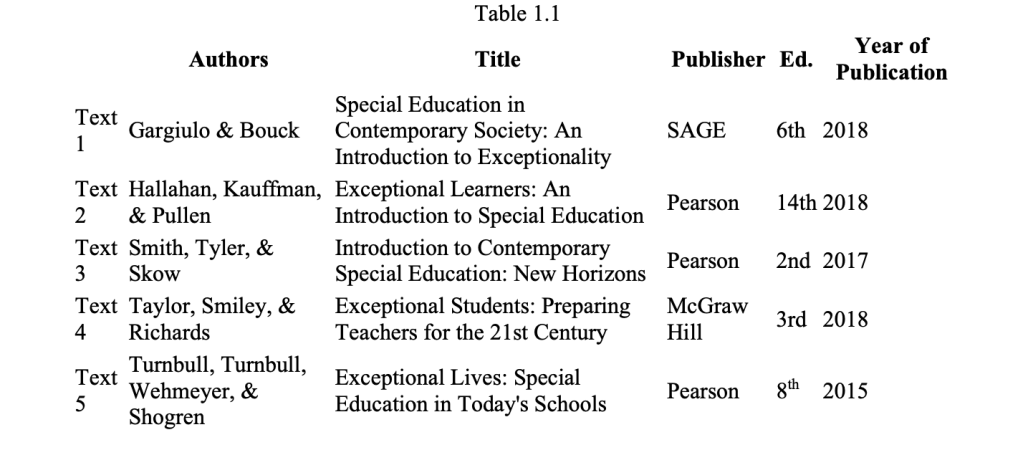
The team analyzed five of the leading American special needs textbooks used in university teacher education programs. To find the top five textbooks, they decided to base them on the best-selling textbooks for “Introduction to Special Education” courses. Professor Assaf added, “We thought that if they are the top five, then that means the most number of people are looking at them, and they should be significant.” To gauge which five textbooks are the best-selling, they reached out to sales representatives from three of the leading publishing houses; SAGE Publishing, McGraw-Hill Education, and Pearson Education. 

(Assaf et al., 2021)

What are data coding and content analysis, and how were they used for the research?

Data coding is the process of taking information that is collected from a wide range of texts and/or observations and transforming them into a set of significant, cohesive categories. Content analysis is a research tool used to discover the presence of patterns, key terms, themes, and concepts in a given text, in this case, American special needs textbooks. Professor Assaf went into detail about how data coding and content analysis was used for her team’s research, “Our data points were history chapters within textbooks. I scanned those chapters and read through them initially, then came up with initial code words and terms to highlight. When they would talk about government change, people with disabilities, or a high-profile individual we went through and coded for all of those. We had a meeting about it and then came up with some themes we found. It changed a little bit when Jenny came on, we ended up shifting to include some English lit stuff, then went back and coded for the Hero’s Journey, then it had to apply to that.”

Reflection

In our interview with Assaf, we focused on the process a team undergoes to successfully address and uncover a research goal. Approximately three years passed between the conception of the project to the publication of the results. Her biggest tip was to be sure you work with a group you get along with and work well with. Researchers must combine knowledge and skill, and make sure things are distributed appropriately based on each individual’s abilities.

We can take Assaf’s information and advice directly into our research. The key takeaway is that working with a team who is both passionate and dedicated will lead to success of the problem you are trying to identify and the research you conduct to attempt to answer it. 

Teamwork makes the dream work! 

Interview

How Social Media Has Affected the Roles of PR Practitioners: A Conversation with Dr. Nicole Lee

By: Ava Kendrena, Adrianna Harper, Yohanna Rios Montes, and Carmen Ordiano

Nicole M. Lee Arizona State University | ASU · School of Social and Behavioral Sciences

We had the chance to talk to Dr. Nicole Lee about her experience conducting research in the communications field, her discoveries of how social media has affected the PR industry, and her preferred research methods. Dr. Lee is an assistant professor at Arizona State University in the School of Social and Behavioral Sciences, where she teaches courses in communication. Before becoming an assistant professor, she attended San Diego State University as a theater student, but she switched to the public relations program because she discovered her love for writing and research. She received her Ph.D. in Media and Communication from Texas Tech University in 2016. Her research examines the intersection of science communication, public relations, and digital media. She is the author of several articles published in journals such as Science Communication, Environmental Communication, and Journal of Communication Management

Continue reading “How Social Media Has Affected the Roles of PR Practitioners: A Conversation with Dr. Nicole Lee”