
By: John Torres, Audrey Marcilla, John Square, Roberto Ordonez
Introduction
My group had the pleasure of interviewing comm scholar Dr.Elise Anguizola Assaf on her part in writing and researching for “The Politics of the Hero’s Journey: A Narratology of American Special Education Textbooks.” Dr. Assaf, Dr. Scot Danforth, and Professor Jennifer James collaborated on this research study to show how special education textbooks, commonly used to earn a teaching credential, fail to portray disabled students as active participants in their own lives. These texts allude to the notion that they cannot make their own decisions. Therefore, they are left out of decisions that affect their lives and well-being. It also fails to empower the instructor to make a difference in the lives of the students they will serve. Instead, they are forced to conform to antiquated ideas of what it means to be a disabled person in and out of the American education system. Dr.Assaf and the rest of her team call for a shift to a disability studies approach to education rather than the current segregative special education programs in place all over the United States.
Motivation and Background
Dr. Assaf, Dr. Danforth, and Professor James all shared an interest in disability studies. More specifically, they all wanted to emphasize the significant differences between disability and special education studies. Dr. Assaf defined disability education as a shared classroom with students with disabilities and other students, while special education divides these students into separate classrooms. The major issue that Dr. Assaf and her team found with special education is the lack of inclusivity. Flaws with the special education system include the limited opportunities for social interaction between students and the perpetuation of stereotypes. With Dr. Dandorth’s extensive experience and background with studies in special education and disability studies, Dr. Assaf and Professor James were able to conduct a research study where they highlighted how special education textbooks lack in creating a path for teachers to help students with disabilities meet their academic potentials through their collaborative efforts. Dr. Assaf, Dr. Danforth and Professor James strived to empower educators to take on different approaches to their teaching methods and styles to create an environment to help all students thrive regardless of their ability.
Goals and Challenges

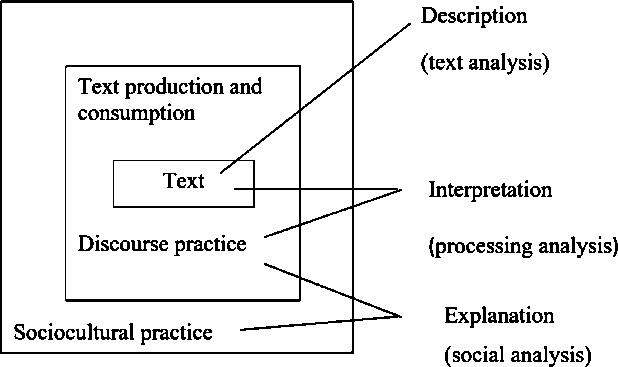
Table 1.1 pulled from Dr.Assaf’s research study
The hardest challenge that Dr. Assaf said her team faced was getting the data from the textbook companies. Many of these textbook companies were worried about what they were doing with the data and what their intended goals were for their research. Nevertheless, they were able to obtain as much information and data as they needed to conduct their research. Their primary objective was to showcase the lack of information necessary for inclusive teaching and learning within these textbooks. By revealing how these textbooks were not providing enough information for inclusive learning, their hope was for this study to open the door and evoke a sense of urgency to incorporate disability education in favor of special education. Bringing different lenses and approaches to teaching and education for disabled students would ultimately aid the lack of inclusivity within the education system.
Methodological Approach
Dr.Assaf and the rest of her team used several different methodological approaches to analyze the data they collected. These methodologies aim to unravel how the history of special education is presented to future educators. It focuses on linguistic elements, narrative structure, and thematic content. The primary approaches include:
Content Analysis
Here, their team focused closely on the portions of the text that revolved around the history of special education and how it is structured through prose, structure, and citations.
Discourse Analysis
Their team took a more traditional approach, such as line-by-line coding. In her interview, Dr.Assaf explained how her team fed their texts into an online program and gave it keywords to find specific information. This was also to see how often or not certain words were used and how they were used to get a clear understanding of how concepts were being presented.
Narratological analysis
Their textual analysis uncovered a motif prevalent throughout their research. The concept of the hero’s journey was used to express how special education has evolved over time. According to their study, the hero’s journey consists of five parts: a call to adventure, supernatural aid, threshold guardians, trials and tribulations, and the return. This concept was employed partly because it makes the ideas they are trying to convey easier for the reader to understand. In her interview, Dr.Assaf stressed the importance of “writing for your audience” when reporting your findings to ensure they reach the target audience.
Findings
Dr.Assaf and her team uncovered several problems within these textbooks and how they portray special education students and instructors. These textbooks do not express these two groups’ agency or the difference it makes. Instead, they choose to revere and focus on the efforts of historical figures and legislations they helped pass. This portrayal undermines the professional identity and autonomy of exceptional education instructors and positions them as passive recipients of wisdom rather than active, innovative participants. Disabled students and adults are often dehumanized in their portrayal and unincluded in decision-making on what will affect them. Little to no focus is placed on their adult lives. Rather than attempting to empower these individuals, they paint bleak pictures of their future. These texts also express skeptical views of inclusive education, a method that, according to Dr.Assaf, several other countries have adopted and have had great success with. Separated education is almost uniquely American and fails to encourage these individuals to be self-sufficient and empower them to feel like they have agency in their lives.








 The Society for Communications Research