Our Group had the opportunity to conduct an in-depth interview with Professor Robert Meeds in regards to his study, “Cognitive & Attitudinal Effects of Technical Advertising.” This study aims to understand the idea how individuals with varying levels of knowledge in specific product domains respond to print advertisements containing technical information. The focus lies on understanding consumer-level differences in processing persuasive messages, which directly influence advertising copywriting strategies. We discussed Robert Meeds’s breakdown of the study, how the study came about to begin with, and his overall thoughts and process within the study.
by Jackie Logwood, Stephen Lopez, Dustin Malek & Tony Rodriguez
Amy Schmitz Weiss is a research professor at the School of Journalism and Media Studies, at San Diego State University. Her 2020 paper titled Journalists and Their Perceptions of Location: Making Meaning in the Community is an attempt to better understand the role location plays in journalism. It’s one of many papers and research projects Dr. Schmitz Weiss has conducted over several years.
“The article is one of several that I’ve done that look at the idea and the framework called spatial journalism. That is an area that I’ve been developing for several years now that looks at…how journalists do their work from a lens of location,” says Dr. Schmitz Weiss.
The role of location and journalism is long-standing and, in many ways, obvious. After all, newspapers are often location-based. The New York Times, The Chicago Tribune. The Fayetteville Observer. For centuries newspapers have been serving specific communities, covering local elections, high school sports teams, community events, and the like. Location and journalism are not a new concept but that doesn’t mean there isn’t room for improvement. Nearly every person in the developed world carries a GPS device in their pocket and uses apps like Yelp that can direct you to the best pizza or hamburger in any given city. How the technologies of today improve journalistic practices that have been around for centuries is at the heart of Dr. Schmitz Weiss’s research.
For this study, Dr. Schmitz Weiss interviewed twenty-one journalists from three different media organizations that use software to geotag the location of the stories they report on. The interviews represent a form of qualitative research known as grounded theory. Grounded theory collects data, in this case, answers to interview questions, forms concepts from that data, and groups those concepts into categories. Through these twenty-one interviews, Dr Schmitz Weiss identified recurring themes and insights. Those were grouped into six categories which eventually consolidated into three. This is the final phase of grounded theory research which is where the data is analyzed and interpreted to identify relationships and connections between the categories.
“Basically the grounded theory approach entails diving in and reviewing all the material that you have. In this case, all the transcripts, the 21 reviews going through and at first identifying what the explicit information that’s there, what people say in the actual wording, and doing a first read of that, and then going back through that a few more times, two times, three times, four times to re-review what’s coming up that’s implicit, that could be garnered out of the deeper meaning of what people are saying, and then identifying how they may translate with the specific themes or concepts, and then grouping them accordingly,” says Dr. Schmitz Weiss.
The three categories that the research led to are as follows. Location as a meaning maker, location as an organizer, and location as a communicative challenge. This article offers a cursory overview of each category. It is in no way meant to represent the extensive research Dr. Schmitz Weiss has done on the topic of spatial journalism but rather to display the outcomes the research uncovered using grounded theory research.
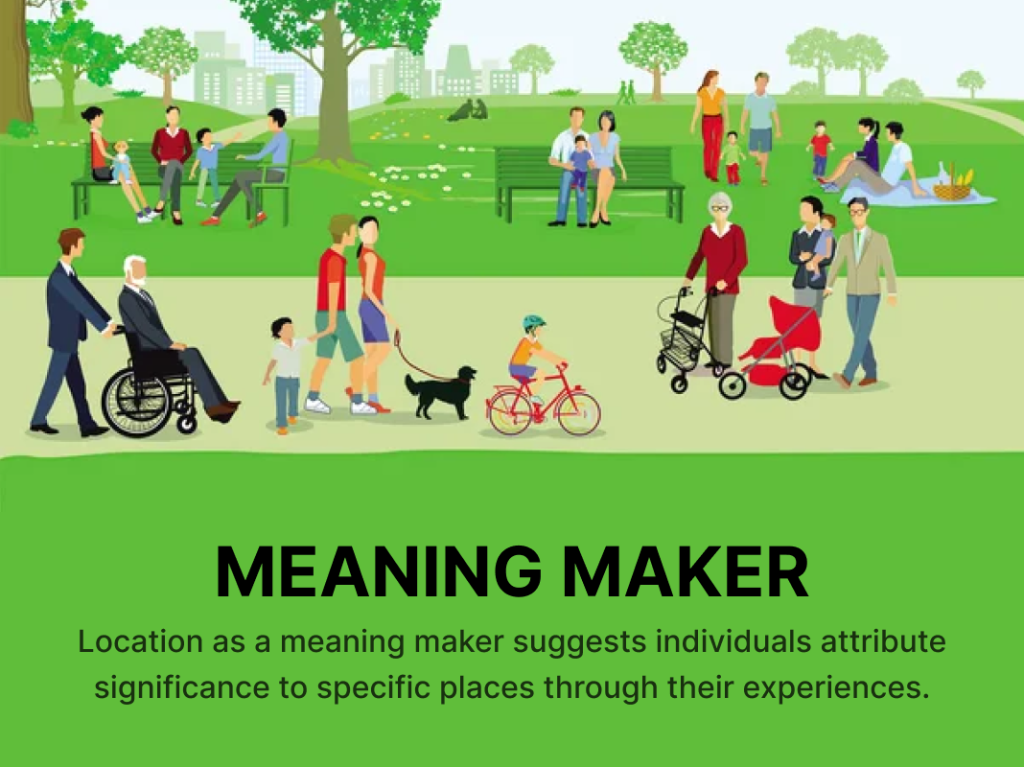
Location as a meaning maker is the idea that we as people ascribe meaning to a place. The example Dr. Schmitz Weiss used in our conversation was a person’s favorite coffee shop. To one person it might simply be another coffee shop, to someone else that might be where you wrote your first screenplay or worked your way through college. Readers will engage in a story about a place they care about. Understanding which places people in the community have an outsized connection to provides a helpful context for journalists and can potentially drive readership.
“Spatial ideology takes the idea of what we put in our mind as what’s close and has meaning to us and puts it within the context of space and place is how we associate information and how we make decisions from that information of how important it’s to us or why we would want to know more about it,” says Dr. Schmitz Weiss.
Location as an organizer is helped by the technology that some news organizations use allowing them to geotag the stories they cover. This technology gives newsrooms a visual representation of where news is happening. In the past, a newsroom might have had a sense of where news was happening but they wouldn’t have hard data, now they do. Although this does bring about certain challenges. As one of the publishers, Dr. Schmitz Weiss interviewed explained in the research paper.
“Not everything that you cover should be eligible for this sort of thing. Like, if you’re down at City Hall and you’re writing a story that ultimately takes place at City Hall, people don’t need to see that on a map, because it’s a City Hall story, right? It’s not a geographically linked thing.…. We needed the editor to sort of go through and figure out what was appropriate to tag and what was not,” said the editor.
There’s also the issue of privacy. The Austin Monitor has an interactive map on their website where Austinites can see stories based on location. Usually, they geotag stories based on an address. If a liquor store gets robbed, that’s easy, put in the address and move on. But sometimes a story has multiple locations in those cases they have to make tough decisions. The new technology brings up old ethical issues journalists have always faced. Using an exact address could potentially out a source leaving them open to retribution. Or it could be used to identify a victim of a crime. In cases like that, these organizations have to be broad, opting for cross streets or general areas rather than exact locations. While challenges exist, there are numerous benefits. It allows stories to be categorized in new and unique ways and it lets organizations know which parts of the community are underserved.
The last category Dr. Schmitz Weiss found was location as a communicative challenge. Essentially the challenge is convincing news organizations that spatial journalism is a value add that will help drive readership.
“The research shows that when something has space place with meaning to them, they are more interested, they’ll consume it more,” says Dr. Schmitz Weiss.
While this type of grounded theory qualitative research is thorough and can be eye-opening it does have its drawbacks in comparison to quantitative research.
“If you have a thousand people representative of a population for a quantitative study, you might be able to say because of X, Y happened based on statistics…. with qualitative you’re not going to have a large enough sample to say, because of X, Y happened with twenty people,” says Dr. Schmitz Weiss.
Still, qualitative research has many advantages. Dr. Schmitz Weiss continues.
“…with that said, qualitative research can still show the validity in the layers of nuance and deep meaning that comes out of those 20 people that shows specific patterns, similarities or differences.”
By: Tamera Innabi, Natali Martinez, Andrew Silva, Destinee Yepez
Dr. Ricardo Valencia, California State University, Fullerton
Our team had the opportunity of interviewing Dr. Ricardo Valencia about the research he conducted regarding LA Galaxy and LAFC rivalry. Dr. Ricardo Valencia, an esteemed assistant professor of public relations within California State University’s Department of Communications at Fullerton, brings a wealth of global communication experience to his role. Graduating with a doctoral degree in Media Studies from the University of Oregon in 2018, Dr. Valencia’s career highlights include serving as the head of the communication section at the Embassy of El Salvador to the United States from 2010 to 2014. Prior to his diplomatic role, he garnered extensive journalistic experience covering international and domestic politics. In our interview we focused on Dr. Valencias specific research involved with social media in which he collaborated with Dr. Henry Puente titled, “Nothing more American than a Mexican: Negotiating Social Media identities in the First City rivalry in U.S Football.”
Dr. Megan A. Vendemia (Ph.D), Assistant Professor of Communication Technology at West Virginia University
In this generation, social media has become a vast and ever-changing part of our lives. Content shared by celebrities (or now, influencers) sets stereotypes many people can not obtain, such as a perfect body, diet, and lifestyle. Doctor Megan Vendemia is one of many deeply interested in social media; fortunately, our team shares the same interest. We sought Dr. Vendemia to learn more about her perspective on the stigma around social media. We learned that although she broadly studies communication technology, she mainly focuses on social media’s effects on women. She first started digging deeper into social media during the beginning of her graduate studies. She felt as though social media was and still is the perfect place to study because of the modifications that happen time and time again. Through the interview we had with her, we learned more about her and how social media is a significant factor in women’s lives.
By Julymoe Aung, Jessica Bartolo, Marco Maleki, & Lauren Salas
Dr. Christina Ceisel, Ph.d. , Cal State Fullerton
Our team had the pleasure of conducting a zoom interview with Dr. Christina Ceisel, a communications professional and professor at Cal State Fullerton, about her chapter “El Sabor de Galicia : Wine as Performance in Galicia, Spain” published in the bookWine and Culture: from The Vineyard to the Glass. Her prior knowledge and expertise in qualitative research prompted our desire to inquire her about her study. Dr. Ceisel walked us through what she discovered about the significance of and relationship between wine/commodity culture and heritage during her time in Galicia, Spain, and the process of how she conducted her research.
What initially piqued your interest in this topic?
When Dr. Ceisel was honing in on an area of focus for her research, which she conducted for her dissertation; she knew she was interested in transnational communication and media processes. Around the time when she first set out to begin her study, she noticed the rise in more companies and commodities thinking about their branding, and also had a deep interest in food studies. She combined both areas of interest to answer the ultimate questions: “How does food serve as a cultural marker?” and “Why is food and heritage so important?”.
How did you plan the logistics? Was is a challenge trying to align your travel schedule with your research schedule?
One of the most challenging aspects was finding funding, considering there was limited time and financial aid. She knew she wanted to research in Spain, so her goal was to seek out opportunities that would enable her to stay in Spain for as long as possible for the duration of her study. She ended up acquiring some grant money to conduct the research, and later returned due to another fellowship that allowed her to stay for another few months. She visited Galicia in 2010 for about a month, returned in 2011 for and additional three months, and spent two months there in 2014.
How did you determine which research methods would be the most appropriate?
Dr. Ceisel, who described herself as a “qualitative researcher at heart”, demonstrated her belief in the grounded research approach, which she followed for her study. She explained that grounded research is when one starts off with their desired area of study and then examines which research methods would be the most suitable. She detailed her deep appreciation for ethnography, which she was able to explore and expand upon, and enjoyed the opportunity of exploring a new space, observing the environment, and engaging in profound conversations with the locals about themselves and the community.
“I loved being in a new space and getting to observe everything that’s happening, and having the license to be nosy.”
What was the most difficult part of this study?
When asked about the difficulties of the study, Dr. Ceisel mentioned narrowing down her options of studies was difficult. She also mentions the energy required to conduct a study, such as going out to introduce yourself to numerous people. Although she was taking field notes, she had to be able to remember even the smallest details of the day, while staying organized.
Were there any stressful situations?
We asked Dr. Ceisel of the stressors she endured conducting the study. She responded “More often than not, it was fun”. She mentions the struggles of traveling from small town to small town as it required taking several busses.
What was the most surprising? Any unprecedented challenges?
When asked about the unexpected challenges, she mentioned the interdependence movement occurring in Galiacia at the time. This was a political movement which supported the independence of Galiacia and the claim of Galician-speaking territories. She mentions how she was surprised to hear the language as frequently as she did.
Given the qualitative nature of your study, can you explain how you defined and measured your independent and dependent variables?
In the qualitative study, traditional variables were replaced by a more abstract and individualistic approach. Dr. Ceisel’s research did not rely on the conventional notions of independent and dependent variables but instead used personal experiences to convey the information on wine from Galicia. Each person offered a unique take on their preferred wine and the history embedded within.
Courtsey of Dr. Ceisel: Figure 7.1 El Sabor de Galicia (“It’s the Flavor of Galacia”). Seen at a bus stop in Santiago de Compostela and on a bus
Was it difficult planning your pool of people that you wanted to interview and obtain information from?
The people that we wanted to interview happened in a mix between arranged meetings and on the spot conversations. Vendors at Food Festivals offered powerful perspectives and data that allowed her to get a comprehensive understanding of her research topic.
Courtesy of Dr. Ceisel: Figure 7.2: Pidelo su nombre (“Ask for it by.”). Ad in an actiivity guidebook provided by a hotel. C.R.D.O Rias Baixas
By: Ashley Hernandez, Alyssa Velasquez, Jordan Avila, & Mary Hicks
Professor Peter Evanow, Cal State University, Fullerton
Our team had the opportunity to talk to Professor Peter Evanow. He has written Nissan Z: 50 Years of Exhilarating Performance and Ford Bronco: The Original SUV. He talked to us about the current changes happening in the automotive industry, why the media is concerned about these changes, and what these companies should be doing to reassure their customers.
Professor Pete Evanow has been a faculty member at California State University, Fullerton for 23 years. Before his teaching career, Evanow worked in the Automotive industry for 20 years in racing automotive marketing, promoting different products for car companies such as Ford and Nissan, and co-owned an Advertising agency from 1996 to 2006. He explains that cars with an internal combustion engine (I.C.E motors) need oil to operate. The scarcity of oil in the United States leads to high gas prices and produces carbon emissions that pollute the air. Since the early 1990’s, electric vehicles made their debut with the EV1. The vehicle’s purpose was to produce less carbon emissions to improve air quality and save money on gasoline. He later added that Elon Musk’s debut with the Tesla vehicle model, helped electric cars gain more popularity, this also means that there are a lot more competitors today. Evanow said the main reason why the media has its concerns about the vehicle or is against all electric-running vehicles is because people are afraid of change. The majority of consumers are already accustomed to gas-powered vehicles and are comfortable. Professor Evanow commented that there will be a force of change in the auto industry with California stating that there will be no more I.C.E motor cars sold after the year 2023, but consumers will still have the choice to drive the automobile of their choice.
Courtesy of Chamber of Commerce
Electric vehicles are not only beneficial due to it helping the environment but it also benefits college students by offering the use of the carpool lane for a certain period of time. CSUF has a lot of students that commute to campus so this would be an incentive that can lead to students developing an interest for this type of car. However, the reason why students have not made the switch yet is partly because CSUF does not have enough charging stations on campus. So students with EVs would have to go look for a charging station outside of campus. Additionally, a student will, most likely, not be able to afford the current price of an EV. Evanow explains that more marketing needs to be done in order for more people to be willing to switch to electric cars. He explains that they should be marketing to people in their 20s because he believes that it is important to have them on their side since their opinions are the ones being spread around the internet. They also need to work on gaining people’s trust. As mentioned previously, a lot of people do not want to switch to EVs because they already got used to their ICE vehicles so these companies have to find a way to gain people’s trust. Evanow suggests that some sort of web page where current EV drivers explain how this type of vehicle has benefitted them so that it reassures that it would be good to switch to an EV.
Evanow is in a unique position to share his perspective on the winds of change currently sweeping across the industry. With his vast experience, developed throughout his career while marketing that included working with major players in the market like mentioned before, Ford and Nissan, which offers insight into the changing nature of the sector. Evanow’s broad experience in marketing includes promoting a range of products, including those that are sponsored by esteemed events such as NASCAR and Indycar racing.
Although the switch from internal combustion engines (ICE) to electric power has received extensive media coverage, Evanow highlights the many issues that this change brings with it. The automotive industry is changing quickly, necessitating large public and private investments to promote greener transportation and reduce air pollution. These changes are largely driven by funding programs like the Clean Air Retrofit Program (CARP), which are acknowledged as being necessary for a cleaner environment and more sustainable transportation options.
Building consumer trust, doing constant feedback and evaluations, and stepping up marketing efforts are the three main things that Evanow sees as being essential to the ongoing transition. These elements are essential to persuading a larger population to use electric vehicles (EVs). As the future leaders of the automotive industry, younger generations should find the marketing tactics flexible and engaging. This generation holds the power to influence the success of companies by shaping products and services that align with their evolving needs and preferences.
The transition of the automobile industry to electric vehicles is not without its share of difficulties. While most people agree that EVs are better for the environment, there are many challenges in the way of a full transition. Since people are inherently averse to change, the switch to electric vehicles (EVs) may be seen as a major one. Mentioned previously, California’s transformation plan for requiring that gas-powered vehicles be removed from the market by 2030 just shows how strongly the state is firing for a cleaner environment. It’s crucial to remember that internal combustion engines (ICEs) and gas-powered cars are still common on our roads despite this requirement. This suggests that a significant portion of the population remains tethered to their conventional vehicles. The appeal of EVs is clear, as they produce zero emissions and contribute to a cleaner environment. However, it’s also evident that people will continue to drive gas-powered cars, underscoring the challenge of this industry shift.
Furthermore, a closer look at the college campus scenario reveals an additional layer of complexity. With the lack of charging infrastructure on campuses, it makes for a difficult transition into students’ lives regarding electric vehicles . To expand on the inconvenience of seeking charging stations outside of campus compounds the issue, we must discuss deterring potential EV owners. The incentive of using carpool lanes, which is a significant advantage for commuters, is not enough to offset these challenges.
As Evanow notes, to convince more people to switch to electric cars, companies must address these concerns. Marketing strategies must be more robust and adaptable to cater to the demands of the younger generation, fostering trust and reducing costs. This evolving landscape demands that the automotive industry find innovative solutions and adapt to consumer needs. The future of the automotive industry will likely see bigger companies absorbing smaller ones, and the road ahead will be marked by substantial changes and challenges as it moves toward a more sustainable and electric future.
On October 25th, we had the pleasure of meeting and speaking with Jasmine Phillips Meertins, an assistant professor in the Department of Communications at Cal State Fullerton. Previously, she taught public relations courses at Nevada State College and held administrative roles at Virginia Commonwealth University and the University of Miami, overseeing international program marketing and communication. Dr. Meertins’ research focuses on developing culturally competent public health campaigns, notably creating awareness about HIV among youth in the Mayan town of Santiago, Guatemala. She spoke to us about this specific research project regarding HIV Prevention: Engaging Mayan Young Adults in Rural Guatemala. By asking a series of questions on this topic, our team was able to better understand the process and experience of conducting communication research studies.
Q: What made you choose to research the topic of HIV prevention in the Mayan population in Guatemala?
Dr. Phillips was granted an opportunity to work on this study while pursuing her graduate studies. She was eager to participate as it encompassed aspects such as travel, multilingual interactions, working with underrepresented communities, and public health, all topics that resonated with her. Additionally, she was attracted to the idea of working with a Spanish-speaking community in a predominantly Spanish-speaking country and exploring a relatively unexplored topic within that particular demographic.
Q: Why did you choose to use community-based participatory research and the health belief model to guide your research?
Community-based participatory research was used as Dr. Phillips and her team deemed this type of research a “natural fit”. Her team did not choose the type of research first; they decided to speak with the local stakeholders and community leaders to gain more knowledge of what their main concerns were. After this occurred, the researchers sat down and went through the list of research types and models. Community-based participatory research made the most sense because it used a popular approach in which researchers establish that they are from outside of the proposed community and do not know the values, culture or what approach works best towards curing HIV. Researchers also establish that they are there to work together to come up with a solution that is sustainable in this particular community.
Q: When trying to recruit people for this study, why choose to put out radio announcements and flyers throughout the town as opposed to other forms of communication? In your opinion, was this method effective?
Dr. Phillips recalls that the Guatemalan community did not have the same technology as they did in the U.S. Phillips also mentioned they did not have access to the internet or television, so putting out advertisements in those mediums would not have reached their target audience. While there might not have been much access to TV and the internet, the research team found that most young adults had access to radio, so the researchers put advertisement placements through the radio as well as having a variety of flyers posted around the community in hopes of attracting young adults to participate in the study. These forms of advertisements would prove to be successful as they were able to find participants for the study; however, Phillips mentioned that they found the best way to reach possible participants was through word of mouth and wishes they reached out more through that medium.
Q: Was there any preliminary research done before going into this study that you had to conduct?
When going into this study, Dr. Philips stated that she and her fellow researchers had done basic research into the community in which they were conducting their study. For example, they looked into the typical education status of the population, the types of jobs held by the population, and how prevalent HIV was within different Guatemalan communities. Phillips stated, “I think a lot of it we learned on the ground because there was no way to know; there wasn’t a lot of information.” due to the lack of information about HIV in Guatemala. However, the information they could do preliminary showed the most prevalent communities in Guatemala with HIV, allowing the research team to focus their study on those communities.
Q: Why did you and your research partners choose to collect qualitative data as opposed to quantitative data?
“We decided to do qualitative because it’s what my partner and I felt the most comfortable with,” Dr. Phillps stated. All the data from their research was mostly qualitative because they mainly focused on the feelings aspect rather than the numbers. This was because you couldn’t really go into depth with numbers but you can with interviews and different people’s attitudes.
Q: Can you point out your independent clause and dependent clause from your research?
In most research studies, there is typically an independent variable and a dependent variable however, in this particular study, there is neither. “It was more experimental and qualitative, so there wasn’t necessarily one variable that was dependent on another,” Dr. Phillips explained. She explained that any variables there are within the study are not dependent on another. In this case, the researchers were trying to gain more knowledge about HIV prevention within Guatemala.
Q: How did you decide on your population and sample to conduct your research?
During the interview, Dr. Phillips stated that when deciding on the population, her and the other researchers decided on Guatemalans. However, for the sample, they chose young adults from ages 18-25 years old. They decided on this age range because they wouldn’t have to deal with getting permissions for people under 18 years old and they figured those ages would be the most receptive to the new information about HIV. The team also needed to receive permissions from different governments so they decided to not add to that. The age group ended up being beneficial because they were the group with the second highest rate of HIV and her team could help prevent them from becoming the highest-rated group.
Phillips’ first table for phase one of her qualitative study.
Phillips’ second table for participants’ responses from interviews.
View our full interview with Jasmine Phillips Meertins.
by Nathan Villasenor, Natalee Gonzalez, and Olivia Williams
The communication scholar our group chose to interview was Jasmine Phillips. She has a PhD in communications and is a professor here at Cal State Fullerton. The published study we decided to interview Dr. Phillips on was “A Community-Based Approach to HIV Prevention: Engaging Mayan Young Adults in Rural Guatemala“. Dr. Phillips and her team conducted their research in Santiago Atitlán, which is located in the Sololá state of Guatemala. They were inspired to do their research specifically on the Mayan people in Guatemala because they represent 40% of the country’s population and account for 20% of their HIV cases. An interesting point of this study was that, even though the rates of HIV within the Guatemalan community were growing, they were still very low. This led the research team to work backwards to justify the use of the population. The Mayan people have a lack of HIV knowledge and extremely limited access to medical treatment, making them vulnerable to a potential outbreak. The research aimed to raise awareness about HIV within their community.
By: Addison Waugh, Sarah Frazier, Ian Augustine, and Caitlyn Eng
Doctor Henry Puente, Cal State Fullerton
Recently, our group had the opportunity to sit down with Communications Professor, Dr. Henry Puente, as a part of our term project for our Principles of Communications Research class with Professor Du, and we were able to survey him about his book “The Promotion and Distribution of U.S. Latino Films”. In our interview, we discussed the relationship between media and Latino films, as well as how the rise of media in the 21st century has affected the entertainment industry.
Dr. Puente has worked in many different fields of entertainment such as radio programming, reality TV, film distribution, and special events organization. Prior to being a professor at Cal State Fullerton, he mentioned that social media did not have an impact on his career. This is likely due to the fact that the rise of social media began in the late 2000’s and early 2010’s. Although Facebook had been developed for some time, albeit just for college students, media giants such as Instagram or LinkedIn gained traction later. When asked if he thought social media would have made a strong impact in his field of work had it been around, he said he thought that it would have had a positive effect.
In today’s society, the media plays a big role in interpersonal relationships. When asked about whether it is more beneficial or harmful to these relationships, Dr. Puente stated, “I think of social media like a hammer. It can be used as a tool to build or it can be used as a tool to destroy.” The impact media has on someone depends on the way in which it is used. Our group strongly agreed with that point, with members offering their own contributions stating how they had seen people have a falling out with social media. Sarah Frazier mentioned, “Many of my friends feel burnt out from the constant overbearing quality that social media has, and have taken it upon themselves to delete their accounts for their own mental well-being.” Upon hearing this comment, Dr. Puente laughed and stated that he couldn’t believe people in college would delete social media willingly, but that he hoped it would spark a change for the better.
“I think of social media like a hammer. It can be used as a tool to build or it can be used as a tool to destroy.”
Dr. Henry Puente
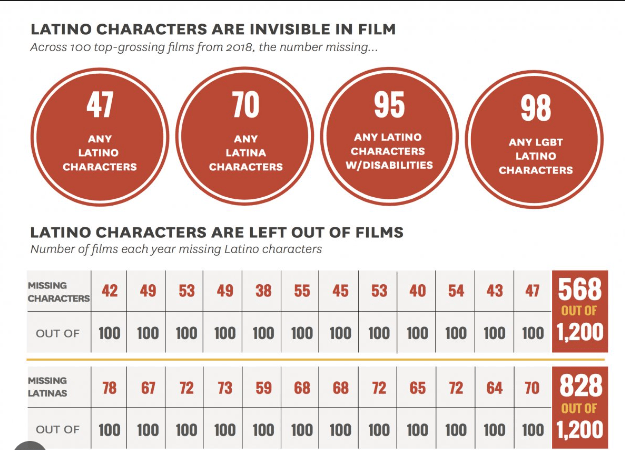
In his research focused on U.S. Latino films, Dr. Puente mentioned that social media hasn’t helped Latino films generate popularity. “They are marginalized in society which also means they are also marginalized in social media. Anything that starts out marginalized is hard to get traction in social media.” This was an interesting notation to point out, as the group hadn’t previously considered this. However, they agreed with Dr. Puente, and that in the future more social media and networking could be done to make the voices of this group louder and more prominent in society.
In the ethnic film market, Dr. Puente mentioned that U.S. Latino films are not quite at the level of African-American films when comparing them in terms of success and traction. However, within the last century, there has been a societal shift towards introducing more inclusive entertainment films. With the right strategies and investments, there is potential to make significant strides in the industry. Examples, such as box office hits ‘Coco’ and ‘Encanto,’ have found success, and although Dr. Puente is correct in stating that U.S. Latino films are lagging behind African-American films, we can see that there is a beginning. As the field continues to evolve and diversify, it is evident that the Latino film market has room to grow.
USC Annenberg
In the classroom setting, Dr. Puente has begun to see the impact of media on schoolwork, specifically in declining attendance and grades. The members of this group, unfortunately, agreed with this comment, with many of them stating that they find it harder to concentrate on one thing for a prolonged period of time. Dr. Puente mentioned how students’ attention spans seemed much shorter, and even in a 90-minute lecture, many of his own students struggled with paying attention.
When asked about any recommendations he may have on creating a healthier environment for social media users, Dr. Puente stated, “When you hold a bunch of dust in your hand and you blow it and you want to collect it back, you’ve already let it out so it’s an almost impossible thing to stop.” Social media has gained plenty of popularity within the last five to ten years, with students having their own personal electronics and social media accounts at increasingly younger ages. Dr. Puente noted that he would not be giving his sons their own personal phones until they were in their teenage years, and mentioned how he would rather them be focused on academics and extracurriculars.
“There needs to be an audiological shift in terms of the folks that are controlling those social media companies. There also needs to be a shift in how we disseminate info to young folks or just to folks.”
In conclusion, our interview with Dr. Puente has enriched our understanding of the interplay between media, entertainment, and personal health. It has provided us with insights on both the opportunities and challenges in this new digital age. We would like to extend our thanks to Dr. Puente for sharing his time and knowledge with us during our conversation. This interview has strengthened our knowledge about research methods and will help expand our expertise as we continue to learn about the principles of research in the communications field.
By: Kyle McCaghren, Logan Blevins, Victoria Bridenbecker
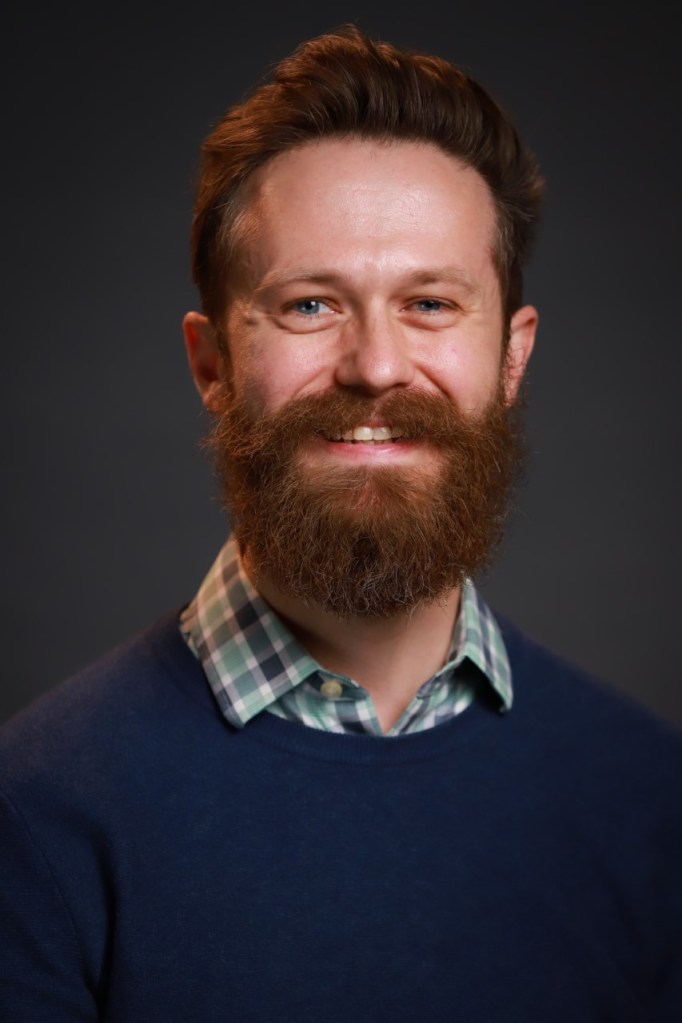
Dr. Zac Johnson, California State University, Fullerton
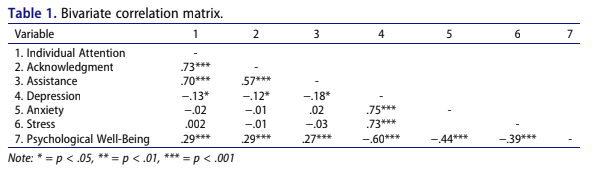
We had the pleasure of sitting down with Dr. Zac Johnson to discuss his study from 2021 about the effect of student-to-student confirmation on the overall mental health and well-being of college students. Dr. Johnson is an associate professor at California State University, Fullerton, in the Department of Human Communications Studies. His research is featured in Communication Education, Communication Quarterly, Communication Research Reports, and other publications.
Q1: In regards to student-to-student confirmation, what caused you to take an interest in that topic and take a dive into it?
Dr. Johnson described student-to-student confirmation as his niche area of study that he was exposed to when seeking to find a direction to take his study in when transitioning out of graduate school and into his career as a researcher.
When going through existing literature and studies, he came to the realization that, as a collective, there were a multitude of studies on teacher-to-student relations. Yet, the understanding of student-to-student interaction and confirmation was borderline nonexistent. Dr. Johnson took an interest in exploring what had yet to be studied about the college student and wanted to assist in pioneering an increase in the focus on this topic.
With this study and various others Dr. Johnson has participated in throughout the years, the focus is on positive forms of communication and communication ideas. He described how a majority of communications research in his field has the tendency to focus on the negative aspects of communication, such as misbehavior and complaining. He attributes this focus on the negatives to the belief that it creates a sense of relatability and normality for the audience; people can look at these negative forms of communication and justify that they are normal because they complain, too. Dr. Johnson guides his research away from this norm to focus on aspects of communication, such as confirmation, that reveal more positive behaviors and their potential benefits.
Q2: In your study, you have a decent selection of references to other studies throughout; what was the process like in finding previous literature for this topic?
Dr. Johnson described how, in this niche field of study that he is in, communications-based research is almost impossible to find. In the case of this study, he had to take a dive into studies from psychology, sociology, and educational psychology in order to find some references and information about the topic.
In the field of communications, the focus has always been on learning outcomes and the things that directly impact those outcomes. Studying student interaction and anything related to the mental health and well-being of the student just has not been done yet. Dr. Johnson said that this actually has been to the detriment of the field in general as it is a significant piece of the puzzle being left out; he continues these studies to fill that gap and pioneer its importance.
Q3: During the sampling process for this study, 412 university students were surveyed. Were you hands-on in the process of gathering those surveys, and what was the process like?
Dr. Johnson described how he has a commitment to going out and gathering his data and surveys. He will go out physically on campuses to individually survey students on his own and take over the whole data-gathering process. Data to Dr. Johnson is an extremely important part of his studies, and he feels the personal responsibility to gather and collect it for his studies. The process can be very challenging at times, but committing to the data-gathering process ensures that things are done correctly.
Q4: When it comes to the results of your studies, do you sometimes find it challenging to translate those results into a meaningful discussion?
When it comes to the discussions, Dr. Johnson described how it definitely can be difficult, but it all comes down to the strength of your results. In cases where your results are significant and strong, it can be easier to draw the conclusions you come to in the end. In the case of this study, he describes how the results were pretty much what was expected, and so there were pretty decent grounds for discussion.
There are, of course, cases where you may go into a study, and the results you find are meager at best. In those cases, it can be hard to find much significance that you can translate to a results-based discussion, and Dr. Johnson shared that he has had studies like this in the past.
Q5: In your discussion, you describe the practical implications of your results as well as the limitations. Do you view it as a researcher’s duty to offer these kinds of insights in their studies?
Dr. Johnson explained how, in some lines of research, this is not necessary, and sometimes just the results are enough. However, with his focus on instructional communications research, it absolutely should be a duty to offer those practical implications.
“It should be the point of instructional-based research. If you’re not sort of concluding why you should care about this, what can you take away from this practically to impact your students’ experiences, to impact your experiences, to be a better teacher, then what are you doing?”







 The Society for Communications Research