Interview with Waleed Rashidi

by Abigail Pike and Brianna Villarreal

The music industry is fast-pace, with new trends coming and going, so using our interest in the music industry, we decided to look into a study of a music technology that peaked in 2000, the compact disc. We met with Dr. Waleed Rashidi, a California State University, Fullerton professor, to gain insight into how he conducted his survey in the article Young adults’ compact disc usage experiences in 2020. Dr. Rashidi has dedicated his career to researching music, specifically music technologies, which is why he decided to research why young adults still wanted to engage with CDs and whether they would still engage with them in the future. 

Before conducting his study, research on CD usage had to be done. It can be difficult to find credible sources that report accurate numbers but Dr. Rashidi found the Recording Industry of America (RIAA) and Billboard to be reliable and accurate sources for reporting data. The RIAA is aligned with many record labels so they have the credibility and trustworthiness of being a long-time establishment. They are also the association that certifies albums when they are sold for gold, diamond, or platinum releases. All of this combined makes these organizations a credible source of information and they report accurately for sales figures, shipment, and when designating awards. He also mentions the International Federation of Phonographic Industry (IFPI) as another source that measures worldwide sales figures.

Achieving the same level of reliability and validity in the survey is essential to his research, so Dr. Rashidi emphasized the importance of data saturation. He achieved this by having enough of a response sample that represents the population and can be generalizable. The survey was sent to CSUF students, but if it was sent to students in different geographical areas, there may be different results. People in different regions of the country interact differently with the media; people on the West Coast are surrounded by the entertainment industry, but people in different geographical areas may have different ways of interacting and experiencing entertainment. There is also an economic basis. Those with more money can pay for streaming or afford to start a physical collection of vinyl records or albums. In contrast, those with less may not be able to afford such a costly engagement with the artist, like purchasing physical copies of music. “Looking at the country regionally and understanding the economic differences in different regions could be important in understanding why certain responses might differ from area to area,” said Rashidi. General demographics also impact the results because age and ethnicity can affect how people experience and interact with music.

The research includes direct quotes from the open-ended questions asked in the survey. When asked how he narrows down which quotes or information to include in the article, he said that he looks for similarities in the responses. A pattern can be a trend, and then he looks for a theme he can build upon; he pulls a few examples to highlight the similarities between the participants. He is also looking for outliers because he wants to hear about things that weren’t as popular or frequent, so this is an opportunity to find out why they responded differently from the majority. As a researcher, he finds this area interesting because he wants to hear from various perspectives. He selects examples to back up what he originally claimed, points out similarities, and highlights some interesting outliers.

CD sales in the year 2020 were heavily influenced by the bundling practice, which is when an artist puts together a CD with the purchase of other merchandise or a concert ticket to create a higher charting sale for the CDs. Dr. Rashidi has not followed how bundling has continued to affect CD sales. Still, he did make a connection based on some of the open-ended responses he gained from his survey that the K-Pop community has found a way to capitalize on the lost art of CD sales by having exclusive inclusions of trading cards of the band members that fans want access to which leads them to continue to purchase the CDs. This has led to a new study he is currently working on about how K-Pop has influenced the market of physical music sales in the decade of the 2020s. Since Dr. Rashidi’s original study was published, Billboard has changed the rules about how CD sales are calculated. It will be interesting to see how different the numbers come out without the addition of bundling calculated. 

The thought process behind deciding which research method to use when conducting a study about the music and entertainment industry was a question we had in mind when going into this interview because we will likely be doing the same research style in the coming weeks. Dr. Rashidi’s insight on the matter guided us to a decision we believe will be fit for our study moving forward as well as his. He explained that using a survey was most effective when reacting to the target audience of college students because it is the most convenient way to gather information, and people will be more willing to participate in the less work they must do. When you send out a survey that is expected to take no more than ten minutes, people are much more willing to interact with it than if you invited them to a thirty-minute interview with no compensation for their participation. “I can get a number of responses that way in a timely fashion and also a good variety,” Rashidi said regarding his decision-making process. After conducting our interview with Waleed Rashidi about how he conducted his research for his study, Young adults’ compact disc usage experiences in 2020, it has given us greater insight on how to move forward as researchers ourselves as well as some insider tips when it comes to how to navigate what is and is not credible information in the music and entertainment industry. The information gained from this interview will allow us to make more informed and strategic decisions when it comes to creating our own research in the music space.

Image from Young Adults’ Compact Disc Usage Experiences in 2020.

Robert Meeds on Advertising Slogans and Syntactic Complexity

By: Mario Fuentes, Noemi Valencia, Angelina Mesina, Carina Cortes

Profile photo of Robert Meeds

Robert Meeds, LinkedIn Profile

Overview

Robert Meeds, Ph.D., is a professor of Communications at California State University, Fullerton. He currently teaches Communications 317, Digital Foundations. He has previously served on the faculties of Kansas State University, Texas Tech University, and Qatar University. Robert Meeds holds a B.S. in Journalism and an M.A. in English from Ball State University. Additionally, he received his Ph.D. From the University of Missouri. He specializes in advertising and integrated marketing communications. Professor Meeds conducts research that focuses on the impact of advertising copywriting on consumer attention, learning, perceptions, etc. His work has been published in various journals such as the International Journal of Advertising, Journal of Consumer Psychology, Psychology and Marketing, Journal of Computer-Mediated Communication, Newspaper Research Journal, and Journal of Middle East Media, among others.

Throughout our interview, we focused on his work titled “Surface-structure transformations and advertising slogans: The case for moderate syntactic complexity”. This research focuses on how the structure of language is used in advertising slogans. Specifically, it explores how sentence structures can be transformed and adjusted to create the most effective slogans. The main idea brought from this research is that moderately complex sentences are most effective at catching attention and assuring slogans are memorable for consumers. Being inspired by Noam Chomsky’s work, Meeds explores the surface structure transformations within advertising slogans and the application of psycholinguistic theory. 

Q: Based on your research article, “Surface-Structure Transformations and Advertising Slogans”, What inspired you to explore surface-structure transformations in advertising slogans? 

Robert Meeds explained that his area of research has been what’s called “Application of Psycholinguistic Theory.” This area of research studies how people process language in advertising. This particular study was an idea conducted by one of his master’s students who was in a psycholinguistics class at the time. They were influenced by Noam Chomsky’s theory of transformational grammar. There was a research that showed that taking the same meaning of a sentence and manipulating the syntax around would cause people to concentrate harder as if to decode the sentence in a way. As a result, Meeds and his student believed this was interesting in terms of how it might apply to advertising slogans.  

Q: Can you share examples of slogans that you believe perfectly illustrate your findings?

Meeds uses the “State Farm” insurance slogan as an example to support his findings. The slogan, “Like a good neighbor, State Farm is there”, is a phrase in which the syntax has been manipulated in order to resonate the sound. Otherwise, the default way of structuring that sentence would be, “State Farm is there like a good neighbor.” Manipulating the syntax and putting a specific phrase first creates a different resonate sound to the slogan. Carefully placing and manipulating the syntax in a phrase can aid in memorizing certain brands and slogans such as this one. He explains that we can look at advertising slogans ourselves and analyze if they are phrased in a default “subject-verb-object” structure.      

Q: What methodology did you use to measure the effectiveness of different slogans?  

Meeds explained that his research within this study was a psychological, within-subject experiment. However, most experiments that we are probably familiar with are between-subjects experiments, which means you randomize an assignment to a treatment condition and each participant is then exposed to one of your treatment conditions. In media work, there are a lot of within-subject designs which means you assign each treatment condition to every subject. In doing this, you can control individual-level variants which can give you stronger results. 

Q: Were there any surprising findings during your research that challenged your initial expectations?

During his research, Meeds explains that there really weren’t any surprises throughout his experiment. He explains this as one of those “rare” experiments where they got the results that they expected. Usually when you conduct an experiment, it is not uncommon to encounter surprises that differ from your expected results, however that was not the case for this one. 

Q: How does syntactic complexity interact with other elements of communication? Such as visual design or brand tone?

Meeds explains that there may not be enough research within either of these elements to show how they interact with one another. The closest thing to show how these elements interact with one another was when he conducted a study in the Middle East. This study looked at tourism websites that they had created as stimulus materials that were done in Arabic. They were looking at differences in how people responded to it, whether they used a Western design style or a Middle Eastern design style. They received the interactions based on whether people liked the foreign language design style. 

Q: How do you think social media and digital communications have changed the roles of effective slogan writing? Ex. Do shorter slogans stick better in an era of fast scrolling?

Meeds states that slogans have always tended to be more memorable and better-liked if they are short. He further explains that the general rule is usually seven words or less. Although the social media era has become more advanced, this general rule hasn’t really changed throughout time. He thinks that with the general speed in which we can scroll through content so quickly, including advertising content, it would seem that the repetition of short, memorable slogans is probably more important now than ever before.    

Q: How did you actually measure or determine the impact of the slogans studied?

The impact was measured by taking the hypotheses, which are your pre-predictions of what you think the outcome of the study will be, and then test whether or not your hypotheses are supported by looking at the scores in each condition. In this specific study, Meeds explains that the two main independent variables were changed in order to see how other people would process it. The first independent variable was the voice of the sentences, which was active versus passive voice. The second independent variable was particle movement, which meant taking a phrase and moving it from where it would normally fit. An example in the study was the sentence, “Officials quickly rushed to the fire.” versus “Officials rushed to the fire quickly.” In this case, the word “quickly” would be the particle. In its normal position, the particle would be close to the verb, which is “quickly rushed.” However, if we move that particle to “fire quickly”, this would be considered a dangling modifier. In this experiment, however, it is known as a particle movement. Once they created various slogans that contained those two treatment conditions, they exposed the participants to all of the different slogans by answering a questionnaire. The questionnaire was based on how well they understood the content, how well they recalled certain words they were exposed to, syntactic recognition, and their attitude towards the ad/persuasion. Once they took these four conditions, they took the mean scores for each one of these dependent variables in each one of these treatment cells. Once all of this information is collected, it is then submitted into the analysis of variance statistical tests. If you end up with a significant difference then you end up with a significant result. 

To Conclude…

Professor Meeds’ work explores the role of psycholinguistics in enhancing how consumers process advertising slogans. By applying transformational grammar to slogan structure, Meeds demonstrated how syntactic manipulation can influence audience engagement and memory. With a fast paced era of digital scrolling, Meeds’ research highlights the benefits and strengths of shorter, well-crafted slogans. His research contributes valuable insights into the process of advertising which highlights the intricate connection between structure and meaning. 

Interview with Irene Matz on Gender inequity in Debate, Legal and Business professions.


By: Xiuhnel Venegas, Yazmin Lopez, Justin Chee

Date: November 6, 2024

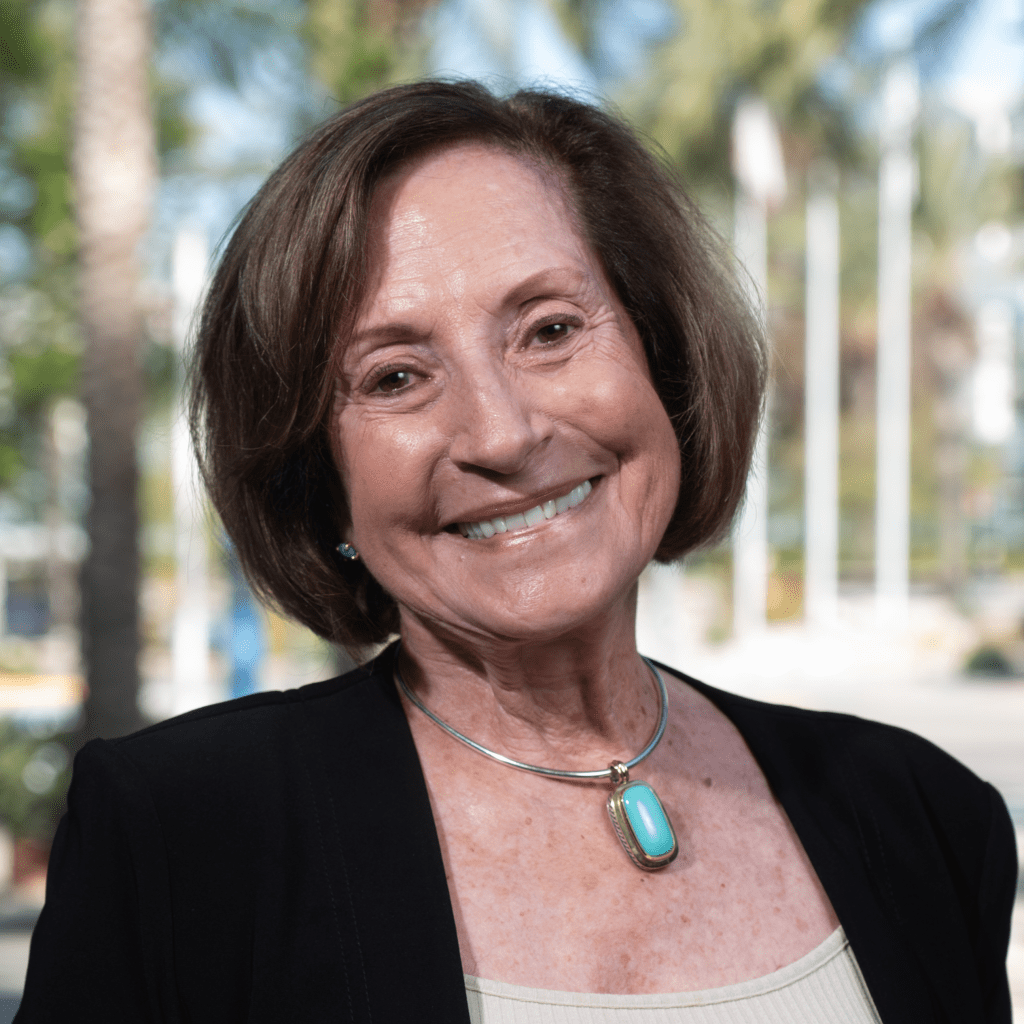
Dr. Irene Matz, Ph.D., is an associate professor in the Department of Communication Studies at California State University, Fullerton, where she previously served as associate dean and interim dean of the College of Communications. She managed a faculty of 180 and a $8.5M budget, and established international partnerships, including an exchange program with the University of Havana. Dr. Matz holds a doctorate in education from Claremont Graduate University and has received several awards, including the Distinguished Faculty Award (2019) and the University Faculty Leadership Award (2020). Her research focuses on leadership, women leaders, ethics, and organizational communication. She also chaired the Faculty Affairs Committee for the Academic Senate from 2019-2022.


Question #1: What made you want to research gender disparity in debate, legal and business professions?

Dr. Bruschke collected data and enlisted Matz to help write up research on the trend of women in debate and legal professions. Matz was looking at gender research and women in leadership positions which made Bruschke invite Matz to assist in the research study. While participation in debate was declining for women, Bruschke wanted to explore the broader trend. Matz emphasized the importance of equal representation and opportunities for all, regardless of race or gender, particularly in university settings, and stressed the need to monitor inequities.

Question #2: In your review of the literature section, you noted that the trend of women’s underrepresentation in argumentation and debate will continue to worsen. Do you believe they are still possibly underrepresented today?

Matz acknowledges that while women in the workplace are improving, progress has been slow. She emphasizes that mentoring is crucial for helping women enter male-dominated fields, but there is still a long way to go for equal representation. Although more women are entering the workforce, they remain underrepresented at higher levels. She also believes the younger generation is more willing to seize opportunities that will elevate them in their career. Matz hopes progress continues and that women’s representation improves at a faster pace.

Source: Women in the workplace 2024, McKinsey & Company and Leanin.org

Question #3  In your literature review, how did you decide what information was important to include on this topic?

Matz advises beginning with literature directly addressing the hypothesis you aim to explore. She suggests consulting researchers with experience in the relevant field to ensure that the insights gathered are credible and valuable. Additionally, Matz recommends examining these researchers’ reference pages to uncover further resources on the topic. Research can start either with a particular topic or with a notable expert. For example, Matz mentions a former California State University Fullerton professor who was a prominent figure in her field, later on contributing to juror selection in court cases. By focusing on established professionals recognized in their field, Matz emphasizes the importance of understanding expert perspectives before going deeper into the topic.

Question #4: What criteria did you follow when deciding what data goes into the study and where to gather your data from?

Matz became interested in women’s leadership after noticing three women in leadership roles being asked to leave their leadership position. This led her to explore how that could happen. First, she conducted a pre-study to test her questionnaire and used focus groups to gather feedback on her research approach. Both helped her understand leadership styles and how life experiences might shape them.

She looked at leadership across four states in government, education, and business, gathering data on different leadership styles. Matz found that the issue wasn’t about gender but about the style of leadership used. She focused on five styles: autocratic, consultative, consensual, collaborative, and laissez-faire, which helped guide her study and conclusions.

Question #5: After gathering your research, do you still believe mentoring is an effective option to increase women’s inclusion in debate and the workforce?

Matz strongly believes that mentoring is a key strategy for increasing women’s inclusion in debate and the workforce. Reflecting on her career, she shared how mentoring moments played a significant role in her development. She recommends mentoring for all women, emphasizing that having a mentor is incredibly valuable. Matz referenced the book First Friends by Gary Ginsburg, in which the author discusses American presidents and highlights the importance of having someone who can be candid and objective in offering advice. She stressed that it’s crucial to have a mentor who can speak openly about the challenges women still face, while also being supportive and encouraging. Matz believes that the support and encouragement provided through mentoring are essential for personal and professional growth.

Full Interview below.