An Interview With Dr. Ceisel: A Talk About Qualitative Research

By: Courtney Iseman, Priscilla Bevel, Nicole Anita
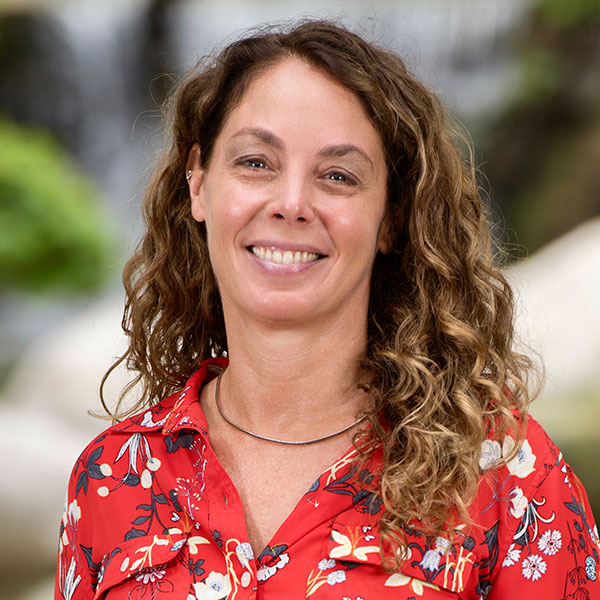
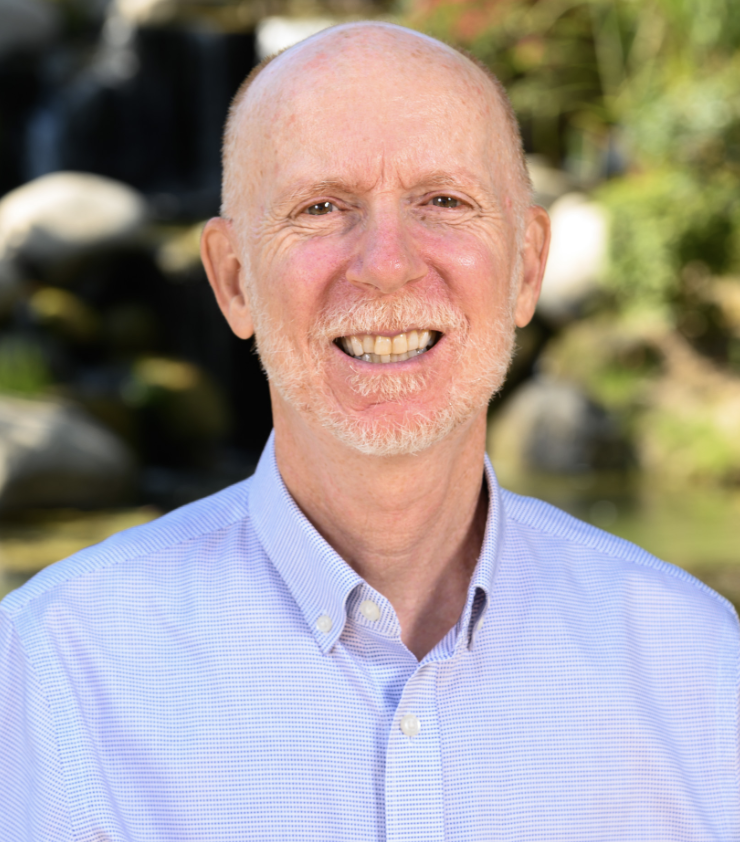
Professor Christina Ceisel

Christina Ceisel, California State University, Fullerton

On Wednesday, November 1st, we interviewed Dr. Ceisel about research methods, specifically her experience with qualitative research. Dr. Ceisel earned a PhD in communications research at the University of Illinois at Urbana–Champaign. She also has a master’s degree in social science and a bachelor’s in media studies. Dr. Ceisel is trained in qualitative research methods using discourse analysis and ethnography. She also does market research and consulting by doing surveys and focus groups.

Read more: An Interview With Dr. Ceisel: A Talk About Qualitative Research

In our interview, we asked her specifically about her study titled El Rock Star Perfecto?: Theorizing Juanes and New Directions in Crossover Celebrity. For this study, she focused on the Columbian rockero, Juanes. Her topic was developed while discussing with a colleague the traction and popularity Latin music artists were gaining in the U.S. At the time, artists such as Shakira and Jennifer Lopez were at the top of the charts for music and had the world by storm. Dr. Ceisel was fascinated by how a country like the United States, with its primary language being English, would have such a demand and liking for Latin music. This developed the foundation of her research on Latin music. In Dr. Ceisel’s previous research, she goes to festivals, observes and interviews people, and later interprets her findings into her research. Dr. Ceisel’s approach to studying Juanes uses discourse analysis by reading and taking notes on how news outlets would portray the Columbian singer. She even studied how they talked about him and the market for Spanish and Latin music.


For this specific study, she focused on using qualitative research methods. When collecting information, she mentioned how instead of picking out specific terms, she took notes across all the articles she gathered, noting specific descriptions of Juanes’s work and performances. She focused on identifying the adjectives, themes, and tones of the coverage that was being published about him. She then used the information she gathered to understand how those aspects led him to a successful career.


Our group is planning to incorporate more quantitative methods into the study we are going to conduct. However, we are also interested in incorporating qualitative methods as well. Dr. Ceisel gave us some insight into why she prefers qualitative research methods.

“I think context is really important, and with quantitative work, surveys and such can give you a lot of interesting information, but I always want to go a little bit deeper. For me, it’s not quite enough. I find interviews and ethnography to allow me to tie things together a little bit more deeply.”

She continues to discuss the importance of tying the method you want to use to the research question you are asking. In the Juanes study she conducted, she didn’t interview anyone due to lack of access, so for this particular study, Dr. Ceisel found discourse analysis to be more efficient in getting the information she was looking for.


We asked Dr. Ceisel what made her interested in researching topics focusing on popular culture and media. She discusses how media matters and “really appreciates the way in which we can understand our world.” Growing up watching many television shows and films, she was always fascinated by how things occurred. Now, as a researcher, she can find answers and information to things she finds interesting. Once she began to study topics within media, she was able to take her previous thoughts and ideas on a subject and be able to prove why her beliefs were correct.


For our research study, we are looking to find and compare how people’s screen time and media consumption have changed since the pandemic. Although we are taking a more quantitative approach, we asked Dr. Ceisel if there are any specific methods she would suggest for researching this type of information. For screen time, she said we could look at quantitative aspects such as phone usage and screen time information our devices track. She gives the idea of surveying people and asking how long they spend on their devices. If we want to add a qualitative dimension, she suggested asking people how they feel about the increase in screen usage after the pandemic. She also added the idea of asking people why they continue to use social media even though people may not always feel great about being on it. 

“There is a lot of disconnect in what we say we want and how we actually behave, and that’s a good spot for qualitative work.”

Types of Research Methodology: Uses, Types & Benefits | EDUCBA

Pedamkar, Priya. Qualitative vs Quantitative Research Pros and Cons. 30 Aug. 2023. Types of Research Methodology, EDUCBA, https://www.educba.com/types-of-research-methodology/. Accessed 1 Nov. 2023. 


When asked how to conduct a successful study in media, Dr. Ceisel highlighted the importance of being precise in what you seek. Not only that, but she also touched on how being interested in the topic you are researching is another critical factor, as you are likely to be more passionate about the subject and motivated to find answers.


After conducting our interview, we took away how important the human connection in a qualitative research method can impact a study compared to the survey benefits from quantitative research. Diving deeper and asking people how they feel about a topic can provide more extensive data rather than asking surface-level questions. Overall, Dr. Ceisel’s insight on qualitative research has inspired us to use more meaningful and detailed questions in the study we will conduct to help reach more significant and more in-depth results.
Zoom Interview Video

Interview with Dr. Frank Russell on Twitter and News Gatekeeping

By: Elizabeth Nunn, Katie Alves, Lucy Karyagina, and Paola Madrigal

Frank Russell, courtesy of CSUF

Our group was given the privilege of speaking with Dr. Frank Russell surrounding his published research work “Twitter and News Gatekeeping: Interactivity, reciprocity, and promotion in news organizations’ tweets.” Frank Russell is a journalism associate professor in the Department of Communications at California State University, Fullerton. He earned his Ph.D. in journalism while at the University of Missouri, along with a Center for the Digital Globe graduate certificate. His previous jobs have included editor, reporter, and more while working for the San Jose Mercury News, The Seattle Times, Puget Sound Business Journal, and the Los Angeles Daily News. Russell now teaches classes on News Literacy, Digital News Reporting and Writing, Editing and Design, and Principles and History of American Mass Communications. We sat down with him to ask about his process while completing this Twitter-focused research on journalism, what he would do differently, and his overall thoughts.

Read more: Interview with Dr. Frank Russell on Twitter and News Gatekeeping

We are most interested in Professor Rusell’s study titled “Twitter and News Gatekeeping: Interactivity, reciprocity, and promotion in news organizations’ tweets” precisely because it is in the same realm as what our group is interested in doing for our own research.

Q: What was your inspiration for this study? 

There were a few things that inspired Professor Russell to create this study. But the main reason is that Professor Russell had the question of how were the biggest companies in media using Twitter. As a journalist himself, understanding the use of a platform and if it will grow into something more is something important to him and other journalists. Back in 2013, Professor Russell and his colleagues found themselves starting this study during a political crisis. They were interested in seeing where it takes them during such a distressful time and how it will benefit them. 

Q: What were some of the biggest challenges and limitations you faced when conducting your research?

Jokingly, Professor Russell shared with us his lack of being a “Super Computer” as his biggest challenge. Completing a study like this, where he is trying to understand the uses of social media and what can come from it, can be very extensive. And with a lack of resources, that can heighten the issues significantly. We can understand how much of an effect that would have on a study, considering it revolves around how Twitter is used in journalism. Not having enough resources to access Twitter can slow the process down.  Everyone could benefit from having their own “Super Computer.”

Q: When conducting this research study, did you prefer a quantitative or qualitative analysis method?

Professor Russell does both quantitative and qualitative when doing his research. The quantitative work he does is typically content analysis, which is what he did for this research study. He also uses discourse analysis, which he defined as “looking at what people say or write and trying to figure out things about a phenomenon based on what people [who] are part of it say or write.” When conducting his research, Professor Russell looked into the relationship between journalism as a social institution and Silicon Valley platforms as a social institution.

Q: How did you prepare for the study? Did you take any steps beforehand, gather any sources, etc.?

When preparing for this study, Professor Russell hired two master’s students to work as coders, whom he also acknowledged in the research. He also took the time to do an extensive literature review beforehand. In preparation for the study, he decided to go about it based on what he had learned in research method classes he had previously done. He even took a class in quantitative content analysis, where he ended up doing a different study related to Twitter as well.

Q: After you concluded your research, did you see any flaws with the reciprocal journalism model?

Professor Russell shared with our group that he didn’t see any flaws with the reciprocal journalism model. He then went on to say that the reciprocal journalism model had not been adopted at the organizational level while adding that there was evidence showing that individual journalists using Twitter were using this reciprocal model. Russell defined the idea to us as “journalists and audience members… interact with each other with reciprocity, or with respecting each other as equals, whereas organizations were taking kind of a broadcast mode.” He further explained that these organizations using Twitter were mainly trying to get clicks and interactions as opposed to using it as a unique platform for storytelling. Russell left us with one last thought: because of how much Twitter has changed since his study was completed, he is unsure if the platform as a whole, will be available for individual journalists anymore.

Holcomb, Jesse, Jeffrey Gottfried, and Amy Mitchell. 2013. “News Use Across Social Media
Platforms.” Pew Research Journalism Project, November 14. http://www.journalism.
org/2013/11/14/news-use-across-social-media-platforms/.

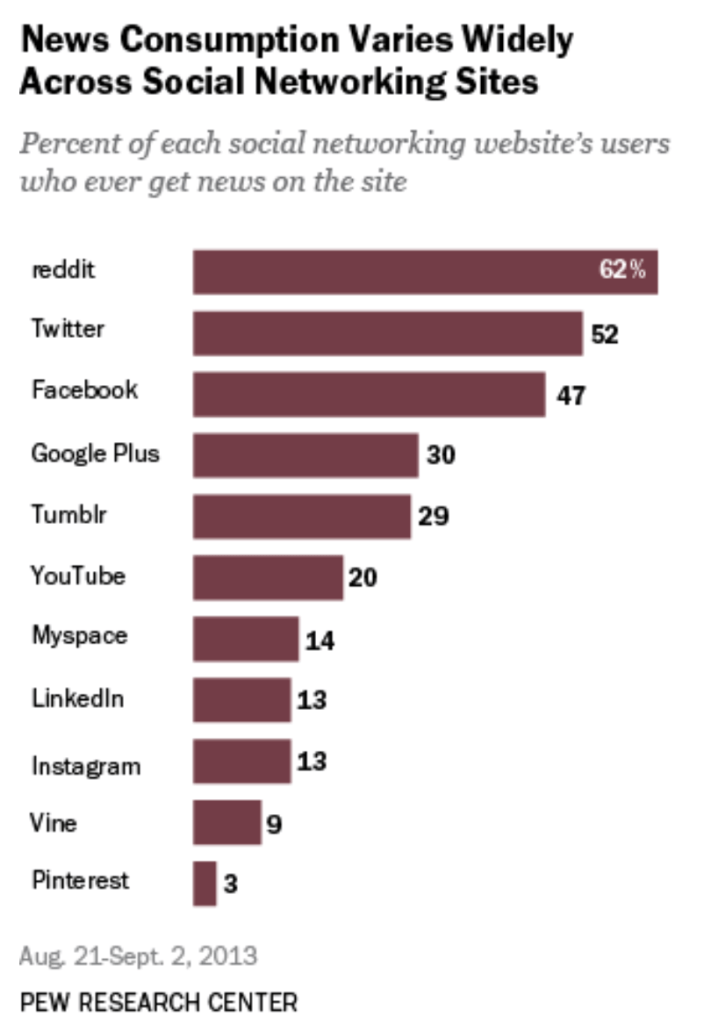
Professor Rusell refers back to this image and research because, as one may notice, Twitter is the second most used social media network. This information proves that the reason why most news organizations were using Twitter is because they just wanted to get clicks and interactions. It is also important to note that about half of Twitter users view the platform as a news source, which makes them less likely to turn to traditional media for news.

Q: Would you have done anything differently if you did it all over again?

Professor Russell explains that if given the opportunity to do it all over again, he would not do anything differently. This is because he was able to answer his own questions effectively in the way he conducted the study. It is also important to note that this type of research study, using Twitter could not be done again due to new Twitter guidelines with Elon Musk’s takeover. He also expressed that this research study, in particular, was the easiest to get published, so there would be no need to change anything. 

To summarize, after talking to Professor Russell about his past studies and the journey he took to complete them, we felt as though we had a much better understanding of the kind of process it takes to create a research project and how much time and effort is genuinely involved. It was wonderful getting to speak to someone such as Russell, who has completed many different projects during his career, and we are grateful that he was willing to open up to us about it. He helped guide us into a direction we should go for our own research project and left us with some insight to think about. While his research was a unique project that could not be replicated anymore, it inspired us to make our own research project surrounding social media in a new way, different than what it used to be. Our interview with Russell will continue to inspire us to learn more about the research process. 

Interview with Professor Russell

Conversation with Dr.Assaf on Research

On Friday, October 20th

By: Cathering Dahlberg, Krystal Ramirez, and Megan Vu

Introduction:

On Friday, October 20th, we had the privilege of interviewing Dr. Assaf. Some background on  Dr. Assaf is that she earned her Ph.D. in Education with an emphasis in disabilities studies from Chapman University. She also holds an M.A. and a B.A. in Communications with an emphasis in public relations from Cal State Fullerton. In addition, she is an Assistant professor from the Department of Communications at California State University Fullerton. She teaches public relations and entertainment courses in the undergrad communication program. 

Read more…: Conversation with Dr.Assaf on Research

During the interview, she spoke on various research topics, such as mental health, social media, and sports in the eyes of communication and the impact/effect. The inquiry was based on her experience conducting research, the type of study it was, why she chose to research that topic, problems during the research process, interesting findings from the research, and advice she would give new researchers and students. 

Interview questions:

Q: Can you give us a quick summary of your research?

Dr. Assaf’s research consists of mental health and mass media with a spefic focus on the representation of mental health on social media platforms. Using a qualitative research approach, she dives into the intricate ways in which mental health and various disabilities are portrayed in the media. Dr. Assaf uses her background in disability studies to help navigate her through her research. A central theme of her research follows the concern of misrepresentation of mental health in the media, prompting her investigate more about the issue. 

Q. How did you come up with this research? What is the reason for choosing mental health?

Dr. Assaf stated that the reason for coming up with this research was because it was an academic requirement for her graduate program. She stated, “a lot of communication is coming out on stress and mental health.” Secondly, she was diagnosed with anxiety and depression; a family member was also diagnosed with other mental health issues. Dr. Assaf shares that mental health has been overlooked/underrepresented and wants to bring awareness of mental health. It was joint research by having mass media and mental health in her research. 

Assaf, E. A. (2020). Hidden Power: Journalistic Representations of Mental Health Labels[Doctoral dissertation, Chapman University]. Chapman University Digital Commons. https://doi.org/10.36837/chapman.000137

Q. How did you conduct your research? Surveys, interviews, groups?

In one of her research studies, she used a lot of content analysis but also used it as qualitative research. She stated she liked storytelling because that is a way she communicates with people better. Also, getting to know other’s stories. Regarding content analysis, Dr.Assaf analyzed in her research study how phrases and words were used in the texts using articles based on how authorities like police officers and law enforcement communicated on mental health. 

Q: What problems arise when conducting your research?

While conducting her research, Dr. Assaf discussed the problems that she faced. She explained how her main problems came from the committee’s that she worked for. They wanted her to prioritize things they thought were important and interesting, rather than ideas of her own. She went on to explain how people in charge had specific requirements to be met which sometimes conflicted with her research process. Some examples were stringent guidelines and a rigorous review process in which she had to abide by. If an editor wanted something changed, she would have to change it. While sometimes Dr. Assaf found herself annoyed with these rules, she admitted there were times where the feedback improved her study. In terms of textual analysis with publicly accessible content, Dr. Assaf noted she had to avoid hyperlinks since they were subject to editing or had a possibility of “dying.” She considered screen grabs and pdfs as more reliable alternatives. Despite these challenges, Dr. Assaf relied on her creative problems solving and adaptability to overcome these obstacles. 

Q: What has been the impact of your research?

Dr. Assaf’s research has had a great impact on various aspects of her academic and professional career. It played a major role in her having her current job as a professor and graduating with a doctorate degree. Her interdisciplinary approach has allowed her to have meaningful conversations with a variety of different groups such as students, faculty, mental health advocates, journalists, and many more. Dr. Assaf aims to inspire and bring positive change to her peers while fostering awareness at the same time. As her research continues to develop, Dr. Assaf hopes to expand her outreach to a larger audience while making a significant contribution to the work she is passionate about.

Q: What were the most interesting findings in your research? 

Upon hearing this question, Dr. Assaf reflected on her authoritative research in journalism. She initially was researching representations of mental health in journalism. With a deeper approach, she started to look directly at who was making the quotes and comments or which people were specifically cited. She noticed a common factor that all of these people had. She found these people to be law enforcement and legal individuals like lawyers and judges. Dr. Assaf realized that journalists would normally be receiving their quotes from these authoritative figures and found it interesting considering the role journalists have as the “gatekeepers”. Another thing that Dr. Assaf found interesting, although it wasn’t a finding in her research but through a literature review, was that 6 out of 10 people don’t read beyond a headline. She considered this problematic as headlines can give a false view to what the whole article is actually about. She talks about how this is typical of people as it is realistically hard to expect people to read everything that they come across. Through her research she found that people can have strong opinions just based on a headline, which is where it can seem more alarming. By only reading the headlines, people are not including the context, which Dr. Assaf believes in the key to understanding information. 

Q: What advice would you give to new researchers?

The first piece of advice Dr. Assaf would give to new researchers is picking a topic that is worth your interest. Doing a full blown study that could take months or years to do, she explains that you would need to research something that you could sustain your interest in for the duration of the study. She talks about how a short-lived interest would make it harder to finish the study since it’s harder to put in research and effort into a topic that you’re interested in anymore. From generally doing the study, to trying to get your research published, and revising for the publications, it takes a lot of time to complete your research. She said that “it’s a time-consuming process..you want to make sure that you’re still interested in it years down the road.” She added another piece of advice, which is that your data set is appropriate for the time period that you are conducting your research. She talks about finding that “sweet spot” of having enough data to look at and analyze, where your findings are also substantial, but also not overwhelming yourself with so much data that you can’t complete within a certain time period.

A Look Into 1950s Gay and Lesbian Community with Professor Craig Loftin

By  Adriana Arias, Meghan Hsieh,, Jacob Guillen, Xzachary Rositas

Renowned academic Craig M. Loftin holds a Ph.D. in U.S. History from the University of Southern California and is a pioneer in the field of queer history research. He is an esteemed professor in the American Studies Department at California State University Fullerton, offering much experience and insight into the academic world. In addition to his work as an educator, Loftin is a well-known writer and editor. The study of LGBTQ+ history and culture has benefited greatly from his essential works, which include “Masked Voices: Gay Men and Lesbians in Cold War America” and “Letters to ONE: Gay and Lesbian Voices from the 1950s and 1960s.” This article explores Loftin’s most recent research project and highlights his significant contributions to the study of queer history.

Academic Craig Loftin began extensive research for his novel “ Masked Voices: Gay Men and Lesbian in Cold War America ” while undergoing his Ph.D. program in American Studies at the University of Southern California. Throughout his book, Loftin  utilizes direct letters that gay and lesbian individuals  sent to ONE magazine in order to interpret the historical background of these individuals during the Cold War—a period of increased anxiety because of the communist party. Through careful examination of each letter, Loftin was able to decipher the significance behind each letter to further understand the context of each letter . Professor Loftin then implemented a systematic division amongst these letters by categorizing each letter through key terms in order to highlight specific themes as part of his research method, which he would ultimately use for his Primary Research. 

Read More : A Look Into 1950s Gay and Lesbian Community with Professor Craig Loftin

What sparked the interest of the LGBTQ+ community during the 1950s rather than other eras?

As an Undergrad, Loftin was always interested in 1950s history, due to it being a time of mass hysteria for the American people because of the Communist Party and the McCarthy Era. However, when Loftin arrived at USC as a grad student,  he was introduced to classes that talked about the LBGTQ+ community, which for him was  a new topic of classes that would further inspire him to write his book. By attending these classes Loftin was able to integrate his personal experience, as a gay man, to what he was being taught in classes.  This would then further spark interest in understanding LGBTQ+ history during the 1950s which ultimately would be the topic of his book.

What steps did you take in order to prepare for your research study?

To prepare for his research study, Loftin first had to understand what type of data he was collecting. Loftin began to collect qualitative data from letters that he was able to find from the ONE magazine archives provided by USC libraries. By reading each letter and understanding the significance behind these letters , he was able to create a coding system in order to organize his data. By creating this coding system Loftin was able to sub categorize each letter in order to understand what these letters were addressing. An example of this would be if a letter emphasize family matters, he would write a coding word to place all family letters together and so on and so forth. By doing this Loftin was better able to use his research in a more productive way which would eventually help him write his dissertation for his class.

How do you consider the accuracy of the data before using it in your work?

Due to ONE Magazine being the first public  LGBTQ+ Magazine, much of its contents were personal letters that gay and lesbian individuals would  send out to the magazine. Due to these letters being more personal testimony rather than actual data, Loftin had to find a way to connect these letters to what was occurring during that time in history. After carefully analyzing each letter, he was then able to find historical context in order to analyze the real message behind these letters, to further help him understand the actual history of the 1950s. 

How do you consider the accuracy of the data before using it in your work?

Due to ONE Magazine being the first public  LGBTQ+ Magazine, much of its contents were personal letters that gay and lesbian individuals would  send out to the magazine. Due to these letters being more personal testimony rather than actual data, Loftin had to find a way to connect these letters to what was occurring during that time in history. After carefully analyzing each letter, he was then able to find historical context in order to analyze the real message behind these letters, to further help him understand the actual history of the 1950s. 

What struggles did you face while collecting your information and data? And how did you overcome it?

When preparing to write his dissertation, Professor Loftin went to his USC library to find articles about the LGBTQ+ community in the 1950’s. However, the library was recently bought only 2 years prior. It was still filled with hundreds of boxes with archives that haven’t been sorted. This is when the librarian told Loftin that he can volunteer in the library and whatever articles he finds he would be able to use for his dissertation. While sorting out these archives he found boxes with ONE magazine letters which had never been seen by the public. In these personal letters he was able to collect his data thus furthering his use of these letters for his dissertation. The struggle he faced in this case was looking through all the boxes to find what articles he could use for his dissertation which did take a couple years to find.

If we were organizing a study on the same topic, would you advise us to use your method of collecting data? Why?

Loftin expresses that he believes that by reading these letters thoroughly in its entirety is a vital way of conducting his research, as reading them repeatedly until full comprehension is needed for a proper way of understanding. Loftin states that although his job as a historian is to interpret what the letters mean and relate to historical events, he also intends for the letters themselves to convey their own messages. Thorough reading and understanding these historical documents is a crucial point of research, as the results are that of qualitative discoveries. When students conduct these studies, they will find that it is much help to research this way, as everyone’s interpretation may be different and lead to new discoveries.

In your opinion what is the most important thing to remember in researching? Any tips?

Professor Loftin believes that the most important part of research is to be patient when looking for data. He emphasizes that while research can be a long and tedious process, it takes time  to formulate and collect all data. If you are passionate enough about your topic, operations will eventually run smoothly when key evidence is revealed. It is good to be passionate and have excitement for your work, however, there is no room for impatience in research as it is easy to make regrettable mistakes. 

Conclusion 

Interviewing Professor Loftin granted us great knowledge to take away and apply in our own research. In doing research, there are many possibilities and tactics that can be used to make it successful and effective. He explained the difficulty of finding the research itself and how long it may take to understand and perfectly translate this information giving one of the key takeaways; patience. It is clear that in order to create a piece of media, one must take much time to find it and then comprehend it to the fullest extent. There is also a chance of running across information that is unexpected that may help in the process. Of course, in the end, the most important thing to take away from this interview is being passionate about the topic one seeks to research about.

“Masked Voices: Gay Men and Lesbians in Cold War America” by Craig Loftin Research Overview

A conversation with Professor Gayle Jansen Brisbane, PhD

By: Emily Diaz, Nicolas Perez, Nicholas Masuda, Juan Maldonado

On Wednesday, April 12th we conducted a Zoom interview with Cal State Fullerton Communications Professor Gayle Jansen Brisbane as part of our term project for Professor Du’s Principles of Communications Research class (COMM 410). Professor Brisbane’s exemplary background in sports journalism and her experience with communications research made her an excellent candidate for this portion of the assignment. The bulk of our interview concerned questions we had about communications research related to her recent study “Side-by-Side Sports Reporters: A Between-Subjects Experiment of the Effect of Gender in Reporting on the NFL”.Our brief chat with her also provided us with invaluable information that will greatly help us with the final stage of this project, conducting our own research study. Some other topics covered in the interview were tips on pretesting methods, ways to minimize variables, and advice for beginning communications researchers. 

Read More…: A conversation with Professor Gayle Jansen Brisbane, PhD

Professor Brisbane’s CSUF staff bio summarizes her research background perfectly,

“Her research examines the progress of women in sports media as well as the intersection of religion, politics, and the media in our current politically divisive climate.”

This was extremely evident in the study that we interviewed her about (Side-by-Side Sports Reporters: A Between-Subjects Experiment of the Effect of Gender in Reporting on the NFL). The report helped us truly understand what is expected out of a Communications research experiment. The report also helped us realize what areas we still need some work on.  We are grateful for the opportunity to interview Professor Brisbane and share our experience here in this blog post. 

Interviewing Professor Brisbane clued us into the ins and outs of how to properly conduct an experiment and the many different variables that need to be accounted for in order for you to run a successful research survey as she conducted. When asked about advice she would give to newcomers who are looking to conduct their own research she mentions narrowing down your focus of study and making sure to not make it too general which in her words “makes your research more complicated”. Her second piece of advice is to conduct your research on things you are passionate about.

From rebounds to research: Former sports journalist Gayle Jansen brisbane pursues journalism Phd. College of Media, Communication and Information. (2019, January 23).

“If it’s something you are truly interested in it makes it just a more enjoyable process.”

These pieces of advice really summed up her ability to teach newcomers how to properly plan out their research before they even begin the experiment, and shows even though this was her first time conducting an experiment such as this survey, she was open to learning from those who were more experienced and was able to properly conduct her survey afterwards. As a group who is looking to join the media world, specifically sports media where she excelled for 20 years, this was the perfect advice that we needed in order to prepare ourselves for any obstacle or assignment that may be presented to us. She was very insightful when it came to answering our questions and even went more in depth about how and why she conducted this survey and the many different variables she accounted for before she even began the experiment. 

Interviewing Professor Brisbane clued us into the ins and outs of how to properly conduct an experiment and the many different variables that need to be accounted for in order for you to run a successful research survey as she conducted.

When asked about advice she would give to newcomers who are looking to conduct their own research?

She mentions narrowing down your focus of study and making sure to not make it too general which in her words “makes your research more complicated”. Her second piece of advice is to conduct your research on things you are passionate about. “If it’s something you are truly interested in it makes it just a more enjoyable process.” These pieces of advice really summed up her ability to teach newcomers how to properly plan out their research before they even begin the experiment, and shows even though this was her first time conducting an experiment such as this survey, she was open to learning from those who were more experienced and was able to properly conduct her survey afterwards. As a group who is looking to join the media world, specifically sports media where she excelled for 20 years, this was the perfect advice that we needed in order to prepare ourselves for any obstacle or assignment that may be presented to us. She was very insightful when it came to answering our questions and even went more in depth about how and why she conducted this survey and the many different variables she accounted for before she even began the experiment. 

Overall, It was amazing to be able to gain insight from a professor who conducted this study from a similar position, as a university student. She spoke about how student work truly does hold its ground in the industry. The specific topic being studied and how the question is asked is what helps make a study great. Along with the help and guidance of professionals in the attainment and execution of study, as stated before. Something else that she mentioned was how it was not important to weed out all the variables that could affect the study but it was important to account for them. This was one of the reasons why she believed that It was important to narrow down the study as much as one can. More complications typically arise with more variables involved, which develops a greater chance of missed or unaccounted variables. Another important factor that she informed us about including when conducting a study using survey format was to ask more question than needed. Professor Brisbane stated that it is

“Important to think about not only what you want to investigate but some additional things that wouldn’t take very long to ask and give you more options to break it down even further, by gender, by age, by socioeconomic background.”

All of the information she shared with us will help us tremendously when its comes to conducting our own survey because she gave us insight on the most valuable steps and keypoints of the study conducting process.

Interview with Dr. Robert Meeds on “Types of Fantasy Sports Users and Their Motivations”

By Libby Hussung, Tiffany Sanchez, and Xavier Mendoza

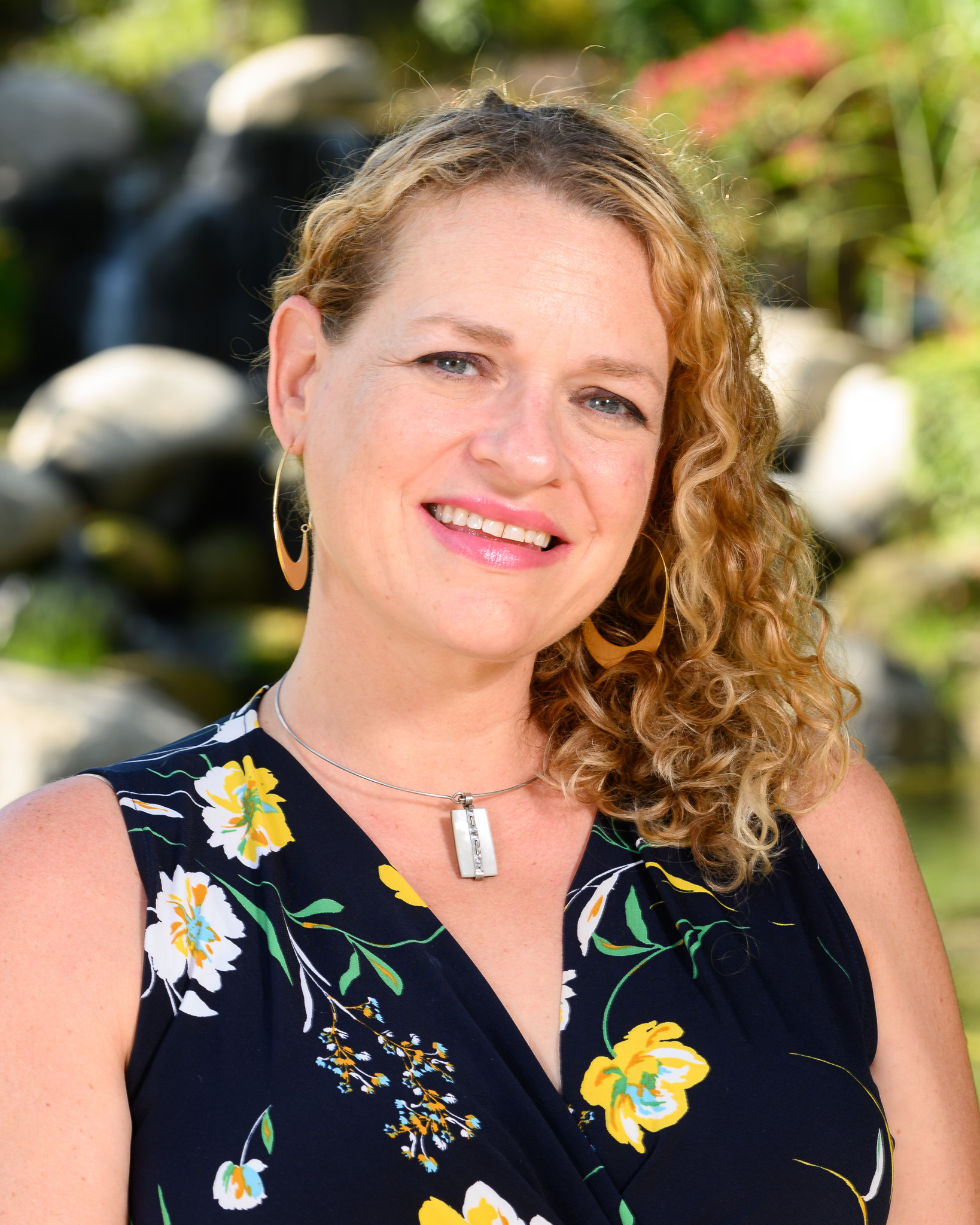
Robert Meeds, California State University, Fullerton

Our group had the privilege of interviewing Dr. Robert Meeds on his research study article, “Types of Fantasy Sports Users and their Motivations”, which aims to understand what type of people play fantasy sports and their reasons for doing so. In our interview with Dr. Meeds, we sat down to discuss his role in the study, the motivation behind the study, the methodology that was used, challenges that were faced, and what surprised him about the study.

Read More: Interview with Dr. Robert Meeds on “Types of Fantasy Sports Users and Their Motivations”

Dr. Robert Meeds is currently a professor at California State University, Fullerton in the department of communications. During the early 2000s, when this study was conducted, he was the director of the graduate program in mass communications at Kansas State University. The lead author of the study was Lee Farquhar, one of his master students at the time. Meeds explains that he was asked to be the thesis advisor for the study, therefore, also becoming the co-author of the research article.

At the beginning of the interview, when speaking on the motivation behind this research study, Meeds mentioned how this study started back in 2005. This is important to note because, at that time, fantasy sports was a developing online social activity. No one knew if it would be a “fad” or if it would stick. Now, almost 20 years later it’s clear to see it wasn’t just a fad, but it has grown immensely in popularity and variety. To explain, fantasy sports is a social game where people create imaginary, virtual teams that consist of real life players of an actual professional sport. These fictitious teams play against one another based on the real life players statistical performance in real life games. Back in 2005, this hobby was brand new, so much so that Farquhar was one of the first to study fantasy sports as a social media communication phenomenon. 

Picture taken from The San Diego Union-Tribune

In order to understand the different types of fantasy sports players and their motivation, the study’s participants were asked to sort through sixty statements and place them into three separate piles. The three piles were labeled as “Most characteristic of my viewpoint”, “Most uncharacteristic of my viewpoint” and “Neutral/Ambivalent”. After the piles were made, the participants were then asked to place the three statements they most agreed with into the far right column and the three statements they most disagreed with into the far left column. They were asked to continue this pattern until they had a remaining ten phrases in a middle, neutral column. The participants were also given an open-ended question that asked them to elaborate on their most agreed and most disagreed with statements as well as their overall opinion of fantasy sports. 

For this study, Meeds and Farquhar used a research method known as Q-methodology, which the article noted as an obscure methodology in most disciplines. When asked why Q-methodology was used in this study despite its obscurity, Meeds responded that the method is “a good quantitative means for setting up typologies of people with respect to how they orient around some topic”. He clarified that the difference between Q-methodology and other methods, such as R-methodology which is more commonly used in social science studies, is that it focuses on figuring out “how people correlate among variables”. In most R-methodology studies, it is the other way around, focusing instead on how variables change among people. As a result, Meeds still holds, to this day, that this is the ideal method for the purpose of this study. While he wouldn’t recommend using another method to conduct this study, he reflected that if they had more time he would have liked to have followed up with additional testing on the factors. He would have liked to have conducted either interviews, focus groups, or surveys. However, he stated that the q-methodology was a pretty good methodology for the distance they wanted to take this particular study.

Meeds admitted that one of the limitations of using Q-methodology in this study came when evaluating the results. It was difficult to measure exactly how much participants of the study actually resonated with or how much they opposed the statements. He explained that in order to get a normal distribution, the participants had to sort the statements in a way that is a bit artificial. The participants were essentially asked to say they’re neutral on a lot of statements, when in reality they might have agreed with the majority of them. However, this doesn’t matter too much, he explained, as long as all the participants in the sample follow the same procedure. Meeds added, with this methodology you might not know the degree to which the participants agree or disagree with the statements, but you know what the distribution is in terms of statements. With this being said, Meeds stated that a perk of using Q-methodology is that once a researcher finds participants and acquires the necessary data, the process is pretty smooth. As far as Meeds recalled, they did not run into any real challenges worth noting.

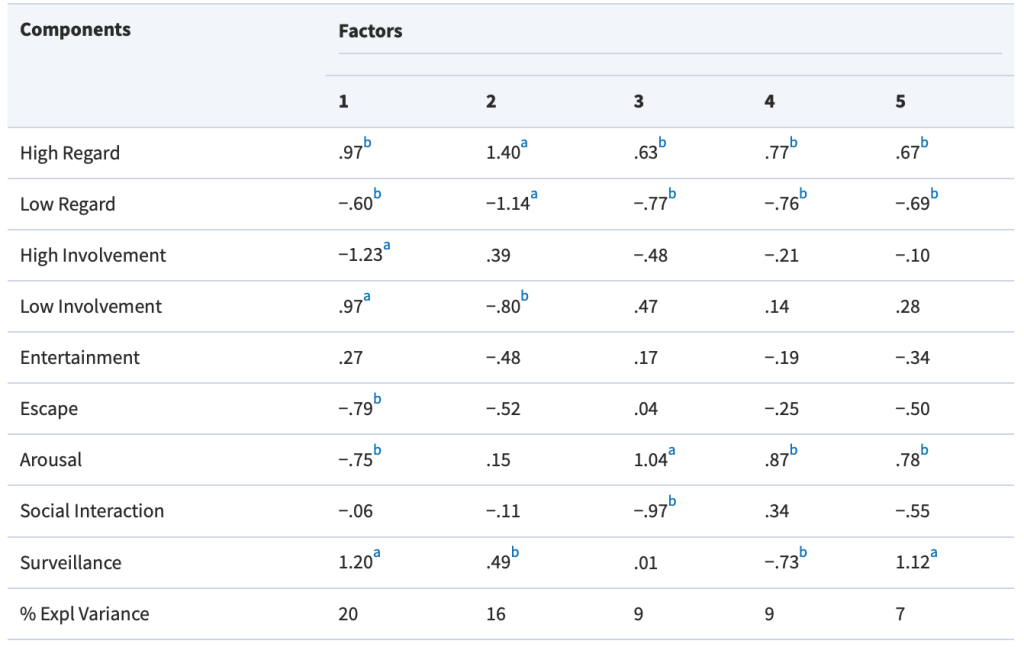
Something interesting Meeds mentioned in his interview, was that when a researcher uses Q-methodology, they approach the study without a hypothesis. So going into this study, they had no expectations and weren’t necessarily surprised with the results since they had no preconceived expectations. On the other hand because this type of research is exploratory, Meeds explained that it was all kind of surprising, because of the fact that they didn’t know the results they were going to get. When asked what surprised him the most while conducting this research study, Meeds mentioned he was surprised by which factors were most important, casual fantasy sports players being the biggest and most stable factor.

Mean z-scores for primary components on all factors taken from the article “Types of Fantasy Sports Users and Their Motivations”

Towards the end of the interview, we wanted to get Dr. Meeds thoughts on the current state and future of fantasy sports. We asked him how he thought the results might differ if the study were to be done today. He thought it would be interesting to do a study like this today, to take some of these principles and apply them into motivations for all kinds of online social gaming, whether it be role player games or typical fantasy sports, in which you have to set up teams and leagues. He mentioned that even his son plays in an MLB fantasy sports league, but for he himself, fantasy sports is not much of an interest anymore. So we probably won’t be seeing any more research from Dr. Meeds on the topic of fantasy sports in the future. However, we were thankful for this time where we were able to speak to him, discuss his research article further, and grow deeper in our understanding of research.

Zoom Interview with Dr. Robert Meeds

The Effects of Using Social Media Excessively in a Society

By: Danielle Cruz, Sasha Kamoku, Caitlin Luu & Kelsey Teague

Dr. Sophie Janicke-Bowles – Assistant Professor at Chapman University in the School of Communication with an expertise in media effects; happiness; positive media; psychology; social media; spirituality.

Dr. Sophie H. Janicke-Bowles is an assistant Ptrofessor at the School of Communication and Communication Studies at Chapman University and is a positive media psychologist that looks into how new media promotes and affects the overall well-being of people along with other factors. Dr. Janicke-Bowles attended Eberhard-Karls University in Germany in 2009. The diploma in clinical and media psychology from Eberhard-Karls University, Tuebingen Dr. Janicke-Bowles earned in Germany is the equivalent to a Masters Degree. She then attended Florida State University where she graduated with a Ph.D. in mass communication in 2013. She, and her research team from Universities in Florida State and Penn State, received a grant from the John Templeton Foundation of $1.9M for 3 years. With this grant the research team was able to “explore how people use and are impacted by media content that elicits self-transcendent emotions such as awe, elevation, gratitude and compassion” according to her biography on Chapman University’s website. Her other research contains reasons why society enjoys media entertainment and how morality factors into it.

Social media has been notorious for negative effects, with issues such as cyber bullying and unrealistic body images as examples. Despite these assumptions, there is a likelihood that social media can actually create a positive effect on its users. A study in 2018 was conducted by the School of Communication at Chapman University professors: Sophie Janicke-Bowles, Ava Nayaran, and Anja Seng. The title of the study, “Social Media for Good? A Survey on Millennials ’ Inspirational Social Media Use”, focused on differentiating and comparing effects on individuals with time spent on social media versus content being consumed. 

“Social Media for Good?”

According to this study, inspiring social media not only has a pleasant and uplifting vibe, but it also gives people energy and promotes social good. While previous research has demonstrated the value of giving social media users the tools to control their usage and produce positive outcomes (e.g., refrain from social comparison and consume more image-based social media; see also Yang, 2016; Pittman & Reich, 2016), the focus of the current study is on the relevance of the content that is consumed and possibly marketed to the millennial generation. Fostering inspirational material could help social media companies and content producers engage the millennial population and improve their wellness. 

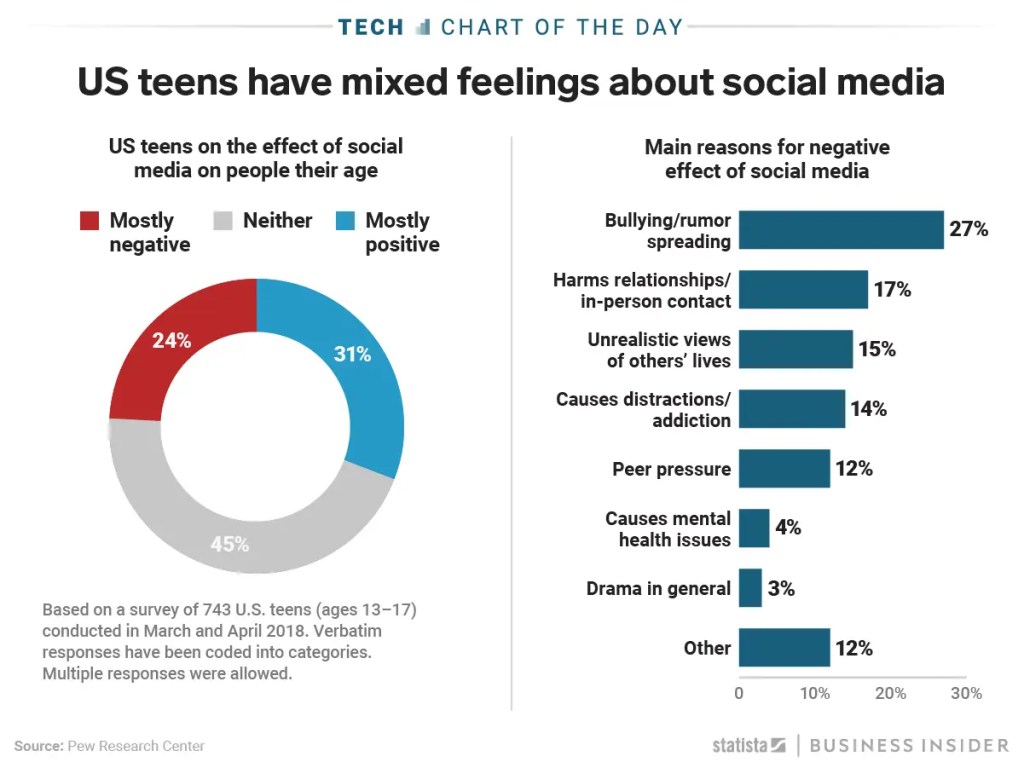
The study was conducted from a subject pool at a private university in the western U.S. with a total of 116 participants. The participants were students, with a mean average age of 19.95 years, who were offered extra credit in return for completing an online survey. The figure below from Business Insider displays a survey in 2018 that shows teens’ feelings regarding social media and its effects.

Bhardwaj, P. (n.d.). Half of the teens who think social media has a negative effect on people say it’s because of bullying, rumors, or harmed relationships. Business Insider. Retrieved April 13, 2023, from https://www.businessinsider.com/teens-social-media-effects-mostly-negative-pew-research-2018-6

In our interview with Professor Sophie Janicke-Bowles we discussed social media’s beneficial and detrimental attributes in society. 

Q: Social media has been notorious for having issues such as cyber bullying and creating unattainable beauty standards for young adolescent women. What are some inspirational materials you have seen in the media that outweigh the negative parts of social media? 

A: I have seen several influential individuals on various social media platforms use their voice to speak out on their mental health, weight, spiritual, religious, and professional journeys. Influencers having stories that their following can relate to is a powerful way of communicating the reality behind the posts. While there are influencers that use FaceTune and Photoshop, there are also many that ensure that their followers understand that social media posts do not define and fully capture a person fully. 

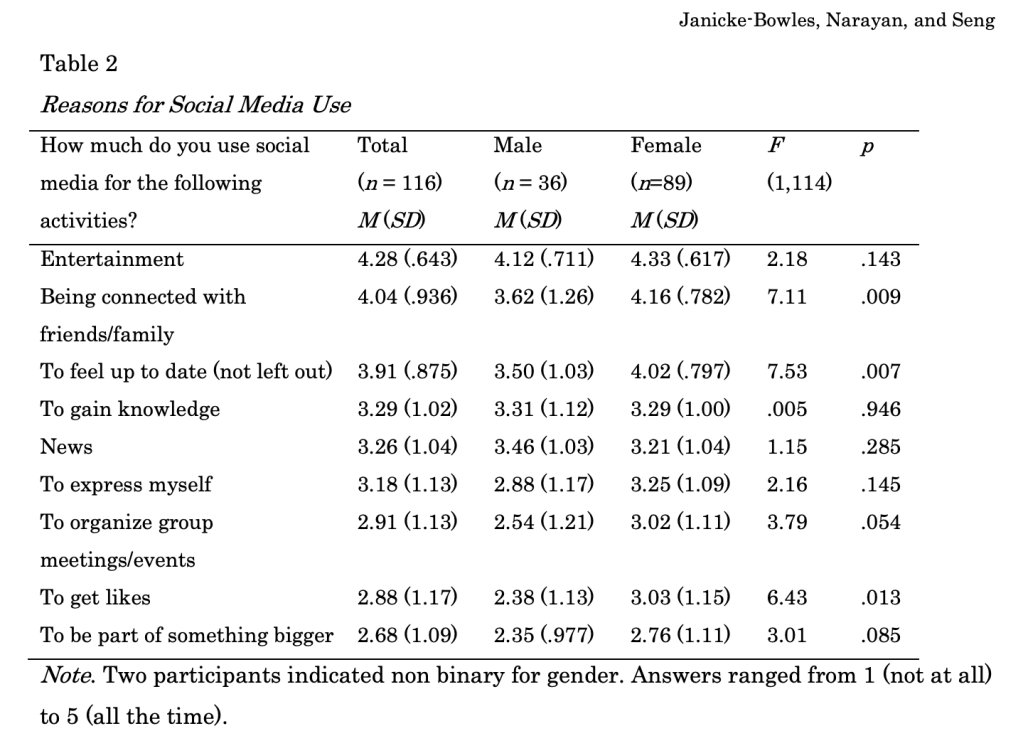
The figure below displays the results of Janicke-Bowles study done with a Likert scale showing the uses of social media for the student participants.

Social Media for good? A survey on millennials … – Chapman University. (n.d.). Retrieved April 14, 2023, from https://digitalcommons.chapman.edu/cgi/viewcontent.cgi?article=1057&context=comm_articles

Q: What are the pros and cons of utilizing social media as a means of forming human connection? How could this improve the wellness of others? 

A: Social media as a whole has the power to form human connection in either a beautiful or dangerous way. I would say a pro of social media would be the ability to interact and reach out to people with the touch of a few buttons. The accessibility of social media is incomparable and many people reunite with old friends on social media. People nowadays exchange each other’s handles to better acquaint themselves with each other and sometimes use these platforms to network. These platforms can improve people’s wellness by offering up a chance to build connections, resources, and help to those who are in need. The accessibility to just knowledge and understanding on the platforms is essential to our way of life today. 

Q: In your study, you and your colleagues noted that social media use can inspire individuals and result in self-transcendent emotions. What kind of posts have you or your peers mentally noted as inspirational? How and why does this post create a lasting effect on you?

A: Most of the posts I remember are of simple acts of kindness: such as someone giving a homeless individual food or, most recently, a TikTok influencer paying a street vendor in Anaheim to Disneyland. I also enjoy nature videos from different parts of the world. It really puts the world into perspective, and that most people have so much to see. In regards to why the posts created a lasting effect, it is common for people to remember posts that settle with them personally. Personally, I find acts of kindness to those in need memorable because I have known individuals who were in similar situations. Also, world nature videos resonate with me because it is a dream of mine to go absolutely everywhere I can before I die. One thing to note is that many people remember posts related to their location. I remember food and nature hiking spots that are close to my area because I want to one day experience what others have done near me. 

Interview with Dr. Miya Williams-Fayne

by Kayla Saunders, Kendall Stier, Yareth Vega, and Hannah Antonopoulos

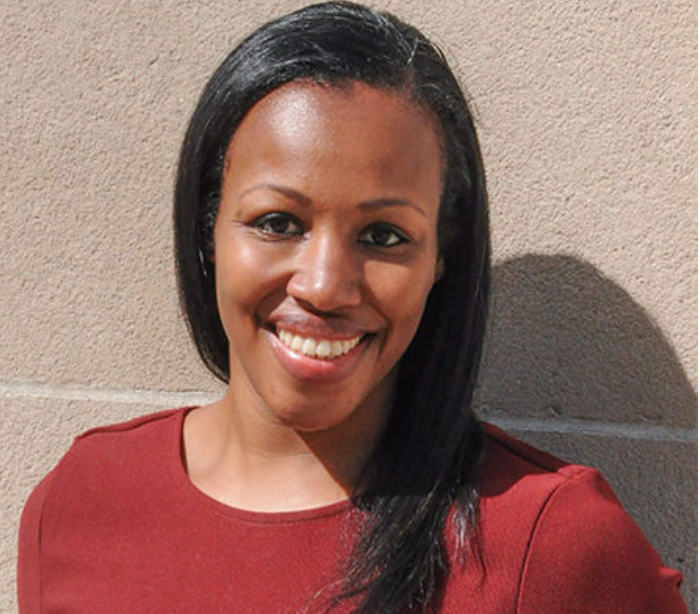
Biography Photo of Miya Williams-Fayne Ph.D. from http://visionariesimageco.com/meet-the-team/

Introduction:

Dr. Miya Williams-Fayne started her career in Communications as a writer and editor at a magazine company. As time passed, she realized that she wanted to become a professor. She earned her PH.D. in Media, Technology, and Society at Northwestern University. While undergoing her doctorate program, Dr. Fayne realized that she could do research that is of interest to her. She has centered her research on the digital black press evolution and in doing so has become an expert in her field. In her paper The Great Digital Migration Exploring What Constitutes the Black Press Online, Dr. Fayne attempts to define the black press in the digital era. Those who have previously or currently worked at a black news outlet were interviewed. This led her to the  conclusion that black media outlets are not required to be black owned and that entertainment news has a large presence in the black press (Fayne 2020). In this interview she talks about the research process behind the paper and goes in depth of how the interviews were conducted.  

Read more: Interview with Dr. Miya Williams-Fayne
Interview:

Q. How did you choose the black news outlets

  • Dr. Fayne began her research with an outlet called Journa-lisms where they had published a list of the top black press sites. Using this as a base for her study, she then used her colleges for recommendations and was able to receive outreach from there. She used snowball sampling by asking other journalists who she should speak to next. She also comments on how she intentionally added a few legacy outlets to her research that went along with her digital outlets. Dr. Faye makes note that some of her outreach was not received, and she had to move on and find other outlets, but at the same time, she was able to have some reach out to her. 

Q. How did you organize your data 

  • Dr. Faye explains that she was able to organize her data using the software MAXQDA, which allowed her to input all of her findings and then code. Her method of coding, she says, was as she went along. From this, there were times she would have to recode her data over again. She found more nuance as she was identifying her data, which would require her to recode. This was helpful to her once she began analyzing her data because it helped to single out the nuances. For the coding specifically, she said that she went by topics that she wanted to write about in her paper, making a note of each one. She gives helpful advice as she explains how she tends to overcode her data, rather than undercoding which would be too broad – making it harder to find answers in the data. 

Q. Why did you do interviews instead of surveys?  

  • “With anything that is qualitative, you can’t get to the why.” With qualitative research you can get an idea of the cause but not the reason behind the cause. She wanted to secure those perspectives, interviews give much more information and context. With an interview, you can ask follow up questions, get deeper responses that help you contextualize what people are saying.

Q. Did you have a time period that defined the traditional black press?

  • For Dr. Faye states that she did not use a specific time period for her research. Instead, she made sure to use ones that originated in print, meaning the ones that were not a digital-first outlet. Ones that were not digital first outlets, what are considered, “Legacy” or “Traditional”.

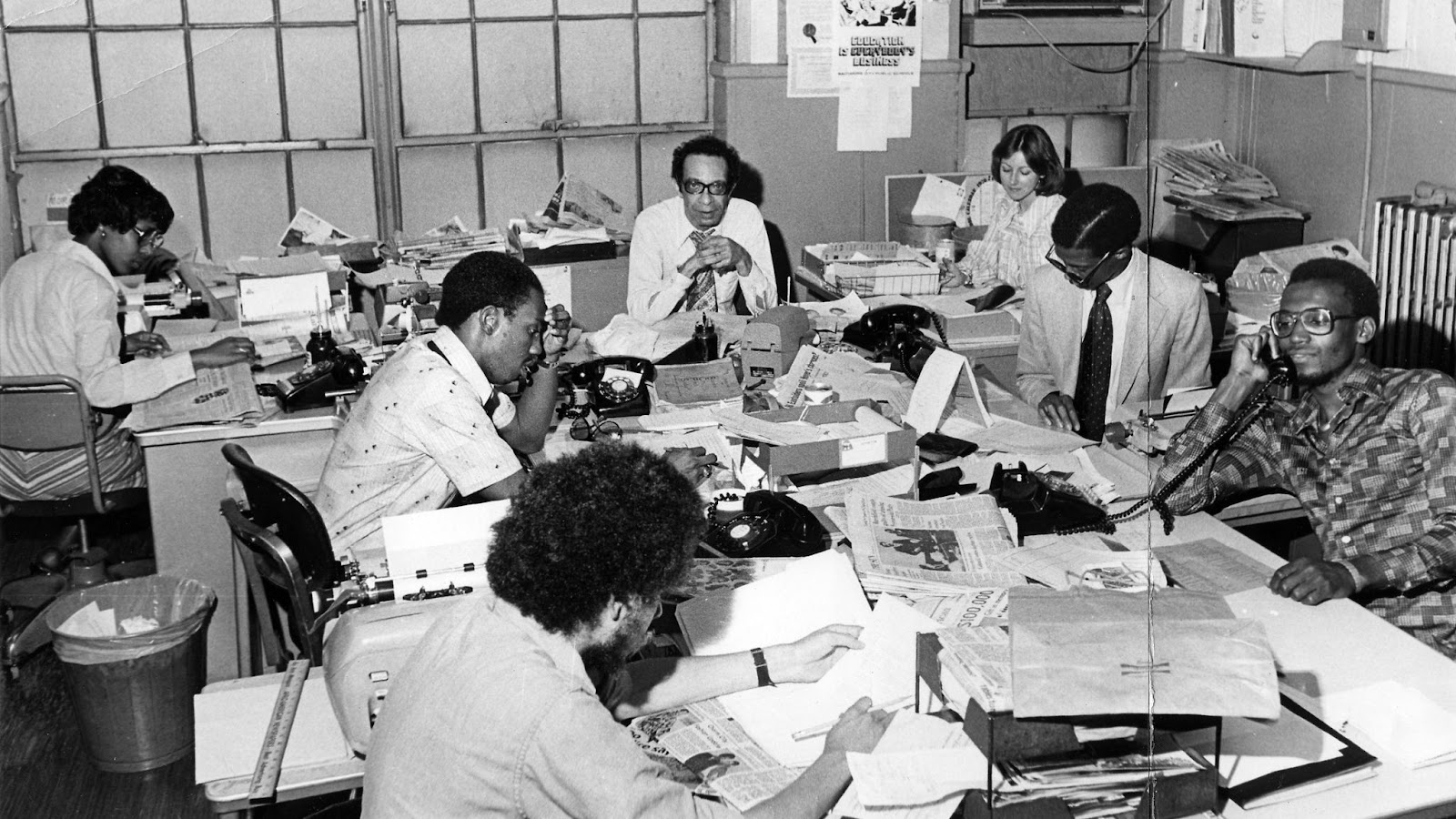
Journalists at the headquarters of the Baltimore Afro-American Getty Images 2018 from https://www.nbcnews.com/think/opinion/critical-role-black-press-civil-rights-movement-has-not-received-ncna859701

Q. Did your previous research indicate that black news outlets were more likely to produce larger amounts of entertainment news or was that new?

  • No, it was already her perception which is why she wanted to do this study because it was different and no one was talking about it. She went into it already having that perception which was supported by her lived experiences – not surprising her at all. When she interviewed the legacy outlets, she found it interesting to learn how they perceived that, which made sense but caught her by surprise when they were more critical of the entertainment content than she expected. There was a clear difference in ideologies between the digital first outlets and the legacy outlets.

Q. Is there anything you would warn us not to do in our research? 

  • Dr. Faye explains how it is important to always get permission to record a conversation before it starts. Even though there are different approaches, she feels it’s safer to let the interviewee know that everything is on the record to avoid confusion. She advises to keep contact to a limit of three emails, with a week in between, to avoid coming off as stalkerish. One thing she notes that is good to do, is ask, “Do you have anything else to add to the conversation?”, at the end of the interview. This gives the interviewee space to share any details they feel are important to add that they might not have gotten the chance to do previously. 

Conclusion:

Through the process of database searching, emailing, reaching out to colleges and snowball sampling, Dr. Fayne’s ability to get multiple perspectives on the current state of the black press. Conducting interviews gave her possible reasons as to why entertainment has a large presence in black journalism. While she was not surprised by the dominant presence of entertainment news in black journalism, she was intrigued by the amount of criticism some black journalists gave towards those media outlets. When asked for advice on how one could conduct their own research she states to always ask for permission to record, never let the interviewee speak off the record, only email someone three times with a one-week gap in between. Lastly, she states that it is a good idea to ask the interviewee if there’s anything else they would like to add as they might provide more insight to the research. 

​​References:

Getty Images. (2018). Journalists at the headquarters of the Baltimore Afro-American . The critical role of the black press in the civil rights movement has not received the attention it deserves. photograph, Baltimore, Maryland; THINK. Retrieved April 13, 2023, from https://www.nbcnews.com/think/opinion/critical-role-black-press-civil-rights-movement-has-not-received-ncna859701. 

Visionaries Image Company. (n.d.). Biography Photo of Miya Williams-Fayne Ph.D.  photograph. From http://visionariesimageco.com/meet-the-team/

Williams-Fayne, M. (2020). The Great Digital Migration: Exploring what constitutes the Black Press Online. Journalism & Mass Communication Quarterly, 97(3), 704–720. https://doi.org/10.1177/1077699020906492 

Conversation with Dr. Cynthia King on Research

By Francesca Cruz, Carissa Harris, Delilah Perez, and Louise Vegas

We had the privilege of speaking with Dr. Cynthia King on her research and study on the “Effects of Humorous Heroes and Villains in Violent Action Films.” Dr. King is a Professor of Communications at California State University, Fullerton. Dr. King teaches courses in communication theory and effects, research methods, entertainment and tourism, and public relations.

During the interview, King gave us insights on her research as well as advice on how to approach research and research challenges we might face along the way.  

Read more: Conversation with Dr. Cynthia King on Research

Q1: What are the main challenges you’ve faced in your research area of media effects?

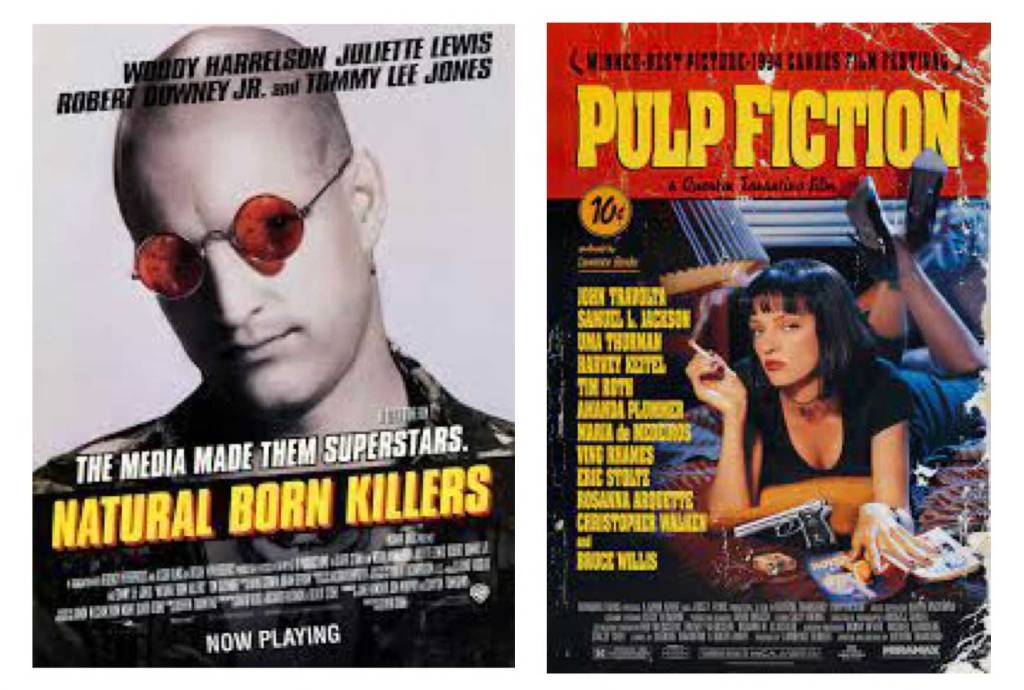
What was most challenging for Dr.King was executing the experiment of comparing violence and humor in violent films and creating material for the experiment. Dr.King had to create and replicate data for each group in the study while making sure that there was a different effect for each group to determine whether or not humor and violence were correlated. Popular action comedy movies such as “Natural Born Killers” and “Pulp Fiction” were coming out during the time of Dr.King’s experiment which were the perfect types of films for this type of experiment.

Q2:  What inspired you to research this topic?

Dr. King mentioned that what inspired her to research this topic was a conversation she had over dinner with her major professor and peers when she was attending the University of Alabama. She reflected back to that time when she was attending the University of Alabama where she had decided already to write her dissertation on health campaigns. What inspired her to change her dissertation from health campaigns to the effects of Humor and violence within films was her interest in humor and violence within films. Dr. King’s professor thought that it was a great idea for her research so King switched her dissertation. At the time, many good films were coming out and inspired Dr. King to make the switch, ones such as “Natural Born Killers” and “Pulp Fiction”. 

Photos from IMDb

Q3: Going back to all the problems and challenges that you’ve faced along the way within your research what would you say is the biggest thing that you learned from it?

When speaking with Dr. King, she explained that the biggest lesson she learned was that if things don’t come out the way you planned them to, you can always go back and explain the logic up front rather than to explain the logic at the end of the research which in her point of view would be more complicated. She states, “oftentimes maybe you’re not sure what you’re going to find and theories might predict certain things but it can be kind of lazy to just be like ‘oh we’ll see what happens’ versus dialing it in and being more specific”. She gave us advice on what questions to ask ourselves when conducting research like what are we going to find, why we’re going to find it, and how it’s going to work. Dr. King notes that the first initial idea will always change, she states that her first thesis idea was no where near the comparison between humor and violence. It wasn’t until she seeked guidance from her Professor at the time who told her that it was a good idea. She states that it’s okay to change your idea until you feel like it’s the right one for you.

Q4: So, you mentioned that the way you collected data was through surveys and then you inputted it into SPSS. How did you narrow down what subjects to research when it came to characters and then the humor and hostility subjects?

Dr. King proposed a question “what is the relevant research for your topic?”, and then further elaborates that in her study she was looking at two different kinds of topics, humor and violence, which compounded the amount of research she had. She noted that she looked at each subject individually, then both together. It also helped that she had her Professor to lean on for advice and some of his thinking overlapped with hers. She points out, “I came from a tradition of thought you know? It’s like when you work in academia there are different like families right of researchers that kind of have different traditions”, so she worked within that framework by looking at existing studies finding the most similar one to what she was researching on. She said it was key to find overlapping ideas in similar studies to find out which theories worked and what didn’t. What she noticed was that a lot of these humor theories still have a lot of hostile elements that are not so friendly. Dr. King mentions that within her research she saw that there was a pattern of “winners and losers and a bunch of jokes” and it becomes a weapon. One takeaway was a metaphor that Dr. King used, “you start with your idea and you kind of like trace it out kind of like a wheel in terms of all these spokes and then you go from there”.

Photo from Dr. Cynthia King’s Research

Q5: If you were starting your project again today, what would you do differently?

What Dr.King would do differently in this study is view different types of humor and violence and see how that affects people while viewing movies. There are many different types of humor, such as slapstick or more physical comedy. Another thing that Dr.King would take into account is how certain genders view movies as comedic because one thing that really differed in her data was that men and women thought that different things were more or less humorous. Examples of differences in how other people view movies and comedy were that men were more likely to find trash-talking funny but women saw it as more annoying. Humor is very subjective but getting into the details of humor would deepen the research and results.

Q6: What advice would you give to new researchers?

Keep it simple.

– Dr. Cynthia King

A seasoned researcher such as Dr. King emphasized that when conducting research there’s no need to overcomplicate it. King mentioned how people can easily get overwhelmed by research and in turn end up fearing it. King made it known that it’s something to try out and once we try it out, we will realize that we are capable of conducting this type of research. Keeping her words in mind will help us apply all of these learned research strategies and have faith in ourselves that if we stick to the basics we will be successful.

Zoom interview with Dr. Cynthia King.

Interview with Dr. Brisbane on How Women Are Perceived in Sports Media. 

by: Janel Murray, Karen Angulo, Leslie Pineda, Lauren Jefferies

Gayle Jansen Brisbane | Cal State Fullerton – Department of Communications | CSUF. 

We had the chance to speak with Dr. Brisbane about her recent research study published in 2023 called “Side-by-Side Sports Reporters: A Between-Subjects Experiment of the Effect of Gender in Reporting on the NFL.”  

Dr. Brisbane was a broadcast sports journalist for 20 years before earning her Ph.D. in Media Research and Practice in 2019. Throughout her doctoral program, she conducted research studies on topics such as the intersection of religion, politics, and how audiences perceive women in television sports media. She has been able to present her research at the International Communication Association (ICA), Association of Educators in Journalism and Mass Communications (AEJMC), and Broadcast Educators Association (BEA). Dr. Brisbane is currently a professor at Cal State Fullerton who teaches multiple journalism classes on campus, including COMM 325 Multimedia Journalism and JRNL 3804 Sports, Media, and Society.  

Continue reading “Interview with Dr. Brisbane on How Women Are Perceived in Sports Media. “