Ph.D., and Professor in Advertising at the California State University of Fullerton.
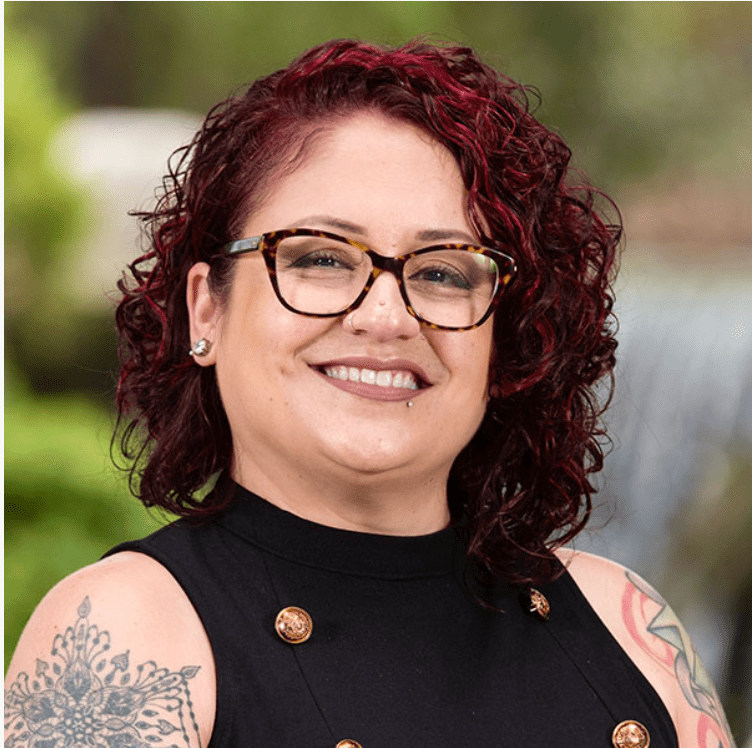
We had the pleasure of interviewing Dr. Vega regarding her recently released article: “Milleniage Advertising: Reconceptualizing Advertising and Its Role in Forming Social Identities.” This article emphasizes the fact that advertising plays a huge role when it comes to identity. Dr.Vega breaks down each component within the article that goes hand in hand when speaking to a diverse audience. Advertising today tries to reach different facets of the targeted audience through different types of media.
We started off the interview by asking her as to why she decided to research about race, gender, class, and sexuality. She stated when she was a PhD student she would think about things that she is most passionate about allowing her to see through a different lens as a woman of color, queer and Latina. She also has experience from both sides of the table in the industry; the advertising side and marketing side. This allowed her to gain more knowledge and experience in order to conduct her research. We spoke about the relationship between advertising and the consumer and the adaptation to ads. She stated “that’s an evil cycle” she goes on to explain how it’s truly both parties that have involvement within this cycle of progression. Advertising entities that want to advertise pay attention to what the consumer is doing and what they want and vice versa. They go hand in hand with one another due to advertising being nothing without consumers because it builds that communication between the both, allowing the marketplace to live and breathe. Continue reading “Milleniage Advertising: Reconceptualizing Advertising and Its Role in Forming Social Identities.”→
We had the privilege of interviewing Dr. Liesel Sharabi via Zoom on her studies regarding the effect online dating has on long term relationships, specifically marriage. Her research, “The Enduring Effect of Internet Dating: Meeting Online and the Road to Marriage,” focuses on qualitative data from 50 individuals who were engaged or married to someone they met through the internet or online dating applications.
Dr. Sharabi is an assistant professor and director of Relationships and Technology Lab at Arizona State University. Her work focuses on interpersonal relationships and how they intersect with communications technology. She received her Masters at the University of New Mexico and her PhD from the University of Illinois Urbana-Champaign.
The effects of internet dating on long term relationships sought to answer two questions; “What stages characterize the development of online relationships to marriage,” and “What are the long-term outcomes of the stages of development in online dating for relationships?”
During our discussion, we were able to ask Dr. Sharabi about her research methods and limitations by asking the following questions:
What made you interested in conducting a study on this topic?
Dr. Sharabi describes her college years, as a millennial she experienced Myspace and Facebook as the dominating social media platforms. “Everything we did was very much shaped by this emerging social media ecosystem.” At the time, there was a lot of stigma regarding online dating and it was during her graduate years, she saw many of her friends turn to online dating applications. Considering her friends, Dr. Sharabi understood that online dating wasn’t a result of social incompetence but rather a tool used to navigate the social networks within their reach.
Were there any related ideas that just didn’t pan out?
Dr. Sharabi describes how while doing her thesis for her Masters, she was interested in how people can go from talking online to eventually meeting in person in the context of social media. She distinguishes those who use social media and the internet as a tool to make friends, from those who use it to go on dates and get to know people in a romantic sense. She claims how, “originally a lot of my research centered around social media and eventually pivoted to focus more specifically on online dating.” While both social media and online dating are similar topics, Sharabi ultimately decided there wasn’t enough research on the effects of online dating as a whole—and wanted to change that.
How did you prepare for your research study?
As a social scientist, Dr. Liesel Sharabi focuses on quantitative data for her research. She states, “I collect large samples and use statistics to draw inferences that I hope generalize to bigger populations.” Much of her research is a result of an interest in wanting to predict people’s behavior, and the research of John Gottman who researched marriage, using conversations between couples on conflict topics to predict divorce with 90% accuracy. To make these types of predictions, Sharabi utilizes quantitative data research and depending on the questions being asked, qualitative methods.
What was the most shocking or interesting thing to come out of your research in your opinion?
While studying those in long-term relationships who met via online dating, Dr. Sharabi was very surprised about how many said they don’t tell people how they met despite being in a serious relationship and even engaged or married. She explains how by studying it for so long, she forgot about the “stigma” that can surround these dating apps—being seen as just for hook-ups—when in reality some people meet their life long partner via online dating.
If we conducted a study on this topic, would you recommend us following your method of collecting data?
Dr. Sharabi recommends before conducting further research, to consider the question being asked. While Dr. Sharabi mainly focuses on quantitative research, the question regarding the effects of online dating on longterm relationships seeks a different type of answer. In her research she asked 50 individuals questions with qualitative answers via phone call, with this method she was then able to analyze her date to reach her conclusion. Mainly, Dr. Sharabi encourages us to use the question of your study to guide you to the research method needed to answer.
What problems or limitations did you encounter in your study?
One big challenge Dr. Sharabi faced throughout her longitudinal research on first dates that came out of dating apps was, “finding people who met on a dating app then went on to meet a new person.” While dating apps are good to get to know someone else, there are hundreds if not thousands of other people using these apps as well so the chances of people talking once and deciding to go on a date without the distraction of anyone else was difficult to come around enough to notice a pattern.
If you could redo this study again, what would you change?
There is always room for improvement, through each research study, you go through the trial and error of your methods, often rethinking different ways to collect data and which mediums. It is through Dr. Sharabi’s experience, that she gained an awareness of things she could have done better, but this only helped her redesign future research studies. She informs that she is “constantly changing” the ways she conducts her research as a result of any recent study she has completed.
Dr. Liesel Sharabi closed off with advice to help us further our own studies while in undergraduate school.
Ultimately, Dr Sharabi was able to uncover throughout her research that while online dating relationships develop similarly to one’s met face to face, they do not progress the same. With online dating you are able to seek information on potential partners before initiating contact, while diminishing distance barriers as opposed to meeting someone knowing little to nothing about them previously. In the end, online dating created a downstream effect on participants’ relationships allowing for a stronger foundation of intimacy, no shared past or network, and overall better mate choices. We thank her for being so kind as to sharing the ins and outs of her research so openly with us and doing our interview on a short notice.
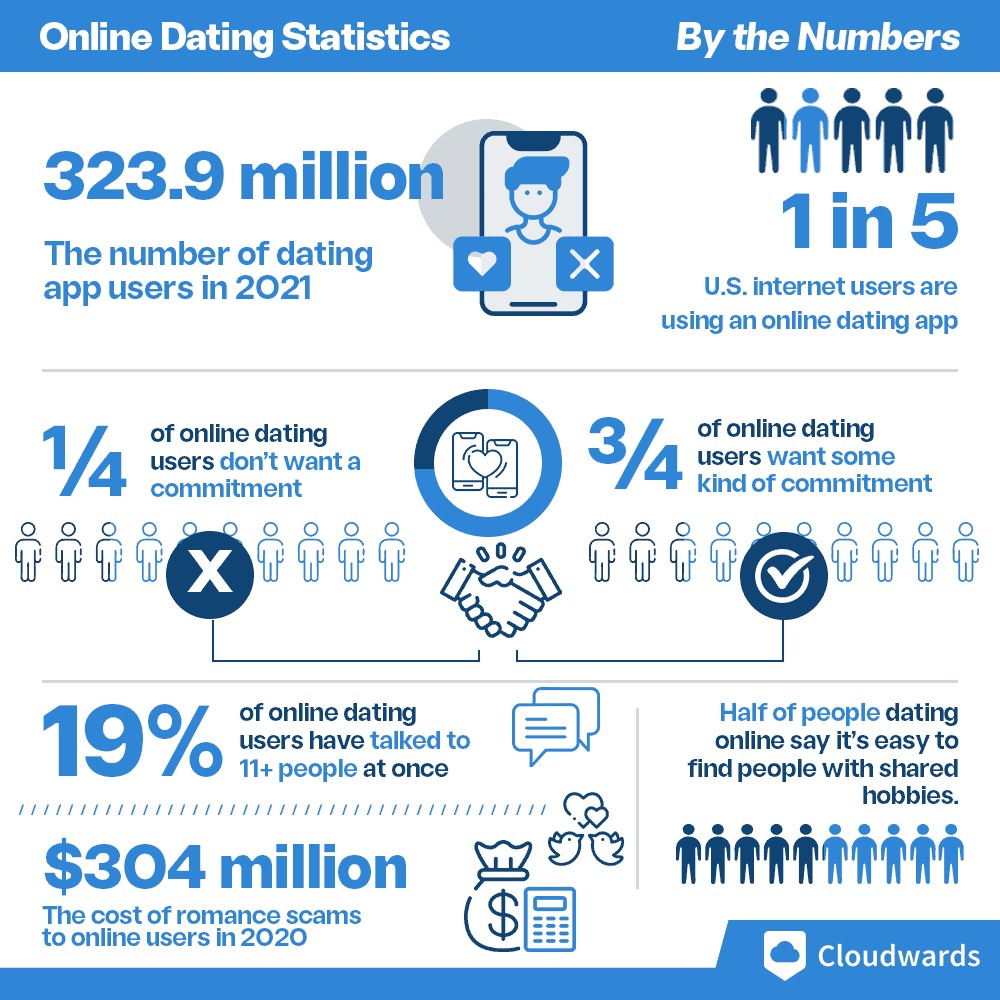
Graph illustrating some online dating statistics (2021/2022) via Sasi George
Our group had the opportunity to interview Dr. Assaf, an assistant professor in the Department of Communications at California State University Fullerton. She is an award-winning public relations practitioner that has worked with clients in the fields of healthcare and lifestyle. Our interview is focused on her research paper, Perpetuating Stereotypes: Newspaper headlines covering stories of individuals with mental health diagnoses.Assaf’s conference paper analyzes mental health diagnosis topics in online news headlines, as well as uncovers news agendas and misrepresentations of health topics in media. During the interview, we discussed general conceptual and practical ideas about the research.
Assaf focused on the news publication, The LA Times. Her findings revealed the stereotypes of mental health in the media. One might ask themselves if the publication that was analyzed had any political bias and that’s why the mental health stigma was present. Assaf mentioned she has an understanding of the publication in terms of their stance on politics and does not think the LA Times has a political leaning bias or, has at least not publicly come out and claimed so. Assaf’s research consisted of the usage of content analysis. With her enjoyment of content analysis, selecting this research tool was an easy choice. Assaf believes content analysis aligns with characteristics such as language, stories, and word choice. According to Kerlinger’s definition of content analysis, it is a systematic, objective, and quantitative research method. However, many people consider it a mixed-method approach because it tells a story. If analyzed under this lens, Assaf’s research consisted of both qualitative and quantitative methods which were required by the specific research question. Qualitative can evolve and result in a change of questions throughout the study whereas quantitative sticks to one topic for the entirety of the research. The benefit of a mix-method approach is the high chance of obtaining information from both research methods. Assaf does not like quantitative research and believes the numbers she gathered do not equate to quantitative research and are more qualitative.
When looking at Assaf’s research we saw she focused on one publication for her research and not multiple posts to see similar aspects. She concluded that she did not look at other publications of multiple online newspapers due to the time and manner of the study. Since it was a college research study, she had limited time to conduct a research process and successfully look at other perspectives and compare her results to multiple online newspapers looking at mental health. Assaf explained that the scope of the project was limited and was not intended to become a research study. We also saw the study had a high sample size and considered if any sample errors would have evolved in her study when she was conducting her research. Assaf explained since it was a public publication that there were no sample errors when doing her research. However, if there was a sample error they would not be able to see it if it was to show later. She explained that when working with online publications take it at face value. This is because there are no face-to-face interactions therefore, it can cause some skewing to happen in her research study. We have concluded that doing a research study on an online source for research is to take it with a grain of salt. This is because sample sizes and results can change over time due to the publication taking it down later and not having accurate results. Therefore it is better to do face-to-face evaluations with your research to get the best results for your study.
As a group, we enjoyed reading Assaf’s research and found it really telling how the media depicts mental health. Looking towards the future we asked Assaf if we were to use her study to make our own, what would she like to see be further researched. Assaf alluded to the fact that the study can be easily replicated. Just replicating her study can show so much more information because news articles may have changed from 2017 and replicating it can show these changes. Since we are college students with limited resources, Assaf also mentions perhaps looking at more accessible publications such as The Daily Titan or other local publications and looking at the whole publication and the photos that make evoke emotional responses as opposed to just one article.
When asked about further research on why mental health diagnoses headlines were not published in the health sections, Assaf responded that there are many methods for addressing this issue. Further steps include extensive interviews with writers and editors asking the whys of the story. A question asked may be discussing why there was no health reporter when producing these stories. An additional question we asked Assaf discusses the general topic of mental health and its relation to the knowledge and power theory and news media. Assaf has an understanding of the topic and explains that as people become more aware of mental health, they will have more power in terms of knowledge. However, it all depends on the gatekeepers, such as the editors and producers, to make these decisions. Assaf concludes with her hope that news media will change, but only time will tell.
All in all Assaf’s research shows a clear understanding of research methods like content analysis. Using content analysis can show a story through the analysis process and reveal hidden agendas or themes, as Assaf’s study does. Her methods showed that mental health needs a better representation and voice in the media. If studies were to be conducted in the future on this topic it would be interesting to see if anything has changed since Assaf’s 2017 study.
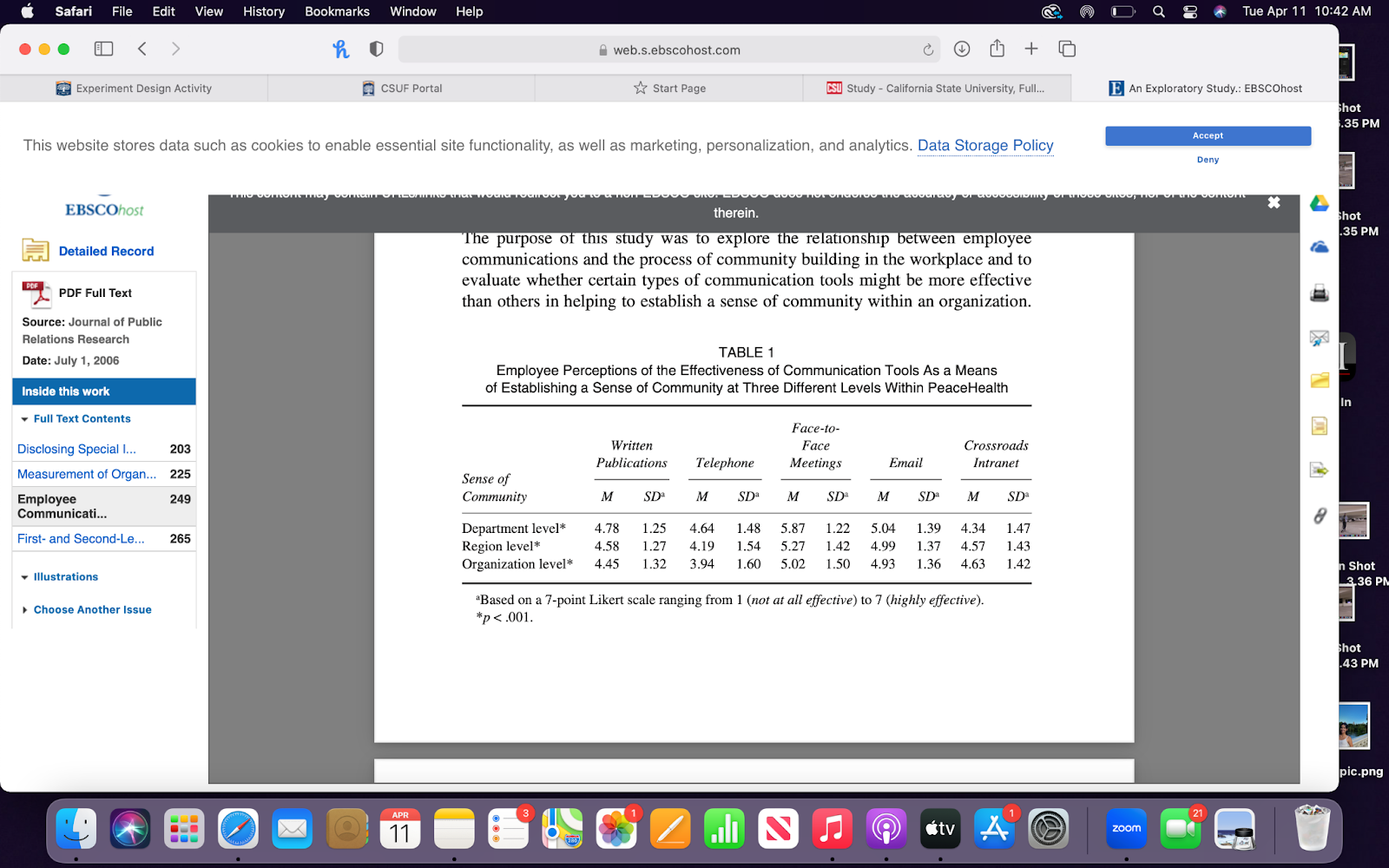
For our research project, we decided to interview the scholar Andi Stein. She is currently a professor at Cal State- Fullerton in the Communications department. We decided upon her due to her concentration in Public Relations and testing the effectiveness of communication tools. The study we acquired information from her research done in 2006, “Employee Communications and Community: An Exploratory Study”. This research was conducted as a qualitative research through a survey, due to the high volume of employees that were going to be studied.
Read More…
The project was set to study how employees and employers communicate with one another in the workplace. As well as what tool of communication was more effectived in the departmental, regional, or organizational levels. The five different communications tools that were being observed were: face-to-face, telephone, personal writing, formal writing, and numeric. The study was conducted for the hospital PeaceHealth in the Pacific Northwest. During that time, the use of technology as a tool for communication was still being introduced so PeaceHealth was more than happy to aid Professor Stein in her research. They provided her with the tools and access to conduct this research because they wanted to improve communication within the company. Not just one location, but to also see if they could improve communication between different PeaceHealth locations and be a community as a whole. The study was conducted as a survey sent to the emails of the 7,500 employees at PeaceHealth. They were encouraged to answer and divided upon their answers.
As students, we wanted to learn about the purpose and methodology of the research conducted by the interviewed researcher. We were interested in understanding the specific research questions that were being addressed, the sample population that was used, and the methods employed to collect and analyze the data. We were also curious about the key findings and implications of the research. What were the most important takeaways from the study, and how could these findings be applied in real-world settings. Additionally, we wanted to understand the limitations of the research, such as any potential biases or confounding factors that may have affected the results.
Furthermore, we were interested in the researcher’s personal experience conducting the study. We wanted to know what challenges they faced during the research process, how they overcame these challenges, and what they learned from the experience. We also wanted to know if there were any unexpected findings or results that emerged during the study, and how these were addressed.Overall, as students, we wanted to gain a comprehensive understanding of the research process and the impact that research can have on real-world organizations and individuals. We hoped to learn about the importance of precise methodology, effective data analysis, and clear communication of results in the field of research.
Our group was interested in the tools Professor Stein used in her research to achieve her results. She studied digital resources at a time where print media was just being segued out for digital to become more common. As mentioned before, the survey issued via email to 7,500 employees of PeaceHealth used a qualitative approach that she was unfamiliar with but learned how to do via her research. Part of what PeaceHealth wanted to test was the viability of the corporate Intranet as a method of maintaining connection and community between different locations of the same company. As the basis for her research, Stein used Daft and Langel’s Richness Theory which posited that different methods of communication would differ in effectiveness depending on the message being delivered. To explain in more detail, this theory found that people preferred face to face communication, but since it was conducted in 1984, the addition of email and the internet added a new layer to the study. Surprisingly, Stein did find that people still preferred face-to-face communication, though email was the second most popular option. She expected that print communication would still be preferred to email, but the speed and convenience of digital communication influenced the results. Overall, by utilizing a qualitative survey sent out to the employees of PeaceHealth and basing her research on the Richness Theory of communication, Stein conducted successful research and found the results necessary for her dissertation.
My group and I were also interested in the overall purpose of Andi Steins research study as well as what her greatest takeaways were. After various questions via our interview with Steins, she informed us of many different insights regarding the world of employee communication. She mentioned that employee communication is constantly changing and evolving within the workplace. Stein was looking to improve employee communication within a company in several different locations. This interested her due to a lot of change in communication methods in the late 1990s and early 2000s as a result of the invention of the internet.
The study comparing digital vs. print communication and what the future holds for communication sparked Andi Stein’s interest. Within her research study regarding employee communication, Stein stressed the fact that it is important to ask employees what they think is working and what is not working within their workplace. She stressed the importance of every member of the company being valued and respected whenever they needed something of importance to be communicated. Whether that be within their day to day work or within the entire company as a whole. For example, older managers could be wanting to use emails as a way of communication, but younger employees would prefer to communicate via text message. This small insight proves that ways of communication have changed very drastically in such a short period of time due to the vast advancements in technology.
My group and I also asked Stein what she found most surprising during her research process. She told us that her most surprising discovery was that face to face communication is the most preferred method while the second most preferred method was email. This intrigued her because she assumed Email was the quickest way to contact someone, but to her surprise, people preferred an in person interaction. I believe this can tell us that although technology is always improving, you are never going to be able to replace meaningful human interaction with online ways of communication.
Please see below for our visuals and interview
Image from survey results of the effectiveness of each communication tool by department at PeaceHealth (2006).
By: Jose Rodriguez, Jaime Figueroa, and Jon Espinoza
Dr. Henry Puente is an Associate Professor of Communications at California State University, Fullerton. His research areas include examining U.S. Latino films, U.S. Latino media outlets, and race/ethnicity. He holds a Ph.D. from the University of Texas at Austin, an MA in Communication Management from U.S.C., and a BA in Radio-Television-Film from CSU Fullerton.
Puente has published a book entitled The Promotion and Distribution of U.S. Latino Films. He has also published journal articles in Bilingual Review and Studies in Hispanic Cinemas and contributed to five books. These include Images that Injure: Pictorial Stereotypes in the Media and Contemporary Latina/o Media: Production, Circulation, Politics.
In Dr. Puente’s research study titled, Marketing and distribution lessons from Hispanic Hollywood, he focused on the Hispanic Hollywood era of 1986-89. This was the era in which Hollywood recognized Latinos as a people group, thus creating films for them. The films referenced in this study are “La Bamba,” “Stand & Deliver,” “The Milagro Beanfield War,” “Born in East LA,” “Salsa,” “Break of Dawn,” and “Romero.”
While he had a few questions to ask himself, the one that he made the main focus to be was; “How did the studios and independent distributors promote and circulate U.S. Latinx films during the late 1980s?”
Photo provided by Dr. Puente’s research study presentation.
Dr. Puente spent the majority of his time at the USC Cinematic Arts Library, as well as at the Margaret Herrick Library in Beverly Hills, to conduct research for his study using both periodization and generative mechanisms to help analyze Latinx films during the 1980s. He believes that periodization can be applied through any point of time, and even mentioned he would use this method nowadays if he were to conduct the same study. It can be applied to almost every study when it comes to researching ethnic groups, as this form of research and analysis can help show the history of how the group has changed historically. It was also important for him to look at this study through the lens of generative mechanisms, which focuses on explaining why certain events occur, as at the time, Latinos were beginning to push themselves into the mainstream and film industry.
What led you to do your study on Hispanic Hollywood?
Puente chose to do the topic of Hispanic Hollywood because no one had done it before. It would be an original research study. He had a lot of work to do, as much of the data still needed to be recorded or not recorded conveniently.
When you’re first starting your research, what type of research method would you recommend for someone to start with? Qualitative, quantitative, or does it depend on the topic of the research?
Puente says that choosing the type of research method will depend on the kind of information that one would want to gather. Quantitative and qualitative research both have their strengths and their weaknesses. If choosing to compile data or numbers, then quantitative research is the method to go with. If interviewing people and pouring through notes from the interview, piecing together information, is what is desired or required, then quantitative research is the method to go with.
When brainstorming, Puente suggests asking yourself, “What is my endgame?”. According to him, this will help determine the method to use.
He does acknowledge that figuring out which research method to use can be difficult. He struggled with figuring out the first question in his research process, as he didn’t know what his research would ultimately consist of. He recalled how tricky it was to start.
Puente stated that being open to pivoting during the research process is essential. You may focus in one direction, but other information and data may take you down another path. You can’t be married to your idea at that point.
For the 1980s films, you looked at them through the lens of periodization. What kind of scope would you look at it nowadays in general?
Puente wouldn’t look at the films he researched in a different way than he did before publishing his findings. While he referred to the lens that he used as periodization, he also implemented PESTLE. This is similar to periodization, but it takes a closer look at the political, economic, social, technological, legal, and environmental aspects. This is a good way of looking at the market or society when you’re doing a study. It gave an overview of how these movies were made, when, and how their production, distribution, and promotion were impacted.
One aspect revealed by using this method was that Hollywood didn’t know that Latinos existed. It wasn’t until the 1980s that Latinos were counted as part of the census. Hollywood then discovered that there was a people group that they weren’t making movies for.
Periodization can be used as a way to analyze anything.
Photos provided by Dr. Puente’s research study presentation.
Periodization is a good way of researching any topic. Especially like how you honed in on one specific group, the Latinx community. Would that transfer over to any kind of research study?
Periodization can be used to research a specific group. These groups include but are not limited to LGBTQ+, women, African-Americans, Asians, etc. It can also be used when studying movies, music, and TV.
It provides a larger lens to look at things, but at the risk of showing too much information, it can be challenging to focus on the main point you’re researching. You have to have to be aware of keeping a fine line.
Conclusion
Our interview with Dr. Puente improved our understanding of conducting proper research. He gave us insight into how a study may incorporate qualitative and quantitative research elements. My group mates and I now know better how to conduct our research for our research project. From what we have learned from our Principle of Communication Research course, we as a group will conduct cross-sectional surveys using different types of interval response scales such as comparative, Likert, and linear numeric scales. In the mix, we may also perform one-on-one interviews with people allowing us to note a more in-depth response regarding our research topic. Dr. Puente has become our reference point, and we will integrate his well-given tips and suggestions into our research process.
By: Andrea Agustin, Emily Gumz, Charles Graham, Sarah Garreton
Dr. Elise Assaf is a professor in the Department of Communications at California State University, Fullerton. She primarily focuses her teachings on public relations and entertainment courses in the undergraduate program. Her research areas include communications, disability studies, public relations, and sports. Dr. Assaf obtained a B.A. in Communications with an emphasis in public relations, along with an M.A. in Communications, from Cal State Fullerton. In earning her Ph.D. in Education from Chapman University, Assaf wrote her dissertation, Hidden, Authoritative Power in Journalistic Representations of Mental Health Labels.
When interviewing Dr. Assaf on this publication, we began by gathering background information on her research so that we may be able to understand the context of it. She explains that she started to delve into the topic of mental health from a research perspective because of her personal experience with it. Dr. Assaf shares that she has been diagnosed with anxiety and depression, and some of her family members also deal with mental health issues. At the beginning of her doctorate program, she was asked to write a paper on what she believed was impacting college students but was not being focused on. To this prompt, Assaf answered mental health because she has experienced it herself from a student perspective and could relate to it. It was this paper that guided her into a mental health concentration in her doctorate program.
After deciding to do a multi-site case study, Assaf chose The Washington Post, New York Times, and USA Today for her research because they were some of the most popular publications across the United States. Initially, she wanted to include the LA Times, but there was a conflict of interest with one of her dissertation committee members whose husband was a high-ranking reporter at the LA Times.
Assaf, E. A. (2020). Hidden Power: Journalistic Representations of Mental Health Labels [Doctoral dissertation, Chapman University]. Chapman University Digital Commons. https://doi.org/10.36837/chapman.000137
Hidden power that Dr. Assaf had in mind when conducting her research was authoritative powers, such as physicians, police officers, judges, and court officials, who are quoted when describing what an individual is going through from a mental health perspective.
Dr. Assaf expresses that she is a storyteller and enjoys communicating through stories; therefore, she focuses on using qualitative methods in her research. She believes that she remembers information better when they are told in a story format and that others do as well. Assaf is not very interested in numbers, so she tends to avoid quantitative methods, although she can still manage some quantitative research. From her personal experience, she did not have professors who were able to communicate how to do quantitative research. Dr. Assaf says that she wishes she knew how to do quantitative research better because she believes there are a lot of studies that would benefit from having both qualitative and quantitative methods. Additionally, case studies, which are qualitative, intrigue Assaf because she enjoys delving deep into a person’s story and triangulating data in this way which she finds more interesting as a researcher.
In order to complete the study, Professor Assaf had to be very upfront with her potential biases and how they might affect her research. As somebody who has struggled with mental health personally and has had family members with mental health diagnoses, she wanted to be careful in the ways she presented her findings. To do so, she made her biases clear with her committee. She thought about addressing her biases in the abstract of her work but ultimately decided against it as many of her advisors suggested that as it may skew a reader’s perception. Instead of interviewing people or collecting surveys, Assaf scoured databases, plugging in key terms and setting date parameters.
In fact, she says, “PDFs were my best friend.”
In the future, Professor Assaf hopes to return to researching sports and athletics, specifically the mental health aspect of it. Social media has played a huge role in society and in the sports realm. She is interested in analyzing responses on social media to professional athletes who have chosen to step back due to mental health reasons. She also hopes to do this research on a multi-generational level.
Assaf, E. A. (2020). Hidden Power: Journalistic Representations of Mental Health Labels [Doctoral dissertation, Chapman University]. Chapman University Digital Commons. https://doi.org/10.36837/chapman.000137
The most challenging part when conducting her research was when she had to get approval from the committee. For example, if there were a topic she wanted to look into, such as mental health and social media, she would need to be very specific, and since she was new to the system, it was all unfamiliar to her. Another challenge is that the committee may introduce new rules that only apply after, which can cause more confusion when conducting research. A mistake she made while conducting her research was choosing a topic that did not interest her. She says it is more important to choose something you are interested in because if you do not enjoy the topic, there will be a lack of motivation to research and learn more about it.
As for changes, she said she would not change anything because she enjoyed the topic and found it relevant for her with personally experiencing mental health as well. Although she enjoys all the research and studies she has created and found so far, the only thing she would change would be to branch out, discover, and learn more about other topics that interest her. The most interesting finding she found was that social media played a massive role in its effect and impact on mental health. It seemed to have the most influence.
The advice she shared if a beginner researcher just started researching for the first time would be to choose a topic you like and find interesting. Find out about the whys and how of that topic and delve deep into that topic. If the topic does not interest you, you will be less motivated to understand and learn more about it. She has a bachelor’s in communications and is a professor at California State University, Fullerton. She also has a master’s in communication at CSUF, in education with disability studies. Her interest is clear when it comes to her education. It helped her become a better professor and allowed her to get to where she is today.
Dr. Professor Assaf agrees that California State University, Fullerton does a fine job of helping students with mental health struggles. She believes that the campus has a lot of great programs for the students, but for them to succeed, Dr. Professor Assaf thinks the communication is satisfactory. The reason why she feels this way is because of the number of commuter students. This campus “is a commuter school, so they don’t see or hear about the resources.” Dr. Professor Assaf wants to have these beneficial and important resources exposed to the students even more than it already is. The system and the quality of the assistance are something she is proud of, but the exposure can be worked on.
Dr. Professor Assaf believes that the main reason why we see mental health on the rise is not that more people are diagnosed, it’s more that people are discussing it. They are talking about their own mental health issues in common conversations. She sees students and her own peers feel more comfortable talking about their struggles, whether it is constant or temporary. However, Dr. Professor Assaf will admit that COVID had increased mental health issues and that daily struggles like school, work, and relationships are still causing a lot of distress.
When answering this question, Dr. Professor Assaf emphasized a “case by case basis” in regard to what solutions can be beneficial to those who struggle with mental health. She explains that all of the struggles that come with mental health are personal, and each individual experiences them differently. She does think that a universal solution would be for everyone to talk openly about their troubles if they feel comfortable. It is the most important step in finding solutions and the help that someone needs. Dr. Professor Assaf also wanted to highlight that “there are different levels on how someone can help.” Whether it is being a listener or someone that finds a professional for the person that needs guidance, anything would be a valuable step.
Social media was her answer for the medium that has the most influence and effect on mental health. Dr. Professor Assaf explains that it has increased the number of issues she sees her students have just in the last couple of years. She believes that social media is a great resource and has a lot of useful information, but the influence and effect on people’s mental health are rising exponentially.
For this assignment we had the opportunity to speak to Dr. Elise Assaf about her dissertation study called Hidden, Authoritative Power in Journalistic Representations of Mental Health Labels. She is an assistant professor in the department of Communications at Cal State Fullerton. She focuses on representations of mental health in media. She uses qualitative methods to understand linguistic elements and sources of power within texts, including content analysis and critical discourse analysis. She holds a Ph.D. in Education from Chapman University, as well as a M.A. in Communications and a B.A. from Cal State Fullerton with an emphasis in public relations. Through this interview we learned about different subjects surrounding her study and other mental health issues.
Q. Why did you choose to do qualitative versus quantitative research on this topic?
Dr. Assaf is a qualitative researcher. She states that quantitative research does not resonate with her, and that the process of figuring out numbers and doing algorithms is just not her thing. She enjoys language and understanding how people use different words and descriptors, as well as their stories. Understanding how people communicate is interesting to her and so she generally leans qualitatively.
Q. What are the risks and benefits of digital mental health? And how do you think it should be evaluated?
Dr. Assaf mentioned that there have been discussions in terms of who should implement restrictions on social media because studies have shown the problematic nature of it. She thinks the harder discussion is whether restrictions should be left up to parents, government officials, or to the companies who own the platforms. She sees issues from both a research standpoint and from a personal standpoint. For her, there are a number of arguments against and for evaluation, but as someone who works with young adults and someone who has children she believes that it’s important to discuss personal topics in a casual way. She states that it is important to have discussions in the classroom and at home. From a research standpoint, Dr. Assaf states that one can analyze the content to understand what is actually being said online, creating the starting point and then one can delve into how it is actually affecting other people. Creating a content analysis to begin with can lead you to future studies, such as interviewing individuals to see how it has affected them both short term and long term.
Q. What are some of the misconceptions about mental health and social media?
Dr. Assaf believes that there are misconceptions about mental health in general. There are different stereotypes for each mental health diagnosis but generally speaking that they are “crazy” or “they can’t be relied upon” is not it because there’s a huge connection between mental health and homelessness. She believes that there is a greater discussion of mental health and people are becoming more open about it.
Q. How did you go about setting up the dissertation?
When asking Dr. Assaf this question, she explained to us the whole process of the dissertation: “The goals of the dissertation are slightly different from what the goals of a paper or conference presentation would be. So for the dissertation, I had a committee and I had to work with them to get a topic and then they had to approve my methodology so that I could graduate. On those parameters, they influenced what I did with my research and my dissertation.”
Through this process she learned about Foucault and some other theorists and that’s how she got into hidden and authoritative power. In terms of the paper itself it was a journal publication which has specific requirements. What needs to be included in the dissertation is a few hundred pages long so that’s not what a conference paper is going to result in or be so when you submit a dissertation for a conference they tell you what to focus on and what they want, such as headers. The committee wants to see so that dictates what is included more than anything else does.
Q. How did you choose the three newspapers used in your study?
Dr. Assaf was looking at newspaper articles from three different Publications across the U.S. She had wanted to use the LA Times, but her committee member’s husband works for the LA Times, so she had to change that. She explained that was one example of how a committee member could have an influence on the research she does. Initially she was looking at the stereotypes and representations of mental health, generally speaking, but one of the committee members suggested that she needed to delve a little deeper, and gave her some information to use. She ended up using the Washington Post, USA Today, and The New York Times. Dr. Assaf mentioned that she wanted to go with the top five newspapers in the U.S. She initially wanted to use one from the West Coast, one from the East Coast, and one from the middle, but that got changed because one of her committee members. It ended up being The Washington Post, USA Today, and New York Times because they were in the top five, and the content was easily accessible. She does a lot of research with publicly accessible documents, so that she does not have to go through IRB. Access to the content was her main factor for using these.
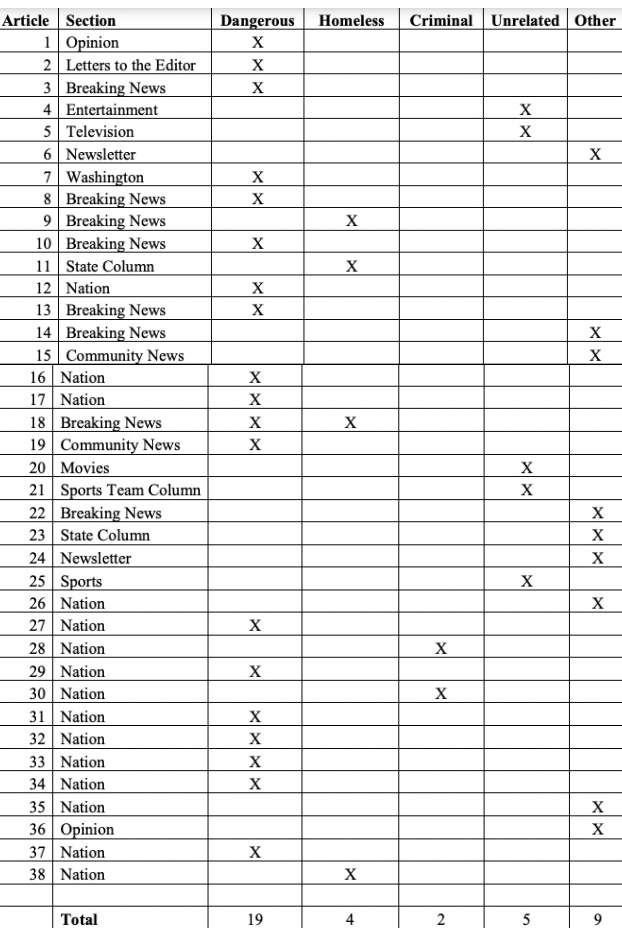
The figure above is a chart of how many times the term “mental health” and “mental illness” were used in publications across The Washington Post, The New York Times, and USA Today. The term mental health was used a total of 116 times, and of those times it was mentioned, only 89 times was it found to be consistent with medical model terminology and beliefs.
Q. How was the process of using NVivo?
Dr. Assaf explained that NVivo works fine when helping manage your data. She said that it can be very helpful and serve its purpose, but it is also software, so there are restrictions. After she started using the program, she found that coding by hand was an easier way of managing data. Her coding included going through PDFs and highlighting things on her computer. She concluded that NVivo is useful for certain things, so it may be helpful with our research project.
We had the opportunity to speak with Dr. Jennifer L. Bevan regarding her article, “ ‘You’ve been on my mind ever since’: A content analysis of expressions of interpersonal attraction in Craigslist.org’s Missed Connections posts”.
Dr. Bevan is a professor at Chapman University. She received her master’s degree from the University of Delaware and obtained her Ph.D. from the University of Georgia. Dr. Bevan’s research and courses are centered on interpersonal communication and health communication within close relationships. In addition, she was recognized in 2009 and 2015 as one of the most prolific and central scholars in the field of communication studies. Dr. Bevan has also received numerous awards, including the Valerie Scudder Award. Her first book, The Communication of Jealousy, was given the Diamond Anniversary Book Award and Gerald R. Miller Book Award by the NCA.
Throughout the course of our discussion, we were able to ask Dr. Bevan about the research methods and limitations of her study. Dr. Bevan also gave her professional insight on how we could best conduct our own research.
Read more…
Craigslist’s Missed Connection Website
What made you interested in conducting a study on this topic?
Dr. Bevan stated that she’s always been interested in Missed Connections ever since she read about it in the past. She thought it was such a unique and weird way to try and reconnect with someone. It is somewhat simple and basic because you are posting something on Craigslist, but since it is also online it has the chance of linking with someone. She was interested in how attraction is depicted in these settings.
How did you arrive at this Research topic? Were there any related ideas that just didn’t pan out?
Dr Bevan was very interested in the idea of how a website like Craigslist was able to connect so many different people together and the audience it would reach. Jennifer and her team of undergraduate students were pretty focused on what they were looking for, since they knew the Craigslist posts and users were not going to be that detailed. They felt pretty limited by who the individual person was seeking based on the information that they were given. In their study, they were able to get a lot of information for their research topic based on the gender and sexual orientation details the post provided, despite their limited information. There were still some limitations with gathering specific data because a few of the posts had very little data to collect. It was difficult for the people who were making the posts because they could only use words to describe the person they are trying to connect to without using any photos or videos.
What was the most shocking or interesting thing to come out of your research in your opinion?
Throughout her research, some of the details and information she was collecting were very detailed and in-depth. People felt very passionate about who they were trying to find and connect to. It was quite sweet, but also sad reading about these posts because it was possible that they would never connect with the people they were trying to find. Also, she was quite shocked by how many men posted trying to find these connections. This made her ponder if this was an easier way for men to express themselves since their posts on Craigslist were anonymous.
What problems or limitations did you encounter the most while conducting research?
Since the Craiglist’s posts were all so public and you really did not need to make an account or go through approval to review posts, it was quite difficult for Dr. Bevan to ask people further questions. It would have been interesting if they were able to directly contact the people who post to see if they were successful in finding the person they were looking for. Since Dr. Bevan is a survey researcher, it would have been helpful to individually ask follow up questions in the form of online surveys to gather more information to better support the research topic.
Do you foresee new methods of gathering data from individuals in the near future?
Dr. Bevan explains that the internet has advanced significantly since 2015 and that her method of collecting data could be considered a bit outdated. There are several new databases and public forums online and the numbers will only increase in the future. Dr. Bevan believes that these new archives will make it much easier to gather data.
If we conducted a study on this topic, would you recommend us following your method of collecting data?
If we were to have the same format of collecting data, Dr. Bevan recommends using her way of gathering her research topic if we were just looking at the posts. She did a pretty safe way of doing a quantitative content analysis of people. She does recommend we over sample and make sure to get an equal amount of heterosexual and homosexual posts in order to gain more insight of the population and to portray a more realistic representation.
If you could redo this study again, would you change anything?
Dr. Bevan said that she regrets not delving into same-sex attraction. Her content analysis only showed heterosexual relationships and heterosexual attraction. Dr. Bevan believes that it was a missed opportunity to not add in Missed Connection posts from people in the LGBTQIA+ demographic.
How did you prepare for your research study?
Dr. Bevan and her team had a vision of how they wanted the research study to look like beforehand. A few people from her group were set aside to do the research of the website and annotations of the study. Meanwhile, a few members of her team and her were learning the exact coding of the study while also preparing the research paper.
Is your study still relevant to any situation or website we have in today’s society?
Dr. Bevan believes her study is still relevant in today’s society and that it is quite different from any other websites that we have today. Since users of Craiglists do not have to make an account, providing personal information, a lot of people are able to go anonymous without the worry of people trying to figure out who they are. A lot of online users would like to connect with others without the worry of being identified, which caters to a lot of p
By Vanessa Rodriguez, Sophia Lozano, Sophia Good, Janete Por Amacosta
Dr. Andi Stein
Through the rise of their popularity with people, the Walt Disney Company leads in victory in the entertainment industry by building a line of storytelling. Their storytelling has created a gateway to a huge part of people’s lives by implanting their characters everywhere from movies to action figures to theme park rides. Having this impact can shape everyone since childhood to grow from loving the characters to potentially wanting to be part of the fantasy land that Disney has created.
To begin, we as scholars were interested in learning about the marketing aspect in entertainment and tourism, specifically what amusement parks like Disney offer to their patrons to be a successful brand. This “colossal titan” has led to an example of how to become successful in marketing for tourism attractions. Leading expert professor from Cal State Fullerton, Dr. Andi Stein, provides insightful information on Disney’s marketing strategy. Dr. Stein teaches in the Department of Communications and has conducted much research in the Walt Disney Company. Her book “Attracting Attention: Promotion and Marketing for Tourism Attractions” best reflected the authenticity of marketing as a whole. As Stein described, the book examines all the different ways companies in the attractions industry can promote and market to the public using traditional media and social media. Doing things like having events, developing marketing materials, and promotional brochures help in drawing people to their attractions.
A look inside “Attracting Attention”…
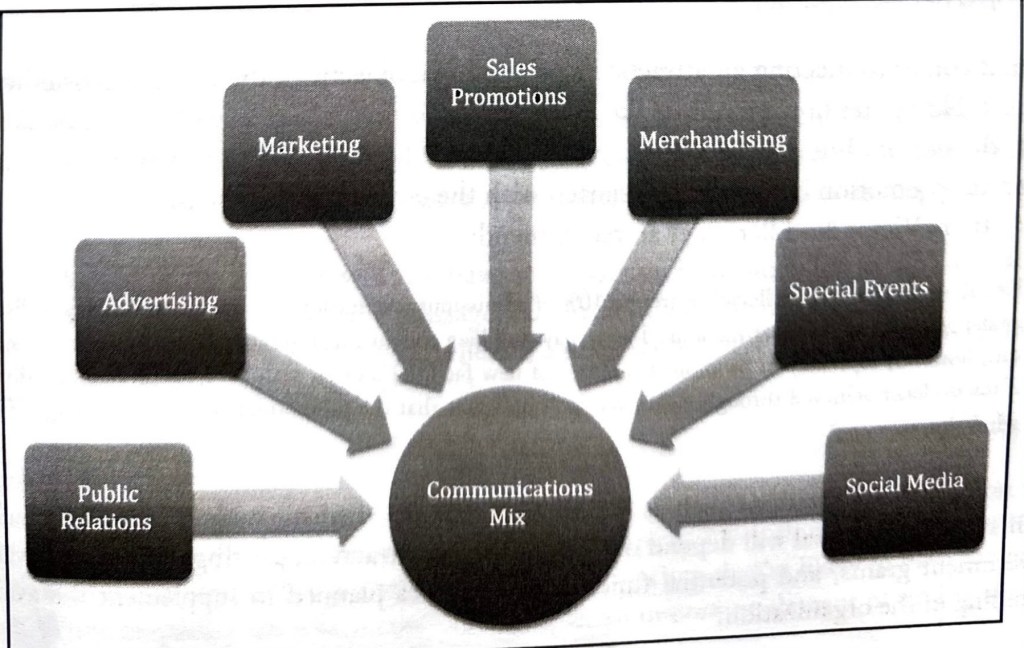
Promotion and marketing are essential components of attraction management. They serve as a means of telling an attraction’s story through words, images, and events. One bit of key information that stood out was the use of the Communication mix, a chart that highlights the categories in promotion. It includes the following: public relations, advertising, marketing, sales promotion/merchandising, social media, and special events. Although the landscape for public relations has changed in recent years, much of traditional media is still of use for highlighting what attractions provide. Within the new digital age of technology, advertising has also come a long way. It offers new techniques and methods for creating better ads. Sales promotion and merchandising rely on special incentives, gimmicks, and other techniques to encourage sales. It falls under the umbrella of sales promotion and services to rack sales up through online and in-person shopping. Social media perpetuates the need to “be in the loop” when these promotions and sales go up. It draws the attention of differing audiences with the goal to get their hands on the newest releases. Special events are another means of bringing attention to an attraction. It allow patrons to experience the hype firsthand. When enough people talk about it, the event can bring about entertainment, leisure, and fun.
Just how did Dr. Stein go about conducting her research in the study?
Her research consisted of talking to other scholars in the entertainment and tourism industry. Stein read many academic sources, including newspapers, magazines, and scholarly articles about what was going on regarding companies and their success.
How is Disney able to sustain itself as a colossal in all aspects of entertainment, tourism, and media?
According to Dr. Stein, the Disney company is consistently successful because they understand the steps of successful marketing. First, the team at Disney constructs great ideas and researches them extensively to ensure it has yet to be executed. Then they produce these ideas into products and know how to market them successfully to their target audience. Disney has administered the ability to tell a heartfelt story about likable characters. “They are masters at taking those characters and building empires around them. They build theme park rides, movies, and merchandise.” Disney has mastered synergy; its characters can be found in its parks, on its streaming service, in TV ads, in merchandise stores, and on their social media platforms. Everything they produce connects, keeping their ideas and products in the limelight of people’s minds.
What are setbacks in the theme park industry?
The Covid-19 pandemic caused a significant misfortune loss of revenue to all companies in the entertainment and tourism industry. Dr. Stein stated, “We are now seeing how a lot of these companies are trying to fight their way out of the chaos the pandemic caused. Theme parks have bounced back pretty well; the cruise industry is still struggling, and hotel and restaurant industries are struggling because they do not have the staff they used to have”. Currently, our economy is in a high state of inflation. As a result, Disney raised the prices of theme park admission, parking, merchandise, and food at the parks. Yet, Disney parks are more packed than before pre-pandemic. Stein explained that Disney has ‘magic’ that draws people to them. Interacting with Disney puts their target audience in a fantasy. “Their theme parks create an escape environment. Same as watching a film or attending a Disney cruise line; everything is about fantasy. It makes us feel good consuming and experiencing their brand,” Dr. Stein mentions. Disney owes its extraordinary success to its ability to provide escapism to its target audience, who will pay any price to endure the brand.
Post-Pandemic Theme Park Recovery
When speaking to Stein regarding the effects of the pandemic on tourism, in anticipation of their reopening, Stein believes the closures did more damage from a financial standpoint. These parks have found other ways to compensate for these losses. “Now that the parks are open, people are coming back in droves… some parks have more people than they know what to do with,” said Stein. Since these reopenings, we have seen prices spike for admissions and the cost of food. “We are all paying the price for these companies trying to recover their losses,” said Stein. Despite these changes, Stein still frequents Disney parks but has noted an increase in parkgoers compared to pre-pandemic attendance.
Disney’s marketing tactic is proven to be successful because they understand what consumers want. Through the thick and thin, Walt Disney company has continued to grow during the pandemic. Traditional media, social media, and theme parks have reached many as young as five-years-old to love Disney. Disney’s ability to tell stories through characters is what made them so successful and what sets them apart from the rest of the competition.
Although a typical day in the workforce can be long and strenuous, for many people, developing good relationships is crucial to maintaining their mental health. However, not everyone is willing to keep the peace and unfortunately, backstabbers can run rampant throughout any field and affect the wellbeing of their targets.
About Our Interviewee
Patty Malone received her PhD at the University of Texas, Austin in 2005. In 2010, she began her work as a communications speaker and trainer for the Clear Communication Institute, an organization devoted to aiding teams in resolving conflict and improving communication.
She is also employed as an associate professor at California State University, Fullerton for the department of human communications.
We decided to interview Dr. Malone after finding great interest in the article she co-authored for her dissertation: Backstabbing in Organizations: Employees’ Perceptions of Incidents, Motives and Communicative Responses. Its contents will serve as the foundation for our primary research.
Question 1A:
In the research, it said that grad students were targeted as participants because they have more work experience. Do you believe that your results would have changed if you didn’t have any students as participants?
Dr. Malone’s starting point was working with graduate students, but she later decided to send these surveys to companies for subsequent procedures. However, using graduate students as participants was key in this case. Undergraduates in comparison don’t necessarily have as much work experience in comparison to positions higher up the professional hierarchy since most merely handled menial roles (e.g., retail and resturants) instead of occupying established careers.
(Malone & Hayes, 2021)
Question 1B:
Before you analyzed the results, what forms of backstabbing did you believe were going to be the most prominent based on your sample?
She wasn’t quite sure at the time of conducting the study if there were any particular forms of backstabbing were going to be more prevalent in workplaces. Regardless, the survey with open-ended questions heavily inspired her second study.
The first study was a survey that incorporated open-ended questions. The second one consisted of a likert scale with questions based on answers she she received from the previous study.
Dr. Malone was able to come up of numerous categories of backstabbing based on the information and data that was collected from the second study. These categories played a significant role in her study, as they broadened the definition and concepts of backstabbing. Although she did not focus on a specific form of backstabbing, all of the categories listed served a purpose for the entire study.
Question 2:
Through your research, do you think gender plays a role in backstabbing and workplace aggression through the perceived motive of power struggles?
Dr. Malone does not believe that gender plays a role in backstabbing following to the results of her study. It was confirmed that the outcomes were not indiciating any considerable gender differences. Although, there is a common belief that women are more inclined to commit backstabbing than men are, but Dr. Malone’s findings prove otherwise.
The methodology of how they were backstabbing on the grounds of gender roles did not seem to hold true either. There were many various categories that emerged from it. An example of such would be the forms of how they were backstabbed, consisting of actions like lying, stealing ideas, spreading rumors, etc.
Dr. Malone additionally examined how employees responded to the backstabbing they experienced. An example would be if they complained to the supervisor after the incident. Another response would be backstabbing the backstabber in hopes to get even with one another. These responses served great data to Dr. Malone’s research. These categories of backstabbing evolved from the methodologies of how they were backstabbed on the grounds of gender roles.
Question 3:
Does the experience level and position of the employee, such as entry-level positions, leave the employee more vulnerable to backstabbing in the workplace In comparison to middle or intermediate positions?
Because our intended matter of primary research concentrates on instances of backstabbing between entry-level positions in particular, we needed to further explore her outcomes regarding durations of professional experience as a sample demographic. Dr. Malone divided such into: 0-5, 6-10, 11-15, 16-20, 21-25, 26-30, 31-35, and over 36 years of experience—additionally factoring in their specific occupations since the distances between administrative levels can vary across industries.
Moreover, her response to this question explicitly stated that employees’ length of experience was not necessarily a variable which affected the frequency, occurrence, or manner of backstabbing. Her results contrarily indicated that the nature of backstabbing was similar across 0 to 36+ years of experience. Both active and passive forms of aggression were displayed. And, perceived motives were rooted in manners of self-projection, conflicting personalities, and pursuits of authority despite how much experience they had.
However, Malone is not absolutely certain that there is an absence of association between backstabbing and accumulated experience since her study participants skewed toward the higher tiers of the administrative totem pole. She revealed that a greater majority of her sample—by chance—occupied long-term careers near or within executive departments like chief executive officers, vice presidents, and managerial positions of that sort.
Question 4:
Due to this study being conducted in 2012, do you believe that remote work has reduced the amount of backstabbing found in the workplace?
When asked, Dr. Malone cited that she did not have enough information to address the question properly. Due to the study being conducted over 10 years ago, there are significant changes that have occurred regarding the workplace and how it’s viewed. As a result of the COVID-19 pandemic, remote work has become the standard in the workplace. However, there is limited research conducted on remote work environments and the interactions among coworkers.
Due to the limited study on remote work and its relationship regarding workplace behavior, there leaves much room for a new study to be conducted analyzing these interactions. A hypothetical study utilizing similar research methods as Dr. Malone’s backstabbing in the workplace methodologies and typologies would provide insight on how backstabbing incidents present themselves through remote work.












 The Society for Communications Research