Conversation with Henry Puente: Hispanic Hollywood

By: Maddie Barsch, Dana Del Rio, Janine Hernandez, Mikayla Orozco-Pedroza
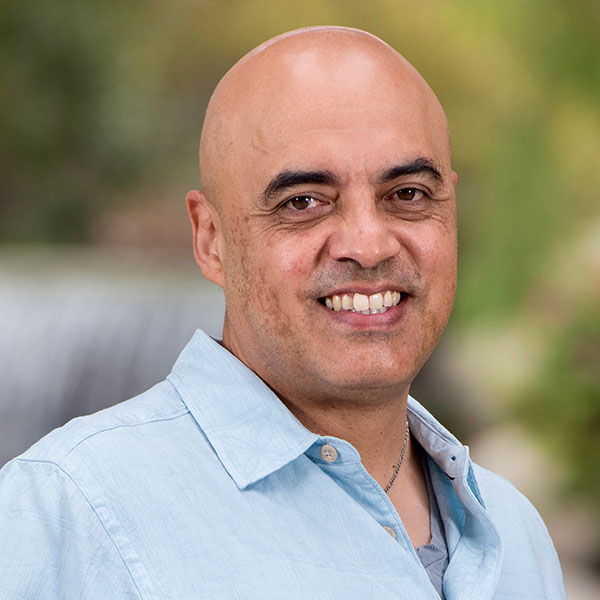
Dr. Henry Puente

First of all, we would like to thank Dr. Henry Puente for taking the time to speak with us regarding his qualitative research study on the Hispanic Hollywood. He was extremely helpful and provided us with insight that allowed us to have a better understanding of research methods and approaches.

Dr. Henry Puente is a Professor of Communications at CSUF. He has experience in the entertainment industry and specializes in researching the areas of U.S. Latinx Entertainment. We began this interview with Dr. Puente by asking him what inspired him to conduct this research. He explained how he worked for a Latino film distributor while also completing his Ph.D. He realized there was little research regarding Latino audiences and felt inspired. He decided that he could be the first to conduct this kind of research.

What question do I want to ask?

Once Dr. Henry Puente decided on conducting this study, his first step in approaching this project was creating questions to ask his interviewees and deciding what questions he wanted answers to. He explained how this was a difficult process because having questions is basically the entire basis and outline of the research. We can relate to this difficulty because likewise, we had to create questions for Dr. Puente to get our answers.

While on the topic of interviews, we asked Dr. Puente about the process of interviewing people for his research. He said that one aspect that surprised him was the fact that some people just did not want to talk about this subject. He said he was especially surprised because the questions he asked were not too personal or invasive. We think that this was very insightful information because organizing interviews plays a huge role in research. Without interviews it is hard to receive vital information that one needs for academic research. He also explained how this made his process much longer than he wanted it to be. He also introduced to us the idea of the IRB. It is a type of certification one has to have before interviewing people. He understood why the University makes this necessary after this experience. We found this interesting because we did not know about this concept beforehand.

Dr. Puente mentioned that research methods depended on the study in which was being performed. So, when asking him what method he used for this specific research, he had said he used a mix of both qualitative and quantitative studies. Quantitative studies were the easiest part since all he was looking at were numbers. The qualitative part was the hardest because of having to transcribe the information given by people. When interviewing people, it became hard at times to get the information needed from them. He had to be able to read people and navigate what was fact and what was fiction, which is only learned from experience.

With all the time and hard work he put into his research, he didn’t think it would be innovative but he more so did it because it was a topic that was never really brought into question. Being in the industry, he noticed there wasn’t much attention on latino culture, let alone films. He wanted his research to make an impact on the industry and to focus on better promotion and advertisement with latino films and to push to make more

In response to a question about the most effective research methods, Dr. Puente explained that the approach that works best depends on the study in question. He explains that much of his skill is derived from experience. 

 “People are complicated.” 

According to Puente, one of the skills he has acquired over the course of his research career is the ability to read people. When interviewing folks, you have to be able to discern whether they are saying what you want them to; “sometimes they don’t tell you enough” so you have to judge how relevant the information is. Puente goes on to explain that you can determine if a person is telling the truth by reading their body language and crosschecking it with other sources of information.

“Navigating fact and fiction is just a skill you have to learn, I think you can learn it but I don’t know if you can teach it” 

During the course of writing and publishing his research, Dr. Puente reveals he had no great ambitions. “Best case scenario, It might be helpful for people who are going to be promoting Latino culture or even reaching Latino audiences…you don’t necessarily write things because you think everyone is going to read it, you just want some people to read it.” In retrospect, he expressed hopes that it would have crossed over to the industry a little more. In spite of the fact that the work he conducted was kept under wraps, it continues to inspire young Cal State Fullerton researchers.

Navigating through the research was a process for Dr. Puente. When it came to choosing which films will be included in the research, he came up with a criterion that each film needed to be classified as a U.S. Latino film. To help with that process he used periodization. When talking about what is included and what is not included, he asked the question: “What is Hispanic Hollywood?” He determined the best way was to say when Hispanic Hollywood started and when it ended. With those determinations he also made a justification for his reasoning.

“Most of the cast had to be latino, director had to be latino, the writer latino, had to be produced in the U.S.,” said Dr. Puente.
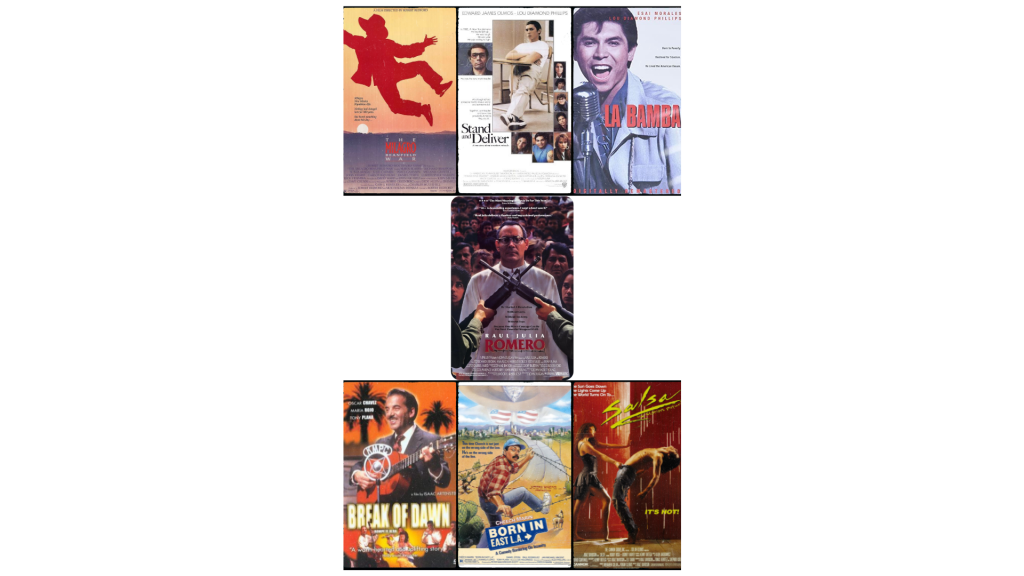
In that short period that Hollywood was making Hispanic films, Hollywood will use English/Spanish print and advertising, as well as Hispanic language and subtitles. Knowing that fact defined Hispanic Hollywood according to Dr. Puente.

Although Dr. Puente was the first one to research Hispanic Hollywood, he did not feel overwhelmed. He felt that there was no pressure because the research simply did not exist yet.

“This research did not exist, so whether I don’t do it or do it do matter that much, so I just kind of saw it as something of tiny little contributions of knowledge and not as something more than that,” said Dr. Puente.

After a year and a half worth of work Dr. Puente’s discipline helped him finish his research on “Marketing and Distribution lessons from Hispanic Hollywood.” and is available to read online.
An interview with Professor Emily Erickson-The Watchdog Joins the Fray: The Press, Records, Audits, and State Access Reform

By: Isla Huerta, David Peach, Devin Guevara, Antoine Dinh

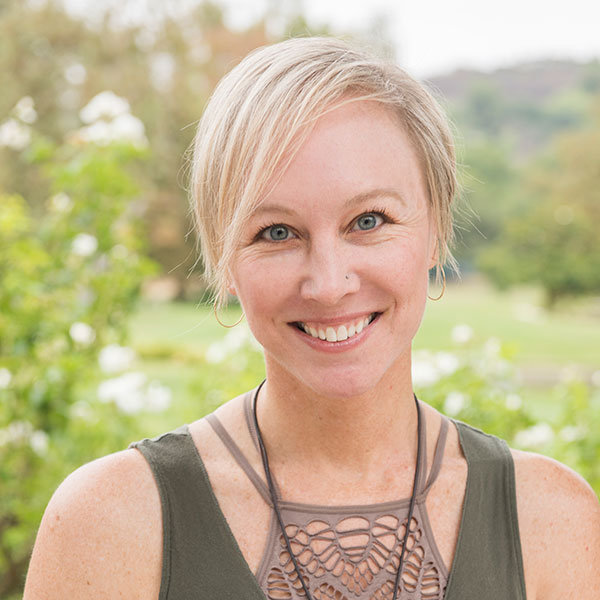
Professor Erickson is an associate professor at Cal State Fullerton where she teaches Comm Law and Media and Society. Professor Erickson has several published articles that are in the realm of law review, but the article that we chose to base our research around is the article, The Watchdog Joins the Fray: The Press, Records, Audits, and State Access Reform. The article is about how journalists have crossed into the realm of politics so that information can become more accessible. In our interview with Professor Erickson we ask her a series of questions that give us an insight of how she conducted her research and why she chose to do research on this topic.

What made you choose to research about the watchdog element of journalism?

Being that Erickson is a professor in law, she is well versed in the ideas of information and how it should be presented legally and if it is legal to obtain in the first place. Her article, The Watchdog Joins the Fray: The Press, Records, Audits, and State Access Reform is a research piece that focuses on the free flow of information and the access to it by the general public. In our interview, Erickson states that there are three main groups or occupations that have to deal with freedom of information – those being: librarians, lawyers, and journalists. For her research she was set to create a “group” that would do audits in seven different states in order to find out if the information that was supposed to be public really was public and accessible. When these groups set out, Erickson learned that not only was the information inaccessible, but the journalists who went for the information were displeased with the lack of cooperation with the states. This led to the journalists trying to push for more accessibility to the information effectively making them activists on the side of freedom of information and putting more pressure on the states to allow free flow. Erickson stated that this surprised her and it was not something that was planned but certainly welcomed as the watchdog of journalism was in full effect though her research

How was the research conducted?

Professor Emily Erickson said that it was a painstaking process, but there were seven different case studies. Gathering information from seven different states as well wasn’t easy, but it took time and patience. One of the types of research that she included was multi prong research and she took interviews of 100 people who were involved with the freedom of information. This included lawyers, politicians, journalists, and editors. Another form of research that was included was statutory analysis and she created a typology from the information that was gained from the statutory. Historical analysis was key in this research. In order to do this, Erickson read countless press coverage about freedom of information and audits in the seven states. The last form of research that she used was political science theory to understand groups and coalitions. Looking over the work and information that was gained, Erickson said that she did too much research, but it was necessary to make sure all the information was correct and accurate. The amount of research that was done made it possible to gain all the information needed about state audits, freedom of information, public records, to help make the watchdog possible.

What challenges did you face throughout your research?

When we asked Professor Erickson about what her challenges were throughout her research, she answered by saying she felt like throwing her hands up and her mind was spiraling into despair when she was researching about finance and corporate speech related stuff. She explains that she is currently going through this with her partner Matt with the paper that they are currently doing. She says that the problem is that they can try pointing something out, but who really cares about their point because whoever they are researching about knows what they are doing so why even bother.

Professor Erickson mentions that with legal research, what you want is to be cited. You want your ideas to ultimately find their way into arguments that are made in court. One of the papers that Matt and her did was called “Transformative You”. She explains that the Screen Actors Guild (SAG) awards have submitted an amicus brief, which is an argument that supports one side of a case. Since their amicus brief has been submitted to the Supreme Court, someone at the Supreme Court will potentially see their names if their research is used. Erickson goes on to explain that if you read court cases, you would know that court opinions will actually cite research from researchers like her. She says that getting cited is the goal and her challenge is being able to write something that will get cited. Something that is persuasive enough and well-articulated enough to make it to the big stage.

With Erickson having such a huge goal, perfectionism is her biggest challenge. She always goes crazy about making every little thing perfect, but not because she thinks that she’s perfect, but because the self doubt in the back of her mind is telling her that this is not perfect. She has a big goal so she wants everything to be completely perfect and wants everything to be good in order to accomplish the goal.

Professor Erickson never went to law school and because of that it has caused her to have imposter syndrome since she self learned almost everything in regards to law. She mentions that she has taken a couple law classes in grad school for her PhD that was in her area of study, but she’s never had 2 years worth of hardcore law training. So what comes easily for other people didn’t come easy for her, especially since they were taught how to turn these things out and she wasn’t. She advises that students should fight the imposter syndrome as hard as they can and that most of us feel that challenge at some point in our lives when we really don’t know what we’re doing. Confidence is the key even if you don’t feel like you know what you’re doing, carry yourself with confidence because it can really take you a long way.

“If you’re never failing – it probably means you’re never taking any meaningful risks.”

Emily Erickson

Was there anything that surprised you when conducting your research?

As we began to do our own research we asked Professor Erickson if there was anything that surprised her to see if we should expect any surprises. Erickson goes on to say that when doing her research she was not expecting journalists to be activists since journalists are supposed to be seen as independent from those they write about. This is surprising because throughout the history of journalism there has always been a specific way of writing a story and journalists are really only supposed to objective. Professor Erickson feels very strongly that journalism needs to change and she says, “you shouldn’t just follow this basic idea that in itself is not truth”. Having a newsroom that is filled with diversity that is not just about race and gender, but also about diversity of backgrounds can bring a fresh perspective to different things. With her new findings Professor Erickson believes that the new generation of journalists can change journalism for the better and strive to give journalists their own voice when writing their stories.

Effects of Humorous Heroes and Villians in Violent Action Films

By Fynn Chester, Juan Pablo Sepulveda, Andrew Gutierrez, Jacob Ishikawa

Dr. Cynthia King

We conducted an interview with Dr. Cynthia King, a very well known professor of Communications at California State University, Fullerton. The Interview was based off of one of her publications called the Effects of Humorous Heroes and Villains in Violent Action Films.

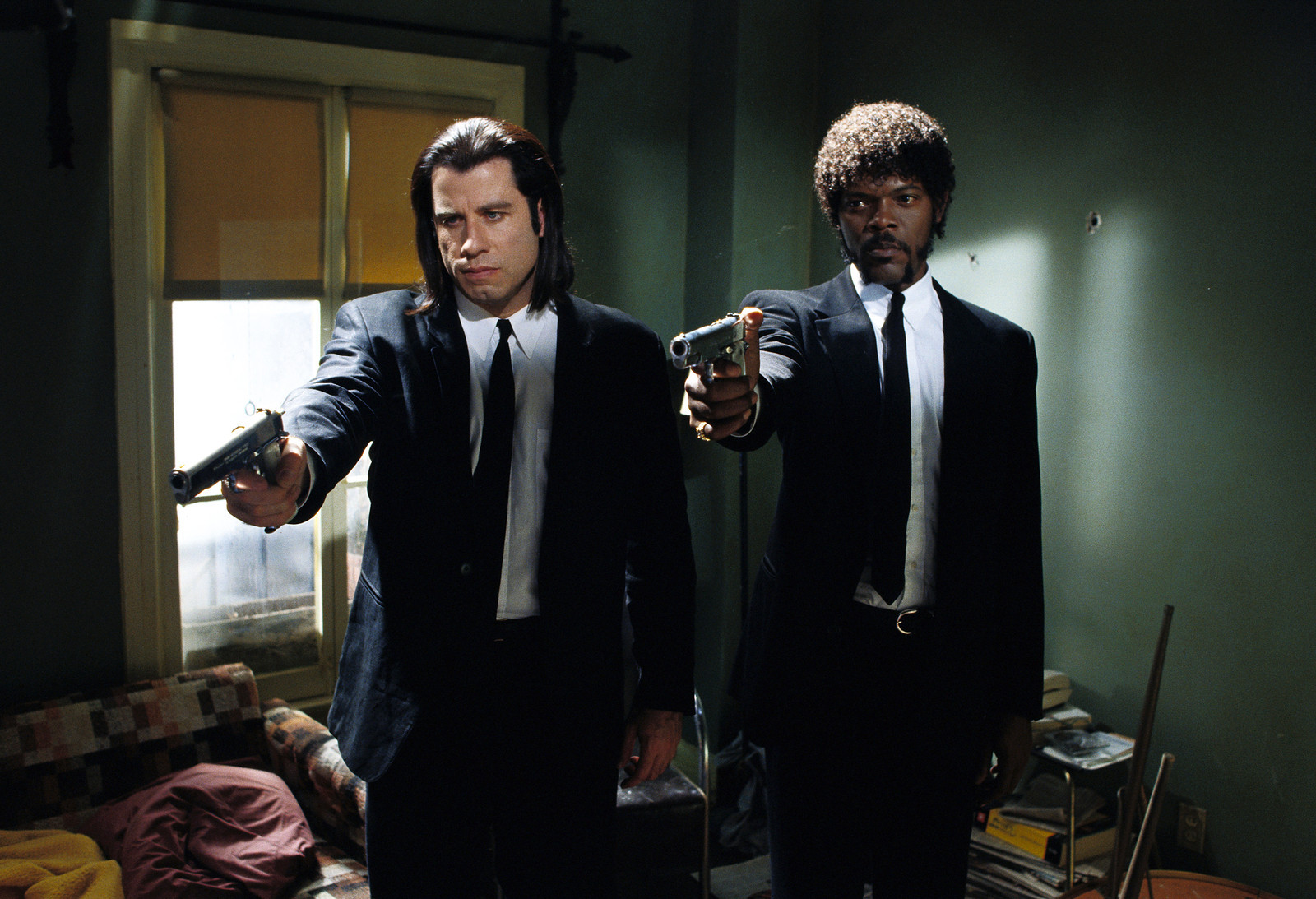
Dr. King worked in a media violence research field prior to conducting this study. While working on media violence, she then took a course to elaborate on humor theory. The similarities between the two intrigued her enough that she combined the two during this study. During this time, however, there were movies coming out such as Pulp Fiction, and one liner Arnold Schwarzenegger movies where violence was at the forefront, but humor was a close second. Dr. King decided to research the effects that humor plays in these violent, and sometimes grotesque, action films. King goes on to describe how her curiosity was what attracted her to the topic and how presenting this to some of her classes gives students an understanding of the commitment, curiosity, and thinking process one must have as a research professional.

Pulp Fiction (1994)

Dr. King describes how the background information is based on what we already know. Reviewing articles, other studies, and using key information to obtain a plethora of knowledge and information as the cornerstone of your research. King describes how you may already find an answer to a question you’re thinking about using as a hypothesis altogether and your understanding of the question at hand may be resolved before starting. By using this information to your advantage, you can refine and redetermine your hypothesis in a more quality manner. King studied how humor and violence wasn’t a new theory and that her previous knowledge on the topics had been short stemmed. Learning to love the process of examining an entire history of feelings and emotions among certain aspects of life. Designing a study that is well rounded is key and the goal of all researchers and publishers. Then having others review your research and study and giving you very helpful feedback, even about information that you may have already seen and adapted into your study. King compares her study to mystery movies and foreshadowing. A good mystery movie will leave you at the end looking back and saying you already had the answers, and you just had to finish the movie to see it. A bad mystery movie will leave you with open ended questions that have no result from the movie itself. The study should come to an answer at the end, whether it is negative or positive, but it shouldn’t end in more questions.

Dr. King states that her study was completely experimental, which allowed her to manipulate whichever part of the process she’d like. A survey, King says, is really only correlational, and cannot create causality. Taking films and editing the movie to have no humor at all allows for the manipulation in her survey, which resulted in varying answers for her study. The main difference between the control groups was that each viewed a different version of the same movie because of the editing. One control group viewed a movie which had been edited to show no humor for the hero, another was edited to show no humor for the villain. These manipulations created vast differences in the outcomes of how the viewer interpreted the film. In the bigger picture, the study aims to show what the effects on society may be, and that maybe violence mixed with humor can desensitize something that is wrong or not seen in everyday life. The true test of the experiment came after the movie when Dr. King had the control groups watch short videos of actual violence. King played two videos, one of the show Cops, where a squad car pulls up to two men in a violent altercation, and another video from Face of Death, a video compilation of people being hurt or hurting themselves.

Terminator 2: Judgement Day 1991

Villain humor made the movie more distressing for all viewers, and hero humor made the movie less distressing only for men. Women still had the distressing factor to the movie based on the perception of the movie. Also, finding a film that not everyone had seen was key to the experiment, because bias did not want to be included if participants had viewed a film before. The implication of using humor in violence actually may have worked better because it can make people view it in a more materialistic view. The idea that humorous cues in violent films indicates that whatever is being watched is “just a movie” and not reality allowed audiences to enjoy and appreciate the films.. The second aspect of the study showcases actual violence, but without any humor at all, because it is real life. Without humorous cues to precede the violence, audience reactions were different than expected. Being able to decipher the media research that happens and the effects it can have on populations was of utmost importance.

At the time the experiment was conducted, technology and programs were still in their infancy, so paper and pencil were the instruments used. While inputting the results and coding the participants to have statistical analysis is difficult, it used to be much harder due to the lack of technology at the time. The brainstorming and designing of the study will take much more time to prepare then actually putting it into action.

In Dr. King’s experience with film editing, it became much harder to actually learn a completely different skill just to be able to conduct a study. Without the technology to “point and click”, it was tedious and difficult and the study took quite some time to complete in full. In total, the experiment took one year from start to finish. Dr. King states she had a great, sometimes frustrating, experience. King found a new love for video editing, considering she had never edited film before. King also had to build her own code to gather the statistics. It was an experience that allowed her to grow as a person, instructor, and doctor.

If one is to take anything from this interview, it should be that perseverance and understanding should be at the forefront of one’s goals during an experiment. There will be times when one cannot fathom moving forward, finishing a task, gathering the right partners, or building an experiment…but if the motivation and determination is there, one can endure. Create, learn, and share. That is the true nature of experimentation.

The Use of Music: A Conversation with Professor Waleed Rashidi

By: Melissa Torres, Catalina Melgoza, Kenya Nunez

Humans have been making music for over 35,000 thousand years. The oldest manufactured instrument is the flute, originally made out of mammoth ivory. Today, there are over 1,500 musical instruments used individually or together to make the music we listen to every day. Advancements in technology have also allowed us to make and listen to music more efficiently, making it easier to take music with us wherever we go. After interviewing researcher and Professor Waleed Rashidi regarding music and its related technology, we were able to gain some insight on their important roles in students’ lives today. 

Professor Waleed Rashidi

Why Has Tik Tok Become Extremely Addictive?

By Alan Ramirez, Branden Richards, and Gabriel Gonzalez

We’d like to first give a huge thank you to Dr. Assaf for clearing time in her busy schedule to talk with us and share her expertise with us on our topic. She was a huge help and provided a lot of insight into the topic of our study. 

Discussion with Dr. Elise Assaf

Dr. Elise Assaf (Communications)

What Is Your Current Knowledge On The Social Media Platform, Tik Tok?

We began our interview by asking Dr. Assaf about what her prior knowledge on Tik Tok was. Her answer was that although she has heard a lot about Tik Tok and finds herself learning a lot about it in her field of communications she did not have the app herself. She also acknowledged that her previous knowledge on the app was anecdotal. This question was followed by a conversation by Brendan about the addiction of social media itself. Brendan expressed his love/hate relationship with Tik Tok which entails him downloading the app. Then realizing he has been on it way too long and deleting it. Then later out of boredom downloading the app again. Assaf related with us and expressed how sometimes when she opens up Instagram and notices that there isn’t anything new to look at she feels a little sense of frustration as well as wondering where new content is as well as sometimes trying to search herself for new content.

Continue reading “Why Has Tik Tok Become Extremely Addictive?”

Social Media and Effects of Mental Health: A interview with Dr. Jackson Preston

Posted on April 13, 2022 by vcfelic

By Jake Saavedra, Vanessa Feliciano, Lily Hong, Jocelyn Castanon

Dr. Portia Jackson Preston is an Assistant Professor of Public Health at California State University, Fullerton.  She conducts research on multilevel approaches to self-care, and examines how stressors such as media contribute to health inequity. She was a featured speaker at TEDxCrenshaw, where she gave a speech entitled “The Missing Ingredient in Self-Care”. She works with organizations to prevent and manage burnout by making sustainable performance and resilience. 

Continue reading “Social Media and Effects of Mental Health: A interview with Dr. Jackson Preston”

Quantitative Research Methodology: An Interview with Dr. Mark Wu

By Janet Chavarria, Joanne Dao, Zoey Nguyen, Daniella Perez

Currently working as a Communications professor at California State University, Fullerton, Dr. Mark Guohua Wu is an expert in the field of Advertising and Online Consumer Behavior. With his 22 years of teaching experiences, he gave us insights into the field of Communication research.


Dr. Mark Guohua Wu

Dr. Wu received his academic degrees in Advertising from the Top 50 world-renowned universities, such as a Ph.D. from The University of Texas at Austin, an M.Sc. from University of Illinois at Urbana-Champaign, and a B.A from Beijing’s Tsinghua University. He is most well-known for his invention of the construct of “perceived interactivity of websites”. According to the Journal of Current Issues and Research, Dr. Wu was named the Top Cited Advertising Scholar.

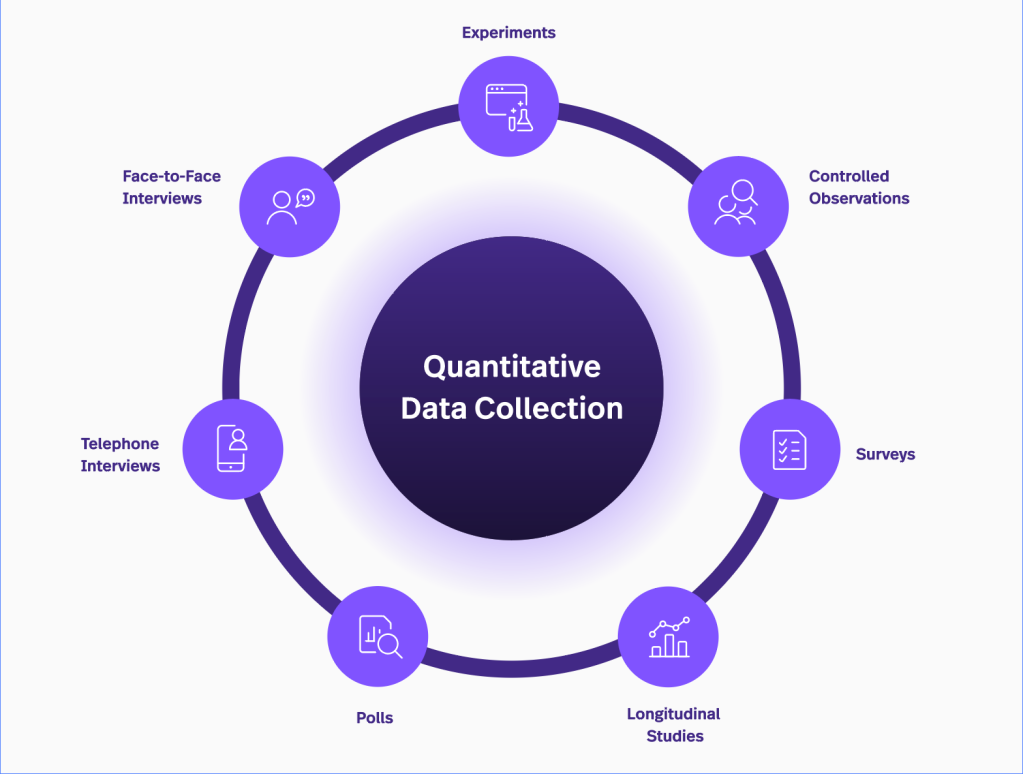
We met with Dr. Wu for an interview where he shared with us his personal experiences with quantitative data collection and his thoughts on social media as a research tool. Below, we share the main points of our discussion with him.

Managing a large pool of data when conducting quantitative research

With his research expertise, Dr. Wu tends to focus more on quantitative data. One difficulty that comes along with conducting this type of research is the size of the pool of data that is drawn. However, Dr. Wu is not intimidated by these larger quantities  ––– he emphasizes that the larger the pool, the better the data will turn out to be. He takes a headstrong approach and told us right away that he would likely utilize SPSS softwares when dealing with larger data base. ” [It] allows me to do a lot of complicated statical analysis, from descriptive statistics to inferential statistics.” said Dr. Wu, explaining his reasoning behind using this software. He went on to explain that he leans towards structural equation modeling. The exploration of the relationships between all of the different variables allows the most conclusive research to be done.

Bias & Errors within quantitative data

The key to any quantitative research is measurement. When using quantitative methods like survey research, we are trying to measure variables and we make sure those variables are accurately scaled using measurement scales. Dr. Wu explains that the most important part of survey research is survey design and that is where lots of errors are made.

Potential bias can stem from many types of errors within the design phase. “Survey design has lots of errors. We have all kinds of errors,” said Dr. Wu. “ We have sampling errors, and the non-sampling errors which are pretty much the measurement errors.” Measurement errors comes from many different sources, be it the sample, the researchers, the respondents, and even the survey instruments itself. To reduce sampling errors, Dr. Wu suggests that we increase sample size; however, researchers need to trade-off between the costs and the sample size. For other measurement errors, he expressed the importance of making sure that researchers, research assistants, and even those who may participate in the survey should be properly trained.

” There are no true [ways] to eliminate all biases. We just do the best we can to make sure the design is solid, and the measurement skills are valid. “

Dr. Mark Wu

Suggestions for beginners when dealing with potential challenges

First and foremost, to be able to deal with a large data base, data errors, and research methodologies, students need to pay attention to the foundation of research, which is the knowledge that is commonly taught in college classes. Dr. Wu recommends students to conduct their own research and be detail-oriented when it comes to data collecting and its concepts. “If you’re doing quantitative research, be as objective as possible…Underline the assumptions of quantitative research, try to find the truth, and you don’t want your personal opinions get into the process,” said Dr. Wu.

Social media as a research tool

When asked to share his thoughts on social media as a research tool, Dr. Wu shared that platforms like Instagram, Facebook, Twitter, etc. are “ the new forms of communication and [is] definitely where lots of research have been done to address social issues.” He further explained that social media research deals a lot with analytics, where you can track data and visualize it. Data visualization is definitely helpful with research as you can track and see how people respond to certain things they see online. 

Is social media an advantage when it comes to research?

Social media is definitely advancing and it will continue to grow in the future, but the fundamentals of research will always stay the same. Dr. Wu shares that there is not much of an advantage per se as research are still done the same way today as it was done back in his days. However, social media has definitely helped with accelerating the speed of data gathering and there are a lot more data available today. Essentially, old tools are now being put to use in the domain of social media.

Advice for student researcher

Before ending the interview, Dr. Wu left us with a piece of much-appreciated advice for beginners in research: finding patterns is crucial when you go through a tremendous amount of data. “Students need to cast through the noise,…and find insights,” said Dr. Wu. When dealing with a pool of information, finding the right one is tricky. Hence, methods taught in research classes will utterly become a helpful assistant in helping you select the information that you need for further analysis along the journey of data research and collecting.

The Relationship Between Social Media and Mental Health: A discussion with Dr. Megan Vendemia

By: Guadalupe Alcazar, Gabriela Angel, Gustavo Lopez, Marhaly Ramirez, Iyana Seraphin

Dr. Megan Vendemia

Have you found that the impact people get from others online is more negative or positive?

Dr. Vendemia believes the impact to be both positive and negative in an equal manner as there is not enough evidence to confidently choose one over the other. There are a number of variables that need to be taken into account. For example, those who are passively versus actively viewing content on social media, whom they are following, what kind of content they post themselves, and what their views of societal expectations consist of.  However, Vendemia mentioned,  “sometimes what might be positive for the content creator such as posting a picture of themselves online opens themselves up to public scrutiny or a level of self-consciousness.” This contributes to the possible need to reinforce the idea that physical appearance is central to one’s overall identity. Oftentimes, the focus on physical appearance can take away from other significant and valuable characteristics that may otherwise be overlooked or completely unknown. Although people enjoy receiving compliments, for people to consistently utilize social media as a way to receive positive feedback can increasingly become less and less fulfilling. Dr. Vendemia said, essentially, “over time, continually getting this reinforcing feedback is unsustainable.” This can especially become dangerous when oftentimes people “tether their self-worth” to instant gratification and validation. Naturally, people’s appearances will change, and this mindset can often lead to unhappiness with physical appearance, editing photographs, and even cosmetic surgeries.

Continue reading “The Relationship Between Social Media and Mental Health: A discussion with Dr. Megan Vendemia”

Social Media and Mental Health: A conversation with Dr. Assaf

By: Kasra Nosrati, Camila Garcia, Estefania Navarro, Kyle Hankins

The rise in the usage of social media has been imperative within the lifestyle of society. It has allowed us to connect with friends and family in ways that weren’t possible before, and it allows us to interact and engage with current events. As good as social media can be for us, there has been a troubling pattern between it and the mental health of citizens; social media has notoriously become known for its tendency to have its users cyberbully others online, and also its need to have users buy in to an image that social media tries to depict to other online users. 

To get more information about the relationship that social media and mental health has, we sat down with California State University, Fullerton Dr. Elise Assaf. Dr. Elise Assaf’s research focuses on social media and its impact on mental health. Within this interview, we asked Dr. Assaf about how the relationship has developed into the status that it is today, ways to promote mental health within social media, and the future of this relationship

Have you seen a trend between social media and mental health with the research that you’ve done?

  • Dr. Assaf mentions that the impact it has is significant. There has been a shift with people becoming more comfortable talking about their own experiences. This revolution parallels scientists researching it more and being more open about diving into the impact of social media and mental health. These research topics would be investigated as separated and combined research topics.
  • Dr. Assaf also mentioned that there are fewer academic research topics. It’s gone within television shows, plot lines, and story lines. It has become a topic of conservation of areas in life. People are more comfortable discussing it.

In my family generationally, my grandad probably wouldn’t talk about it very much. My mom is more comfortable talking about it. I’m most comfortable talking about it.”

How would you conduct research within the social media world?

  • While talking about how to conduct research within the social media world, Dr. Assaf said content analysis is a good way to do so. She mentioned a research project she did where she used content analysis. A good way to start conducting the research is by choosing different platforms, set a date parameter, and then collect all the posts that were published during that date parameter. 
  • Once the posts are collected, look at the comments section to see how people reacted to them because it allows the person that is doing the research to get a good sense of how the information is being received by the consumers. Content analysis can be done on visual components and on text, since some platforms are text based.

Why do you think social media has an effect? Do you believe there is a way to “tame” this effect?

  • Dr. Assaf believes that social media is so dominant in our culture that “it is bound to have an effect.” People spend so much time both producing and receiving content that it makes it hard for social media to not have an effect. Nowadays people in social media tend to be more uplifting and supportive of one another that, “there’s this natural progression in it being better now.” Dr. Assaf believes the problem is in people who do not know how to use and how to act on social media. 
  • Most of the people who do not know how to use social media are younger kids, who are still trying to figure out the impact of words and how it can impact people. Dr. Assaf believes that besides setting parameters to only allow access from a certain age or just blocking people on social media, that there is not much that can be done to “tame” this effect that social media has in our current culture.
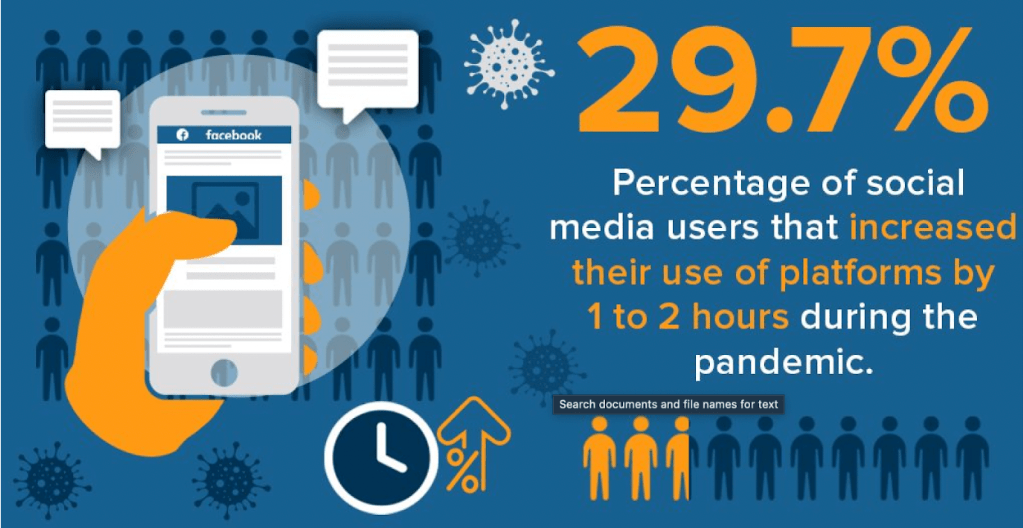
Source: Statista, Broadband Search

How do you believe the future of social media and mental health will work out? 

  • When asked about the future relationship between social media and mental health, Dr. Assaf emphasized the growth that has already occurred between the two. She believes that social media has grown in its understanding of mental health by using the example of body shaming and the direct ties it has with mental health. 
  • While social media used to be a place where body shaming was constantly being used if a post didn’t fit the ideal body standard, today it’s a place where all bodies are, for the most part, embraced and there is a safer space for people to be themselves. Dr. Assaf states, “there has been a call from society for these platforms to be better.” While there is much that has improved due to the call society has placed, there is much more that can be done.
  • The future of social media should be open to embracing mental health, according to Dr. Assaf and her research works to highlight what more can be done to further these improvements. Dr. Assaf ended by saying, “you need audience members, creators, and platforms to be open to the fact that things could be improved and then have these discussions about how to improve them over time.” Her research will continue to view these relationships while highlighting the important role that social media plays on people’s mental health.
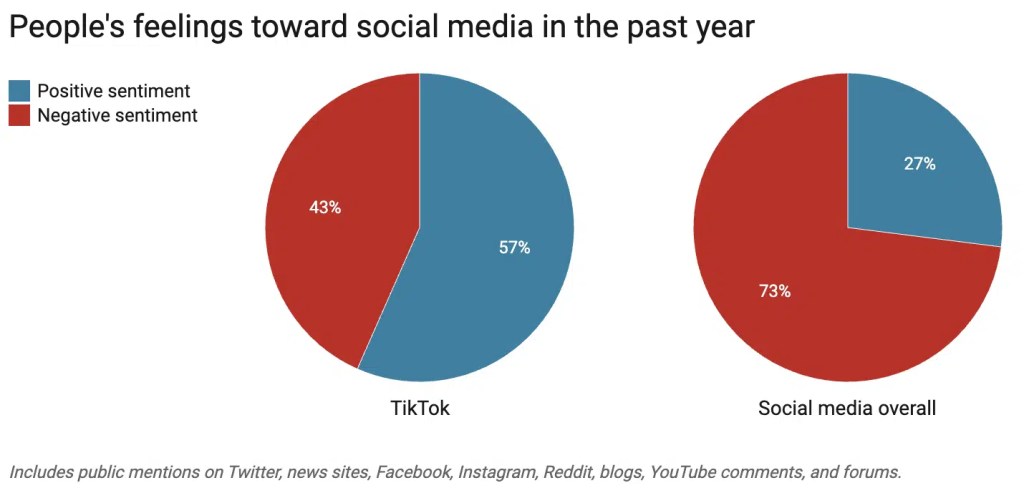
Source: Vox

What is the future for social media and mental health? 

  • When asked about the future of social media and mental health Dr. Assaf stated that she believes that it is something that can be talked more about from the users of the platform. Essentially, it would be from people that feel comfortable about sharing their experiences. Obviously influencers and celebrities have the largest following and so having them being open to discussing it.
  • Dr. Assaf also doesn’t expect anyone to forcibly share their story, “I mean it’s their story. So it should be up to them on how much they tell. I know there is a lot of influencers who get questions about and want their followers to share more than what they are willing to share and I don’t think that is fair just because they are sharing one part of their life doesn’t mean that they have to share everything but obviously the more people that do share their experience the more that we understand that it is not a singular experience that a lot of people go through mental health experiences.”
  • According to Dr.Assaf, she thinks that some people would put others into a box if they acknowledge that they have anxiety or depression and not understand that, that is something that can fluctuate and change over time and so that label can be something that prevents people from sharing their stories. So maybe changing that discourse would be beneficial. Being able to learn from others mental health experience will go a long way to mental health throughout social media.

A Conversation with Dr. Evan Wirig on the Wild World of Social Media Advertising

By Kaitlyn Elpedes, Brooklyn Fears, Jared Hansen, and Theo Pologeorgis

headshot of Dr. Evan Wirig
Dr. Evan Wirig

From your point of view, how has the social media advertising landscape changed in the past 5 years?

Dr. Wirig noted how much the Covid-19 pandemic has changed social media advertising in many different aspects. The use of acceptance cookies in order for corporations to sell their products to consumers is one of the most substantial changes in social media marketing according to Dr. Wirig.

Continue reading “A Conversation with Dr. Evan Wirig on the Wild World of Social Media Advertising”