Gallery

Mental Health Labels with Dr. Elise Assaf

COMM 410

By: Andrea Agustin, Emily Gumz, Charles Graham, Sarah Garreton

Dr. Elise Assaf is a professor in the Department of Communications at California State University, Fullerton. She primarily focuses her teachings on public relations and entertainment courses in the undergraduate program. Her research areas include communications, disability studies, public relations, and sports. Dr. Assaf obtained a B.A. in Communications with an emphasis in public relations, along with an M.A. in Communications, from Cal State Fullerton. In earning her Ph.D. in Education from Chapman University, Assaf wrote her dissertation, Hidden, Authoritative Power in Journalistic Representations of Mental Health Labels. 

When interviewing Dr. Assaf on this publication, we began by gathering background information on her research so that we may be able to understand the context of it. She explains that she started to delve into the topic of mental health from a research perspective because of her personal experience with it. Dr. Assaf shares that she has been diagnosed with anxiety and depression, and some of her family members also deal with mental health issues. At the beginning of her doctorate program, she was asked to write a paper on what she believed was impacting college students but was not being focused on. To this prompt, Assaf answered mental health because she has experienced it herself from a student perspective and could relate to it. It was this paper that guided her into a mental health concentration in her doctorate program. 

After deciding to do a multi-site case study, Assaf chose The Washington Post, New York Times, and USA Today for her research because they were some of the most popular publications across the United States. Initially, she wanted to include the LA Times, but there was a conflict of interest with one of her dissertation committee members whose husband was a high-ranking reporter at the LA Times. 

Assaf, E. A. (2020). Hidden Power: Journalistic Representations of Mental Health Labels [Doctoral dissertation, Chapman University]. Chapman University Digital Commons. https://doi.org/10.36837/chapman.000137

Hidden power that Dr. Assaf had in mind when conducting her research was authoritative powers, such as physicians, police officers, judges, and court officials, who are quoted when describing what an individual is going through from a mental health perspective. 

Dr. Assaf expresses that she is a storyteller and enjoys communicating through stories; therefore, she focuses on using qualitative methods in her research. She believes that she remembers information better when they are told in a story format and that others do as well. Assaf is not very interested in numbers, so she tends to avoid quantitative methods, although she can still manage some quantitative research. From her personal experience, she did not have professors who were able to communicate how to do quantitative research. Dr. Assaf says that she wishes she knew how to do quantitative research better because she believes there are a lot of studies that would benefit from having both qualitative and quantitative methods. Additionally, case studies, which are qualitative, intrigue Assaf because she enjoys delving deep into a person’s story and triangulating data in this way which she finds more interesting as a researcher. 

In order to complete the study, Professor Assaf had to be very upfront with her potential biases and how they might affect her research. As somebody who has struggled with mental health personally and has had family members with mental health diagnoses, she wanted to be careful in the ways she presented her findings. To do so, she made her biases clear with her committee. She thought about addressing her biases in the abstract of her work but ultimately decided against it as many of her advisors suggested that as it may skew a reader’s perception. Instead of interviewing people or collecting surveys, Assaf scoured databases, plugging in key terms and setting date parameters. 

In fact, she says, “PDFs were my best friend.”

In the future, Professor Assaf hopes to return to researching sports and athletics, specifically the mental health aspect of it. Social media has played a huge role in society and in the sports realm. She is interested in analyzing responses on social media to professional athletes who have chosen to step back due to mental health reasons. She also hopes to do this research on a multi-generational level.

Assaf, E. A. (2020). Hidden Power: Journalistic Representations of Mental Health Labels [Doctoral dissertation, Chapman University]. Chapman University Digital Commons. https://doi.org/10.36837/chapman.000137

The most challenging part when conducting her research was when she had to get approval from the committee. For example, if there were a topic she wanted to look into, such as mental health and social media, she would need to be very specific, and since she was new to the system, it was all unfamiliar to her. Another challenge is that the committee may introduce new rules that only apply after, which can cause more confusion when conducting research. A mistake she made while conducting her research was choosing a topic that did not interest her. She says it is more important to choose something you are interested in because if you do not enjoy the topic, there will be a lack of motivation to research and learn more about it.

As for changes, she said she would not change anything because she enjoyed the topic and found it relevant for her with personally experiencing mental health as well. Although she enjoys all the research and studies she has created and found so far, the only thing she would change would be to branch out, discover, and learn more about other topics that interest her. The most interesting finding she found was that social media played a massive role in its effect and impact on mental health. It seemed to have the most influence.  

The advice she shared if a beginner researcher just started researching for the first time would be to choose a topic you like and find interesting. Find out about the whys and how of that topic and delve deep into that topic. If the topic does not interest you, you will be less motivated to understand and learn more about it. She has a bachelor’s in communications and is a professor at California State University, Fullerton. She also has a master’s in communication at CSUF, in education with disability studies. Her interest is clear when it comes to her education. It helped her become a better professor and allowed her to get to where she is today.  

Dr. Professor Assaf agrees that California State University, Fullerton does a fine job of helping students with mental health struggles. She believes that the campus has a lot of great programs for the students, but for them to succeed, Dr. Professor Assaf thinks the communication is satisfactory. The reason why she feels this way is because of the number of commuter students. This campus “is a commuter school, so they don’t see or hear about the resources.” Dr. Professor Assaf wants to have these beneficial and important resources exposed to the students even more than it already is. The system and the quality of the assistance are something she is proud of, but the exposure can be worked on. 

Dr. Professor Assaf believes that the main reason why we see mental health on the rise is not that more people are diagnosed, it’s more that people are discussing it. They are talking about their own mental health issues in common conversations. She sees students and her own peers feel more comfortable talking about their struggles, whether it is constant or temporary. However, Dr. Professor Assaf will admit that COVID had increased mental health issues and that daily struggles like school, work, and relationships are still causing a lot of distress. 

When answering this question, Dr. Professor Assaf emphasized a “case by case basis” in regard to what solutions can be beneficial to those who struggle with mental health. She explains that all of the struggles that come with mental health are personal, and each individual experiences them differently. She does think that a universal solution would be for everyone to talk openly about their troubles if they feel comfortable. It is the most important step in finding solutions and the help that someone needs. Dr. Professor Assaf also wanted to highlight that “there are different levels on how someone can help.” Whether it is being a listener or someone that finds a professional for the person that needs guidance, anything would be a valuable step.

Social media was her answer for the medium that has the most influence and effect on mental health. Dr. Professor Assaf explains that it has increased the number of issues she sees her students have just in the last couple of years. She believes that social media is a great resource and has a lot of useful information, but the influence and effect on people’s mental health are rising exponentially.
Interview with Dr. Assaf

Dr. Elise Assaf: The Language of Qualitative Research

Sydney England, Natalia Hernandez, Diana Thompson

For this assignment we had the opportunity to speak to Dr. Elise Assaf about her dissertation study called Hidden, Authoritative Power in Journalistic Representations of Mental Health Labels. She is an assistant professor in the department of Communications at Cal State Fullerton. She focuses on representations of mental health in media. She uses qualitative methods to understand linguistic elements and sources of power within texts, including content analysis and critical discourse analysis. She holds a Ph.D. in Education from Chapman University, as well as a M.A. in Communications and a B.A. from Cal State Fullerton with an emphasis in public relations. Through this interview we learned about different subjects surrounding her study and other mental health issues.

Read more: Dr. Elise Assaf: The Language of Qualitative Research

Q. Why did you choose to do qualitative versus quantitative research on this topic? 

Dr. Assaf is a qualitative researcher. She states that quantitative research does not resonate with her, and that the process of figuring out numbers and doing algorithms is just not her thing. She enjoys language and understanding how people use different words and descriptors, as well as their stories. Understanding how people communicate is interesting to her and so she generally leans qualitatively.

Q. What are the risks and benefits of digital mental health? And how do you think it should be evaluated?

Dr. Assaf mentioned that there have been discussions in terms of who should implement restrictions on social media because studies have shown the problematic nature of it. She thinks the harder discussion is whether restrictions should be left up to parents, government officials, or to the companies who own the platforms. She sees issues from both a research standpoint and from a personal standpoint. For her, there are a number of arguments against and for evaluation, but as someone who works with young adults and someone who has children she believes that it’s important to discuss personal topics in a casual way. She states that it is important to have discussions in the classroom and at home. From a research standpoint,  Dr. Assaf states that one can analyze the content to understand what is actually being said online, creating the starting point and then one can delve into how it is actually affecting other people. Creating a content analysis to begin with can lead you to future studies, such as interviewing individuals to see how it has affected them both short term and long term.

Q. What are some of the misconceptions about mental health and social media?

Dr. Assaf believes that there are misconceptions about mental health in general. There are different stereotypes for each mental health diagnosis but generally speaking that they are “crazy” or “they can’t be relied upon” is not it because there’s a huge connection between mental health and homelessness. She believes that there is a greater discussion of mental health and people are becoming more open about it. 

Q. How did you go about setting up the dissertation?

When asking Dr. Assaf this question, she explained to us the whole process of the dissertation:  “The goals of the dissertation are slightly different from what the goals of a paper or conference presentation would be. So for the dissertation, I had a committee and I had to work with them to get a topic and then they had to approve my methodology so that I could graduate. On those parameters, they influenced what I did with my research and my dissertation.”

Through this process she learned about Foucault and some other theorists and that’s how she got into hidden and authoritative power. In terms of the paper itself it was a journal publication which has specific requirements. What needs to be included in the dissertation is a few hundred pages long so that’s not what a conference paper is going to result in or be so when you submit a dissertation for a conference they tell you what to focus on and what they want, such as headers. The committee wants to see so that dictates what is included more than anything else does.

Q. How did you choose the three newspapers used in your study?

Dr. Assaf was looking at newspaper articles from three different Publications across the U.S. She had wanted to use the LA Times, but her committee member’s husband works for the LA Times, so she had to change that. She explained that was one example of how a committee member could have an influence on the research she does. Initially she was looking at the stereotypes and representations of mental health, generally speaking, but one of the committee members suggested that she needed to delve a little deeper, and gave her some information to use. She ended up using the Washington Post, USA Today, and The New York Times. Dr. Assaf mentioned that she wanted to go with the top five newspapers in the U.S. She initially wanted to use one from the West Coast, one from the East Coast, and one from the middle, but that got changed because one of her committee members. It ended up being The Washington Post, USA Today, and New York Times because they were in the top five, and the content was easily accessible. She does a lot of research with publicly accessible documents, so that she does not have to go through IRB. Access to the content was her main factor for using these.

The figure above is a chart of how many times the term “mental health” and “mental illness” were used in publications across The Washington Post, The New York Times, and USA Today. The term mental health was used a total of 116 times, and of those times it was mentioned, only 89 times was it found to be consistent with medical model terminology and beliefs. 

Q. How was the process of using NVivo?

Dr. Assaf explained that NVivo works fine when helping manage your data. She said that it can be very helpful and serve its purpose, but it is also software, so there are restrictions. After she started using the program, she found that coding by hand was an easier way of managing data. Her coding included going through PDFs and highlighting things on her computer. She concluded that NVivo is useful for certain things, so it may be helpful with our research project.

Behind the Published Research Novel: A Talk with Professor Craig Loftin

By: Ella Deshautreaux, Clara Meade, Caleb Feliciano, and Justin Wolf

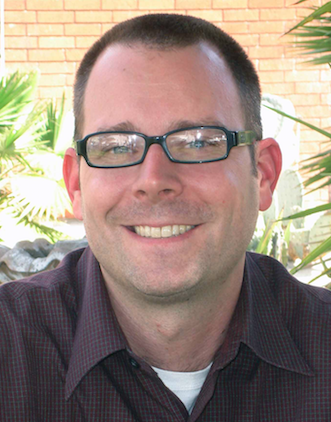
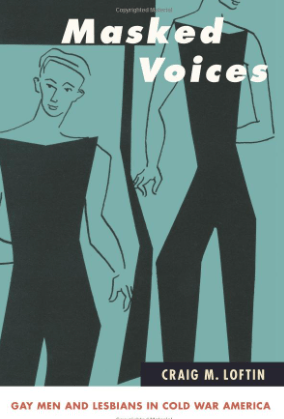
Published research on LGBT history in America is limited in comparison to other research subjects in U.S. history. Cal State Fullerton professor, research scholar, and author, Craig Loftin, brought both an academic and captivating voice to LGBT U.S. history through his 2012 published book “Masked Voices: Gay Men and Lesbians in Cold War America”. In Craig Loftin’s book “Masked Voices: Gay Men and Lesbians in Cold War America”, the letter archives deriving from “ONE Magazine” expose the honest and vulnerable voices of gay and lesbian people during the 1950s and 1960s in America. 

Read More: Behind the Published Research Novel: A Talk with Professor Craig Loftin

The novel uses the direct letters sent to ONE Magazine as primary sources of research with scholar Craig Loftins extended interpretation, historical background information, and structured division among categorized topics. Craig Loftin began his research for his book, “Masked Voices: Gay Men and Lesbians in Cold War America” while undergoing his Ph.D. program in American Studies at the University of Southern California. Among uncovering the archived letters written and sent to ONE Magazine, Craig Loftin used the letters as primary research for his study. Professor Loftin shares with us how he began his research process, and his research steps including his use of coding keywords to divide his topics, and utilizing the letters as primary sources of research.

Craig Loftin’s novel “Masked Voices: Gay Men and Lesbians in Cold War America” has been awarded the “Over the Rainbow Project book List” by the American Library Association and is used as a second source of research and enjoyable read of history including in multiple University libraries for readers everywhere. Craig Loftin’s research and publication have brought life to the historical archives of the letters sent to One Magazine. It is our honor to present further information on scholar Craig Loftin’s research.

Loftin initially had the monumental task of writing and researching one of the most sensitive topics and making it not only appealing to read but extracting meaning for his research. He had these letters from the 50s, and the 60s, from all sorts of different gay men with different views on being gay in society. Loftin takes these first-hand accounts of gay life and tries to make sense of what being gay in that time was as respectfully as possible. He needs to omit names not because he is a kind man, which he is, but for the privacy of those that he was using. The authors of these letters could be deceased or alive but it was still not Loftin’s place to out them or potentially alter their legacy. It is imperative to respect those in research and Loftin had such a keen understanding of that. Loftin conducted his research respectfully and wrote a book about it while maintaining the anonymity of those he was referring to. Before any research can be done, especially on this topic, respect and ethics must be upheld which is what Craig Loftin did.

When beginning his proper research after reading the letters, Loftin began to consider the most simple ways that he should go about compiling the information and presenting it in an accurate way. One of the things that he did that proved to be most successful was reading the letter in their entirety, multiple times, and coding while he was doing it. So with this in mind, he set out to do his research. It took him almost a year before he felt as though he thoroughly understood the messages and stories that of which the letters were trying to tell. Obviously, there was a lot of information to process, enough that he had hundreds of pages worth of notes by the end of his research. One problem that Loftin faced was whether or not he would allow his agenda to seep into his research, but he took extra care to make sure that would not happen. It was important to “let the letters tell the story and speak for themselves.”

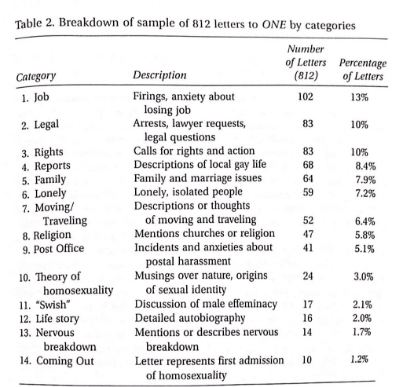
Eventually, chapters began to develop around the topic that different letters were commonly found across the thousands of letters that were archived. To compile everything together Loftin began to code the research, in which he set keywords throughout the letters. For example, he would set keywords to “family” or “love” to track his research and accurately compile the information he needed to begin his research. Loftin’s use of coding and his care to accurately portray the thoughts and emotions of the letters that he was writing about made for a very good start to his research on primary sources.

In researching further into Loftin’s content analysis research, his coding method in categorizing the letters must be fully understood. In order to make the book easily digestible, he decided that he should divide the letters into chapters separated by key phrases. To know which key phrases he should use, he filled out several hundred pages of single-space notes of potential subjects. This process took quite a long time, as he spent years just reading the letters and writing down notes, and writing down simple words for each passage he deemed significant. From there, he found patterns of repeated words, such as family life, jail, or specific cities, and pasted sections of letters that contained these topics into their own chapters. In using the keywords, Loftin found he was able to keep his research flexible; meaning he was able to unexpectedly create more specific chapters within these sections that he would not have noticed. For example, through dividing the letters, he realized that many gay men found fear in the effeminate, or stereotypical, gay men because they were scared that being associated with them would expose their sexuality to the public.

Even with coding the letters into chapters, he still had to do secondary research into finding more information, like finding more information about gay men in jail in the incarcerated chapter. In dividing the letters into key phrases, he was able to create a content analysis research method that not only made it easier for the reader to digest all the material in the letters but also for Loftin to create the book on a subject he is highly knowledgeable about and very passionate about. Overall, this is a wonderful example of how combining an interest in a subject and a thorough research process together can create a book that other readers can enjoy learning from.

Dr. Bey-Ling Sha: The Process of Researching in Public Relations

By May Pham and Isaac Einhell

Dr. Bey-Ling Sha currently serves as the dean of the College of Communications on the Cal State Fullerton campus. When selecting a professional to interview for inspiration towards our future term project, our group decided to interview Dr. Bey-Ling Sha after reading her published study published in 2005 titled “Future professionals’ perceptions of work, life, and gender issues in public relations,” which focuses on work perceptions in the public relations industry. Our goal for the interview was to understand better different research methods relating to quantitative research and how we can apply similar research methods from Dr. Sha’s study to our term project.

Read more: Dr. Bey-Ling Sha: The Process of Researching in Public Relations

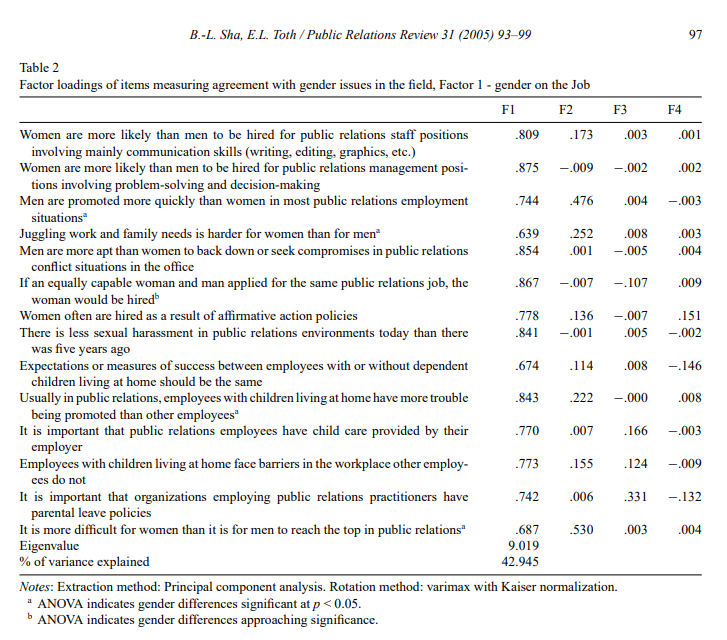
About 20 years ago, Dr. Bey-Ling Sha’s study on “Future professionals’ perceptions of work, life, and gender issues in public relations” (2005) still holds much relevance in today’s society and work environment. With this in mind, our group came into this interview with Dr. Sha very intuitive and eager to learn more about the research steps she developed and the methods used regarding this particular research. Surveying was a large part of Sha’s research, whereas getting respondents’ feedback regarding this issue. Even in 2005, in the early stages of technological surveying, Sha received an above-average respondent rate, with a sample size of 6,284 students, 566 participated. In a college setting, surveys are consistently sent out to students, asking for their opinions and experiences and incentivizing them to complete the survey. Today, college students are less apt to respond to surveys, even with an incentive. One of the first questions we asked Dr. Sha was if 566 respondents still provided significant and accurate data regarding the topic. From her response, we learned that a decent response rate is 10-14%, which she had received. We also learned that the statistical analysis of over 468 respondents was reasonable and adequate. This information will help us idealize what response rate for our survey will provide accurate and adequate data to consider. Dr. Sha also emphasized the importance of “item non-response,” which entails what percentage of the population returned the survey but how many skipped part of the instrument because it was too long. Therefore, we will need to consider the overall sample size being large enough to run the analysis and whether “enough people filled in and answered specific questions that we need to input into the statistical formula to run that particular statistic.” The sample size was important to discuss because getting students to participate in a survey is difficult, so we need to be prepared to have a large enough sample size to ensure the actual response rate is still enough to provide information to run the statistical analysis. 

In order to feel confident in getting a high response rate for our survey, Dr. Sha also shared some tips that will be important in implementing our survey strategies. She shared that getting a high response rate depends on the participants’ convenience. For example, a lengthy and extensive survey can overwhelm and bore the participant, resulting in a poorly answered or completely unanswered and unusable response. While it is better to have a short survey, ensuring our survey is comprehensive is also critical without compromising missing survey questions that help our research. Another thing to think about is balancing authenticity with incentivization. We want people to participate in the survey because of choice rather than because there is an incentive that results in little effort in accurate responses to the actual survey. Another helpful tip Dr. Sha recommended to encourage student participation would be sending everyone a preliminary email that alerts participants, inviting them to participate in a survey that will be sent out shortly. Then also sending a post-solicitation reminder for students that a survey is active but still needs to be completed.  

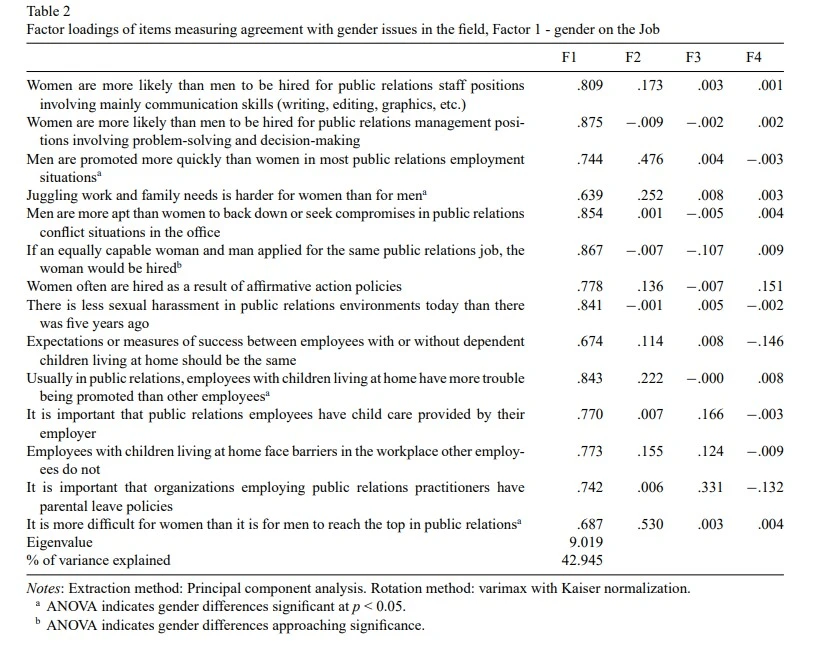
SOURCE: Sha, B.-L., & Toth, E. L. (2005). Future professionals’ perceptions of work, life, and gender issues in public relations. Public Relations Review31(1), 93–99. https://doi.org/10.1016/j.pubrev.2004.09.004

There are limitations when conducting a survey because of skewed sample responses. Dr. Sha’s study identified the sample population. While our study will not be on a large scale or generate an equal amount of responses to Dr. Sha, it is important to remain skeptical and have an appropriate sample size so that our research remains unbiased. In order to do so, this gave our group clarity and a starting checkpoint in our research because we need to determine our sample population and sample size first and then evaluate which research method would be the best fit. Ideally, Dr. Sha understands that more responses are better; however, to be cautious about misusing or misinterpreting quantitative data (for example, 75% out of 4 people is more skewed than 75% out of a sample of 400 people).

In addition to Dr. Sha’s expertise in utilizing quantitative data, she provided a suggested reading material explaining effective measurement techniques for further brainstorming if we were interested in measuring qualitative data. A primary concern when conducting qualitative studies is how to articulate the results and discuss the effects of a research study. Results in a research study do not mean publishing data without providing an explanation; rather, they should provide answers to the research purpose. Dr. Sha’s qualitative research article summarized various published studies that use qualitative research sampling that list the success of qualitative from each research article. Ultimately, multiple qualitative data collection methods, including in-depth interviews, document analysis, or field experiments in a research study, enhance the credibility of the research. One example from Dr. Sha’s article list is nonprofit relationship management, where it utilized a five-dimensional Likert scale for measurements but was able to translate that quantitative data into qualitative data. For our future term project, we could incorporate quantitative and qualitative methods for adequate measurement levels and maintain credibility in our research. 

Our interview helped us determine the next steps and inspiration as we move forward to conduct our research and start our term project. Initially, our idea was to complete a term project using qualitative methods. However, this interview helped us better understand quantitative methods, and we feel confident in our ability to conduct research using survey tools that yield reliable and valid data points. Using quantitative data will allow us to achieve higher responses, and we can effectively execute our research given the short time frame of our project. We gained new insight to pay attention to important details when conducting surveys, particularly skewed responses and biased sampling sizes. Using Dr. Sha’s method to construct our survey is an excellent framework for us to get a start in brainstorming research topics and drafting our survey. 

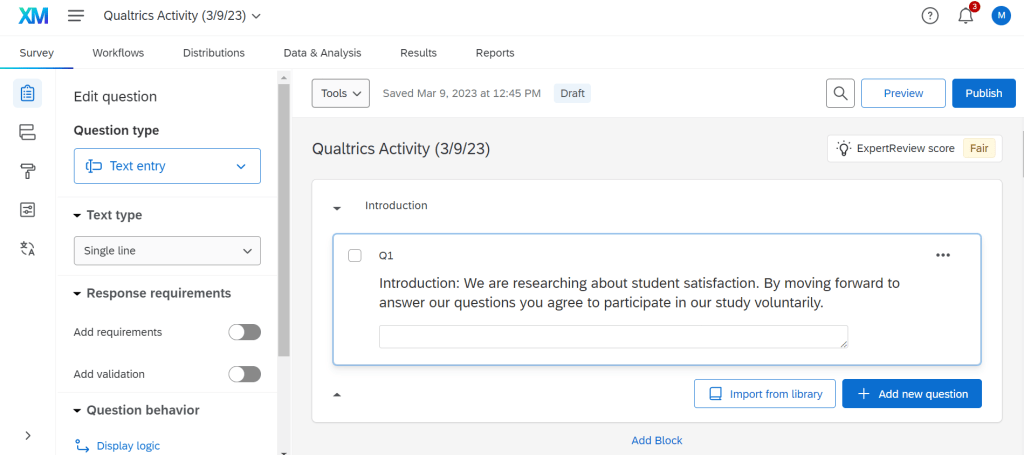
SOURCE: Qualtrics screenshot of constructing a survey from class on March 9, 2023.

Interview with Dr. Bey-Ling Sha

“People will go to great lengths to look for love” with Dr. Jennifer Bevan

October 18th, 2022

Tobie Atanacio, Crystal Bender, Kevin Duong, Julissa Villalobos, Marcos Zelada-Rodas

“Bevan, Jennifer L.” Jennifer L. Bevan — School of Communication | Chapman University, https://www.chapman.edu/our-faculty/jennifer-bevan

We had the opportunity to speak with Dr. Jennifer L. Bevan regarding her article, “ ‘You’ve been on my mind ever since’: A content analysis of expressions of interpersonal attraction in Craigslist.org’s Missed Connections posts”.

Dr. Bevan is a professor at Chapman University. She received her master’s degree from the University of Delaware and obtained her Ph.D. from the University of Georgia. Dr. Bevan’s research and courses are centered on interpersonal communication and health communication within close relationships. In addition, she was recognized in 2009 and 2015 as one of the most prolific and central scholars in the field of communication studies. Dr. Bevan has also received numerous awards, including the Valerie Scudder Award. Her first book, The Communication of Jealousy, was given the Diamond Anniversary Book Award and Gerald R. Miller Book Award by the NCA.

Throughout the course of our discussion, we were able to ask Dr. Bevan about the research methods and limitations of her study. Dr. Bevan also gave her professional insight on how we could best conduct our own research.

Read more…

  1. What made you interested in conducting a study on this topic?

Dr. Bevan stated that she’s always been interested in Missed Connections ever since she read about it in the past. She thought it was such a unique and weird way to try and reconnect with someone. It is somewhat simple and basic because you are posting something on Craigslist, but since it is also online it has the chance of linking with someone. She was interested in how attraction is depicted in these settings. 

  1. How did you arrive at this Research topic? Were there any related ideas that just didn’t pan out? 

Dr Bevan was very interested in the idea of how a website like Craigslist was able to connect so many different people together and the audience it would reach. Jennifer and her team of undergraduate students were pretty focused on what they were looking for, since they knew the Craigslist posts and users were not going to be that detailed. They felt pretty limited by who the individual person was seeking based on the information that they were given. In their study, they were able to get a lot of information for their research topic based on the gender and sexual orientation details the post provided, despite their limited information. There were still some limitations with gathering specific data because a few of the posts had very little data to collect. It was difficult for the people who were making the posts because they could only use words to describe the person they are trying to connect to without using any photos or videos. 

  1. What was the most shocking or interesting thing to come out of your research in your opinion? 

Throughout her research, some of the details and information she was collecting were very detailed and in-depth. People felt very passionate about who they were trying to find and connect to. It was quite sweet, but also sad reading about these posts because it was possible that they would never connect with the people they were trying to find. Also, she was quite shocked by how many men posted trying to find these connections. This made her ponder if this was an easier way for men to express themselves since their posts on Craigslist were anonymous. 

  1. What problems or limitations did you encounter the most while conducting research? 

Since the Craiglist’s posts were all so public and you really did not need to make an account or go through approval to review posts, it was quite difficult for Dr. Bevan to ask people further questions. It would have been interesting if they were able to directly contact the people who post to see if they were successful in finding the person they were looking for. Since Dr. Bevan is a survey researcher, it would have been helpful to individually ask follow up questions in the form of online surveys to gather more information to better support the research topic. 

  1. Do you foresee new methods of gathering data from individuals in the near future? 

Dr. Bevan explains that the internet has advanced significantly since 2015 and that her method of collecting data could be considered a bit outdated. There are several new databases and public forums online and the numbers will only increase in the future. Dr. Bevan believes that these new archives will make it much easier to gather data. 

  1. If we conducted a study on this topic, would you recommend us following your method of collecting data? 

If we were to have the same format of collecting data, Dr. Bevan recommends using her way of gathering her research topic if we were just looking at the posts. She did a pretty safe way of doing a quantitative content analysis of people. She does recommend we over sample and make sure to get an equal amount of heterosexual and homosexual posts in order to gain more insight of the population and to portray a more realistic representation. 

  1. If you could redo this study again, would you change anything?

Dr. Bevan said that she regrets not delving into same-sex attraction. Her content analysis only showed heterosexual relationships and heterosexual attraction. Dr. Bevan believes that it was a missed opportunity to not add in Missed Connection posts from people in the LGBTQIA+ demographic. 

  1. How did you prepare for your research study?

Dr. Bevan and her team had a vision of how they wanted the research study to look like beforehand. A few people from her group were set aside to do the research of the website and annotations of the study. Meanwhile, a few members of her team and her were learning the exact coding of the study while also preparing the research paper. 

  1. Is your study still relevant to any situation or website we have in today’s society? 

Dr. Bevan believes her study is still relevant in today’s society and that it is quite different from any other websites that we have today. Since users of Craiglists do not have to make an account, providing personal information, a lot of people are able to go anonymous without the worry of people trying to figure out who they are. A lot of online users would like to connect with others without the worry of being identified, which caters to a lot of p

Interview with Dr. Bey-Ling Sha on The Research Process

By Raquel Diaz, Natalie Urrutia, Stephanie Parra, and Sophia Bravo

As students attending CSUF, we got the chance to interview Dr. Bey-Ling Sha on the Research Process and specifically on her 2005 study on “Future professionals’ perceptions of work, life, and gender issues in public relations.” In this blog, we will discuss what we found and the incredible insight of Dr. Bey-Ling Sha.

Stephanie Parra:

I opened up by asking Dr. Bey-Ling Sha about her creation of media programs to enhance student and faculty diversity, alongside the idea of the “diversity pipeline” for US media professions, and if minority leaders are important when it comes to the diversity pipeline. She stated that “Each of us in our daily lives can behave in ways that influence other people. Leadership is defined as influencing other people. I do think that having people in leadership that represent different groups of people are important. If you can’t see it then you can’t be it, having someone of a minority group in a leadership position has the power to encourage people into the pipeline”. 

Next, I asked Dr. Bey-Ling Sha what she would say is the idea of someone’s “identity” and what drove her research and funneled new ideas when conducting research methods. She went on to say, “When you grow up as an immigrant child in the US you grow up with “American culture”. Thus, when you’re a child in a family of immigrants, oftentimes children partake in cultural interpretation for their parents, and have to explain language and “normal” American culture to their parents.

Then I decided to ask Dr. Bey-Ling Sha about her work in the U.S. Census Bureau. I asked how the experience of the census changing and letting people identify as more than one thing in their paperwork, established the connection between herself and her research on new generations of students being able to choose more than one identity. She said, “The 2000 Census was the first time people could identify under more than one group, and it was important for our country because we used to put people of various diversity into one box and when you give people the opportunity to pick more than one box, it gives them more to choose from that represents them. This showed that people belong to many different groups

Sophia Bravo:

“What finding in your research has shocked you the most?”

Professor Sha mentioned in our interview that she had quite a few things come up in the research that shocked her the most. She mentioned a stand out being that “after fourth to fifty years of research women in public relations women are still paid less.” This shocked her the most out of all of her notable research in all of her years, hoping that by now women would have more equality in both treatment and pay. She wishes that she could say that now women are looked at as equal to men in both the workforce and public relations, but infuriated her that unfortunately there has not been much growth in that area, and may even have taken some steps in going back in time. 

“What was the biggest obstacle you faced when completing this study?”

Issues that she had noticed with her survey was that students were not checking their emails so they didn’t know they were being emailed. Also, some of the students that were being reached out to had already graduated; therefore were not checking their old school email, and was just overall hard to get student engagement.

“What would you do differently if you had to do this research experiment again?”

What the professor found that she would do differently in an updated version of her survey was to make it more condensed, and easier for the students to complete it. In our interview, she mentioned that the original copy was too long for them to finish. Almost two decades had passed since she condu

Raquel Diaz:

I had initially asked Dr. Sha about the method they had used for the research considering it was a low response rate. She discussed how they went with an online questionnaire because of how little the response rate was it was still higher than it would have been if they had gone with the mail-in version of this study. She said that the factored-in costs of the mail and the amount of time it would have taken just were not realistic. To calculate it statistically email came on top for the easiest.

I also asked how she had collaborated with other people doing the study with her to formulate the questionnaire. She stated that the most important thing was to look back at past research to come up with the best-rounded study. This being in 2005 it was a bit hard for her to recall the specifics.

The conclusion of the study was that there should be more focus on work-life balance and how gender issues are critical in improving the field. I asked if she could elaborate more on this statement and if she believed it still holds up to this day. She says that what we are finding now is that PR has found its name eroded over time. She believes that to some degree these problems are still very prevalent and in some cases getting worse in 2022.

Natalie Urrutia:

I began by asking Dr. Sha why she wanted to conduct this study and if a specific incident made her want to do this survey. She discussed that she cared a lot about the future of the Public Relations field. She said that there was not a specific incident, but as an educator, she wanted to know more about how the minds of the future people working in Public Relations. She believes that having insight into these college students’ think would help her how to teach her prospective students.  

Furthermore, I asked her if there were any claims she made in her study that she would disagree with today in 2022. She expressed that she wished she could add more on gender fluidity. Instead of only having girl and boy options on the survey, she would add a third option for people who do not identify as girl or boy. Having the third option would give more data to analyze. 

To end the interview, I wanted to ask her for advice for students in the Public Relations field on managing work-life balance. She explained that this generation has a good grasp of work-life balance. Most students a CSUF are good at working and going to school and still managing to make time for their friends and family. She mentioned that people criticize First-generation students for not knowing particular stuff. Still, she acknowledged that many first-generation know more about managing their work-like compared to what she learned at 20 years old.

Overall, Dr. Bey-Ling Sha was very personable and made this experience 10x more comfortable than we had thought. She has a great understanding of the PR world and it was a pleasure discussing these topics with her. We appreciate her valuing the students here at CSUF and for giving us a bit of her knowledge to help us flourish in the communications industry.

Dr. Doug Swanson’s Perception of Mindfulness and Social Media

By Gelsey Anica, Mackenzie Koch, and Lesly Ramirez

Dr. Doug Swanson is an accredited public relations practitioner and Professor of Communications at California State University, Fullerton. He came to public relations through journalism, working in radio, newspaper, and television. After receiving his doctorate, Dr. Swanson began his career in public relations as a writer, strategist, and event planner. He credits his abilities in writing to his long history in journalism. After working in public relations at a firm, he then accepted his role as a public relations professor.

Read more: Dr. Doug Swanson’s Perception of Mindfulness and Social Media

Dr. Swanson was drawn to the topic of mindfulness because of prior research that had been done in other professions as well as the benefits it can bring to people in the workplace. He says mindfulness can “greatly help reduce stress and anxiety in the workplace, and it can help people work together better.” Although it is studied and practiced in many other professions, such as the medical field, Dr. Swanson found that mindfulness is “rarely if ever, studied, discussed, or given any attention to in the communications disciplines”, even though it is a “very stressful field”. This discovery is what led him to study mindfulness in the field of communications, among both professionals and University students.

Dr. Swanson was drawn to the topic of mindfulness because of prior research that had been done in other professions as well as the benefits it can bring to people in the workplace. He says mindfulness can “greatly help reduce stress and anxiety in the workplace, and it can help people work together better.” Although it is studied and practiced in many other professions, such as the medical field, Dr. Swanson found that mindfulness is “rarely if ever, studied, discussed, or given any attention to in the communications disciplines”, even though it is a “very stressful field”. This discovery is what led him to study mindfulness in the field of communications, among both professionals and University students.

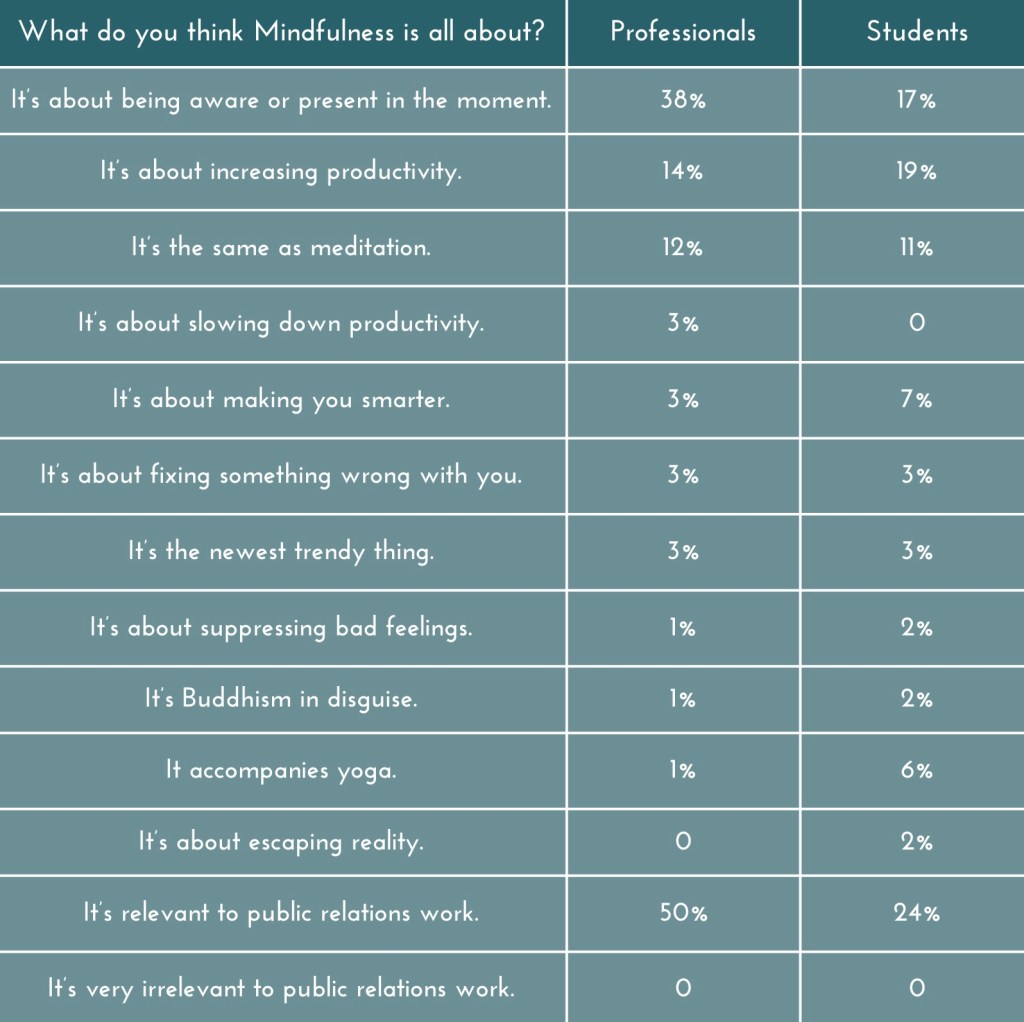
Mindfulness Defined and Workplace Relevance Explained by PR Professionals and PR Students

Data by Doug Swanson

Dr. Swanson expresses the importance of taking things one at a time and being flexible when it comes to mindfulness in order to maintain a smooth running work environment. The importance of this is because the best way rational decisions are made is when things are taken calmly and thought through. Swanson greatly emphasizes the importance of students not getting completely wrapped up in the stress their classes may bring, and reminds them that they do have a life outside of school and it is perfectly okay to take a break from school responsibilities.

Furthermore, Swanson has seen exceptional benefits and advantages when mindfulness is incorporated into his own workplace and with his own students as well. Swanson has now created his own mindfulness class, COMM 466T, Mindfulness and Media in PR. This class has the object of teaching students how to practice mindfulness as communication professionals. Swanson shares the anxiety and stress that a workplace can bring and this class helps in learning how to stay productive yet maintain peace of mind. Consuming media also requires the skill of mindfulness. Swanson highlights how easy it is to get consumed and frightened by the news we read, especially today where news can be altered in so many ways on social media. His solution is not to turn a blind eye to the news and ignore what is going on in the world but instead learn how to absorb this information and not let it affect us negatively. After taking this class, Swanson notes that students found a way to destress and become mindful on their own, which will help them in the long run professionally.

Source: The Economist

According to Dr. Swanson, the goal of social media is to make money through advertisements, and content is made purposefully alluring to draw people in and keep them continuously hooked and scrolling. This is why consumers must stay mindful of what they are seeing and how often they are seeing it. Student and professional success can be put at risk if the consumer is not mindful of how much media they are consuming on a daily basis. Consumers should not be so involved in social media that their physical and virtual worlds blur and become one. 

“I am not going to be so plugged in that this becomes my reality. I have to unplug and not be consumed by this.” 

Dr. Doug Swanson

Dr. Swanson expresses that public relations professionals have a hard time disconnecting from work. Those who are working in public relations have to stay alert to what is happening on social media, but it is important to develop a boundary between consuming media for work and for themselves. They have to know when they should know that work is done and have to set it aside. It is finding the balance between work and personal life and when to say when browsing social media is enough. 

The goal of public relations is prediction and control. Not to mention the ambiguity that comes with public relations. That is why Dr. Swanson recommends practicing mindfulness when going into any communication job, as well as setting up healthy habits as a student so that they can take these techniques into their professional careers. 

An Interview With Dr. Jasmine Meertins

By Kiana Isenberg, Lilly Carrillo, and Lauren Smith

We had the opportunity to interview Dr. Jasmine Meertins, an assistant professor in the College of Communications at Cal State Fullerton, about her most recent publication, Institutional Relational Maintenance Barriers and Perceptions of Relationship Quality Among Women With Incarcerated Partners (2022) and her experience conducting research in the field of intercultural communications. In addition, we discussed social media as a research tool, as well as the use of Tik Tok as a search engine

Prior to teaching, Dr. Meertins attended Yale University where she received her B.A. in political science and later graduated from George Washington University with an M.A. in international affairs. Realizing her passion lay in studying intercultural communications, she graduated from the University of Miami with a Ph.D. in communication and went on to develop a public health campaign to raise awareness of the HIV epidemic among youth in Santiago, Guatemala. Her research primarily focuses on health communication issues in underserved and minority communities in the U.S. and globally. She then became an assistant professor at Nevada State College where she taught numerous Public Relations courses. Dr. Meertins currently teaches Digital Foundations and upper-division level courses in Public Relations at Cal State Fullerton.

During our interview, we asked Dr. Meertins to elaborate on her study on relationships between women and their incarcerated partners and the research process. Her study used a quantitative research method to examine the relationship between several prison facilities and their impact on relationship quality from the perspective of a woman whose partner is incarcerated.

Read More…: An Interview With Dr. Jasmine Meertins

Can you walk us through the research process for your publication, Institutional Relational Maintenance Barriers and Perceptions of Relationship Quality Among Women With Incarcerated Partners, and the inspiration behind it for you and your colleagues?

In comparison to Dr. Meertins’ other studies, her publication Institutional Relational Maintenance Barriers and Perceptions of Relationship Quality Among Women With Incarcerated Partners was different in the way the data collection and research was done. Inspired by her personal background in law and communication and her colleague’s practice in criminal justice, they wanted to examine racial and ethnic differences between women and their incarcerated partners. For the study, she mentioned the data had already been collected and they did not have to design their own survey and ask questions to those affected by their incarcerated partners directly. It was common to have the data already presented to the researchers in the realm of criminal justice and it was a prevalent part of the research process. Dr. Meertins emphasized that research studies are similar, yet different in terms of the communications and criminal justice fields.

“It’s really important for the family structure for people [to] maintain romantic connections” – Dr. Jasmine Meertins

As for the process of the research, she explained that it was not conducted in the usual way for research. She described them doing the process as “backwards” since they already had the data retrieved from other sources. 

The first step was to analyze the data they obtained from their sources. From analyzing the data, they went on to determine what their research question would be and to study other data or research in that area of criminal justice and communications. After solidifying their research question, they moved on to their literature review. With their literature review, they gathered sources, data, and other publications to support their research question. Once their literature review developed, they came up with a theory or framework for their research. They named their theory the “Relational Maintenance Theory”, which is essentially the hypothesis for their research of incarcerated partners and their relationships with one another. From the data collected, they wrote about the barriers that affect the relationships of those with incarcerated partners, for example, phone calls and in-person visits. There were many methods to obtain the data that was collected, and from their own separate research, they concluded their results by using quantitative methods.

Source: LinkedIn

What problems or limitations did you run into conducting your research for this study?

Dr. Meertins shared there were several limitations her and her colleagues ran into while conducting their research. One difficulty was a lot of research is correlational, not causation which made it a challenge to prove anything during her study. An example she provided is the barrier of women not having money to visit their partners in prison and the effect being the relationship drifting apart. There is no way to prove one thing causes the other in this example, making it a correlation. Another issue was the lack of depth and answers. In her study, no interviews were conducted for Dr. Meertins to understand their feelings or answer the question, ‘why?’. The only information provided was numbered, which created a limitation for the study to include the thoughts and emotions behind the people involved. The final limitation mentioned was that the information used was old and collected over a decade ago, meaning things may have changed now.

Social media plays a prevalent role in today’s society, what are your thoughts on using social media as a research tool?

When asked if social media is a good research tool, Dr. Meertins responded, “Oh it’s really popular, that is what gets published nowadays”. The way she described it is for the first time in history, people have access to free data on social media to use and analyze for studies. From analyzing the engagement on applications to people’s responses to viral videos, Meertins described social media as a “gold mine” for studying users and their interactions with different applications. She mentioned a recent video she saw where six influencers were invited to the White House to meet President Biden and interview him. She noted an interesting study would be to analyze those six influencers’ followers and content before attending the White House versus their followers’ responses after posting their experience with the President at the White House.

Source: NoGood

When conducting a research study, do you prefer using a quantitative or qualitative method of analysis and why?

Dr. Meertins prefers conducting qualitative research studies in comparison to quantitative and other research methods. She liked qualitative methods more because she explained you can gain more information directly from people than just numbers. She really wanted to emphasize how to gain more traction in qualitative methods using different tools and outlets. She gave an example where her colleague wanted to create an app for young people to participate in clinical studies and to gain their insight directly through there. It would still be considered a qualitative method of research because she would gain direct communication on how they can influence young people to participate in a clinical trial through their application or website. It is important to note that Dr. Meertins enjoys the focus group portions of qualitative methods because she could engage with the participants and truly gain their insight instead of gaining insight through numbers and statistics. Meertins mentioned that she is not

What would your advice be for student researchers or beginners who are conducting their first research study?

Dr. Meertins’ advice for student researchers was to pick something that is interesting to you. She said, “If it’s interesting to you, don’t worry about if it’s interesting to anybody else, and don’t worry about if someone else has done it before”. She also advises not to worry too much about the research question because it will change as you continue to pull information. The way Dr. Meertins described it is to make the question ‘small’ and focus on one niche thing in the topic of your choosing.

Conversation with Dr. Miya Williams Fayne: Black Press’ role in the digital media

By Jillian Ferre, Susan Hernandez, and Lara Meneses

Dr. Miya Williams Fayne studies the Black Press in the new media age with an emphasis on entertainment and representation of Black Americans. Her respective publications give us an insight on the roles Black Americans have on the media and how she studies them. Dr. Williams Fayne has worked for Jet Magazine and Ebony Magazine, two Black Press publications, which have inspired her to focus on why entertainment content was at a rise. She was inspired to study how the traditional black press differed from the digital black press.

In the age of digital media, we’ve seen a shift in reeling in representation and voicing opinions that resonate to audiences, especially within minority groups.

We talked to Dr. Fayne about the dissertation she had done regarding advocacy in journalism and the digital migration of the Black press. Her two publications, Advocacy Journalism in the 21st century: Rethinking entertainment in digital Black press outlets and The Great Digital Migration: Exploring What Constitutes the Black Press Online, focus on how the Black press has changed in the digital age. She tackles the content of digital Black press outlets and how its created and catering to audiences.

The Digital Migration: Why is the black press so watered down?

We then discussed with Dr. Williams Fayne about another publication of hers titled The Great Digital Migration: Exploring what Constitutes the Black Press Online. One of the first things discussed regarding this article was how black press is often watered down because they are owned by white media companies. BIPOC representation in the media is crucial to creating a more diverse and inclusive community, but there is often a misunderstanding because the audience is unaware of the author or who is writing the article. When conducting interviews with journalists for this portion of her research project, Williams Fayne said that despite the journalists stating that they cared about who was writing the article, it was not going to change the fact if they read it or not. This was a particularly interesting piece of information to be received because it gives insight as to why people consume biased journalism since they are not fully aware of who is behind it and the intentions they may have. This ultimately influences how the message of the articles in the press are received. Understanding the author and their experiences while reading an article gives can give the reader a different perspective of the content within the article because they can read it through the author’s lens as opposed to just their own.  Often, owners of the media companies can control what gets written about, which is a concrete explanation as to why the black press is watered down so much. These white media company owners are influencing their journalists to write about some things but telling them not to write about others. The moral of the story is to consume content that representative and inclusive from an author and company that has good values that are reflected in their content.  

There is no doubt that media outlets can be more effective in making sure that there is more BIPOC representation. Nevertheless, many media companies are only representative of BIPOC for a monetary value. These companies can state that they are inclusive all they want, but if their internal values and structures push this narrative for a monetary benefit, it is counterproductive. Representation in the media and press are important but only if it is being done for the right reasons and truly wanting to make a change. A lot of the changes we are seeing now in the media to be more representative may not be long term because of the fact they are driven by monetary value. Dr. Williams Fayne advises that if we stop consuming content that is being representative for the wrong reasons, we will likely start to seem some permanent changes in these companies. Many people have yet to take this step, so rather than complaining and simply advocating for more representation, audiences should adjust their focus to prioritizing only consuming content that is diverse and inclusive for the proper reasons.

Matthew Guay | Unsplash 2016

Advocacy journalism: The blurred lines between hard advocacy and soft advocacy

Advocacy journalism, which includes hard and soft advocacy, is studied in Dr. Miya William Fayne’s publication Advocacy journalism in the 21st century: Rethinking entertainment in digital Black press outlets. As mainstream media has historically excluded African American stories, Dr. Williams Fayne interviews a variety of people and focus groups to study how they perceive advocacy journalism. For one, hard advocacy involves crime and political content like the coverage of the Black Lives Matter movement. While soft advocacy involves lifestyle or entertainment content. The Black Press distinguishes itself from mainstream media as they cater to Black Americans who are either excluded or negatively portrayed. Dr. Williams-Fayne discusses how the Black Press incorporates Thematic coverage by writing stories in many ways over a long period of time through in-depth interviews with activists, community members, and government officials who can offer different perspectives. However, this publication covers what consumers value as the most important type of advocacy. Dr. Williams Fayne held four focus groups with 30 participants based off region and age. She found that some believed that all the black press outlets covered and practice soft advocacy. Others believed that the Black Press should primarily focus on sociopolitical content as that’s how they defined advocacy journalism. These people had more traditional ideologies. Lastly, other groups valued soft advocacy more because it represented Black Americans in a positive matter through inclusivity. From a different standpoint, some journalists believed in the balance of entertainment and political coverage as it serves the black community through relevant information. Although entertainment content may be deemed more profitable, hard news should be prioritized. Concluding, the Black Press’ duty is to serve the Black community, as the advocates and consumers are both mispresented in the new age of digital media.

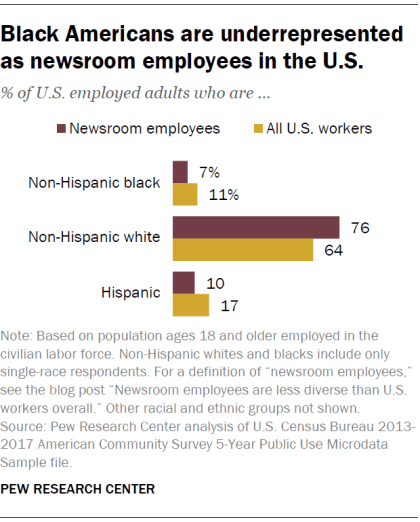
Black Americans are the most misrepresented group; therefore, Black Journalists turn to objectivity as personal bias is important when it comes to Advocacy journalism. Source: Pew Research Center. 2017

Research Methods

Dr. Fayne conducted her research through a series of interviews with Black press journalists. Essentially, she had done data collection for both research topics simultaneously. She found her participants through a snowball sampling, gathering contact information through word of mouth and connecting to other people through the people she had interviewed. In Advocacy Journalism in the 21st century: Rethinking entertainment in digital Black press outlet, she conducted four focus groups with a total of 30 participants. The participants consisted of journalists and consumers of the Black press.

“…I felt like the readers matter on this perspective. I really wanted to include readers in my research because I thought I wasn’t going to get from the journalists.”

– Dr. Fayne

Two groups were based in Los Angeles and Two groups based in Chicago. She focused her research in LA and Chicago to avoid any bias in her research. She separated these groups by age

In The Great Digital Migration: Exploring What Constitutes the Black Press Online, Dr. Fayne utilized the same 30 participants. She focused on hearing from other journalists to hear their perspectives on exploring the Black press within digital media. She interviewed several journalists who came from different regions and publications. She reached out to many journalists from a variety of black media publications. Dr. Fayne asked them questions focusing on what defines the Black press.

Advice from Dr. Williams-Fayne

Dr. Williams-Fayne was kind enough to offer some advice to new researchers as they start their journey and may not know where to begin. Researching can be somewhat intimidating but knowing these tips may make it much easier to navigate a research project in its beginning stages. One of the pieces of advice she emphasized was to the importance of starting early and always allocating for more time than necessary during the data collection portion of the project. Additionally, networking is a huge part of research than can be difficult to navigate as a new researcher. Dr. Williams-Fayne stated that finding any way to connect with those you are interviewing or surveying, such as being alumni from the same groups or having a mutual connection. This increases the chance of getting a valuable response or any response at all.

A clip of the interview with Dr. Fayne. She speaks about her research process and advice to future researchers.

A Conversation with Dr. Jess Vega-Centano

By Katelyn Meinershagen, Andrew Goh, Maiquel Gutierrez, Veena Sahithi Mokkapati

(Source: http://communications.fullerton.edu/comm/faculty/vega-centeno_jess/vega-centeno_jess.php)

California State University, Fullerton’s own professor Dr. Jess Vega-Centano allowed us to interview her on her dissertation “Turning up the Volume: on Racial Silence: A critical examination of consumption practices of Puerto Rican women Post-Hurricane Maria”.  Dr. Vega pursued a Bachelor’s in Psychology before achieving her PhD at University of Texas in Austin.  She has extensive experience in the field of advertisement and communication through both working at agencies and teaching at different universities including CSUF.  As a Puerto Rican woman herself, she sought to take this project with extreme care and passion as it was personal.  The focus of our interview was to dissect her dissertation thoroughly.  We accomplished this through gathering background information, discussing the different research methods, and analyzing the data provided by both the interviewee and the paper.

Read More: A Conversation with Dr. Jess Vega-Centano

In “Turning up the Volume: on Racial Silence: A critical examination of consumption practices of Puerto Rican women Post-Hurricane Maria”, Dr. Vega’s research focuses primarily on the aftermath of Hurricane Maria, a natural disaster which fatally impacted Puerto Rico and other islands native to the northeastern Caribbean in the fall of 2017. Dr. Vega, who is of Puerto Rican descent, was at home watching and reading the national news coverage of the natural disaster when she noticed a variety of publications reporting on the niche and personal topic of how native Puerto Rican women on the island were styling their hair and embracing its natural texture. 

Prior to observing the news coverage centered around how Puerto Rican women were styling their hair, Dr. Vega reveals that she had no real previous interest in the beauty industry. As a Puerto Rican woman Dr. Vega has had first hand experience styling and caring for her own hair. Dr. Vega mentions that she has embraced a range of styles and shares that she prefers her hair when it is in its naturally curly state, “my hair became a symbol of my ethnicity and I wear it as such”.

Although hair was an influential factor, Vega also wanted to use her research to focus on two groups she felt like aren’t typically included in research: women and those of Puerto Rican descent. Dr. Vega expresses that Latinx representation in research is typically centered around Mexicans or immigration, neither of which fully represent the range of the community. As she began preparing for her research she realized that the national conversations being held about how the women were doing their hair post-hurricane Maria was laying the groundwork for a much larger conversation centering around race.

In her research, Dr. Vega constantly references how the ways in which consumerism is linked to race and during our time speaking with Vega she expressed first hand the difficulty she experiences trying to find hair care products and ingredients to cook traditional Puerto Rican, even in a place as diverse as Orange County, California. She often resorts to ordering these items online, but she also recognizes the lack of inaccessibility women who don’t have the same resources and who may have just immigrated to the United States have in trying to acquire these items that would make them feel at home. In her paper, Dr. Vega references the Critical race theory which expresses how laws, social/political movements and the media help shape the perception of different races and the ways in which every race consumes. Dr. Vega decided early on that the theory was one she would use in order to conduct research and interview her participants. 

Dr. Vega stated she has always loved talking to people and realized that after Hurricane Maria, she realized that she loved talking to Puerto Rican women about their hair. Using purposive sampling, Dr. Vega began her search in order to find participants willing to be interviewed. She specifically searched for women that were forced to leave the island and had in depth interviews with them. Dr. Vega managed to secure interviews with 18 different women. All interviews ranged from 60-90 minutes and all participants were between the ages of 19-56.

Dr. Vega used the snowballing research method the most when interviewing her participants. A majority of the time, women would just self-disclose all their stories, struggles and personal experiences to her. It was almost as if they were just having a normal conversation about their lives and hair. Dr. Vega described women disclosing their personal stories as “diarrhea of the mouth.”, meaning that many of these women just wanted to share their personal experiences and tell her everything. During her research process, she learned a lot about these women which made her research process extremely easy.

Lastly, Dr. Vega also stated that at times during the interviews, the language barrier was a bit of a problem, but both Dr. Vega and all of the participants were still able to communicate with one another. Vega is bilingual but speaks mostly English, her level of Spanish isn’t as advanced as her participants. Most of her participants knew a little English but a majority of them were more comfortable with speaking in Spanish.

(Source: https://www.npr.org/2018/06/03/616565034/after-hurricane-maria-puerto-rican-women-embrace-their-natural-curly-hair)

Based on the results and the data collected from the interview with Dr. Vega, we discovered that there was a connection between racial features of Puerto Rican women and their lives in the United States. Interviewing and collecting data also gave us insight on knowing more about issues going on in this world especially when it comes to the negative impacts diversity had on these women. The fact that other Hispanic people besides Mexicans should be included is very important in the advertising and public relations industries in order to be more inclusive. For example, whenever someone refers to the Latinx community, the country Mexico would immediately come to mind, but what about the other Latinx native countries? Dr. Vega feels like she can add a unique perspective since there aren’t many women of color working in the field, another reason why she wanted to conduct research on this topic.   

Puerto Rican women have specific curly and dark hair, which gave racial and prejudice issues during the acculturation process. Culture and immigration play key factors in improving diversity amongst jobs and opportunities. Unfortunately however, racism still exists. Dr. Vega discusses that the problems these women encountered will most likely continue for years and hopes for a future where race plays little to no role in the path of one’s success. In our interview, Dr. Vega shared that one thing she found shocking through the interview process was the consensus of facing discrimination in public.

“My hair became a symbol of my ethnicity and I wear it as such.”

In Conclusion, Dr. Vega has demonstrated immense passion for this research project regarding Puerto Rican women and their struggles with the acculturation process.  Through her usage of qualitative research she was able to have down-to-earth conversations with her interviewees in order to gain as much data as possible.  Usage of purposive and snowball sampling also aided in grabbing a larger audience to get more concise research data.  Key topics rose up from her research and they became a focal point in her study such as curly hair, gender, and critical race theory. Dr. Vega believes that issues regarding race have profound historical context and the issues from her research will take a long time to fix.  The image discussed in the dissertation that others have of Puerto Ricans continues and will continue to have a negative connotation for a long time to come, but maybe one day race will no longer play such a heavy role in perception. Overall, we thank Dr. Vega for her time, allowing us to interview her and giving us amazing insight on the topic.

Featured above is a short highlight video from our virtual interview with Dr. Vega.