By Lilly Leal, Katelyn Moreno, Jaime Espinoza-Wolff, and Ivan Hernandez
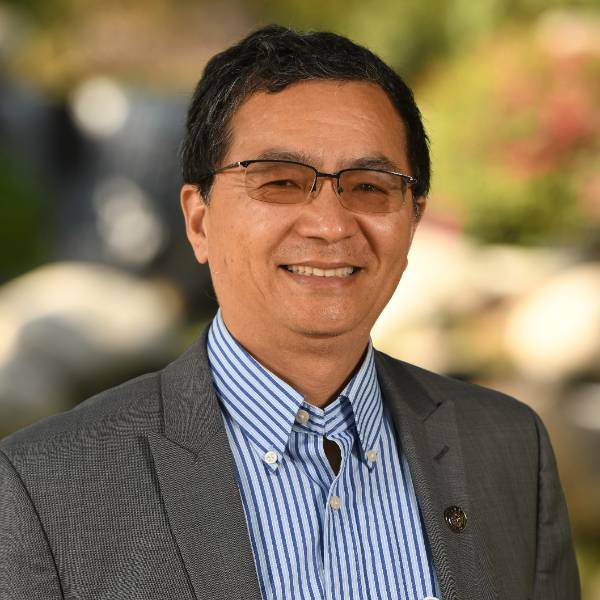
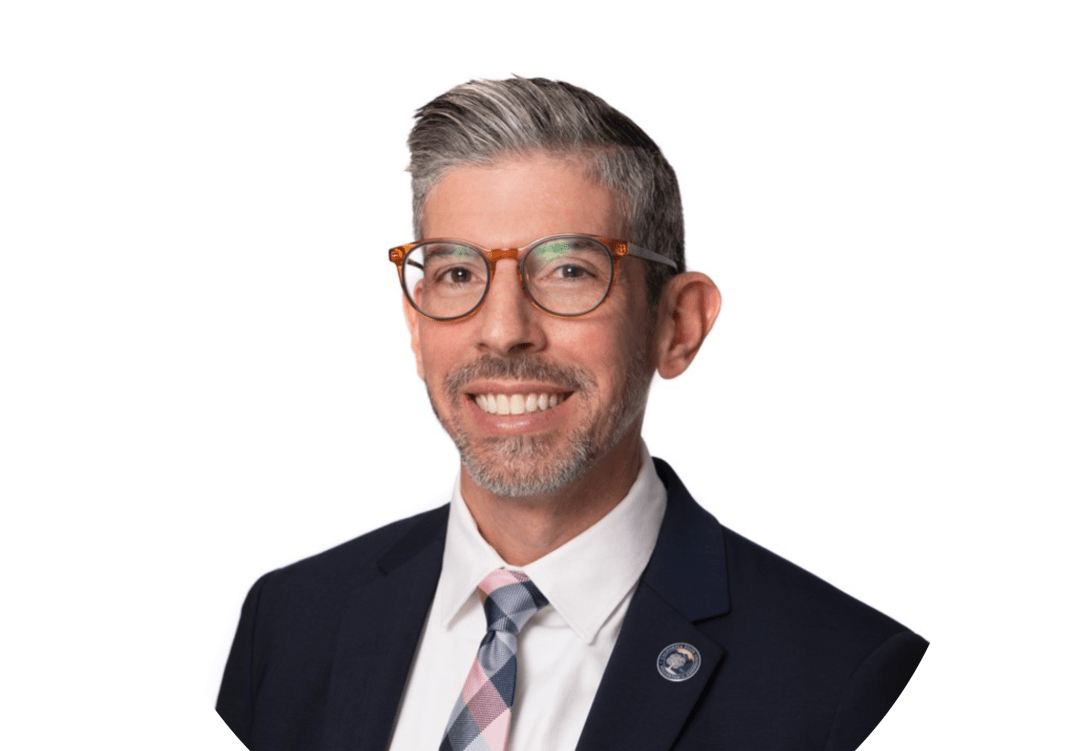
Profesor Dean Kazoleas Ph.D. – Photo by CSUF Communications Department
We conducted the interview with Dr. Dean Kazoleas, a Public Relations Professor here at California State University Fullerton. We analyzed his work The Impact of Argumentativemess on Resistance to Persuasion. This research wanted to look into the study of argumentativeness and if it influences cognitive responses and attitude change during persuasion. In the study it is hypothesized that argumentative individuals would be more resistant to persuasion and generate more counterarguments in response to persuasive messages. The results showed that argumentative individuals were more resistant to persuasion and produced more counterarguments.
By: Ann Sadek, Nicole Strang, Lauren Rosbottom, & Abigail Chertock
Dr. Zac D. Johnson is an associate professor at California State University, Fullerton. His work is in the Department of Human Communication Studies. After years of experience, he’s in his first semester as the department chair. Dr. Johnson’s primary research pertains to the way students communicate inside and outside of the classroom environment and subsequent effects that follow. His work is featured in many places, including Communication Research Reports, Communication Education, Communication Quarterly, and more. We were pleased to have the opportunity to sit down and discuss his published research, From student-to-student confirmation to students’ self-determination: an integrated peer-centered model of self-determination theory in the classroom.
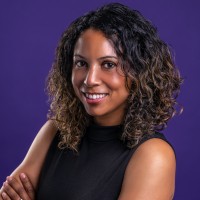
Dr. Jasmine Phillips Meertins is an assistant professor in the Department of Communications at California State University, Fullerton, teaching digital foundations and public relations courses. She holds a B.A. in political science from Yale University, an M.A. in international affairs from George Washington University, and a Ph.D. in communication from the University of Miami. Prior to working at CSUF, Dr. Phillips was an assistant professor at Nevada State College, teaching courses such as Public Relations Campaigns, Case Studies in Public Relations, and Social Media. She was also a Director of Education Abroad at Virginia Commonwealth University and Assistant Director of Study Abroad at the University of Miami, where she led marketing communications to promote international program participation. Dr. Phillips conducts research at the intersection of communication, culture, and media, utilizing both quantitative and qualitative methods.
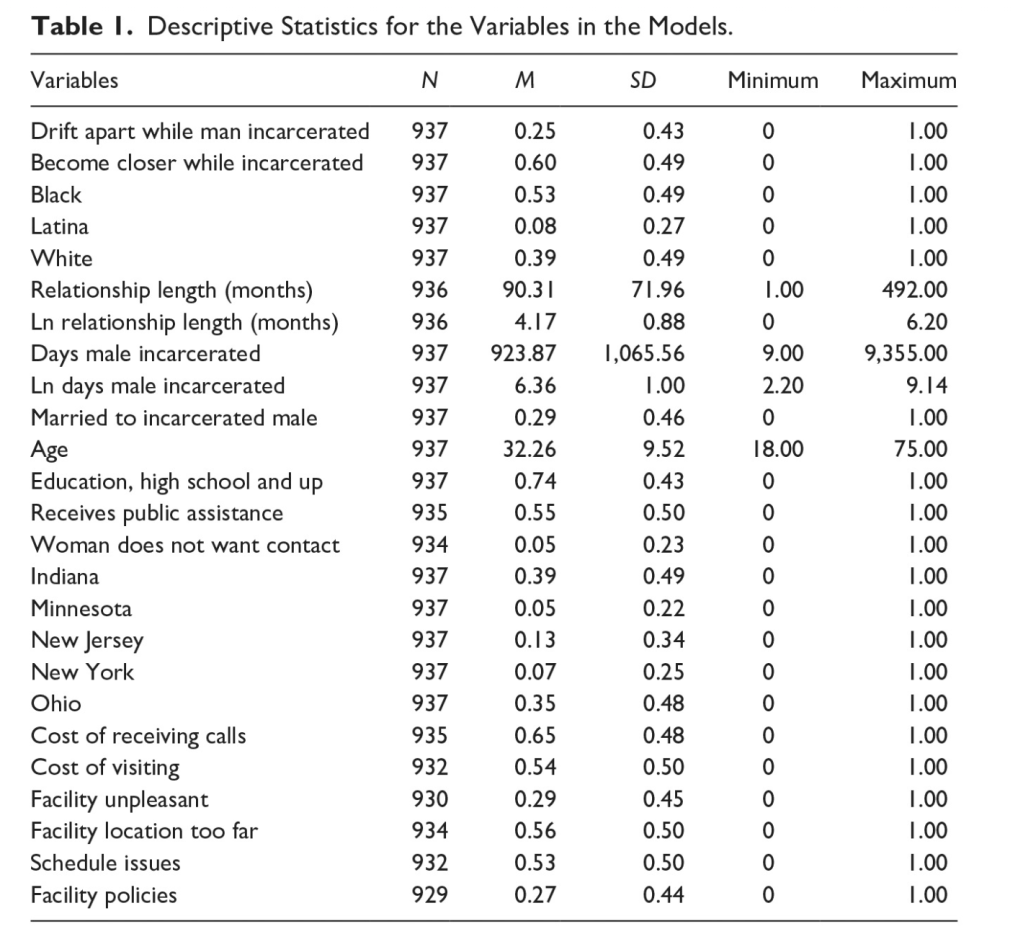
During our interview, we focused on Dr. Phillips’ research study, “Institutional Relational Maintenance Barriers and Perceptions of Relationship Quality Among Women With Incarcerated Partners,” which she conducted with her colleagues, who are also scholars with different academic backgrounds. The study highlights how institutional barriers in the prison system affect the relationship quality of women whose male partners are incarcerated. The research focuses on how these barriers impact women’s emotional connections and perceptions of their romantic and co-parenting relationships. Through both quantitative and qualitative methods, Dr. Phillips and her colleagues found that these barriers contribute to women feeling emotionally distant from their partners.
Q: What inspired you to explore the impact of institutional barriers on relationships of women with incarcerated partners?
This research opportunity came about when a colleague of Dr. Phillips, who works in the criminal justice field, approached her with the idea of collaborating on a research project. Dr. Phillips, a scholar in communications, and her colleague recognized the potential for a collaborative approach to studying issues at the intersection of their two fields. They began brainstorming ideas to find a topic where communication and criminal justice issues overlap. They identified an area of interest: how institutional barriers can impact relationships in the criminal justice system. They specifically discussed how communication challenges within the prison system affect relationships between incarcerated partners and their families. This collaborative process allowed them to develop a unique research topic that combined their expertise, leading to the study of “Institutional Relational Maintenance Barriers and Perceptions of Relationship Quality Among Women With Incarcerated Partners.”
Q: What were the demographic characteristics of your study sample, and how did you select participants?
For her study, Dr. Phillips focused on a predominantly female sample. The critical criteria for inclusion were that the participants had to be non-incarcerated women in a romantic relationship with an incarcerated male partner. Additionally, the women also had to have a child with their incarcerated partner. Dr. Phillips did not exclude participants based on age, race, or other demographic variables. The study aimed to capture diverse experiences and perspectives among women navigating relationships with incarcerated partners by maintaining this broad inclusivity. The study allowed for a more comprehensive understanding of these women’s challenges and relational dynamics.
Q: What specific data collection methods did you use to gather information from participants?
Dr. Phillips and her colleagues did not collect the data for this study. She explained that, as a researcher, she had initially assumed she would always gather her own data. However, she learned that in some cases, researchers analyze pre-existing data rather than collecting it firsthand. Dr. Phillips and her colleagues used data from a broader research project focused on incarceration, parenting, and partnership. Gaining access to interview people who are incarcerated or those visiting jails and prisons can be challenging, so they analyzed the interviews the original study conducted. Overall, learning that analyzing existing data was an option was an important insight for her research approach.
Q: Can you describe the process you went through to develop your survey questions? How did you ensure they accurately captured the participants’ experiences?
Dr. Philips discusses the limited control she had in developing the survey questions, which were primarily close-ended, allowing participants only three response options. She emphasizes that in the field of social sciences, complex variables like attitudes, perceptions, and feelings can make it challenging to verify the accuracy of participant responses. By using close-ended questions and Likert scale options, however, the survey design simplified data collection and analysis, providing a more straightforward approach to gathering responses across these nuanced variables.
Q: Why do you prefer qualitative research over quantitative?
Dr. Phillips notes her abilities to be limited in numbers. Therefore, she prefers qualitative research because it enables a more in depth exploration of complex issues. While she acknowledges the strain that a barrier like incarceration could create on interpersonal and romantic relationships, she believes that the emotions and personal stories exist and are important to outline through qualitative methods. She also appreciates the human aspect of qualitative research, it values the meaningful conversations that reveal the participants’ genuine emotions and feelings.
Q:What challenges did you face during the research process, particularly in collecting or analyzing data?
She describes that sometimes you start out with a research question and it doesn’t yield the anticipated results. Initial questions can oftentimes not align with the data that is collected. Dr. Phillips notes that researchers may “reverse engineer it”, by coming up with the results they want and then go on to asking the question. What she and the team did was look at the data set and analyze it in different ways with the hope of uncovering a distinction. Generally, there were certain variables they found not to be significant at all which would result in omitting them or refining the research question in order to understand the data from a different angle.
Phillips Table #1 :Statistical Data
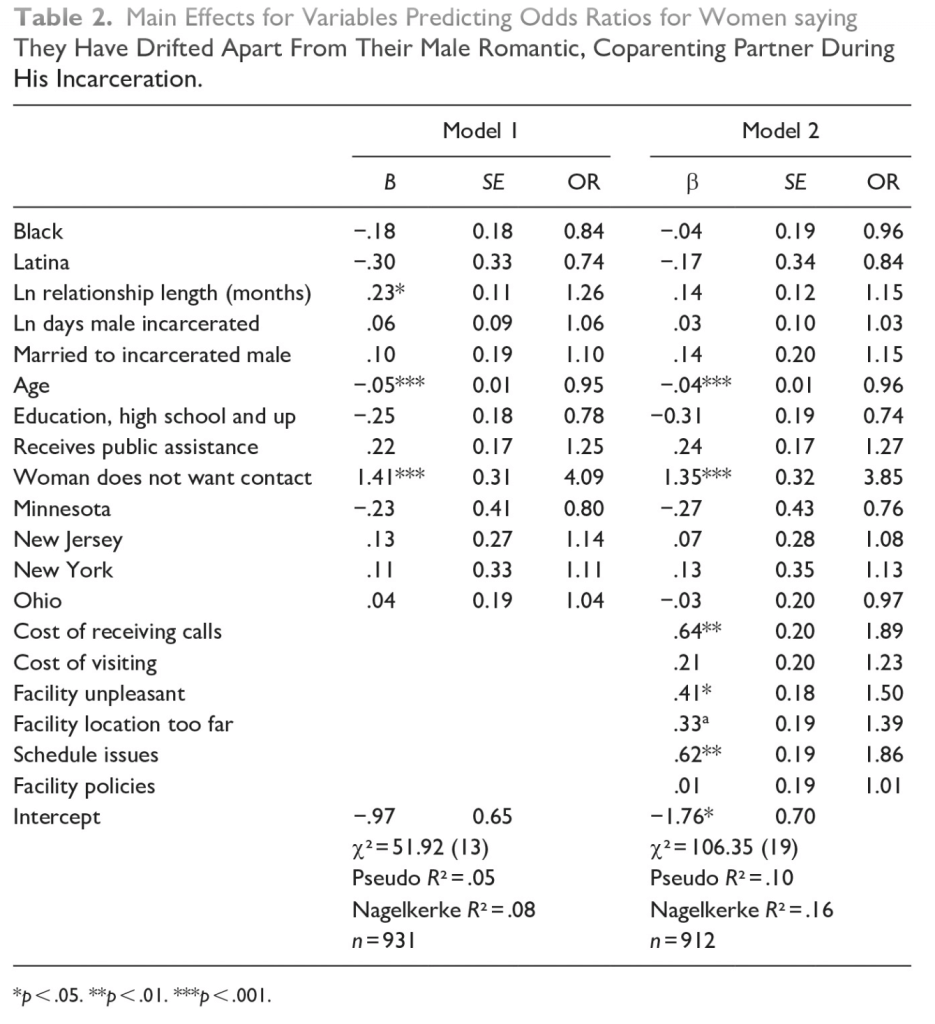
Phillips Table #2
Q: Did you encounter any limitations with your data collection methods? How did you address these limitations in your analysis?
As Dr. Jasmine Phillips mentioned in the interview, one limitation of this study is that the data used was quite old between 2008 and 2014. This made the data less relevant and less applicable to current situations. Dr. Jasmine Phillips also pointed out that this is a quantitative study. There was no way to follow up with participants to clarify or further explore their responses. This made it challenging to understand the reasons behind participant’s answers. In addition, Dr. Jasmine Philips emphasized that the study was a snapshot of one day. It was difficult because it didn’t allow her or her colleagues to track participants from the beginning of their relationships or observe how their views might differ before or after. Dr. Jasmine Phillips concluded her answer by mentioning that this was a longitudinal study and would have been insightful with more varied data.
Q: What specific challenges did the participants identify as most significant in maintaining their relationships with incarcerated partners?
Dr. Jasmine Phillips highlighted that while phone access in prison is often seen as a basic issue, it is a significant problem. Many prisons still restrict phone access; when it is available, the cost is astronomical because two or three companies control it. She continues to say that this burden falls heavily on the families outside, particularly on the primary person with income, such as often being women who are also responsible for taking care of children and planning visits. Dr. Phillips added that she supports free phone calls for prisoners and mentions that maintaining contact through these phone calls can play a crucial role in preserving relationships.
Q: How can the study findings help create better support or programs to help women communicate and maintain their relationships with incarcerated partners?
Dr. Jasmine Phillips pointed out that the high cost of phone calls for prisoners harms both relationships and society. While it benefits corporations, it certainly doesn’t help the individuals or families involved, especially when we live in a period where you can easily talk to someone halfway across the world for free. She emphasized the absurdity of continuing to restrict prisoners’ access to communication, as they are already incarcerated and facing numerous challenges. She continues to mention that several states, including California, have begun to address this issue. She believes this is an important issue to pay attention to.
To Conclude…
Dr. Jasmine Phillip’s research highlights how prison-related barriers like expensive phone calls hurt relationships between women and their incarcerated partners. These challenges often create emotional detachment between families, resulting in a loss of connection. Dr. Phillips states that making communication affordable or accessible would help these relationships flourish. As states across the country, including California, begin to address this issue, many families have hope that there will be a better support system for prisoners and their families.
Mark Wu is a presitgous professor at California State University, Fullerton. He has been conducting his own research and teaching at many prestigous universities all over the world for over 20 years now. He also worked for many Fortune 500 companies across the globe. Professor Wu research focuses more on the Advertising side, winning many awards along the way. With all of his accollades and credibility we felt like he was the perfect person for our group to interview.
We had the privilege to interview Professor Mark Wu on October 25, 2023. We discussed about a variety of topics in terms of research. We started off with a basic question on ways to conduct research and asked him about his opinions on certain topics regarding research. All of us being Advertising Majors as well we were interested in his research that involved social media and how it can be used to advertise products to the consumers of today.
What we wanted to focus on was Professor Wu’s research in regards to Social Media. Bringing up some of his older works like “Traits, Predictors, and Consequences of Facebook Self-Presentation”. We wanted to know how that research would apply in todays social media platforms such as TikTok, Instagram & many others. We were also curious on his thought on AI technology and how it can be used in research today as well. These questions helped us learn more about how to do research and also learn about how research may be conducted in the near future.
When answering this question Professor Wu helped us learn how we can minimize as many errors as possible in our future research. He brought up how there are multiple different forms of research errors such as administrative error, instrument error and process error. He mentions the fact of how one administers their survey can be the difference between a good amount of error and a few.
Another, tip that Professor Wu gave was for sampling and non-sampling errors. For sampling error that is a fixable, by increasing the sample size or by using probability sample rather than convenience sample. While for non-sampling error it is not as easy. The way to minimize non-sampling errors is to make sure the survey instrument is created correctly. This is because non-sampling cannot be fixed after the fact.
The final point that Professor Wu made that we thought was interesting was when he said, “You cannot avoid errors, the best you can do is minimize.” This opened our eyes on how we will conduct research and also approach errors that we may face.
Does your research in “Traits, Predictors and Consequences of Facebook Self-Presentation” apply to social media today?
The thing that Professor Wu brings up when discussing this specific research is that even thought this research paper is over 10 years old, the findings from this research still apply to many of the social media platforms today. What the research paper mainly focuses on how Facebook affects the way people interact and present themselves on the platform.
The reason the Professor Wu believes this is the case is due to human nature and the way that people interact with social media hasn’t changed. He brings up a phenomenon that is used in media called Echo Chamber. An echo chamber in social media is when a person only encounters ideas that reflect their own. This reinforces their ideas that they had already believed. This keeps people on social media because they like to see things that they agree with. Professor Wu mentions the platforms that partake in this phenomenon such as TikTok and Youtube.
Another, topic that Professor Wu mentions that reflect this belief is that we as people are more influenced by what others do more than we know. This is part of the reason why a majority of people post on social media. They basically want to get gratification and assurance from the content that they are posting on certain platforms.
The final point that he talks about is how we as researchers for advertising are always looking to study human nature and how people think. By doing this it allows for researchers to get a sense or idea of what society may think as well.
Sun, Tao; Wu, Mark (2012). Traits, Predictorsand Consequences of Facebook Self-Presentation” Sage Publishing.
Ethics of AI technology use in Research
With AI technology such as Chat GPT becoming more significant and many workplace within the Advertising space starting to use it capabilities, we thought it was appropriate to get Professor Wu’s thoughts on this topic. AI technology has become the latest trend in terms of almost everything. This is due to it seemingly unlimited capabilities and its vast amount of information that is pulled from the internet. Many companies hiring nowadays want people who know how to work with such tools, which is why it is important for us to learn more about the topic now.
One of first points that Professor Wu discusses with us for this question is that with AI technology it allows researchers to get a more personal idea of what consumers may want. This is what companies are looking for, so they can directly target consumers with Advertisements that will most likely fit them. The use of AI technology has potential to be used for great things in research.
The view of ethics that Professor Wu had on the use of AI technology in research is, he thought it depends on how the technology is used. He believes that if the tool is in the correct hands than there is nothing wrong with it. But, when organizations start to use AI as a tool to promote propaganda or political agenda then it starts to be used for wrong purpose. Also, if AI is used to exploit people. This is because the ability to gather information about a person or society in general has become much easier than before with AI.
By: Alexa Valdez, Alonzo Floriolli, and Alan Ruelas
On October 28th, 2022, we conducted an interview with Dr. Robert Flores, Assistant Dean for Student Affairs at California State University, Fullerton regarding his dissertation, Career Development Through An Identity-Conscious Lens: A Framework to Engage First-Generation and Underrepresented Students. Our objective in conducting this interview with Dr. Flores was to get a better understanding of his research process for his paper on first-generation and underrepresented students. We asked him ten questions regarding the way he conducted his research along with his thoughts and findings throughout the process.
Question 1: Why is this study important and how does it differ from similar studies (if there are any)?
Dr. Flores first stated that his primary concern for the study was that career development supports the first generation, and underrepresented students need to progress beyond just a focus on skill attainment. He pointed out that it is not just about talking on how you take what you learn and turn it into a job, but also about strengthening students’ inclusion of identity-based methodologies. In other words, who they are as a person, also informs their career development decisions. The other piece Dr. Flores found is that we need to help students understand the multiplicity of their identities, due to the fact that the different components of our identities form our values, and our decision-making process, and ultimately can be key factors in our career trajectory. Dr. Flores then went on to explain how it differed from similar studies by stating that this was an action research study where “we look at how we, as practitioners in higher education, can create change in our current environment, and how we, as a practitioner and an individual, are positioned in that study as well,” as opposed to an empirical study, where you have a cause and effect. He concluded his answer by pointing out that it is not just about what happens to the participants in the study, it is also about the change that occurs in you as the researcher, and what you learn about yourself.
Question 2: What do you find to be the most efficient research/sampling methods?
Dr. Flores first pointed out that the most efficient research/sampling methods varies depending on the research type. He explained that when he first started his research project, he had both quantitative and qualitative data collection. As he got further into his research, he learned that when reporting it out in later chapters, the qualitative data had the most impact and connection to his research question. The quantitative data had some importance but was not needed as much as the qualitative. He went on to explain that in his experience with this research, he found that focus groups were most useful and was where he got most of the “heart and soul” of his dissertation.
Question 3: How do you start your research process when looking for articles?
Dr. Flores explained that he started his research process very broadly. He understood his main focus as examining career development practices, therefore analyzing career development theory. After all, theory informs practice, and that he was also looking at identity development. With that, he then selected a few keywords that were part of his research question that helped guide him along the way. As was deeper into his research, he then realized he was also examining underrepresented first-gen students, and added “Underrepresented” and “First-Gen” to his word search. After taking what he had already identified and combining words and mixing them up a bit, he was able to find a lot of great material. Something that Dr. Flores pointed out that really was a big takeaway when he was talking about “gaps” in research. He stated that “I also found that when there was a lack of information on a certain component, that to me, as a researcher, helped me understand that there’s a gap in the research, right, and so I’m onto something really great. So instead of being frustrated, it tells me, I’m looking for something that no one else has probably done yet or hasn’t published. So this is a great position to be in because you’re being a contributor to the literature that’s out there to support the groups that you’re working with.”
Question 4: What are the most important factors to consider when conducting research?
Dr. Flores immediately answered this question by flagging the importance of research guided by individual passion because of the countless and arduous hours spent looking into a topic. He pointed out that the topic should really resonate with a part of who you are as a person and something you are deeply passionate about if you are doing real in-depth research. Flores also went on to point out that another factor to consider is the amount of access you have and your current position– whether it is a student, practitioner, employer, employee, etc. “Think about your circle of influence, and connection, and how you can maybe utilize some of that in your research. Because that will help you so you’re not just starting from scratch, in some cases.” By considering these things, you can understand if what you are researching is as attainable as you would hope it would be.
Question 5: How do you brainstorm for your research topics?
Dr. Flores mentioned that you can document your thoughts in whatever way you prefer– whether it is journaling, drawings, blogs, etc. He went on to explain that for this research process, he would use audio recordings. For example, after class, he would record himself on his phone during his hour-long car ride home. During this time, he would debrief the day, talk about themes that had impacted him, times that made him stop and think, or even ask himself questions. By doing this he was able to go back and listen to those recordings to remember what exactly was really striking him at that moment and point out some key things that he could use.
Question 6: What are some experiences that have led you to this topic of research? Was there a moment that inspired your research?
Dr. Flores explained that his research initially started with him examining his own journey to his career. He realized that there were certain things that happened in his life that contributed to the decisions made by him. He then took this and then looked at how other students with similar identities were embarking on that journey and how they can create a structure that supports them to understand their identity, values, and strengths in order to put that together and form a career roadmap.
Question 7: Do you have any advice when it comes to choosing a topic that interests you?
Dr. Flores answered this question by first pointing out that it is not always the best idea to pick the “hot” topic at the moment, even though it might be tempting. This can be because a lot of people might be drawn to that topic as well. He says it is best to push yourself out of your comfort zone to try and get the most out of what it is that you want to research. He explains this is because if we choose things that are a little too close to home, we have a tendency to be comfortable and be blinded by our own biases and own experiences. With this, do not be afraid to tackle something that is new and remind yourself that you are not an expert (yet) and give yourself grace for not knowing the answer at that moment, but be determined to figure it out.
Question 8: What was the most challenging part of this research study?
Dr. Flores pointed out that the launch of his study was set to be in August 2020, which happened to be a few months after COVID-19 had hit. With this, it made it difficult to continue with his research because they were supposed to be in-person workshops. Along with the switch to Zoom, came uncertainty if students were still interested in being a part of the study. Although there were lots of changes that had to be made on short notice, Dr. Flores pointed out that something positive came out of this challenge. He explained that since the pandemic brought such isolation to everyone, students missed being together in person and connecting with one another. So in the study, students reported that they enjoyed coming together every other week with their group of people to talk about something so personal in a space where they felt safe.
Question 9: In other research studies what is usually the most challenging part of the research process for you?
Another challenging thing, aside from the answer to the last question, Dr. Flores pointed out that getting access to subjects or participants. It can be difficult finding people who are willing to participate, and also endure the duration of the study. He explained that doing more in-depth research is most difficult because it requires multiple time commitments, which is often the biggest challenge, because “you are going to see some, you’re going to see a little bit of a melt, you might start with a really high number of participants, and then that’s going to kind of fade off and you will need to account for that and your finding.” So it is always important to consider the number that you started with, and then any attrition that happened over time, and how that might have an impact on what it is that you’re reporting.
Question 10: What was the most shocking part of this study and how did you find it?
The most surprising part for Dr. Flores was the level of advocacy that the students reported having gained as a result of this study and that came from the exit interviews. During their interviews, participants went over goals based on career plans they had developed, and a high percentage of the students were able to articulate that they had learned certain advocacy skills for themselves and for others as a result of this. Dr. Flores had not expected this because he was really focused on this being about career development and your identity and its understanding, he did not think at the time that this advocacy awareness would come into play.
Conclusion:
After interviewing Dr. Flores, we have a better and more complete understanding of his research process for his paper on first-generation and underrepresented students. We learned about the easy and complex parts of conducting a rigorous research project on equity within education. The biggest takeaway from our interview with Dr. Flores is understanding the reward of conducting a research study in any field will ultimately be contingent on the discoveries made that can exponentially grow our understanding.
Professor Assaf works in the department of Communications at California State University of Fullerton. We asked her questions regarding her writing process behind her dissertation, Hidden Power: Journalistic Representations of Mental Health Labels.
Professor Assaf explained that a big catalyst that inspired her research was her brother and his schizophrenia diagnosis. While it isn’t a mental health diagnosis like depression or anxiety, schizophrenia still came with similar negative stereotypes. Assaf explains,
“There were a lot of stereotypes that were communicated to me. People would question, ‘Oh is he dangerous?’, ’Is he violent?’ … In my mind, it was like, ‘Where are these [stereotypes] coming from?’ And why do people have these assumptions, because they are very far from the truth.”
Professor Elise Assaf
Assaf was also inspired personally by the increase of mental health becoming a more prevalent problem in the college setting. She recalled a specific article from the Daily Titan about test anxiety and witnessing it herself through her students.
Assaf mentions that she wishes she had included more of this information about what inspired her in the positionality statement of her publication. A positionality statement is a part of qualitative studies where you explain what inspired your research, your perspective, and any other biases you may have related to the research. However, with this particular study, Assaf had an advising team that helped her decide what she should include. During the time of the publication Assaf was working towards tenure and Assaf and her advisors decided that including too much information about her personal mental health diagnoses could potentially harm her chances of getting a tenure (especially based on what the research was studying).
Because of her career in public relations, education in mass communications, and disability studies, as well as personal experiences with mental health stereotypes— she demonstrates the importance of picking a topic that interests you. However, she also warns that a challenging part of choosing a topic you like is ensuring it is not only interesting, but that it also provides an opportunity for advancing the field with your own studies, or, “growing the research that is already out there” as Assaf puts it.
Professor Assaf’s Rules of Thumb
Assaf explained narrowing down her publications proved to be one of the most challenging parts behind her research process. A personal rule of thumb Assaf follows is finding publications that are similar in their consistency, size, and importance to the subject being discussed. One might find difficulty comparing a short publication to a longer one as short ones are more condensed. Assaf found the top ten articles in the U.S. surrounding her subject of research and picked her sources from those based on their relevance, importance, and length. The importance of staying neutral and being aware of any conflicts of interest is crucial as well. Assaf explained that a woman from her dissertation committee had a husband who worked for the L.A. Times, and it prevented her from using them as a source. She recommended that it is important to go into the writing process knowing what your research goal is and having an idea on what topics you will compare, as doing such is the key to writing an in-depth, intellectual piece.
Her Own Work
We asked Professor Assaf about her personal thoughts on her dissertation and whether or not she wished to condense it or hoped to expand upon it. Assaf explained that her dissertation is more of a broad publication that she has been able to submit fragments of to various areas. She recalled being told to write something that she could pull about two to three sources from. The dissertation she wrote had to be a bit longer as she explained that proving her knowledge on the subject itself was the most important part, as there was not a lot of current or past research on the topic. Her goal was to get at least a conference paper or journal article out of the dissertation; after publication, her dissertation was picked for a conference discussion, and a piece of it was submitted for a chapter of a book being written by a professor.
Bridging the Gap
In building the foundations for forming productive conversation on research, Professor Assaf illuminates the importance of providing context for the intended audience, explaining that “it was something I specifically worked on” in regards to her own dissertation on mental health. Pertaining to the research that she conducts, Professor Asssaf mentions that it is targeted towards those that produce content, such as reporters, and therefore it is her responsibility to ensure that the content she writes can be reproduced in an easily digestible form by the general public. Essentially, because reporters are communicating her research on widely discussed topics like mental health in mass media channels, it is necessary to make the information as accessible as possible so that societal changes and perceptions can be positively affected.
Paramount to research as a whole, Professor Assaf further highlights the process of disseminating content and always holding in consideration to whom the information will be received by: at a conference, for publication, to journalists, and above all, “knowing who my target audience is” so that she can present it “in a format that makes sense for the group I’m reaching out to.” For Professor Assaf, she aims to address groups such as advocates for mental health, and focuses upon adjusting the language to make the biggest impact within communities.
Reinventing Research
Because research is a saturated field of varying perspectives and analyses, we brought up our concerns for “double-dipping” or being repetitive in putting together our own research. Responding to these inquiries, Professor Assaf stated that in this industry, you must be “cognizant” of becoming “pigeon-holed…or in your echo chamber of what you expect to find within research.” To do so, researchers should always consider alternate perspectives, and avoid leaning into established biases and expectations for the subject areas that they explore. Assaf advises us to stay current and aware of the information circulating on our topic, so that we can consider all points of discussion.
Moreover, when working with sources, Professor Assaf states it is imperative to, “look at other research as the building blocks to your study.”
Professor Elise Assaf
In doing so, one can find where there is a lack of research, and formulate their studies based on those guidelines instead of regurgitating information; essentially, we are filling in the gaps. Assaf also reassures us that it can take time to uncover where there are unsupported ideas, and to find what research hasn’t been done, while simultaneously being cautious about redundancy. A method of implementing this involves “tak[ing] a study that was done a decade ago, two decades ago, and…apply[ing] it again to see if that is still accurate or if things have changed,” and in that way, “you could potentially be looking at the same thing, but seeing if it’s still a current finding.”
Ultimately, Professor Assaf encourages us as researchers to find topics we’re interested in, invested, and passionate about, and to be realistic about executing our research based on our timeline, the intended target audience, and within the parameters given to us.
Professor Heather Osborne-Thompson is a scholar and associate professor at Cal State Fullerton within the Radio/TV/Film department. Having been awarded her Bachelor’s in English with a concentration in Journalism from the University of New Hampshire along with her Master’s and Doctorate in Cinema-Television Critical Studies from the University of Southern California, our team found her to be a qualified expert on the topic of gender and genre in television; both contemporary and historical. As such, we had the opportunity to sit down with Professor Thompson to discuss her own work of research within the scope of women’s comedy entitled: “Routine Adjustments: Re-Viewing Women’s TV Comedy Genres, 1950-1969”. According to Thompson, the idea for this graduate program dissertation research stemmed from a desire to bring more attention to women who would not conform to society’s set expectations for them. In other words, the women who strayed from the typical stay-at-home mother and wife role that was broadcasted and encouraged across the nation in the 50s and 60s. Thompson stated that she wanted to find more information on not only these kinds of women, but also the “funny women who say things you’re not supposed to say, and behave in ways that are different from the cues we get about how we [women] are supposed to behave”. As a result of deciding upon this research topic, Thompson was certain that the next steps of developing this subject would be to take a closer look at the traditions from which female comedians had come from, as well as examine different types of historical evidence in regards to the way these women were understood and portrayed by the media (newspapers, radio, television, etc). Ultimately, this meant delving deep into the early feminist movement and looking at the way performances done by female comedians impacted the difficult and often sad issues addressed within comedy at the time.






 The Society for Communications Research