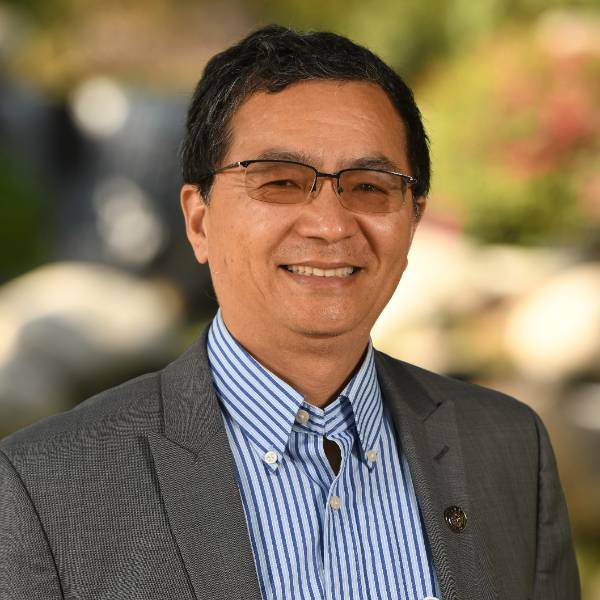
Mark Wu is a presitgous professor at California State University, Fullerton. He has been conducting his own research and teaching at many prestigous universities all over the world for over 20 years now. He also worked for many Fortune 500 companies across the globe. Professor Wu research focuses more on the Advertising side, winning many awards along the way. With all of his accollades and credibility we felt like he was the perfect person for our group to interview.
We had the privilege to interview Professor Mark Wu on October 25, 2023. We discussed about a variety of topics in terms of research. We started off with a basic question on ways to conduct research and asked him about his opinions on certain topics regarding research. All of us being Advertising Majors as well we were interested in his research that involved social media and how it can be used to advertise products to the consumers of today.
What we wanted to focus on was Professor Wu’s research in regards to Social Media. Bringing up some of his older works like “Traits, Predictors, and Consequences of Facebook Self-Presentation”. We wanted to know how that research would apply in todays social media platforms such as TikTok, Instagram & many others. We were also curious on his thought on AI technology and how it can be used in research today as well. These questions helped us learn more about how to do research and also learn about how research may be conducted in the near future.
When answering this question Professor Wu helped us learn how we can minimize as many errors as possible in our future research. He brought up how there are multiple different forms of research errors such as administrative error, instrument error and process error. He mentions the fact of how one administers their survey can be the difference between a good amount of error and a few.
Another, tip that Professor Wu gave was for sampling and non-sampling errors. For sampling error that is a fixable, by increasing the sample size or by using probability sample rather than convenience sample. While for non-sampling error it is not as easy. The way to minimize non-sampling errors is to make sure the survey instrument is created correctly. This is because non-sampling cannot be fixed after the fact.
The final point that Professor Wu made that we thought was interesting was when he said, “You cannot avoid errors, the best you can do is minimize.” This opened our eyes on how we will conduct research and also approach errors that we may face.
Does your research in “Traits, Predictors and Consequences of Facebook Self-Presentation” apply to social media today?
The thing that Professor Wu brings up when discussing this specific research is that even thought this research paper is over 10 years old, the findings from this research still apply to many of the social media platforms today. What the research paper mainly focuses on how Facebook affects the way people interact and present themselves on the platform.
The reason the Professor Wu believes this is the case is due to human nature and the way that people interact with social media hasn’t changed. He brings up a phenomenon that is used in media called Echo Chamber. An echo chamber in social media is when a person only encounters ideas that reflect their own. This reinforces their ideas that they had already believed. This keeps people on social media because they like to see things that they agree with. Professor Wu mentions the platforms that partake in this phenomenon such as TikTok and Youtube.
Another, topic that Professor Wu mentions that reflect this belief is that we as people are more influenced by what others do more than we know. This is part of the reason why a majority of people post on social media. They basically want to get gratification and assurance from the content that they are posting on certain platforms.
The final point that he talks about is how we as researchers for advertising are always looking to study human nature and how people think. By doing this it allows for researchers to get a sense or idea of what society may think as well.
Sun, Tao; Wu, Mark (2012). Traits, Predictorsand Consequences of Facebook Self-Presentation” Sage Publishing.
Ethics of AI technology use in Research
With AI technology such as Chat GPT becoming more significant and many workplace within the Advertising space starting to use it capabilities, we thought it was appropriate to get Professor Wu’s thoughts on this topic. AI technology has become the latest trend in terms of almost everything. This is due to it seemingly unlimited capabilities and its vast amount of information that is pulled from the internet. Many companies hiring nowadays want people who know how to work with such tools, which is why it is important for us to learn more about the topic now.
One of first points that Professor Wu discusses with us for this question is that with AI technology it allows researchers to get a more personal idea of what consumers may want. This is what companies are looking for, so they can directly target consumers with Advertisements that will most likely fit them. The use of AI technology has potential to be used for great things in research.
The view of ethics that Professor Wu had on the use of AI technology in research is, he thought it depends on how the technology is used. He believes that if the tool is in the correct hands than there is nothing wrong with it. But, when organizations start to use AI as a tool to promote propaganda or political agenda then it starts to be used for wrong purpose. Also, if AI is used to exploit people. This is because the ability to gather information about a person or society in general has become much easier than before with AI.
By: Alexa Valdez, Alonzo Floriolli, and Alan Ruelas
On October 28th, 2022, we conducted an interview with Dr. Robert Flores, Assistant Dean for Student Affairs at California State University, Fullerton regarding his dissertation, Career Development Through An Identity-Conscious Lens: A Framework to Engage First-Generation and Underrepresented Students. Our objective in conducting this interview with Dr. Flores was to get a better understanding of his research process for his paper on first-generation and underrepresented students. We asked him ten questions regarding the way he conducted his research along with his thoughts and findings throughout the process.
Question 1: Why is this study important and how does it differ from similar studies (if there are any)?
Dr. Flores first stated that his primary concern for the study was that career development supports the first generation, and underrepresented students need to progress beyond just a focus on skill attainment. He pointed out that it is not just about talking on how you take what you learn and turn it into a job, but also about strengthening students’ inclusion of identity-based methodologies. In other words, who they are as a person, also informs their career development decisions. The other piece Dr. Flores found is that we need to help students understand the multiplicity of their identities, due to the fact that the different components of our identities form our values, and our decision-making process, and ultimately can be key factors in our career trajectory. Dr. Flores then went on to explain how it differed from similar studies by stating that this was an action research study where “we look at how we, as practitioners in higher education, can create change in our current environment, and how we, as a practitioner and an individual, are positioned in that study as well,” as opposed to an empirical study, where you have a cause and effect. He concluded his answer by pointing out that it is not just about what happens to the participants in the study, it is also about the change that occurs in you as the researcher, and what you learn about yourself.
Question 2: What do you find to be the most efficient research/sampling methods?
Dr. Flores first pointed out that the most efficient research/sampling methods varies depending on the research type. He explained that when he first started his research project, he had both quantitative and qualitative data collection. As he got further into his research, he learned that when reporting it out in later chapters, the qualitative data had the most impact and connection to his research question. The quantitative data had some importance but was not needed as much as the qualitative. He went on to explain that in his experience with this research, he found that focus groups were most useful and was where he got most of the “heart and soul” of his dissertation.
Question 3: How do you start your research process when looking for articles?
Dr. Flores explained that he started his research process very broadly. He understood his main focus as examining career development practices, therefore analyzing career development theory. After all, theory informs practice, and that he was also looking at identity development. With that, he then selected a few keywords that were part of his research question that helped guide him along the way. As was deeper into his research, he then realized he was also examining underrepresented first-gen students, and added “Underrepresented” and “First-Gen” to his word search. After taking what he had already identified and combining words and mixing them up a bit, he was able to find a lot of great material. Something that Dr. Flores pointed out that really was a big takeaway when he was talking about “gaps” in research. He stated that “I also found that when there was a lack of information on a certain component, that to me, as a researcher, helped me understand that there’s a gap in the research, right, and so I’m onto something really great. So instead of being frustrated, it tells me, I’m looking for something that no one else has probably done yet or hasn’t published. So this is a great position to be in because you’re being a contributor to the literature that’s out there to support the groups that you’re working with.”
Question 4: What are the most important factors to consider when conducting research?
Dr. Flores immediately answered this question by flagging the importance of research guided by individual passion because of the countless and arduous hours spent looking into a topic. He pointed out that the topic should really resonate with a part of who you are as a person and something you are deeply passionate about if you are doing real in-depth research. Flores also went on to point out that another factor to consider is the amount of access you have and your current position– whether it is a student, practitioner, employer, employee, etc. “Think about your circle of influence, and connection, and how you can maybe utilize some of that in your research. Because that will help you so you’re not just starting from scratch, in some cases.” By considering these things, you can understand if what you are researching is as attainable as you would hope it would be.
Question 5: How do you brainstorm for your research topics?
Dr. Flores mentioned that you can document your thoughts in whatever way you prefer– whether it is journaling, drawings, blogs, etc. He went on to explain that for this research process, he would use audio recordings. For example, after class, he would record himself on his phone during his hour-long car ride home. During this time, he would debrief the day, talk about themes that had impacted him, times that made him stop and think, or even ask himself questions. By doing this he was able to go back and listen to those recordings to remember what exactly was really striking him at that moment and point out some key things that he could use.
Question 6: What are some experiences that have led you to this topic of research? Was there a moment that inspired your research?
Dr. Flores explained that his research initially started with him examining his own journey to his career. He realized that there were certain things that happened in his life that contributed to the decisions made by him. He then took this and then looked at how other students with similar identities were embarking on that journey and how they can create a structure that supports them to understand their identity, values, and strengths in order to put that together and form a career roadmap.
Question 7: Do you have any advice when it comes to choosing a topic that interests you?
Dr. Flores answered this question by first pointing out that it is not always the best idea to pick the “hot” topic at the moment, even though it might be tempting. This can be because a lot of people might be drawn to that topic as well. He says it is best to push yourself out of your comfort zone to try and get the most out of what it is that you want to research. He explains this is because if we choose things that are a little too close to home, we have a tendency to be comfortable and be blinded by our own biases and own experiences. With this, do not be afraid to tackle something that is new and remind yourself that you are not an expert (yet) and give yourself grace for not knowing the answer at that moment, but be determined to figure it out.
Question 8: What was the most challenging part of this research study?
Dr. Flores pointed out that the launch of his study was set to be in August 2020, which happened to be a few months after COVID-19 had hit. With this, it made it difficult to continue with his research because they were supposed to be in-person workshops. Along with the switch to Zoom, came uncertainty if students were still interested in being a part of the study. Although there were lots of changes that had to be made on short notice, Dr. Flores pointed out that something positive came out of this challenge. He explained that since the pandemic brought such isolation to everyone, students missed being together in person and connecting with one another. So in the study, students reported that they enjoyed coming together every other week with their group of people to talk about something so personal in a space where they felt safe.
Question 9: In other research studies what is usually the most challenging part of the research process for you?
Another challenging thing, aside from the answer to the last question, Dr. Flores pointed out that getting access to subjects or participants. It can be difficult finding people who are willing to participate, and also endure the duration of the study. He explained that doing more in-depth research is most difficult because it requires multiple time commitments, which is often the biggest challenge, because “you are going to see some, you’re going to see a little bit of a melt, you might start with a really high number of participants, and then that’s going to kind of fade off and you will need to account for that and your finding.” So it is always important to consider the number that you started with, and then any attrition that happened over time, and how that might have an impact on what it is that you’re reporting.
Question 10: What was the most shocking part of this study and how did you find it?
The most surprising part for Dr. Flores was the level of advocacy that the students reported having gained as a result of this study and that came from the exit interviews. During their interviews, participants went over goals based on career plans they had developed, and a high percentage of the students were able to articulate that they had learned certain advocacy skills for themselves and for others as a result of this. Dr. Flores had not expected this because he was really focused on this being about career development and your identity and its understanding, he did not think at the time that this advocacy awareness would come into play.
Conclusion:
After interviewing Dr. Flores, we have a better and more complete understanding of his research process for his paper on first-generation and underrepresented students. We learned about the easy and complex parts of conducting a rigorous research project on equity within education. The biggest takeaway from our interview with Dr. Flores is understanding the reward of conducting a research study in any field will ultimately be contingent on the discoveries made that can exponentially grow our understanding.
Dr. Bey-Ling Sha, Dean of the College of Communications at CSUF.
“Public relations is about sharing the right information to the right people at the right places and times–to build a brand reputation into a specific image”.


 The Society for Communications Research