Impacts Media has on Mental health with Professor Assaf

By: Jennyfer Lopez Ramirez, Leah Humphrey, Lily Holman, and Sofia Vargas
Key findings include:

  1. Dominant Use of Medical Framing: Most articles apply a medical model, often casting mental health in terms of illness, treatment, and pathology, thereby reinforcing stigmatized views.
  2. Power and Source Bias: The majority of articles rely on law enforcement and legal sources for causality and authority, which often leads to depictions of individuals with mental health conditions as potential aggressors.
  3. Overlexicalization and Connotation: The frequent use of formal, medicalized language impacts readers’ perceptions by highlighting mental health conditions in terms of risk or criminality, often neglecting social or recovery-focused narratives.

Q1: How do you think the lack of tone indication or context in social media can lead to negative mental health effects?

A: Professor Assaf explained there are two sides of social media in terms of the content that audience members are getting. There is the visual and the text that they are reading. With the visual components, tone can come across more clearly. Whereas things that are written can be difficult for an audience member to understand the tone that is intended. There can be problems that occur such as not knowing if the person is mad or funny, we are not always sure how the message is going to come across to the reader. Social media tends to be much more stagnant, she explains that unlike in a text where we can ask for clarification over social media it is almost a one way communication because there is less fluidity back and forth. This issue can affect mental health because people can let that concern, of not understanding the language they are reading, make them uncomfortable and there is not outlet for them to go back and communicate for clarification. 

Q2: How did you ensure the validity and reliability of your data? 

A: During the long process of writing her dissertation, she had a committee and a chair which allowed for conversations to review and assist on some of the data she was working on. There were multiple sets of eyes going over the data to make sure her findings were reliable. She also conducted a pilot study along with another peer researcher and they agreed to be eachothers second pair of eyes and review each other’s research. During this pilot study her peer selected a random sample of 10% of the data and analyzed it with the codes. Then they went back together and matched the data to confirm they were both coding the information in the same way to improve reliability. She also made sure her newspaper sources had enough variety to confirm her data. She chose an east cast, west coast and middle america publication to ensure she covered the whole country. 

Q3: With a topic as nuanced as mental health, how did you ensure that your personal perspectives didn’t influence the interpretation of your findings?

A: Assaf explained she is very up front with her personal experiences with mental health and it did affect her research to an extent. She explained in qualitative research it is very important to acknowledge your bias and the lens you see and process this information through. In her dissertation there are two pages dedicated to why the topic is important to her which tied into how she will read and process the data. She mentioned in qualitative research it is important to communicate those biases to the reader up front so the readers understand what could impact the analysis within that study. 


Q4:
What did you find the most challenging in the research process?

A: Professor Assaf shared that the most challenging part of her research process was managing feedback from her committee. She explained that having a committee of three meant navigating multiple opinions and expectations, which could be frustrating and sometimes delayed her progress. However, she acknowledged that their input helped her grow as a researcher and ultimately strengthened her work, despite moments of struggle. She mentioned that the same challenge arose when submitting work to journals and conferences, where reviewer feedback ranged from outright rejection to conditional acceptance with required changes. This ongoing back-and-forth with reviewers had both positive impacts on her research and tested her resilience throughout the process.

Q5: Do you feel like the more you grow as a researcher it’s able to balance out or is this the life as a researcher?


A: Professor Assaf believes that challenges in research—particularly those stemming from reviewer feedback and blind review processes—are an inherent part of a researcher’s life. She shared an example from a study she conducted with her colleague, Doug Swanson, where they had to anonymize his name in citations to meet the requirements of a blind review. Ironically, a reviewer then recommended they cite Doug Swanson’s work, not realizing he was a co-author. This experience highlighted for her how, in research, if one challenge is resolved, another often arises, reflecting the ongoing, sometimes ironic, nature of the process.

Q6: Looking back, is there anything you would’ve done differently in the research process?

A: Professor Assaf reflected that, overall, she feels confident in the strength of her study and doesn’t have significant regrets. She mentioned that, in retrospect, she might have preferred including publications like the LA Times and a Midwest newspaper, in addition to the NY Times, to capture a broader geographical representation. However, she didn’t feel strongly enough about this preference to pursue a follow-up study, as she moved on to other research areas.

The qualitative research done by Professor Assaf focuses on the stigma of negativity in the media. Assaf talks about how direct messages and content are targeted towards an individual, whether from a post or direct messages. She then explains how negative content can directly impact them more when they do not have an outlet to fact-check where information comes from. Journalists also use mental health and framing in their media, this creates different interpretations of mental disorders such as schizophrenia, or bipolar disorder.

When asked about bias during this research, Assaf stated that “it’s really important to acknowledge your bias” and how it affects you during the process. In her dissertation, she explains why this topic is important and how it impacts her. It is also important to process the lens through which this information is given because that shapes the view of the message to the person reading. By Focusing on the nuances of language, qualitative data really shows the power journalists and reporters have on society.

Professor Assaf’s advice: 

Professor Assaf advised choosing a research topic that genuinely interests you, as this can make the long process of research more fulfilling and manageable. She noted that while a semester-long project may only need a few months of dedication, longer-term research can span years with frequent adjustments and revisions. To prevent burnout, she emphasized picking a topic that won’t become burdensome over time. Assaf also recommended thoroughly researching the topic in advance. She reflected on her own experience as a student, explaining that having a wealth of sources not only strengthens a paper but also makes it easier to write, as you won’t struggle to meet page requirements when you have a strong foundation of information.
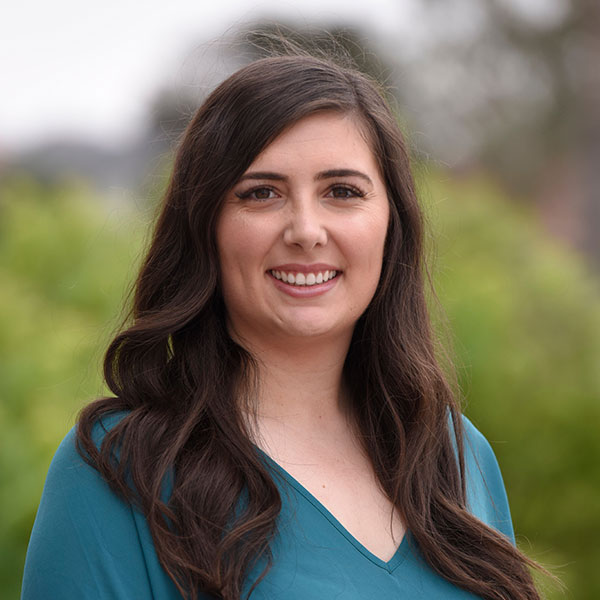
An Interview With Dr. Elise Anguizola Assaf

Posted on 3

By Eve Montano, Hailey Gough, Zaira Garcia, and Montserrat Jijon

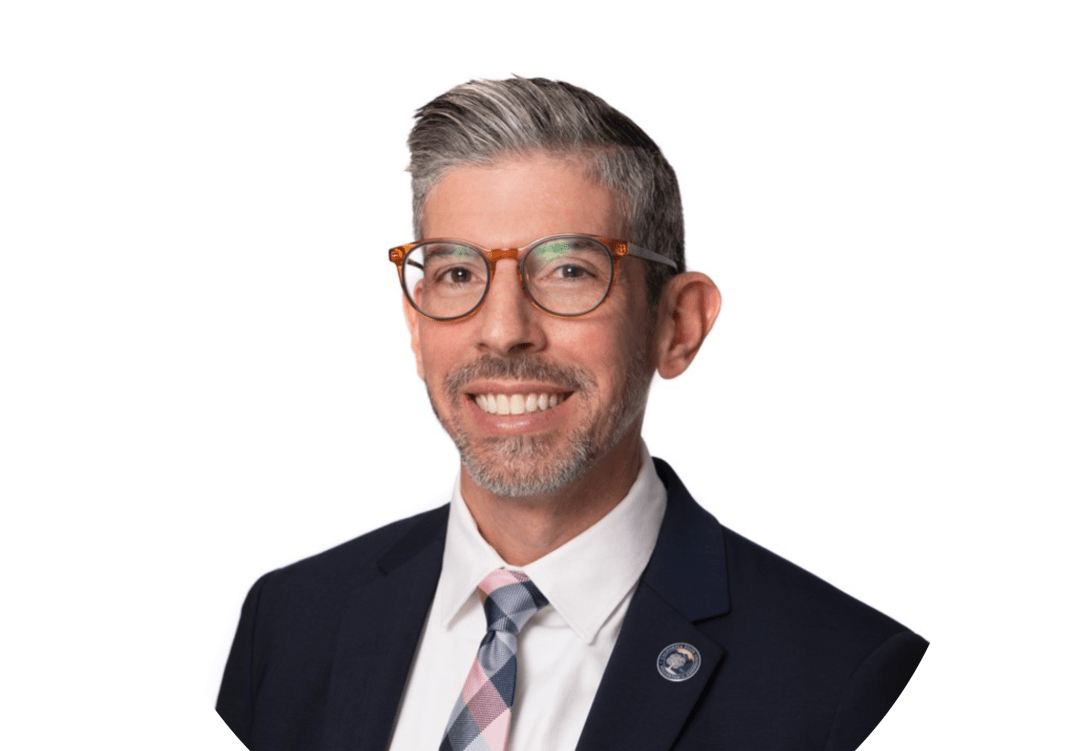
Elise Anguizola Assaf, courtesy of CSUF

Elise Assaf is an assistant professor in the Department of Communications; she teaches public relations and entertainment courses in the undergraduate communications program. In addition to her Ph.D. in Education from Chapman University, Dr. Assaf holds an M.A. in Communications and a B.A. in Communications, emphasis in public relations, from Cal State Fullerton. 

Continue reading “An Interview With Dr. Elise Anguizola Assaf”

Behind the Published Research Novel: A Talk with Professor Craig Loftin

By: Ella Deshautreaux, Clara Meade, Caleb Feliciano, and Justin Wolf

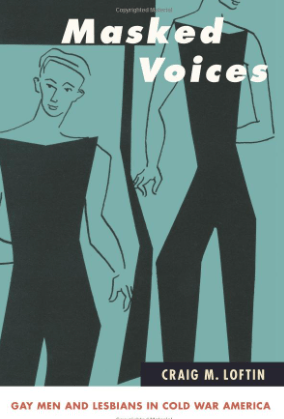
Published research on LGBT history in America is limited in comparison to other research subjects in U.S. history. Cal State Fullerton professor, research scholar, and author, Craig Loftin, brought both an academic and captivating voice to LGBT U.S. history through his 2012 published book “Masked Voices: Gay Men and Lesbians in Cold War America”. In Craig Loftin’s book “Masked Voices: Gay Men and Lesbians in Cold War America”, the letter archives deriving from “ONE Magazine” expose the honest and vulnerable voices of gay and lesbian people during the 1950s and 1960s in America. 

Read More: Behind the Published Research Novel: A Talk with Professor Craig Loftin

The novel uses the direct letters sent to ONE Magazine as primary sources of research with scholar Craig Loftins extended interpretation, historical background information, and structured division among categorized topics. Craig Loftin began his research for his book, “Masked Voices: Gay Men and Lesbians in Cold War America” while undergoing his Ph.D. program in American Studies at the University of Southern California. Among uncovering the archived letters written and sent to ONE Magazine, Craig Loftin used the letters as primary research for his study. Professor Loftin shares with us how he began his research process, and his research steps including his use of coding keywords to divide his topics, and utilizing the letters as primary sources of research.

Craig Loftin’s novel “Masked Voices: Gay Men and Lesbians in Cold War America” has been awarded the “Over the Rainbow Project book List” by the American Library Association and is used as a second source of research and enjoyable read of history including in multiple University libraries for readers everywhere. Craig Loftin’s research and publication have brought life to the historical archives of the letters sent to One Magazine. It is our honor to present further information on scholar Craig Loftin’s research.

Loftin initially had the monumental task of writing and researching one of the most sensitive topics and making it not only appealing to read but extracting meaning for his research. He had these letters from the 50s, and the 60s, from all sorts of different gay men with different views on being gay in society. Loftin takes these first-hand accounts of gay life and tries to make sense of what being gay in that time was as respectfully as possible. He needs to omit names not because he is a kind man, which he is, but for the privacy of those that he was using. The authors of these letters could be deceased or alive but it was still not Loftin’s place to out them or potentially alter their legacy. It is imperative to respect those in research and Loftin had such a keen understanding of that. Loftin conducted his research respectfully and wrote a book about it while maintaining the anonymity of those he was referring to. Before any research can be done, especially on this topic, respect and ethics must be upheld which is what Craig Loftin did.

When beginning his proper research after reading the letters, Loftin began to consider the most simple ways that he should go about compiling the information and presenting it in an accurate way. One of the things that he did that proved to be most successful was reading the letter in their entirety, multiple times, and coding while he was doing it. So with this in mind, he set out to do his research. It took him almost a year before he felt as though he thoroughly understood the messages and stories that of which the letters were trying to tell. Obviously, there was a lot of information to process, enough that he had hundreds of pages worth of notes by the end of his research. One problem that Loftin faced was whether or not he would allow his agenda to seep into his research, but he took extra care to make sure that would not happen. It was important to “let the letters tell the story and speak for themselves.”

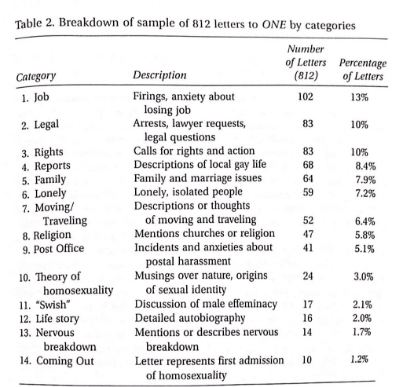
Eventually, chapters began to develop around the topic that different letters were commonly found across the thousands of letters that were archived. To compile everything together Loftin began to code the research, in which he set keywords throughout the letters. For example, he would set keywords to “family” or “love” to track his research and accurately compile the information he needed to begin his research. Loftin’s use of coding and his care to accurately portray the thoughts and emotions of the letters that he was writing about made for a very good start to his research on primary sources.

In researching further into Loftin’s content analysis research, his coding method in categorizing the letters must be fully understood. In order to make the book easily digestible, he decided that he should divide the letters into chapters separated by key phrases. To know which key phrases he should use, he filled out several hundred pages of single-space notes of potential subjects. This process took quite a long time, as he spent years just reading the letters and writing down notes, and writing down simple words for each passage he deemed significant. From there, he found patterns of repeated words, such as family life, jail, or specific cities, and pasted sections of letters that contained these topics into their own chapters. In using the keywords, Loftin found he was able to keep his research flexible; meaning he was able to unexpectedly create more specific chapters within these sections that he would not have noticed. For example, through dividing the letters, he realized that many gay men found fear in the effeminate, or stereotypical, gay men because they were scared that being associated with them would expose their sexuality to the public.

Even with coding the letters into chapters, he still had to do secondary research into finding more information, like finding more information about gay men in jail in the incarcerated chapter. In dividing the letters into key phrases, he was able to create a content analysis research method that not only made it easier for the reader to digest all the material in the letters but also for Loftin to create the book on a subject he is highly knowledgeable about and very passionate about. Overall, this is a wonderful example of how combining an interest in a subject and a thorough research process together can create a book that other readers can enjoy learning from.

Dr. Flores Speaks on Equity: CSUF Communications Department

By: Alexa Valdez, Alonzo Floriolli, and Alan Ruelas

On October 28th, 2022, we conducted an interview with Dr. Robert Flores, Assistant Dean for Student Affairs at California State University, Fullerton regarding his dissertation, Career Development Through An Identity-Conscious Lens: A Framework to Engage First-Generation and Underrepresented Students. Our objective in conducting this interview with Dr. Flores was to get a better understanding of his research process for his paper on first-generation and underrepresented students. We asked him ten questions regarding the way he conducted his research along with his thoughts and findings throughout the process.

Question 1: Why is this study important and how does it differ from similar studies (if there are any)?

Dr. Flores first stated that his primary concern for the study was that career development supports the first generation, and underrepresented students need to progress beyond just a focus on skill attainment. He pointed out that it is not just about talking on how you take what you learn and turn it into a job, but also about strengthening students’ inclusion of identity-based methodologies. In other words, who they are as a person, also informs their career development decisions. The other piece Dr. Flores found is that we need to help students understand the multiplicity of their identities, due to the fact that the different components of our identities form our values, and our decision-making process, and ultimately can be key factors in our career trajectory. Dr. Flores then went on to explain how it differed from similar studies by stating that this was an action research study where “we look at how we, as practitioners in higher education, can create change in our current environment, and how we, as a practitioner and an individual, are positioned in that study as well,” as opposed to an empirical study, where you have a cause and effect. He concluded his answer by pointing out that it is not just about what happens to the participants in the study, it is also about the change that occurs in you as the researcher, and what you learn about yourself. 

Question 2: What do you find to be the most efficient research/sampling methods?

Dr. Flores first pointed out that the most efficient research/sampling methods varies depending on the research type. He explained that when he first started his research project, he had both quantitative and qualitative data collection. As he got further into his research, he learned that when reporting it out in later chapters, the qualitative data had the most impact and connection to his research question. The quantitative data had some importance but was not needed as much as the qualitative. He went on to explain that in his experience with this research, he found that focus groups were most useful and was where he got most of the “heart and soul” of his dissertation. 

Question 3: How do you start your research process when looking for articles?

Dr. Flores explained that he started his research process very broadly. He understood his main focus as examining career development practices, therefore analyzing career development theory. After all, theory informs practice, and that he was also looking at identity development. With that, he then selected a few keywords that were part of his research question that helped guide him along the way. As was deeper into his research, he then realized he was also examining underrepresented first-gen students, and added “Underrepresented” and “First-Gen” to his word search. After taking what he had already identified and combining words and mixing them up a bit, he was able to find a lot of great material. Something that Dr. Flores pointed out that really was a big takeaway when he was talking about “gaps” in research. He stated that “I also found that when there was a lack of information on a certain component, that to me, as a researcher, helped me understand that there’s a gap in the research, right, and so I’m onto something really great. So instead of being frustrated, it tells me, I’m looking for something that no one else has probably done yet or hasn’t published. So this is a great position to be in because you’re being a contributor to the literature that’s out there to support the groups that you’re working with.”

Question 4: What are the most important factors to consider when conducting research?

Dr. Flores immediately answered this question by flagging the importance of research guided by individual passion because of the countless and arduous hours spent looking into a topic. He pointed out that the topic should really resonate with a part of who you are as a person and something you are deeply passionate about if you are doing real in-depth research. Flores also went on to point out that another factor to consider is the amount of access you have and your current position– whether it is a student, practitioner, employer, employee, etc. “Think about your circle of influence, and connection, and how you can maybe utilize some of that in your research. Because that will help you so you’re not just starting from scratch, in some cases.” By considering these things, you can understand if what you are researching is as attainable as you would hope it would be. 

Question 5: How do you brainstorm for your research topics?

Dr. Flores mentioned that you can document your thoughts in whatever way you prefer– whether it is journaling, drawings, blogs, etc.  He went on to explain that for this research process, he would use audio recordings. For example, after class, he would record himself on his phone during his hour-long car ride home. During this time, he would debrief the day, talk about themes that had impacted him, times that made him stop and think, or even ask himself questions. By doing this he was able to go back and listen to those recordings to remember what exactly was really striking him at that moment and point out some key things that he could use.

Question 6: What are some experiences that have led you to this topic of research? Was there a moment that inspired your research?

Dr. Flores explained that his research initially started with him examining his own journey to his career. He realized that there were certain things that happened in his life that contributed to the decisions made by him. He then took this and then looked at how other students with similar identities were embarking on that journey and how they can create a structure that supports them to understand their identity, values, and strengths in order to put that together and form a career roadmap. 

Question 7: Do you have any advice when it comes to choosing a topic that interests you?

Dr. Flores answered this question by first pointing out that it is not always the best idea to pick the “hot” topic at the moment, even though it might be tempting. This can be because a lot of people might be drawn to that topic as well. He says it is best to push yourself out of your comfort zone to try and get the most out of what it is that you want to research. He explains this is because if we choose things that are a little too close to home, we have a tendency to be comfortable and be blinded by our own biases and own experiences. With this, do not be afraid to tackle something that is new and remind yourself that you are not an expert (yet) and give yourself grace for not knowing the answer at that moment, but be determined to figure it out. 

Question 8: What was the most challenging part of this research study? 

Dr. Flores pointed out that the launch of his study was set to be in August 2020, which happened to be a few months after COVID-19 had hit. With this, it made it difficult to continue with his research because they were supposed to be in-person workshops. Along with the switch to Zoom, came uncertainty if students were still interested in being a part of the study. Although there were lots of changes that had to be made on short notice, Dr. Flores pointed out that something positive came out of this challenge. He explained that since the pandemic brought such isolation to everyone, students missed being together in person and connecting with one another. So in the study, students reported that they enjoyed coming together every other week with their group of people to talk about something so personal in a space where they felt safe.

Question 9: In other research studies what is usually the most challenging part of the research process for you?

Another challenging thing, aside from the answer to the last question, Dr. Flores pointed out that getting access to subjects or participants. It can be difficult finding people who are willing to participate, and also endure the duration of the study. He explained that doing more in-depth research is most difficult because it requires multiple time commitments, which is often the biggest challenge, because “you are going to see some, you’re going to see a little bit of a melt, you might start with a really high number of participants, and then that’s going to kind of fade off and you will need to account for that and your finding.” So it is always important to consider the number that you started with, and then any attrition that happened over time, and how that might have an impact on what it is that you’re reporting.

Question 10: What was the most shocking part of this study and how did you find it?

The most surprising part for Dr. Flores was the level of advocacy that the students reported having gained as a result of this study and that came from the exit interviews. During their interviews, participants went over goals based on career plans they had developed, and a high percentage of the students were able to articulate that they had learned certain advocacy skills for themselves and for others as a result of this. Dr. Flores had not expected this because he was really focused on this being about career development and your identity and its understanding, he did not think at the time that this advocacy awareness would come into play. 

Conclusion:

After interviewing Dr. Flores, we have a better and more complete understanding of his research process for his paper on first-generation and underrepresented students. We learned about the easy and complex parts of conducting a rigorous research project on equity within education. The biggest takeaway from our interview with Dr. Flores is understanding the reward of conducting a research study in any field will ultimately be contingent on the discoveries made that can exponentially grow our understanding. 

Professor and Researcher at CSU Fullerton: Social Media

Isabel Guerrero, Katie Mahon, Miranda Bravo, and Marissa Zaidi

Intro about Dr. Carrie Carmody:

Isabel asks Dr. Carmody, “In your 2012 paper it was mentioned that society becomes more comfortable with social media and electronic socialization users will learn to integrate this tool and moderate its usage. Do you feel that since the time you wrote that paper that it has become more comfortably integrated or are there remaining issues with…”

Dr. Carmody expresses that when she began her research back in 2008-2009, social media was the new way to “hang out” socially. Today, social media is no longer just about networking, it is part of the bigger picture including the internet and digital marketing. Dr. Carmody goes on to explain that people from Gen Zers to Boomers are using social media every day, so yes, it is used a lot more than was anticipated in 2012.

Miranda asks Dr. Carmody, “Do introverts vs introverts use social media differently and if so, how does it vary?”

Dr. Carmody explains that when she was doing her research, data was limited to college students. She found that there was a fundamental difference in the way that extroverts and introverts were using it. Extroverts seemed to be collecting people, as in having 1500 “friends”.  Their online relationships were shallower but they were mostly interacting with people in the real world and transitioning it over to social media.

Introverts were having deeper online relationships with fewer people on their social media platforms. They tended to not interact with people in the real world and social media was an easier way of connecting for them. Differences were shown from the beginning in regard to social media use and people’s personalities.

Continue reading “Professor and Researcher at CSU Fullerton: Social Media”

Interview with Professor Ju-Pak: Social Media Advertising

Professor Kuen-Hee Ju-Pak

“Last night, I was looking for a new pair of shoes from Vans, and the next day the Vans’ ad popped up when I was scrolling Instagram,” said Kevin Law, a COMM 410 student. His experience is common to other students in class, and they all have mixed feelings about it. Sometimes the ads help find the best products, and sometimes they are just irrelevant. Social media advertising has become a commonality and a major way for advertisers to reach out for more sales and customers. As many of you may already hear about the term “social media algorithm.” “The social media algorithm is ruled by robots programmed to keep our attention as long as possible, they promote stuff we’d most likely tap, share, or heart – and bury everything else,” according to The Wall Street Journal

Continue reading “Interview with Professor Ju-Pak: Social Media Advertising”

The Effects of Social Media on Attention Span

By Arielle Berma, Madeline Gutierrez, Daniel Kim, and Shelby Martin

As one of the most significant aspects of our current culture, social media usage has taken the world by storm. Social media has given us a way to make direct and genuine connections with our interests and other people in any given environment. With the advancements of technology, it has also become easier to use daily, eventually turning into an encaptivating lifestyle that is hard to escape for most of us.

Dr. Cynthia M. King

With that, the focus of this study will be on the effects of social media on one’s attention span. We had the privilege to interview and discuss this topic with Dr. Cynthia King in the interest of gaining more understanding and perspective from someone familiar with the use of media and its effects on those it spans out to.

Continue reading “The Effects of Social Media on Attention Span”