
Interview with Dr. Amy Schmitz Weiss on her research paper, Journalists and Their Perceptions of Location: Making Meaning in the Community

Taken from the SDSU website

by Jackie Logwood, Stephen Lopez, Dustin Malek & Tony Rodriguez

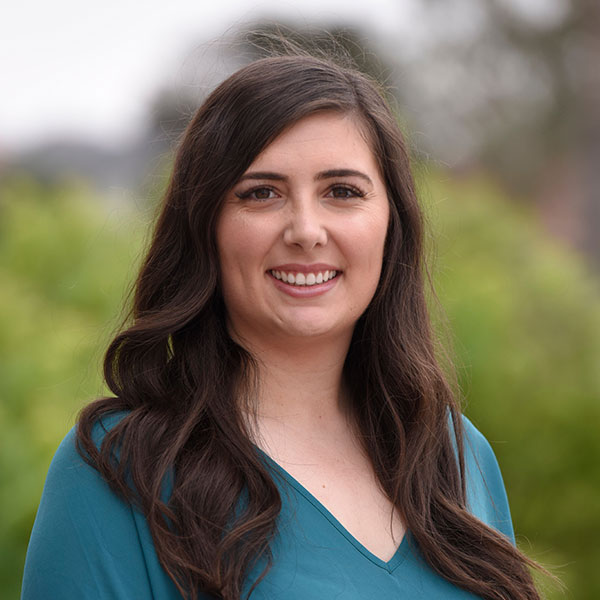
Amy Schmitz Weiss is a research professor at the School of Journalism and Media Studies, at San Diego State University. Her 2020 paper titled Journalists and Their Perceptions of Location: Making Meaning in the Community is an attempt to better understand the role location plays in journalism. It’s one of many papers and research projects Dr. Schmitz Weiss has conducted over several years.

“The article is one of several that I’ve done that look at the idea and the framework called spatial journalism. That is an area that I’ve been developing for several years now that looks at…how journalists do their work from a lens of location,” says Dr. Schmitz Weiss.

Read more: Interview with Dr. Amy Schmitz Weiss on her research paper, Journalists and Their Perceptions of Location: Making Meaning in the Community

The role of location and journalism is long-standing and, in many ways, obvious. After all, newspapers are often location-based. The New York Times, The Chicago Tribune. The Fayetteville Observer. For centuries newspapers have been serving specific communities, covering local elections, high school sports teams, community events, and the like. Location and journalism are not a new concept but that doesn’t mean there isn’t room for improvement. Nearly every person in the developed world carries a GPS device in their pocket and uses apps like Yelp that can direct you to the best pizza or hamburger in any given city. How the technologies of today improve journalistic practices that have been around for centuries is at the heart of Dr. Schmitz Weiss’s research.

For this study, Dr. Schmitz Weiss interviewed twenty-one journalists from three different media organizations that use software to geotag the location of the stories they report on. The interviews represent a form of qualitative research known as grounded theory. Grounded theory collects data, in this case, answers to interview questions, forms concepts from that data, and groups those concepts into categories. Through these twenty-one interviews, Dr Schmitz Weiss identified recurring themes and insights. Those were grouped into six categories which eventually consolidated into three. This is the final phase of grounded theory research which is where the data is analyzed and interpreted to identify relationships and connections between the categories.

“Basically the grounded theory approach entails diving in and reviewing all the material that you have. In this case, all the transcripts, the 21 reviews going through and at first identifying what the explicit information that’s there, what people say in the actual wording, and doing a first read of that, and then going back through that a few more times, two times, three times, four times to re-review what’s coming up that’s implicit, that could be garnered out of the deeper meaning of what people are saying, and then identifying how they may translate with the specific themes or concepts, and then grouping them accordingly,” says Dr. Schmitz Weiss.

The three categories that the research led to are as follows. Location as a meaning maker, location as an organizer, and location as a communicative challenge. This article offers a cursory overview of each category. It is in no way meant to represent the extensive research Dr. Schmitz Weiss has done on the topic of spatial journalism but rather to display the outcomes the research uncovered using grounded theory research.

Location as a meaning maker is the idea that we as people ascribe meaning to a place. The example Dr. Schmitz Weiss used in our conversation was a person’s favorite coffee shop. To one person it might simply be another coffee shop, to someone else that might be where you wrote your first screenplay or worked your way through college. Readers will engage in a story about a place they care about. Understanding which places people in the community have an outsized connection to provides a helpful context for journalists and can potentially drive readership.
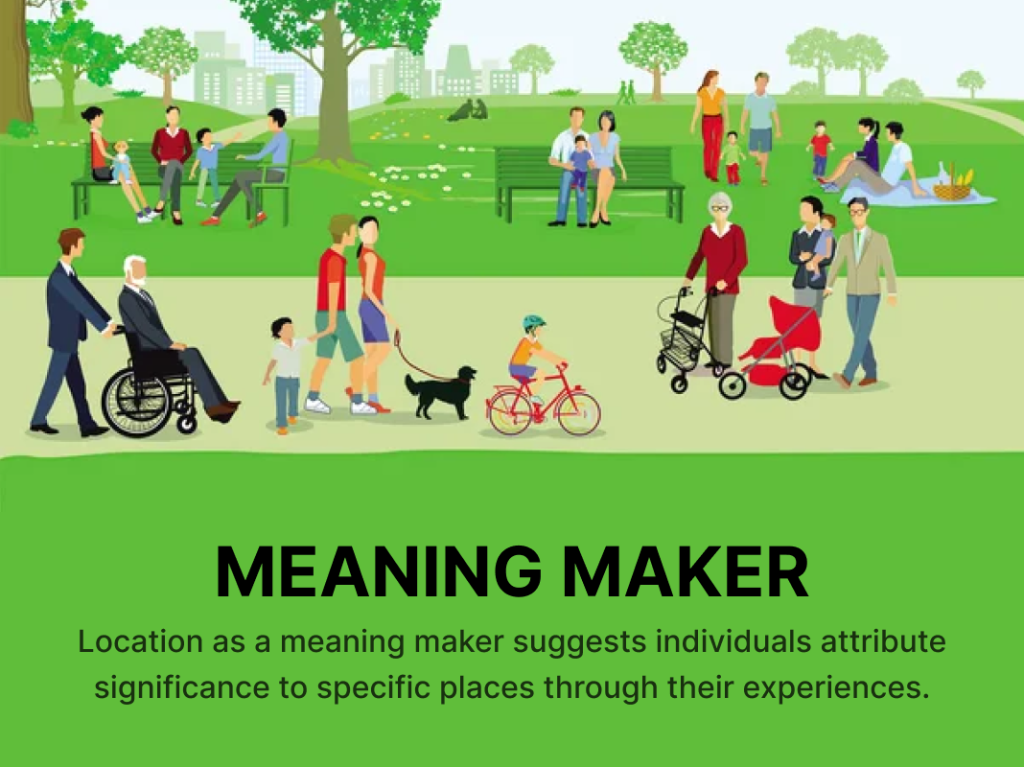
“Spatial ideology takes the idea of what we put in our mind as what’s close and has meaning to us and puts it within the context of space and place is how we associate information and how we make decisions from that information of how important it’s to us or why we would want to know more about it,” says Dr. Schmitz Weiss.

Location as an organizer is helped by the technology that some news organizations use allowing them to geotag the stories they cover. This technology gives newsrooms a visual representation of where news is happening. In the past, a newsroom might have had a sense of where news was happening but they wouldn’t have hard data, now they do. Although this does bring about certain challenges. As one of the publishers, Dr. Schmitz Weiss interviewed explained in the research paper.

“Not everything that you cover should be eligible for this sort of thing. Like, if you’re down at City Hall and you’re writing a story that ultimately takes place at City Hall, people don’t need to see that on a map, because it’s a City Hall story, right? It’s not a geographically linked thing.…. We needed the editor to sort of go through and figure out what was appropriate to tag and what was not,” said the editor.

There’s also the issue of privacy. The Austin Monitor has an interactive map on their website where Austinites can see stories based on location. Usually, they geotag stories based on an address. If a liquor store gets robbed, that’s easy, put in the address and move on. But sometimes a story has multiple locations in those cases they have to make tough decisions. The new technology brings up old ethical issues journalists have always faced. Using an exact address could potentially out a source leaving them open to retribution. Or it could be used to identify a victim of a crime. In cases like that, these organizations have to be broad, opting for cross streets or general areas rather than exact locations. While challenges exist, there are numerous benefits. It allows stories to be categorized in new and unique ways and it lets organizations know which parts of the community are underserved.

The last category Dr. Schmitz Weiss found was location as a communicative challenge. Essentially the challenge is convincing news organizations that spatial journalism is a value add that will help drive readership.

“The research shows that when something has space place with meaning to them, they are more interested, they’ll consume it more,” says Dr. Schmitz Weiss.

While this type of grounded theory qualitative research is thorough and can be eye-opening it does have its drawbacks in comparison to quantitative research.

“If you have a thousand people representative of a population for a quantitative study, you might be able to say because of X, Y happened based on statistics…. with qualitative you’re not going to have a large enough sample to say, because of X, Y happened with twenty people,” says Dr. Schmitz Weiss.

Still, qualitative research has many advantages. Dr. Schmitz Weiss continues.

“…with that said, qualitative research can still show the validity in the layers of nuance and deep meaning that comes out of those 20 people that shows specific patterns, similarities or differences.”
An Interview With Dr. Elise Anguizola Assaf

Posted on 3

By Eve Montano, Hailey Gough, Zaira Garcia, and Montserrat Jijon

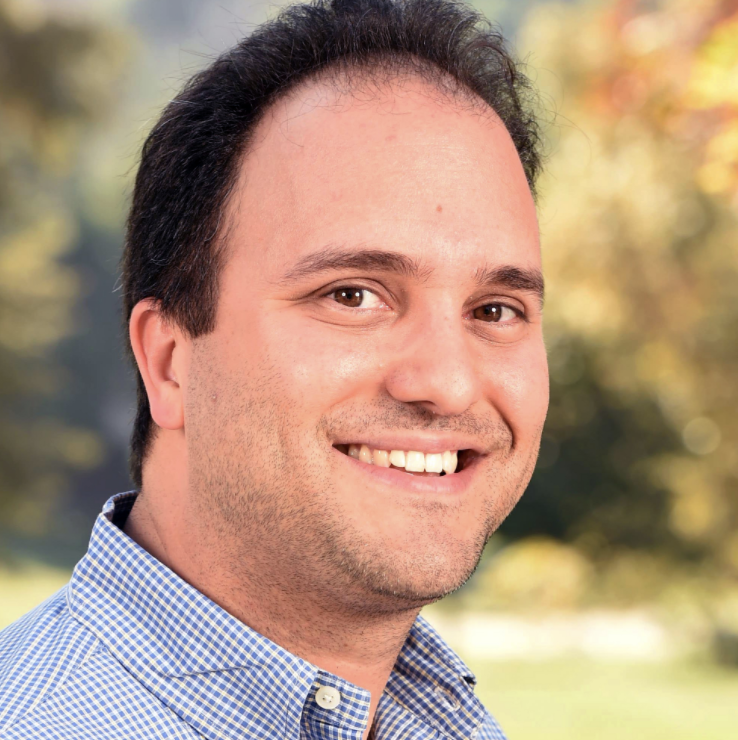
Elise Anguizola Assaf, courtesy of CSUF

Elise Assaf is an assistant professor in the Department of Communications; she teaches public relations and entertainment courses in the undergraduate communications program. In addition to her Ph.D. in Education from Chapman University, Dr. Assaf holds an M.A. in Communications and a B.A. in Communications, emphasis in public relations, from Cal State Fullerton. 

Continue reading “An Interview With Dr. Elise Anguizola Assaf”

COVID-19 and It’s Impact in the Entertainment and Tourism Industry

Dr. Waleed Rashidi, a professor in the Department of Communications.

Dr. Waleed Rashidi is currently a professor in the Department of Communications. He has a Ed.D from the University of La Verne and his research interests include looking into communications programs in higher education and investigating music as a form of mass communication. He is also a faculty advisor to Comm Week and the Entertainment and Tourism Club, as well as the editor in chief of Mean Street Magazine and an editor at the Inland Empire Weekly.

In April of 2020, the continuation of Coronavirus cases across the world have made a halt in the entertainment industry from theme parks, music festivals, films, TVs, and much more. However, it has been over a year since the pandemic began and new solutions have risen to open up places. Vaccines are now available to people all over the world. This advantage has led entertainment industries to open up a majority of places once again with CDC and WHO guidelines, yet things will not go back the way they used to as more precautions will be held for the safety of everyone. Nonetheless, every live performing artist such as huge celebrities to local entertainers have held aside their performances due to the fact they couldn’t perform live anywhere. Throughout the pandemic, the entertainment and tourism industry has had to adapt in many ways. We interviewed professor Waleed Rashidi from California State University of Fullerton, about how COVID-19 has affected this industry now and for the future. Rashidi emphasizes on the entertainment and tourism industry and teaches about it in his COMM 346 class.

Continue reading “COVID-19 and It’s Impact in the Entertainment and Tourism Industry”

“Zoom Fatigue” vs. Online Learning

In the Spring of 2020, universities across the nation emailed college students and professors that spring break would start early because of the nationwide shutdown due to the impending outbreak of COVID-19. Many saw this as an opportunity to catch up on sleep or enjoy the extra time relaxing. Yet, little did they know, this was just the start of a year-long shift from in-person learning to the now normalized virtual online learning experience many faces today. College student’s motivation began to waver as everything was coming to a stop and many have gotten accustomed to what our generation has called this lack of motivation “zoom fatigue”. Zoom fatigue is the burnout, worry, or tiredness associated with the overuse of virtual platforms of communications, with a particular focus on video conferencing. We spoke with Dr. Penchen Phoborisut, an Assistant Professor of Communications at California State University, Fullerton. Dr. Phoborisut has a collective knowledge of what it’s like to work across the screen being a news reporter for CNN World Report with her one of her main areas of research within digital media technology. She provided insight as to how she as a professor has changed her way of learning through COVID-19 and we dive into a closer look as to how “zoom fatigue” has challenged the norms of many students and professors during this complex learning environment.

Continue reading ““Zoom Fatigue” vs. Online Learning”

An Interview with Dr. Baldwin: Covid-19 Impact on College Professors

Dr. Martina Baldwin, Professor in the Department of Television Arts at CSUF

Dr. Martina Baldwin is a full-time lecturer in the Department of Cinema Television Arts. She received her B.A. in public relations with a minor in Sociology from the University of Florida and her M.A. in Mass Communications from Cal State Fullerton. She received her Ph.D. in Media Studies from the University of Illinois at Urbana-Champaign. 

For our research study, my group and I want to analyze the impact Covid-19 had on college professors. The COVID-19 pandemic is a health crisis the U.S. has been dealing with for over a year. The governor of California initially called for a stay at home order in March of 2020. As a result, a lot of places had to be shut down. Such places were stores, restaurants, bars, churches, community centers, libraries, gyms, amusement parks, schools etc. California State University, Fullerton was called to shut down by the chancellor in March 2020 as well. The shut down of the school initiated an immediate transition to a virtual setting. This was during the middle of the Spring semester where all courses were to quickly be adjusted to virtual mode. This was a very sudden change for the whole institution. Full of uncertainty, faculty, staff and students had to quickly adapt themselves to distance learning. In this interview, Dr. Baldwin discussed with us the ways in which Covid-19 has affected her and her job as a professor. 

Continue reading “An Interview with Dr. Baldwin: Covid-19 Impact on College Professors”

An Interview with Dr. Mori

Introduction

Dr. Lisa Mori, Professor of Psychology at CSUF

Anxiety and stress among college students have sharply increased over the past two decades. This is one of the main reasons our group was so intrigued to find a study based around this idea. Especially with COVID-19, we have seen its effects on college students’ performance in their classes. We found the study titled, “Psychological Impact of COVID-19 on Hispanic/Latinx, Asian, and White USA College Students”, researched and written by Lisa Mori, Kiran Kaur, Maximiliano Gutierrez, Alan Guandique and Eric Cortez. We contacted Dr. Lisa Mori from the Department of Psychology, California State University, Fullerton, for a brief interview. In this Blog post we will discuss the conceptual ideas that we had going into this interview, along with the practical ideas and some dialogue quotes we gained after speaking with Professor Mori.

Continue reading “An Interview with Dr. Mori”

Should college students pay the same price for virtual learning? The Hardships and Controversy of Online Learning

Jeffrey Brody is a professor of Communications and a member of the Asian American Studies Program Council at California State University, Fullerton. He teaches advanced writing classes, courses on mass communication and society, and media and diversity. 

Our opening discussion from the interview with Professor Brody consists of questions that would help us understand the teaching experience from a professor’s point of view during a pandemic. 

Professor Brody stated that the most challenging obstacle for him was being able to maintain student interest. He felt it was very hard to gauge their interactions, especially with many blank screens. One way around this resulted in the Zoom breakout rooms. Students would be split into groups and would each have a specific topic to discuss while Professor Brody would visit each room to hear more personal feedback. He felt that in some ways there were many benefits to it that allowed students much more flexibility for those who are also working full-time jobs.

Continue reading “Should college students pay the same price for virtual learning? The Hardships and Controversy of Online Learning”

Interview With Professor Leslie Klukas

The focus of this review of the thesis is presented by the member of California State University Leslie Klukas. She focuses on instructional relationship, Communication, and the effects it has on academic buoyancy. The purpose of the study is founded on the idea as well as the many challenges that undergraduate and graduate students have with the completion of their coursework. Obviously, there are many challenges both on a personal as well as on an academic level that may prove to be setbacks and barriers to success. The focus as well as the major impact in the background of this article is based around looking at the challenges of rigorous academic programs that can make students feel as if they are struggling or able to maintain the same level of success in their coursework. 

Continue reading “Interview With Professor Leslie Klukas”

Social Activism and its Effect on Corporate Behavior

Janelle Gilbert-Darius is a Professor of Psychology, specializing in Industrial Organizational Psychology at California State University, San Bernardino. She is also serving as California State University, San Bernardino’s General Education Director. We asked her a series of questions relating to social activism and its relation to advertising as well as social media’s influence on both. Dr. Gilbert-Darius was well equipped to speak on these matters due to her experience addressing these issues within her Psychology studies. She was able to provide a unique insight into individual’s as well as organization’s behaviors within social and political movements and their relation to marketing.

Continue reading “Social Activism and its Effect on Corporate Behavior”