By Jake Saavedra, Vanessa Feliciano, Lily Hong, Jocelyn Castanon
Dr. Portia Jackson Preston is an Assistant Professor of Public Health at California State University, Fullerton. She conducts research on multilevel approaches to self-care, and examines how stressors such as media contribute to health inequity. She was a featured speaker at TEDxCrenshaw, where she gave a speech entitled “The Missing Ingredient in Self-Care”. She works with organizations to prevent and manage burnout by making sustainable performance and resilience.
By Janet Chavarria, Joanne Dao, Zoey Nguyen, Daniella Perez
Currently working as a Communications professor at California State University, Fullerton, Dr. Mark Guohua Wu is an expert in the field of Advertising and Online Consumer Behavior. With his 22 years of teaching experiences, he gave us insights into the field of Communication research.
Dr. Mark Guohua Wu
Dr. Wu received his academic degrees in Advertising from the Top 50 world-renowned universities, such as a Ph.D. from The University of Texas at Austin, an M.Sc. from University of Illinois at Urbana-Champaign, and a B.A from Beijing’s Tsinghua University. He is most well-known for his invention of the construct of “perceived interactivity of websites”. According to the Journal of Current Issues and Research, Dr. Wu was named the Top Cited Advertising Scholar.
We met with Dr. Wu for an interview where he shared with us his personal experiences with quantitative data collection and his thoughts on social media as a research tool. Below, we share the main points of our discussion with him.
Managing a large pool of data when conducting quantitative research
With his research expertise, Dr. Wu tends to focus more on quantitative data. One difficulty that comes along with conducting this type of research is the size of the pool of data that is drawn. However, Dr. Wu is not intimidated by these larger quantities ––– he emphasizes that the larger the pool, the better the data will turn out to be. He takes a headstrong approach and told us right away that he would likely utilize SPSS softwares when dealing with larger data base. ” [It] allows me to do a lot of complicated statical analysis, from descriptive statistics to inferential statistics.” said Dr. Wu, explaining his reasoning behind using this software. He went on to explain that he leans towards structural equation modeling. The exploration of the relationships between all of the different variables allows the most conclusive research to be done.
Bias & Errors within quantitative data
The key to any quantitative research is measurement. When using quantitative methods like survey research, we are trying to measure variables and we make sure those variables are accurately scaled using measurement scales. Dr. Wu explains that the most important part of survey research is survey design and that is where lots of errors are made.
Potential bias can stem from many types of errors within the design phase. “Survey design has lots of errors. We have all kinds of errors,” said Dr. Wu. “ We have sampling errors, and the non-sampling errors which are pretty much the measurement errors.” Measurement errors comes from many different sources, be it the sample, the researchers, the respondents, and even the survey instruments itself. To reduce sampling errors, Dr. Wu suggests that we increase sample size; however, researchers need to trade-off between the costs and the sample size. For other measurement errors, he expressed the importance of making sure that researchers, research assistants, and even those who may participate in the survey should be properly trained.
” There are no true [ways] to eliminate all biases. We just do the best we can to make sure the design is solid, and the measurement skills are valid. “
– Dr. Mark Wu
Suggestions for beginners when dealing with potential challenges
First and foremost, to be able to deal with a large data base, data errors, and research methodologies, students need to pay attention to the foundation of research, which is the knowledge that is commonly taught in college classes. Dr. Wu recommends students to conduct their own research and be detail-oriented when it comes to data collecting and its concepts. “If you’re doing quantitative research, be as objective as possible…Underline the assumptions of quantitative research, try to find the truth, and you don’t want your personal opinions get into the process,” said Dr. Wu.
When asked to share his thoughts on social media as a research tool, Dr. Wu shared that platforms like Instagram, Facebook, Twitter, etc. are “ the new forms of communication and [is] definitely where lots of research have been done to address social issues.” He further explained that social media research deals a lot with analytics, where you can track data and visualize it. Data visualization is definitely helpful with research as you can track and see how people respond to certain things they see online.
Is social media an advantage when it comes to research?
Social media is definitely advancing and it will continue to grow in the future, but the fundamentals of research will always stay the same. Dr. Wu shares that there is not much of an advantage per se as research are still done the same way today as it was done back in his days. However, social media has definitely helped with accelerating the speed of data gathering and there are a lot more data available today. Essentially, old tools are now being put to use in the domain of social media.
Advice for student researcher
Before ending the interview, Dr. Wu left us with a piece of much-appreciated advice for beginners in research: finding patterns is crucial when you go through a tremendous amount of data. “Students need to cast through the noise,…and find insights,” said Dr. Wu. When dealing with a pool of information, finding the right one is tricky. Hence, methods taught in research classes will utterly become a helpful assistant in helping you select the information that you need for further analysis along the journey of data research and collecting.
Professor Heather Osborne-Thompson is a scholar and associate professor at Cal State Fullerton within the Radio/TV/Film department. Having been awarded her Bachelor’s in English with a concentration in Journalism from the University of New Hampshire along with her Master’s and Doctorate in Cinema-Television Critical Studies from the University of Southern California, our team found her to be a qualified expert on the topic of gender and genre in television; both contemporary and historical. As such, we had the opportunity to sit down with Professor Thompson to discuss her own work of research within the scope of women’s comedy entitled: “Routine Adjustments: Re-Viewing Women’s TV Comedy Genres, 1950-1969”. According to Thompson, the idea for this graduate program dissertation research stemmed from a desire to bring more attention to women who would not conform to society’s set expectations for them. In other words, the women who strayed from the typical stay-at-home mother and wife role that was broadcasted and encouraged across the nation in the 50s and 60s. Thompson stated that she wanted to find more information on not only these kinds of women, but also the “funny women who say things you’re not supposed to say, and behave in ways that are different from the cues we get about how we [women] are supposed to behave”. As a result of deciding upon this research topic, Thompson was certain that the next steps of developing this subject would be to take a closer look at the traditions from which female comedians had come from, as well as examine different types of historical evidence in regards to the way these women were understood and portrayed by the media (newspapers, radio, television, etc). Ultimately, this meant delving deep into the early feminist movement and looking at the way performances done by female comedians impacted the difficult and often sad issues addressed within comedy at the time.
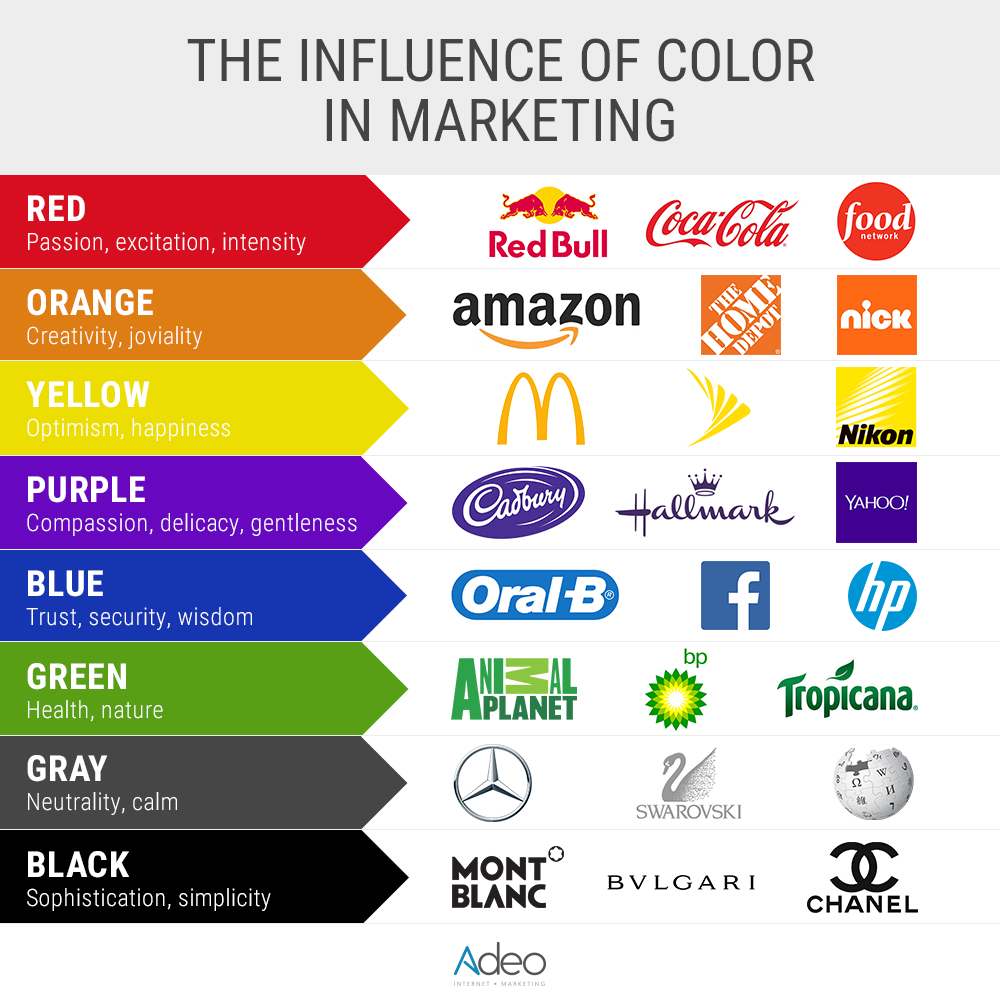
Advertisements are executed differently based on the target audience. Pink, a color generally associated with a feminine color, is used for many women target products. Blue, generally associated with a more masculine product, is used for many male presenting products. But how would one go about creating an advertisement with a more inclusive audience and not following gender norms?
To get an idea of what research needs to be conducted when looking at various forms and tactics of advertisement, we sat down with Robert Meeds. Professor Meeds’s research focuses on the impact different forms of advertisement have on individuals. Meeds teaching areas at Cal State, Fullerton are advertising, integrated marketing communications, and public relations.
Can you tell us a little bit about your previous research, and are you currently in the process of conducting research?
Meeds spent 11 years at Kansas State, where he was heavily involved in research and was a point of contact for many graduate students conducting their research. He has dabbled in different research areas and typically does not stay in the same topic framework, but his primary research interest revolves around persuasive language. Persuasive language is used to persuade the public to buy their products. This is done through billboards, flyers, social media, and other mediums where advertisements are promoted. Meeds is interested in the micro-level factors that copywriters can manipulate to make a difference in what people remember in hopes of producing more persuasive content.
“If you try to be a jack of all traits you will be a master of none.”
What are the steps you take when attempting to conduct research?
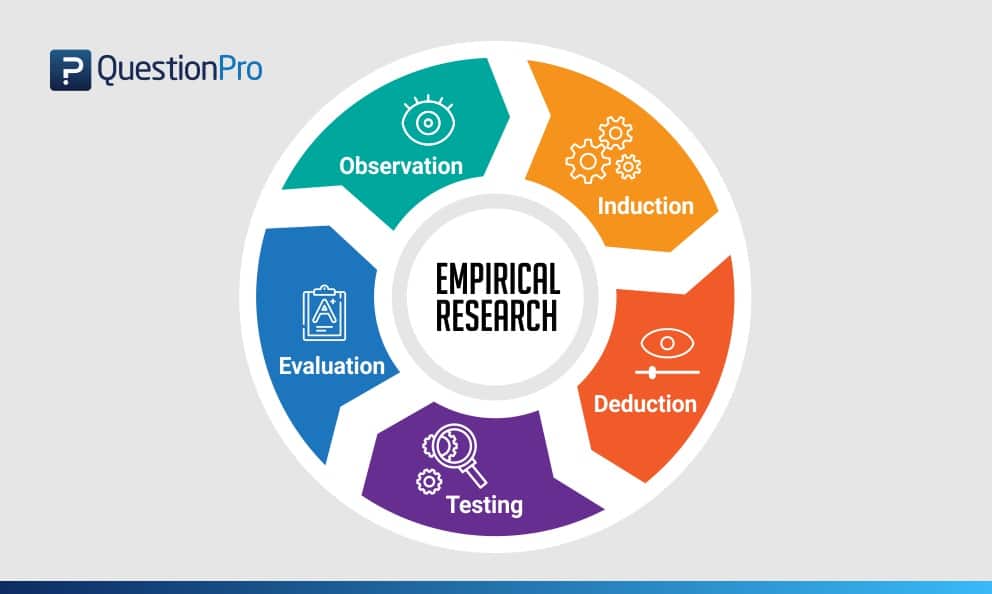
As researchers, one mustn’t feel unsure about trying different things in hopes of finding a correlation between two different things. Meeds’s research was explored by playing around with varying slogans of advertising, specifically sin texts. All of those various explorations in hopes of finding out if different sin texts make a difference in how people remember slogans. Empirical research is mostly experimental-based research based on observations and measurements. The majority of the research conducted by Meeds is experimental. This rests on the questions and hypothesis made and asked at the beginning of the research on whether x, the dependent variable, causes y, the independent variable. When looking at empirical methodologies, most of the steps taken are through a system where things are measured. The independent variables are put in categories such as treatment and control, and the dependent variables operate through a numerical line. Through these research steps, questions and hypotheses can be answered on whether the change observed is meaningful and if the statistic used to test correlates.
An example of Empiracle Research method from QuestionPro
Did you encounter any problems or difficult obstacles when conducting your research?
Robert Meeds states that he had to handle unexpected problems during his research. For many years, Meeds has worked in the field of Communications specifically, advertising research. Meeds states that one should always expect the unexpected obstacles due to history. He goes further, indicating the challenges due to his field of study. The problems he struggles with does not end until the work has been peer reviewed and that is an obstacle within itself. Meeds states that when you finish a study and go to submit it, those reviewing your article may not have the narrow or specific expertise in that specific area of research, which can also be an obstacle.
Do you have any advice for those that are going to attempt to begin the research process that you learned through your experience in your own research?
Professor Meeds not only gave us advice on how to conduct research, but did so through an example based on a general topic of research we presented him with. He began with, “If you are only presenting the topic, and if your research was based upon if color made a difference when advertising the assumption through advertisers is that you would use more colors that were thought historically to be more feminine for women, and use more masculine colors for men. I would center the ad around a gender neutral product. As well as using a Fictitious brand so there are no pre-existing biases.”
Without even describing the sample and execution of the ad, Professor Meeds has already described two essential steps in solidifying the credibility of a research study. He continued with, “You want everything about that ad to be as gender neutral as you can make it. The Imagery, the Typography, and the product itself. And having the one independent variable to be the color scheme.”
Meeds was really emphasizing the importance of the survey. Describing this to be one of the most important factors of maintaining composition within your study. Listening to Professor Meeds walk us through his hypothetical allowed us to understand his thought process when conducting research. Who he chose to study and why, and their relation to the subject. In this instance he described using CSUF students that are ideally balanced out between male and females. To have a better understanding of not only how the younger generation viewed this ad, but their personal biases towards imagery and colors reflected their overall opinion and happiness of the ad.
Have you found that the impact people get from others online is more negative or positive?
Dr. Vendemia believes the impact to be both positive and negative in an equal manner as there is not enough evidence to confidently choose one over the other. There are a number of variables that need to be taken into account. For example, those who are passively versus actively viewing content on social media, whom they are following, what kind of content they post themselves, and what their views of societal expectations consist of. However, Vendemia mentioned, “sometimes what might be positive for the content creator such as posting a picture of themselves online opens themselves up to public scrutiny or a level of self-consciousness.” This contributes to the possible need to reinforce the idea that physical appearance is central to one’s overall identity. Oftentimes, the focus on physical appearance can take away from other significant and valuable characteristics that may otherwise be overlooked or completely unknown. Although people enjoy receiving compliments, for people to consistently utilize social media as a way to receive positive feedback can increasingly become less and less fulfilling. Dr. Vendemia said, essentially, “over time, continually getting this reinforcing feedback is unsustainable.” This can especially become dangerous when oftentimes people “tether their self-worth” to instant gratification and validation. Naturally, people’s appearances will change, and this mindset can often lead to unhappiness with physical appearance, editing photographs, and even cosmetic surgeries.
In recent years there has been a widespread circulation of fake news causing lasting repercussions. Fake news are news stories that are fabricated, with no verifiable facts, sources or quotes. Due to the rise of fake news, people more than ever are believing in the false information being spread. With so much information, the line between fake and real is starting to blur. To further understand this underlying issue, we decided to conduct a survey to find out how many people believe in fake news. However, before we can delve into this issue, we need to understand more about the topic and so we decided to interview Professor Ricard Valencia to get a better comprehension on fake news.
Isabel Guerrero, Katie Mahon, Miranda Bravo, andMarissa Zaidi
Intro about Dr. Carrie Carmody:
Isabel asks Dr. Carmody, “In your 2012 paper it was mentioned that society becomes more comfortable with social media and electronic socialization users will learn to integrate this tool and moderate its usage. Do you feel that since the time you wrote that paper that it has become more comfortably integrated or are there remaining issues with…”
Dr. Carmody expresses that when she began her research back in 2008-2009, social media was the new way to “hang out” socially. Today, social media is no longer just about networking, it is part of the bigger picture including the internet and digital marketing. Dr. Carmody goes on to explain that people from Gen Zers to Boomers are using social media every day, so yes, it is used a lot more than was anticipated in 2012.
Miranda asks Dr. Carmody, “Do introverts vs introverts use social media differently and if so, how does it vary?”
Dr. Carmody explains that when she was doing her research, data was limited to college students. She found that there was a fundamental difference in the way that extroverts and introverts were using it. Extroverts seemed to be collecting people, as in having 1500 “friends”. Their online relationships were shallower but they were mostly interacting with people in the real world and transitioning it over to social media.
Introverts were having deeper online relationships with fewer people on their social media platforms. They tended to not interact with people in the real world and social media was an easier way of connecting for them. Differences were shown from the beginning in regard to social media use and people’s personalities.
The rise in the usage of social media has been imperative within the lifestyle of society. It has allowed us to connect with friends and family in ways that weren’t possible before, and it allows us to interact and engage with current events. As good as social media can be for us, there has been a troubling pattern between it and the mental health of citizens; social media has notoriously become known for its tendency to have its users cyberbully others online, and also its need to have users buy in to an image that social media tries to depict to other online users.
To get more information about the relationship that social media and mental health has, we sat down with California State University, Fullerton Dr. Elise Assaf. Dr. Elise Assaf’s research focuses on social media and its impact on mental health. Within this interview, we asked Dr. Assaf about how the relationship has developed into the status that it is today, ways to promote mental health within social media, and the future of this relationship
Have you seen a trend between social media and mental health with the research that you’ve done?
Dr. Assaf mentions that the impact it has is significant. There has been a shift with people becoming more comfortable talking about their own experiences. This revolution parallels scientists researching it more and being more open about diving into the impact of social media and mental health. These research topics would be investigated as separated and combined research topics.
Dr. Assaf also mentioned that there are fewer academic research topics. It’s gone within television shows, plot lines, and story lines. It has become a topic of conservation of areas in life. People are more comfortable discussing it.
In my family generationally, my grandad probably wouldn’t talk about it very much. My mom is more comfortable talking about it. I’m most comfortable talking about it.”
How would you conduct research within the social media world?
While talking about how to conduct research within the social media world, Dr. Assaf said content analysis is a good way to do so. She mentioned a research project she did where she used content analysis. A good way to start conducting the research is by choosing different platforms, set a date parameter, and then collect all the posts that were published during that date parameter.
Once the posts are collected, look at the comments section to see how people reacted to them because it allows the person that is doing the research to get a good sense of how the information is being received by the consumers. Content analysis can be done on visual components and on text, since some platforms are text based.
Why do you think social media has an effect? Do you believe there is a way to “tame” this effect?
Dr. Assaf believes that social media is so dominant in our culture that “it is bound to have an effect.” People spend so much time both producing and receiving content that it makes it hard for social media to not have an effect. Nowadays people in social media tend to be more uplifting and supportive of one another that, “there’s this natural progression in it being better now.” Dr. Assaf believes the problem is in people who do not know how to use and how to act on social media.
Most of the people who do not know how to use social media are younger kids, who are still trying to figure out the impact of words and how it can impact people. Dr. Assaf believes that besides setting parameters to only allow access from a certain age or just blocking people on social media, that there is not much that can be done to “tame” this effect that social media has in our current culture.
Source: Statista, Broadband Search
How do you believe the future of social media and mental health will work out?
When asked about the future relationship between social media and mental health, Dr. Assaf emphasized the growth that has already occurred between the two. She believes that social media has grown in its understanding of mental health by using the example of body shaming and the direct ties it has with mental health.
While social media used to be a place where body shaming was constantly being used if a post didn’t fit the ideal body standard, today it’s a place where all bodies are, for the most part, embraced and there is a safer space for people to be themselves. Dr. Assaf states, “there has been a call from society for these platforms to be better.” While there is much that has improved due to the call society has placed, there is much more that can be done.
The future of social media should be open to embracing mental health, according to Dr. Assaf and her research works to highlight what more can be done to further these improvements. Dr. Assaf ended by saying, “you need audience members, creators, and platforms to be open to the fact that things could be improved and then have these discussions about how to improve them over time.” Her research will continue to view these relationships while highlighting the important role that social media plays on people’s mental health.
Source: Vox
What is the future for social media and mental health?
When asked about the future of social media and mental health Dr. Assaf stated that she believes that it is something that can be talked more about from the users of the platform. Essentially, it would be from people that feel comfortable about sharing their experiences. Obviously influencers and celebrities have the largest following and so having them being open to discussing it.
Dr. Assaf also doesn’t expect anyone to forcibly share their story, “I mean it’s their story. So it should be up to them on how much they tell. I know there is a lot of influencers who get questions about and want their followers to share more than what they are willing to share and I don’t think that is fair just because they are sharing one part of their life doesn’t mean that they have to share everything but obviously the more people that do share their experience the more that we understand that it is not a singular experience that a lot of people go through mental health experiences.”
According to Dr.Assaf, she thinks that some people would put others into a box if they acknowledge that they have anxiety or depression and not understand that, that is something that can fluctuate and change over time and so that label can be something that prevents people from sharing their stories. So maybe changing that discourse would be beneficial. Being able to learn from others mental health experience will go a long way to mental health throughout social media.
By Kaitlyn Elpedes, Brooklyn Fears, Jared Hansen, and Theo Pologeorgis
Dr. Evan Wirig
From your point of view, how has the social media advertising landscape changed in the past 5 years?
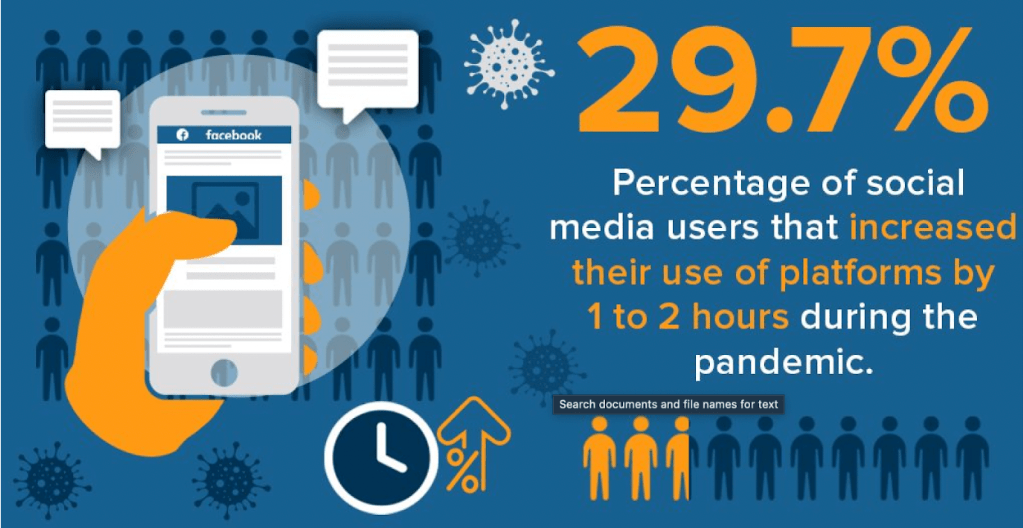
Dr. Wirig noted how much the Covid-19 pandemic has changed social media advertising in many different aspects. The use of acceptance cookies in order for corporations to sell their products to consumers is one of the most substantial changes in social media marketing according to Dr. Wirig.
Social Media has been a game-changer in the way information is spread across people and the world. Most importantly, social media has made it easier for social movements and political groups to use social media as a tool to spread propaganda and rhetoric. Social movements like Black Lives Matter to the far right-wing The Proud Boys have used social media to coordinate the logistics of events. Rallies and protests, and as a way to communicate with like-minded people and develop an identity in an in-group setting with a set of shared beliefs and views.
To get more of the inside to how people use social media to be influenced to join social movements and connect with likeminded people, we sat down with California State University, Fullerton Dr. Vivien Angelus on social movements and his views on how these political groups and social movements members use social media as a powerful tool.





 The Society for Communications Research